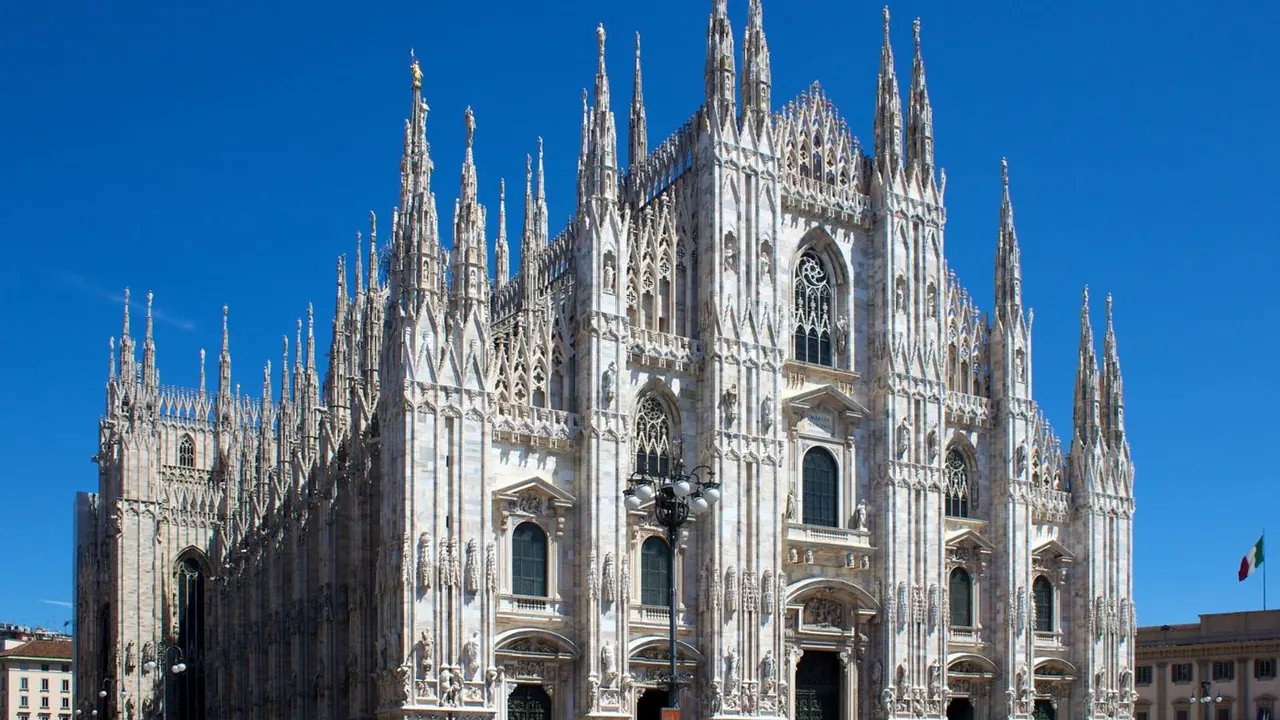
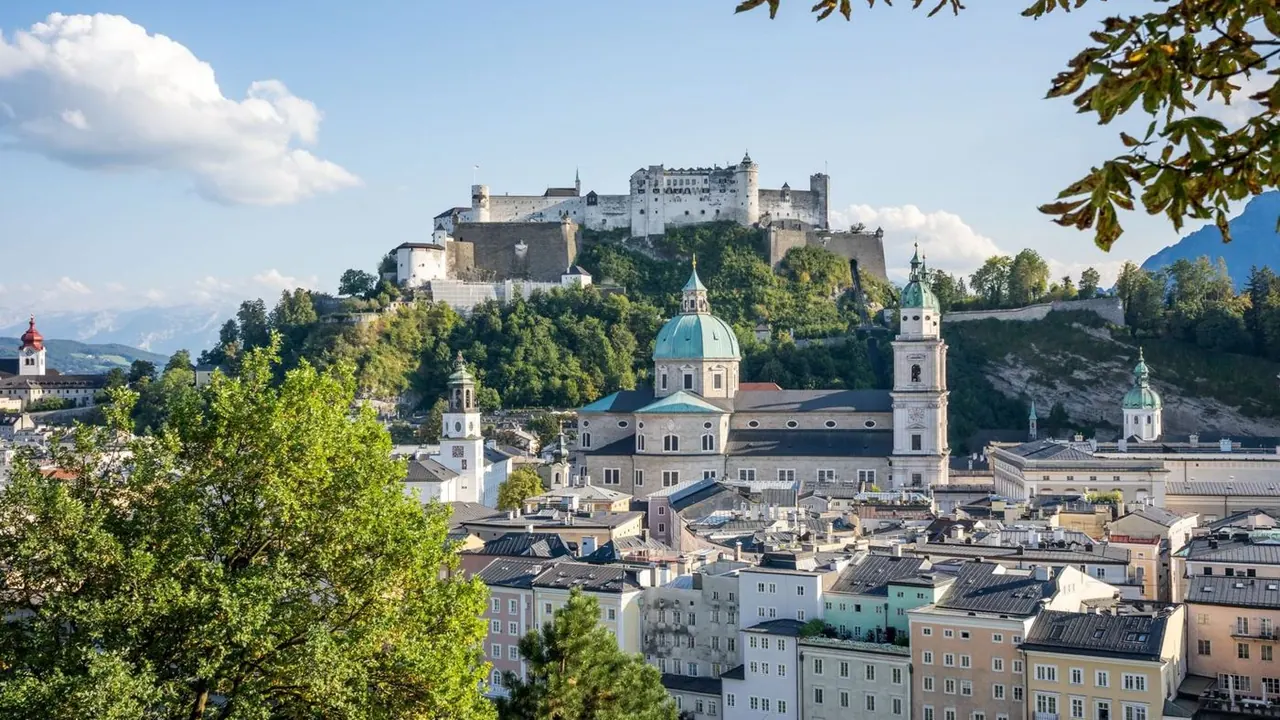
Photos: Milan by Jiuguang Wang, CC BY-SA 3.0, cropped; Salzburg by Leonhard Niederwimmer, Pexels License.
Milan or Salzburg?
Our verdict in twelve categories, each scored against the same fixed benchmark cities, and the climate month by month, so you can choose for your trip.
Choose Milan for
- shopping
- nightlife
- food and drink
Milan suits travellers who want a large, stylish city with plenty going on after dark. It offers fashion and design shopping, serious restaurants, the aperitivo hour, La Scala, and a rail hub that puts Verona, Bergamo, Turin and Lake Como within easy reach. It rewards a trip built around eating, buying and heading out by train.
Choose Salzburg for
- nature and the outdoors
- beaches
- wellness
For a quieter, greener stay, Salzburg is the better pick. Its Baroque old town is compact and largely car-free, the Alps and the Salzkammergut lakes begin almost at the edge of town, and it is calmer with children. Evenings tend to be a concert and a beer hall rather than a night out, and the cooking is hearty rather than varied. That makes it a better fit for walkers, music lovers and families than for night owls.
Scoreboard
Twelve categories on one fixed scale from 0 to 100. The shaded stretch is the gap between the two.
Your match
Pick a travel style or drag the sliders, and both match scores follow your weighting.
Wins on shopping and nightlife with your weighting.
Wins on nature and the outdoors and beaches with your weighting.
What matters to you?
Category by category
What the scores mean for a trip.
Beaches & swimming
Neither city has a beach, so swimming means a lake in both cases. Salzburg has the edge because Fuschlsee, Wolfgangsee and Mondsee are only half an hour or so away, with clear green water you enter from lawns and wooden jetties.
From Milan, Como and Maggiore are about an hour by train, which makes them a full outing rather than a quick afternoon dip. In town you are left with the Idroscalo basin near Linate and the public pools.
Food & drink
Milan is much the better city to eat in. Its own kitchen runs on butter rather than olive oil, with saffron risotto, ossobuco and the breaded cotoletta, and cooks from every Italian region have settled here, so Neapolitan pizza and Sicilian pastry are nearly as good as in their home towns. Add high-end restaurants, old pastry shops and the early-evening aperitivo spread, and a week of meals barely repeats itself, though the cheap places near the Duomo are a letdown.
Salzburg's table is hearty but limited: schnitzel, Tafelspitz, cheesy Kasnocken and the soufflé peaks of the Salzburger Nockerl. Its best moments often come between meals, with cake in the old coffee houses and beer poured from the barrel at the monastery brewery in Mülln, whose garden lets you bring your own food. Skip the tour-group menus in the old town and eat in the inns on the outskirts. Within a few days you will have tried most of what the city offers.
Culture & sights
Milan's few great sights carry slightly more weight. The Last Supper, the Duomo's rooftop among the spires, the Brera picture gallery and Michelangelo's Rondanini Pietà are of a rank Salzburg cannot quite match. They come in clusters, though, separated by modern, businesslike streets.
Salzburg offers the more complete picture. Its UNESCO-listed Baroque old town has the cathedral, the Residenz and the clifftop fortress within a few minutes of each other, plus the two Mozart houses. Two or three unhurried days see it all, while in Milan you need to book ahead for its handful of masterpieces.
Nightlife
Milan has a real night scene. There are bars spilling onto the Navigli towpaths, a smarter crowd in Brera, a relaxed mix and the gay scene around Porta Venezia, and clubs ranging from dressy Corso Como to warehouse nights on the outskirts. It is stylish rather than wild, and it goes quiet in August.
In Salzburg, an evening usually means a concert followed by a beer hall, with a few student pubs along Rudolfskai for later. Anyone who wants a club takes the train to Munich.
Nature & outdoors
Salzburg wins clearly. The Mönchsberg and Kapuzinerberg are wooded ridges inside the city, the Untersberg cable car lifts you to limestone ridge walks at about 1,800m, and the Königssee and the Salzkammergut lakes are around half an hour away.
Milan sits on the flat, hazy Po plain, where Parco Sempione and the canal towpaths are the main green escapes. The lakes and the Grigne ridges are superb, but they start an hour's train ride away, and the ski areas are a full day out.
Day trips
Both make good bases, but Milan's fast rail links give it more range. Verona, Turin, Bergamo and Lake Como are each about an hour away, and Bologna is not much further. The Certosa di Pavia, Mantua and Lugano widen the choice, all without a car.
Salzburg's outings are more about scenery and salt than cities: Hallstatt, the mines at Hallein and Berchtesgaden, and the fortress at Werfen, with Munich by train. Several of the lake villages are awkward to reach by bus, so a hire car helps.
Good for families
Salzburg is the easier city with children. It is small, calm and mostly car-free, with the trick fountains and zoo at Hellbrunn, the hands-on Haus der Natur, the marionette theatre, and salt mines with wooden miners' slides. Cobbles and steep lanes are the main nuisance with a pushchair.
Milan is flat and simple to get around, and its science and technology museum is excellent on a wet day. Most of its big sights are aimed at adults, though, and summer is heavy going. Its advantage for older children is that the Leolandia and Gardaland theme parks are within reach, which Salzburg cannot match.
Getting around
Milan's five simple metro lines and its dense tram network reach almost anywhere, and trains from three stations run straight to the lakes. The drawbacks are the summer heat underground and the long transfer from Malpensa.
Salzburg relies on walking and trolleybuses, which works well because its centre is tiny and largely pedestrianised. It is weaker beyond the city, where the regional buses to the lakes and Berchtesgaden are slow.
Shopping & style
Milan is one of the world's fashion capitals. The flagships of the Quadrilatero della Moda, the old shops under the Galleria and the historic department store beside the Duomo make shopping a purpose of the trip. Design showrooms, Corso Buenos Aires and the vintage shops of Porta Ticinese add more.
Salzburg's strength is narrower and more local: made-to-measure Tracht, Getreidegasse with its wrought-iron guild signs, and the Advent market on Domplatz. There is almost no luxury shopping.
Affordability
Both cities are expensive, and neither suits a tight budget. In Milan the cost is mostly the hotels, especially during trade fairs and fashion weeks. Aperitivo snacks and office-worker lunch menus help keep spending down.
Salzburg is pricey for a small city, and costs peak during the summer festival and the Advent markets. You save by eating in the beer halls and outer-district inns, and by buying the city card that combines transport with the museums.
Live music & performing arts
Both are first-rate for classical music, but in different ways. Milan centres on La Scala's season, which opens each December, with support from the Piccolo Teatro, the symphony orchestra and big stadium concerts at San Siro. Summer is its quiet time for opera.
Salzburg peaks just as Milan slows down. The summer festival fills the Felsenreitschule and the Festspielhaus and stages Jedermann in front of the cathedral, while Mozart Week and the Easter Festival add two more seasons. Chamber concerts keep music going most evenings, though jazz and contemporary music are thin.
Wellness & relaxation
Salzburg is the more restful city in its own right. It has quiet river paths, the Mirabell gardens, unhurried coffee houses and the Paracelsus Bad, with proper spa towns at Bad Reichenhall and in the Gastein valley.
Milan is a work-focused city, with a thermal spa complex, the 1930s Bagni Misteriosi pools in summer and some hotel spas. For real calm, most visitors head an hour north to the lakes.
When should you go?
Pick your month. The climate figures are measured averages, not a forecast.
Milan in July
Salzburg in July
Daytime high, °C
Rainfall in the month, mm
Where the figures come from
Milan has no rain gauge within 25 km of the centre, so its rainfall comes from a gridded climate dataset read at the city rather than from a gauge further away.
Milan's sunshine is measured 41 km from the centre, at Novara / Cameri.
Temperature and rainfall are climate normals, averaged over the years shown. Milan: 1991-2020 normals, Milano / Linate (8 km from centre). Salzburg: 1991-2020 normals, Salzburg (3.4 km from centre).
From spring to autumn Milan is the warmer of the two. July highs reach about 30°C, which is hot and humid for walking the streets. The long, sunny spells of July and August are good for a swim in the lakes, though. May, June and September are the most comfortable months for sightseeing. Autumn turns wet, with rain building through October and November to around 128mm a month.
Salzburg stays milder in summer, with highs near 25°C, which is pleasant for hiking and city walks. Most of its rain falls in summer, often over 160mm a month from June to August, so pack for showers. Lake bathing works in July and August. Winters are a few degrees colder than in Milan, with January highs near 3°C. That suits Advent markets and snow but is less good for long days outdoors.
Which traveller are you?
For a food and nightlife trip, Milan is the clear choice. Aperitivo along the Navigli or in Isola leads into dinners of risotto, cotoletta, regional Italian cooking or fine dining, then bars and clubs. Salzburg is quiet by midnight.
On a shopping trip, Milan wins easily. The Quadrilatero della Moda, the Galleria and the design showrooms make shopping a reason to come. Salzburg has Getreidegasse and its Tracht workshops, but little luxury and a narrow range.
On an outdoors trip, Salzburg is far better placed. You can walk the Mönchsberg from the centre, ride the cable car up the Untersberg and reach the Königssee or the lakes within the hour. Milan's mountains start an hour's train ride away.
Before you go
| Measure | Milan | Salzburg |
|---|---|---|
| Official language | Italian | German, Austrian Sign Language |
| Currency | Euro (EUR) | Euro (EUR) |
| Sockets | CFL230 V, 50 Hz | CF230 V, 50 Hz |
| Driving side | Right | Right |
| Time zone | UTC+1, UTC+2 in summer | UTC+1, UTC+2 in summer |
| Emergency number | 112 | 112 |
| Elevation | 138 m | 424 m |
| Main airport | Milan Malpensa International Airport (MXP)40 km from centre208 non-stop destinations | Salzburg Airport (SZG)3 km from centre64 non-stop destinations |
| Public holidays this year | 13 days | 16 days |
By the numbers
| Measure | Milan | Salzburg |
|---|---|---|
| City population | 1,354,196 | 155,021 |
| People per km² | 7,453 | 2,360 |
| Museums within 10 km | 88 | 38 |
| UNESCO World Heritage sites within 50 km | 4 | 3 |
Where else could you go?
Every comparison below shares a destination with this one, so you can follow Milan or Salzburg somewhere new.