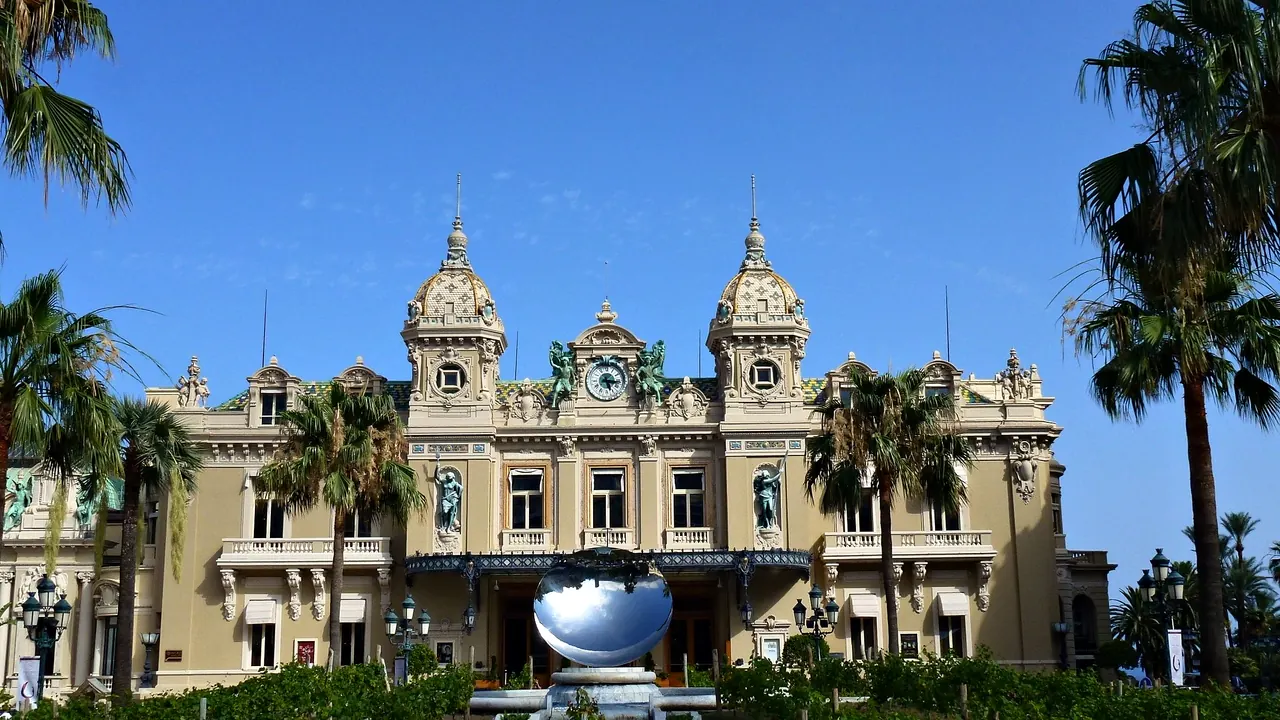
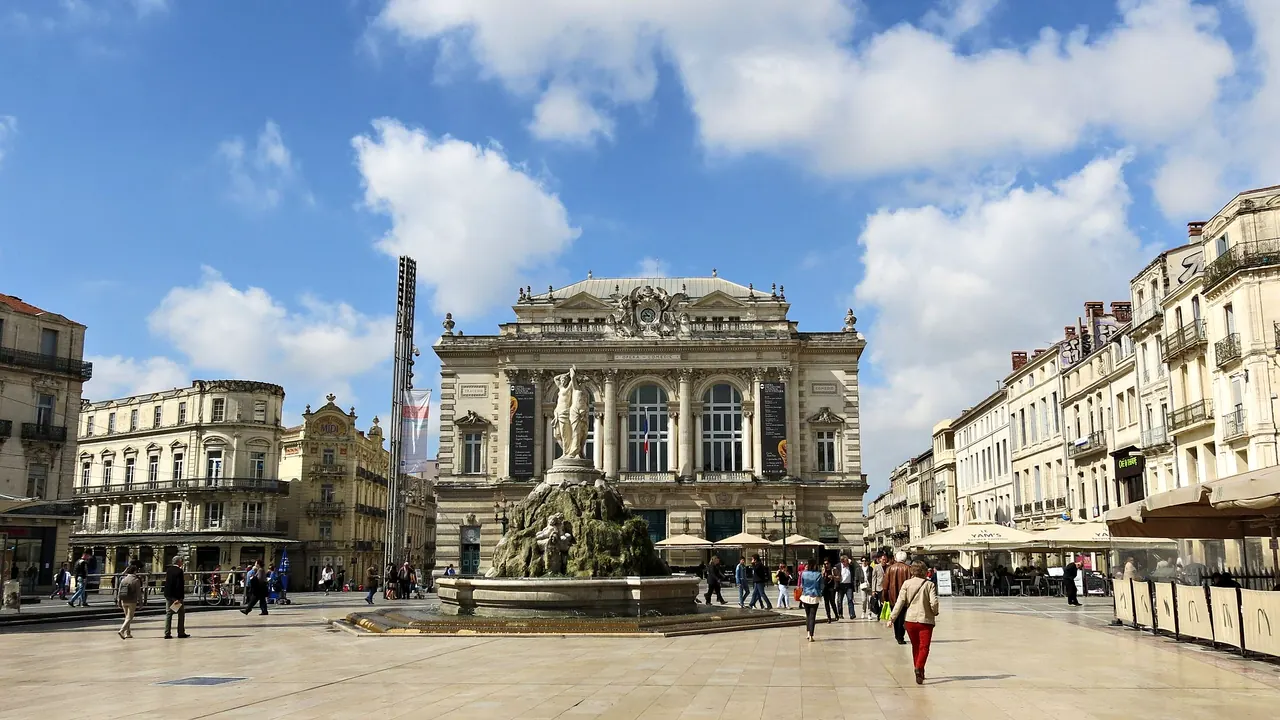
Photos: Monaco by otterboris, CC BY 3.0, cropped; Montpellier by Peter, CC BY 2.0, cropped.
Monaco or Montpellier?
Our verdict in twelve categories, each scored against the same fixed benchmark cities, and the climate month by month, so you can choose for your trip.
Choose Monaco for
- shopping
- wellness
- getting around
Monaco suits a short, polished stay where money matters less than setting. It is worth choosing for the Belle Époque casino square, luxury shopping in a small circuit, seawater spas and a winter opera season in a gilded hall. The coastal railway also makes it a handy base for exploring both Rivieras without a car. Most people give it two or three days rather than a week.
Choose Montpellier for
- nature and the outdoors
- prices
- beaches
Montpellier is the better pick for a longer, livelier and far cheaper trip. A student city with a car-free medieval core, it has Languedoc wine and oysters, long sandy beaches a tram and bus ride away, flamingo lagoons and limestone hills to walk, and the Roman towns of Provence within easy reach.
Scoreboard
Twelve categories on one fixed scale from 0 to 100. The shaded stretch is the gap between the two.
Your match
Pick a travel style or drag the sliders, and both match scores follow your weighting.
Wins on shopping and wellness with your weighting.
Wins on nature and the outdoors and prices with your weighting.
What matters to you?
Category by category
What the scores mean for a trip.
Beaches & swimming
Montpellier has the better beaches, though you have to travel to them. From Palavas-les-Flots and Carnon, about 11km out, open sand runs east to the wild dunes of l'Espiguette, and the shallow, gently shelving water is easy for swimmers. The near end gets crowded in high summer.
Monaco has a single landscaped beach at Larvotto, made of imported gravel and sand and short enough to fill quickly. It does have clearer, calmer water and some rocky platforms for a quick dip, and you can walk there from your hotel instead of taking a tram and a bus.
Food & drink
Montpellier eats better day to day. Wine country begins at the city's edge, oysters and mussels come in from the Thau lagoon, and Sète's octopus tielle and the counters of the Halles Laissac offer cheap, local meals. The large student population keeps casual places plentiful.
Monaco puts its effort into the top end: hotel dining rooms, starred tables around Place du Casino and a row of Italian restaurants on the port. For barbajuans and socca, go to the Condamine market hall. Beyond that the choice is narrow and rarely casual.
Culture & sights
There is about the same amount to see in each, but the sights are of different kinds. Monaco's are the set pieces of a princely state: the palace and changing of the guard, the Grimaldi tombs in the cathedral, the Oceanographic Museum on its cliff and the casino's Belle Époque square.
Montpellier's appeal is a whole medieval town to wander, with hidden courtyards in the Écusson, the Peyrou terrace and its aqueduct, and France's oldest botanical garden. It also has one serious art collection, at the Musée Fabre, which Monaco cannot match, and Bofill's Antigone adds twentieth-century architecture.
Nightlife
For an ordinary night out, Montpellier is the easier and more varied choice. Students fill the bars and wine bars around Place Jean-Jaurès on weeknights as well as weekends, and the mood is casual. Late on, the clubs are out towards Lattes and the coast, so the night usually ends with a taxi.
Monaco offers glamour rather than choice. Evenings move from hotel bars and the gaming rooms to a few famous clubs on Avenue Princesse Grace, where door policies are strict and drinks are expensive. Outside summer and big event weekends it goes quiet.
Nature & outdoors
This is where the two differ most. Montpellier lies between lagoons full of flamingos and herons and garrigue hills rising to the summit climb of Pic Saint-Loup. The Hérault gorges, the Camargue and the Cirque de Navacelles are all within a short drive, and flat paths suit cycling.
Monaco's green spaces are designed gardens, such as the cacti of the Exotic Garden and the Fontvieille rose garden. Its real outdoor asset is the protected marine area off Larvotto for snorkelling and diving, and any proper hike starts across the French border.
Day trips
Both are excellent bases, and the choice depends on what kind of outings you want. From Monaco the coastal railway strings together Riviera towns and villages, from Nice and Menton to Villefranche, perched Èze and Italian Sanremo, and almost none of them needs a car.
Montpellier's outings lean towards history. Nîmes's arena and temple, the Pont du Gard, Arles, Avignon's papal palace and walled Carcassonne are all within easy reach, with Sète and Aigues-Mortes closer still. Some of the smaller villages are much easier to reach by car.
Good for families
Montpellier gives children more to do over several days. The Lunaret zoo is set in woodland, the Odysseum has an aquarium beside a planetarium, the trams take pushchairs and the beaches shelve gently. Summer heat in the centre means planning beach mornings and indoor afternoons.
Monaco is spotless and very safe, and the Oceanographic Museum's sharks and touch pool are a real highlight. Beyond those, the small zoo and Fontvieille's playgrounds, the principality is aimed at adults and is costly for a family.
Getting around
Monaco is slightly easier to get around, because it is so small that you can walk everywhere. Its steep tiers are linked by free public lifts, escalators and tunnels, and an electric boat crosses the port.
Montpellier's car-free Écusson is walkable too, if hilly and unevenly paved, and the trams cover the wider city well. The beaches mean a slow tram and bus ride in summer, though, and the gorges and the Camargue really call for a car.
Shopping & style
For luxury shopping, Monaco is far ahead. The big fashion houses, high jewellers and watchmakers cluster on Avenue des Beaux-Arts, Avenue de Monte-Carlo and the Métropole arcades. Away from that circuit there is little beyond everyday shops and souvenirs.
Montpellier offers small boutiques and bookshops in the old lanes plus the Polygone mall, but it has no luxury street. Its most rewarding buys come from the covered markets: local wine, olive oil and honey.
Affordability
Montpellier costs a fraction of what Monaco does. Central hotels are moderately priced for most of the year, students keep plenty of cheap counters and bars in business, and lunch menus stretch a budget further. Sit-down dinners with wine, and rooms in July and August, are where costs climb.
Monaco is priced for the wealthy all year, from hotel rooms to café meals and beach loungers. The free lifts, cheap buses and walks around the port are the only real savings, which is why many visitors stay in nearby French towns.
Live music & performing arts
The two are evenly matched on stage, but their seasons fall at different times of year. Monaco's strength is classical and in winter: opera in the gilded Salle Garnier, where the Ballets Russes once worked, the Monte-Carlo Philharmonic, Les Ballets de Monte-Carlo and the Printemps des Arts in spring.
Montpellier is at its best in summer. Contemporary dance is its speciality, with the Montpellier Danse festival as the centrepiece, and the Radio France festival brings many free concerts. Students also keep small music venues busy through the year.
Wellness & relaxation
Monaco does pampering better, if you can afford it. The thalassotherapy centre beside the casino has heated seawater pools and hammams looking out to sea, and the grand hotels add spas of their own, though the dense, traffic-filled streets offer little real calm.
Inside Montpellier there are only hotel and day spas. For thermal water you need to go to Balaruc-les-Bains on the Thau lagoon, about half an hour away. The city's real restorative quality is its unhurried pace of long lunches and shaded squares.
When should you go?
Pick your month. The climate figures are measured averages, not a forecast.
Monaco in July
Montpellier in July
Daytime high, °C
Rainfall in the month, mm
Temperature and rainfall are climate normals, averaged over the years shown. Monaco: 1991-2020 normals, Nice (19.9 km from centre). Montpellier: 1991-2020 normals, Montpellier (7.8 km from centre).
Both cities share the Mediterranean pattern of dry summers and wet autumns, but they feel different at the peak. Monaco's sea is warmer, reaching about 25°C in August against roughly 22°C off Montpellier's beaches, and swimming lasts there from June into October. Inland Montpellier gets hotter. July highs reach about 30°C, and the stone streets of the centre are tiring by midday, while Monaco's sea breeze keeps it a touch milder.
Spring and early autumn are the best months for walking in both, with long sunny days from April into early June and again in September. The rains then arrive, heavier in Monaco, where November brings around 138mm. Winters are mild in both and slightly gentler in Monaco. That suits Monaco's opera season and the walk around the Rock, while Montpellier's winter is quieter and cooler.
Which traveller are you?
On a trip on a tight budget, treat Monaco as a day out, walking the port and gardens for free. Montpellier makes the better base for a week, with set lunches and market food, and restaurant dinners with wine kept for the odd treat.
For an outdoors trip, Monaco gives you a morning's snorkelling, and then any walk means crossing into the hills. Montpellier is far better, repaying a hire car and a few days: a spring summit climb, a canoe in the gorges, cycling past the lagoons.
On a shopping trip, Monaco wins if you have a serious budget: one afternoon around the casino lets you compare the great names on foot. In Montpellier, expect browsing rather than buying, and leave room in the suitcase for market wine.
Before you go
| Measure | Monaco | Montpellier |
|---|---|---|
| Official language | French | French |
| Currency | Euro (EUR) | Euro (EUR) |
| Sockets | CEF230 V, 50 Hz | CE230 V, 50 Hz |
| Driving side | Right | Right |
| Time zone | UTC+1, UTC+2 in summer | UTC+1, UTC+2 in summer |
| Emergency number | 112 | 112 |
| Elevation | 68 m | 7 m |
| Main airport | Nice-Côte d'Azur Airport (NCE)18 km from centre130 non-stop destinations | Montpellier-Méditerranée Airport (MPL)8 km from centre44 non-stop destinations |
| Public holidays this year | 12 days | 11 days |
By the numbers
| Measure | Monaco | Montpellier |
|---|---|---|
| Population | 38,857 | 310,240 |
| People per km² | 18,503 | 5,452 |
| Museums within 10 km | 14 | 14 |
| UNESCO World Heritage sites within 50 km | 2 | 2 |
| Swim season, months above 21 °C | 4 months | 2 months |
Where else could you go?
Every comparison below shares a destination with this one, so you can follow Monaco or Montpellier somewhere new.
- Nicevs Monaco
- Antibesvs Monaco
- Cannesvs Monaco
- Arlesvs Montpellier
- Saint-Tropezvs Monaco
- Avignonvs Montpellier