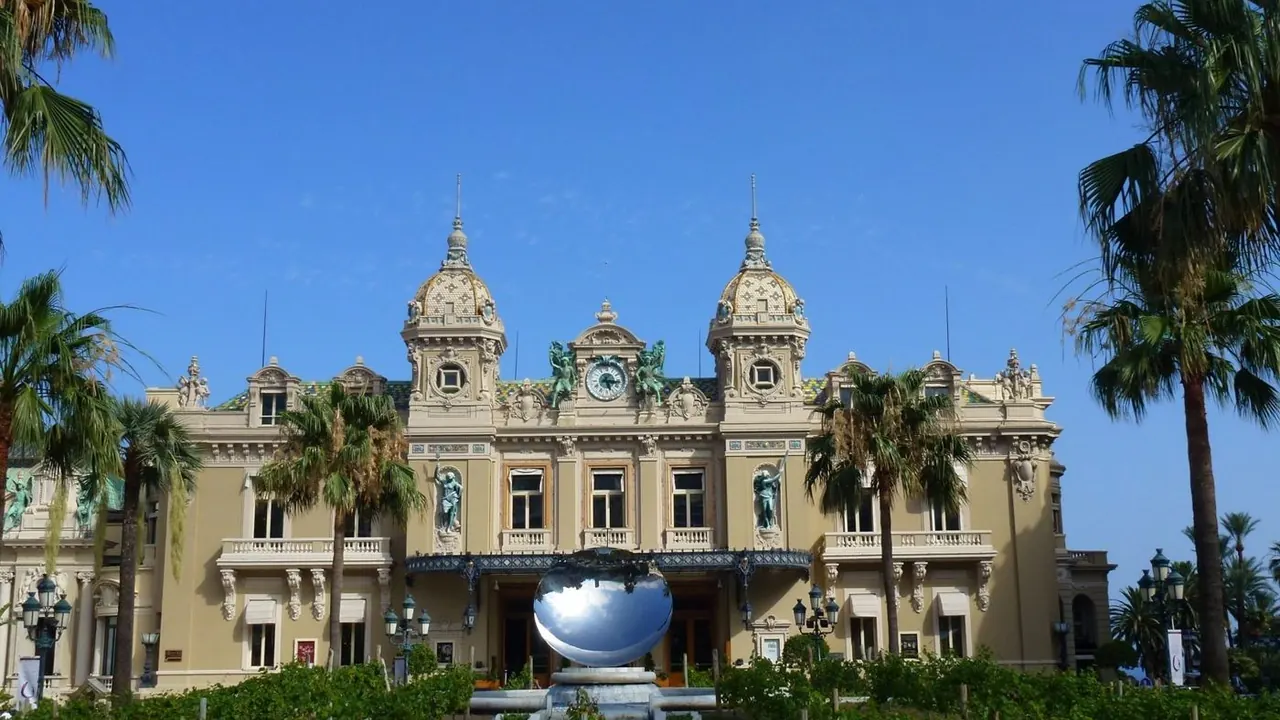
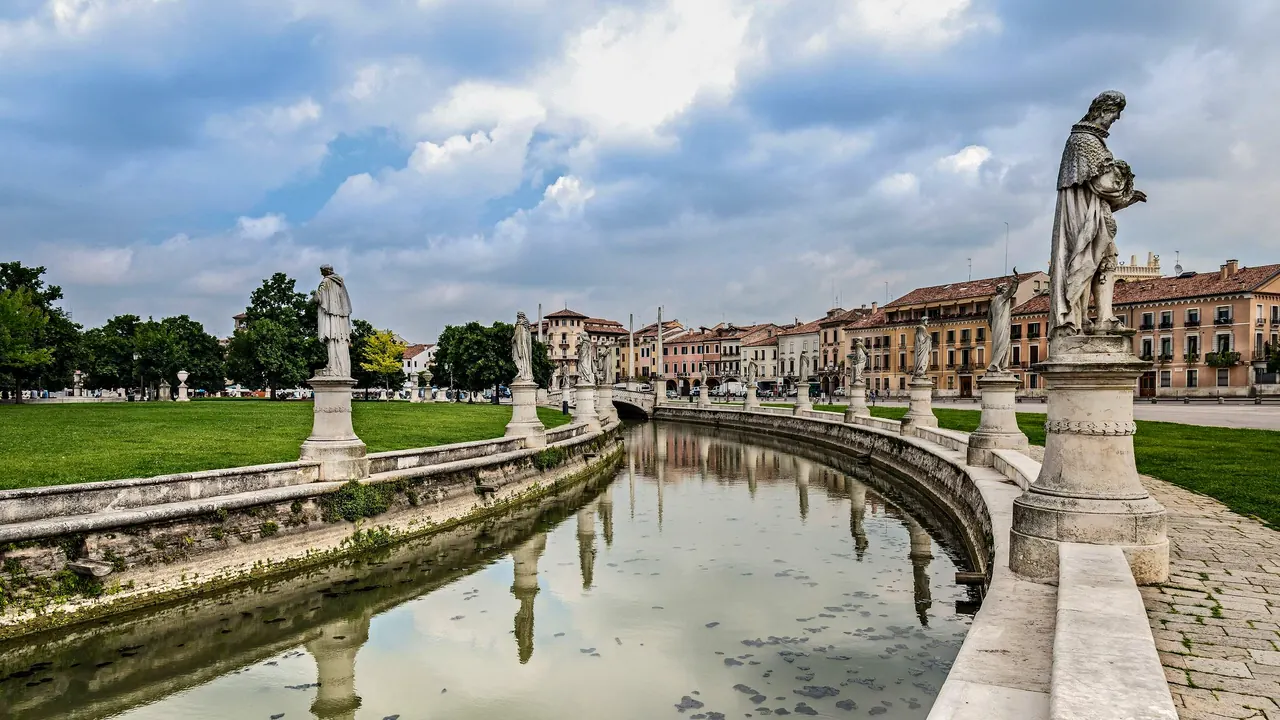
Photos: Monaco by otterboris, CC BY 3.0, cropped; Padua by Didier Descouens, CC BY-SA 4.0, cropped.
Monaco or Padua?
Our verdict in twelve categories, each scored against the same fixed benchmark cities, and the climate month by month, so you can choose for your trip.
Choose Monaco for
- beaches
- live music and the arts
- families
Monaco suits a short, polished stay where the setting is the point. You get a swim off Larvotto or the rocks, a night at the opera in the Salle Garnier, the steep mule path up to Èze and the whole coast from Menton to Nice by train. Children get more to do here than in Padua, and the sea and mountains start at the door. It only makes sense for travellers who are relaxed about paying some of the highest prices in Europe.
Choose Padua for
- prices
- culture and sights
- wellness
Travellers who come for art, everyday Italian food and a sensible base should pick Padua. Giotto's frescoes in the Scrovegni Chapel and the Basilica of Saint Anthony give it far more depth than the Rock. Venice and Vicenza are a short train ride away, and the hotels, trattorias and evening spritz cost far less than anything in Monte-Carlo. Add the thermal pools of Abano a short ride away and it rewards a longer, slower stay.
Scoreboard
Twelve categories on one fixed scale from 0 to 100. The shaded stretch is the gap between the two.
Your match
Pick a travel style or drag the sliders, and both match scores follow your weighting.
Too close to call, 1 point apart
Wins on beaches and live music and the arts with your weighting.
Wins on prices and culture and sights with your weighting.
What matters to you?
Category by category
What the scores mean for a trip.
Beaches & swimming
Monaco is a much better choice for swimming, even though it has little sand of its own. Larvotto is a short, groomed beach with calm, clear water inside its breakwaters, and the rocky platforms and beach clubs along the shore add more places to swim. The coves at Cap d'Ail and the long beaches of Menton and Nice are only minutes away by path or train.
Padua is inland, and the sea is an excursion of about an hour to Sottomarina or the Lido of Venice. The Adriatic there is shallow and gentle, which suits small children paddling, but the beaches are flat strips of umbrellas rather than a scenic coast.
Food & drink
Padua has the edge for everyday eating, and the two cities eat very differently. Monaco's strength is the formal dining room: starred hotel restaurants, Riviera and Ligurian cooking, and harbour terraces where you are partly paying for the view. Simple meals are hard to find, although the barbagiuan and socca at the Condamine market are worth seeking out.
Padua is about Venetian home cooking and markets: bigoli with duck sauce, baccalà, and the morning stalls in Piazza delle Erbe and Piazza della Frutta. The early-evening spritz, Euganean wines and Caffè Pedrocchi complete it. Fine dining is thin, so anyone who wants a grand gastronomic dinner is better served in Monaco.
Culture & sights
Padua is in another league here. The Scrovegni Chapel holds Giotto's fresco cycle, one of the turning points of European painting, and a whole UNESCO-listed group of fourteenth-century frescoes surrounds it. Add the Basilica of Saint Anthony with Donatello's bronzes, the frescoed hall of the Palazzo della Ragione, the university's anatomical theatre and the oldest botanical garden still on its original site.
Monaco's sights are elegant but few: the Prince's Palace and its guard ceremony, the cathedral where Grace Kelly lies, the Oceanographic Museum and the Casino. You can see them comfortably in a day or two, and the setting impresses more than the collections do.
Nightlife
Neither city is made for a big night out, but they go out in opposite ways. Monaco dresses up for the Casino square, hotel bars and glossy seafront clubs, and it comes alive in summer and on Grand Prix weekend, when the harbour turns into one long party. Padua is at its liveliest in term time, when students and locals stand over spritz glasses in the squares around the Palazzo della Ragione and fill the wine bars of the old ghetto.
The seasons work against each other, too. In summer Monaco's nights are at their busiest while Padua goes quiet as the university empties. In Padua you get a cheap, sociable evening, in Monaco a costly, glamorous one.
Nature & outdoors
Monaco wins on scenery right on the doorstep. Limestone mountains rise straight out of the sea behind it. The Tête de Chien cliff looks down over the whole principality, old mule paths climb to Èze, and the coastal paths round Cap d'Ail and Cap Martin pass pines and villas. The clear water is good for snorkelling, diving and paddleboarding.
Padua sits on a flat plain, so the outdoors begins a little way out. The volcanic Euganean Hills, about 15km away, have vineyards, chestnut woods and quiet roads for cycling, and the Brenta towpaths make easy level rides. Proper mountain walking in the pre-Alps needs a car.
Day trips
Both are excellent bases, but Padua's list is longer and weightier. Venice is less than half an hour away by train, Vicenza's Palladian palaces are closer still, and Verona, Bologna and Ferrara are all within about an hour. Nearer to town are the Brenta villas, Petrarch's village of Arquà and the walled towns around the Euganean Hills.
From Monaco the trips run along the coast and up into the hills. Nice and Villefranche lie to the west and Menton to the east, Èze and La Turbie are just above, and across the border are Sanremo and Dolceacqua. These are mostly seaside towns and perched villages rather than great art cities.
Good for families
Monaco is easier to fill with children. The aquarium in the Oceanographic Museum, with its sharks and turtles, is a proper outing, Larvotto's sheltered water suits young swimmers, and the palace guards and the yachts keep children watching. The public lifts take care of much of the climbing, although the formal restaurants are less relaxed.
Padua is welcoming in a practical way: the centre is flat and largely free of traffic, and children are made welcome in any trattoria. Beyond running around Prato della Valle and the glasshouses of the botanical garden, though, the main sights are frescoes and churches. Gardaland and the beaches are day trips of an hour or more.
Getting around
Both cities are easy to cover on foot and neither needs a car, but in Monaco you climb and in Padua you walk on the level. Monaco is only about 3km end to end, but it rises steeply from the sea, and you learn to use its free lifts, escalators and the little harbour ferry to save your legs.
Padua's centre is flat, shaded by arcades and partly closed to traffic, with a tram from the station and bicycles everywhere. Both stations are an asset: Monaco's opens up the Riviera, and Padua's sits where main lines run in every direction.
Shopping & style
Monaco comes out a little ahead, but only if you are after luxury. The Carré d'Or around the Casino gardens packs the big fashion houses, jewellers and watchmakers into a few streets, and window-shopping there is part of an evening in Monte-Carlo. Beyond that, there are souvenirs on the Rock and very little else.
Padua is ordinary but more varied. Its arcaded streets have Italian shoe and fashion shops, independent boutiques and university bookshops, and the markets and delicatessens under the Palazzo della Ragione are good for cheese and Euganean wine to take home. There is also a large antiques market in Prato della Valle one Sunday a month.
Affordability
This is where the two differ most. Monaco is one of the most expensive places in the world to visit: hotels are priced for the very rich, and even a coffee costs a lot. The free lifts and walks round the Rock and harbour are about the only bargains, and many visitors sleep in Nice, Menton or Beausoleil instead.
Padua costs what a northern Italian city of its size normally does. Its hotels are a sensible base for the whole Veneto, including Venice. A standing spritz and market food cost little, and you can walk everywhere. Rooms cost more only around the big trade fairs and graduation season.
Live music & performing arts
Monaco has the stronger stage by a distance. The Monte-Carlo Opera performs in the gilded Salle Garnier inside the Casino, where Puccini and Massenet had premières, and the Philharmonic and Les Ballets de Monte-Carlo both have international reputations. The main season runs from winter into spring with the Printemps des Arts, and summer brings open-air shows by the sea.
Padua's programme is modest but runs all year. There is theatre and some opera at Teatro Verdi, and chamber concerts are held in the Sala dei Giganti and the Basilica of Saint Anthony. Students keep a few small live-music venues going. For major opera, visitors take the train to the Fenice in Venice or the Arena in Verona.
Wellness & relaxation
Padua is the better choice for a restful stay, thanks to Abano Terme and Montegrotto Terme about 12km away. This is one of Europe's largest thermal districts, where hot mineral water rises from the ground and mud treatments go back to Roman times. Many spa hotels let day visitors use their pools, so you can sightsee in the morning and soak in the afternoon.
Monaco's version is seawater rather than hot springs: the large thalassotherapy centre beside the Casino and the spas of the grand hotels. A quiet morning in the Japanese Garden is genuinely restful, but it is a treatment day, not a bathing tradition.
When should you go?
Pick your month. The climate figures are measured averages, not a forecast.
Monaco in July
Padua in July
Daytime high, °C
Rainfall in the month, mm
Where the figures come from
Padua's temperatures are measured 35 km from the centre, at Treviso / Istrana.
Padua has no rain gauge within 25 km of the centre, so its rainfall comes from a gridded climate dataset read at the city rather than from a gauge further away.
Padua's sunshine is measured 36 km from the centre, at Treviso / S. Angelo.
Temperature and rainfall are climate normals, averaged over the years shown. Monaco: 1991-2020 normals, Nice (19.9 km from centre). Padua: 1991-2020 normals, Treviso / Istrana (35.4 km from centre).
Monaco has the gentler year. Winters are mild enough to walk the Rock in a light jacket, although December and January can be damp, and spring warms steadily into good walking weather by April and May. June to August is the dry, sunny stretch, with July and August reaching about 28°C. The sea is warmest late in the summer, at about 25°C by August. The rain returns in September and is heaviest in October and November, the wettest months of the year.
Padua swings much further between seasons. January highs of only 8°C often come with fog lying low over the plain, while July and August climb to 31°C and feel humid and heavy for sightseeing on foot. Rain falls in every month, with no real dry season, and the city gets less sunshine than Monaco all year round. May, June, September and early October are the comfortable months for the frescoes and the hills, and the Adriatic beaches an hour away are warm enough for swimming from June to September.
Which traveller are you?
For a beach and sun trip, Monaco is the clear pick. You can walk to Larvotto's sheltered water and the rocky bathing platforms, the summers are dry and sunny, and Cap d'Ail's coves and the beaches at Menton are only minutes away.
On a culture and arts trip, Padua has far more to see. Giotto's Scrovegni frescoes, the Basilica of Saint Anthony and the old anatomical theatre fill several days, and Venice, Vicenza and Verona are each an easy train ride away.
For a trip on a tight budget, Padua wins outright. Its hotels and trattorias are moderately priced, a standing spritz costs little and the city works as a cheaper base for Venice. In Monaco, even a café coffee strains a budget.
Before you go
| Measure | Monaco | Padua |
|---|---|---|
| Official language | French | Italian |
| Currency | Euro (EUR) | Euro (EUR) |
| Sockets | CEF230 V, 50 Hz | CFL230 V, 50 Hz |
| Driving side | Right | Right |
| Time zone | UTC+1, UTC+2 in summer | UTC+1, UTC+2 in summer |
| Emergency number | 112 | 112 |
| Elevation | 68 m | 12 m |
| Main airport | Nice-Côte d'Azur Airport (NCE)18 km from centre130 non-stop destinations | Venice Marco Polo Airport (VCE)39 km from centre103 non-stop destinations |
| Public holidays this year | 12 days | 13 days |
By the numbers
| Measure | Monaco | Padua |
|---|---|---|
| City population | 38,857 | 206,496 |
| People per km² | 18,503 | 2,220 |
| Museums within 10 km | 14 | 29 |
| UNESCO World Heritage sites within 50 km | 2 | 5 |
| Swim season, months above 21 °C | 4 months | 4 months |
Where else could you go?
Every comparison below shares a destination with this one, so you can follow Monaco or Padua somewhere new.