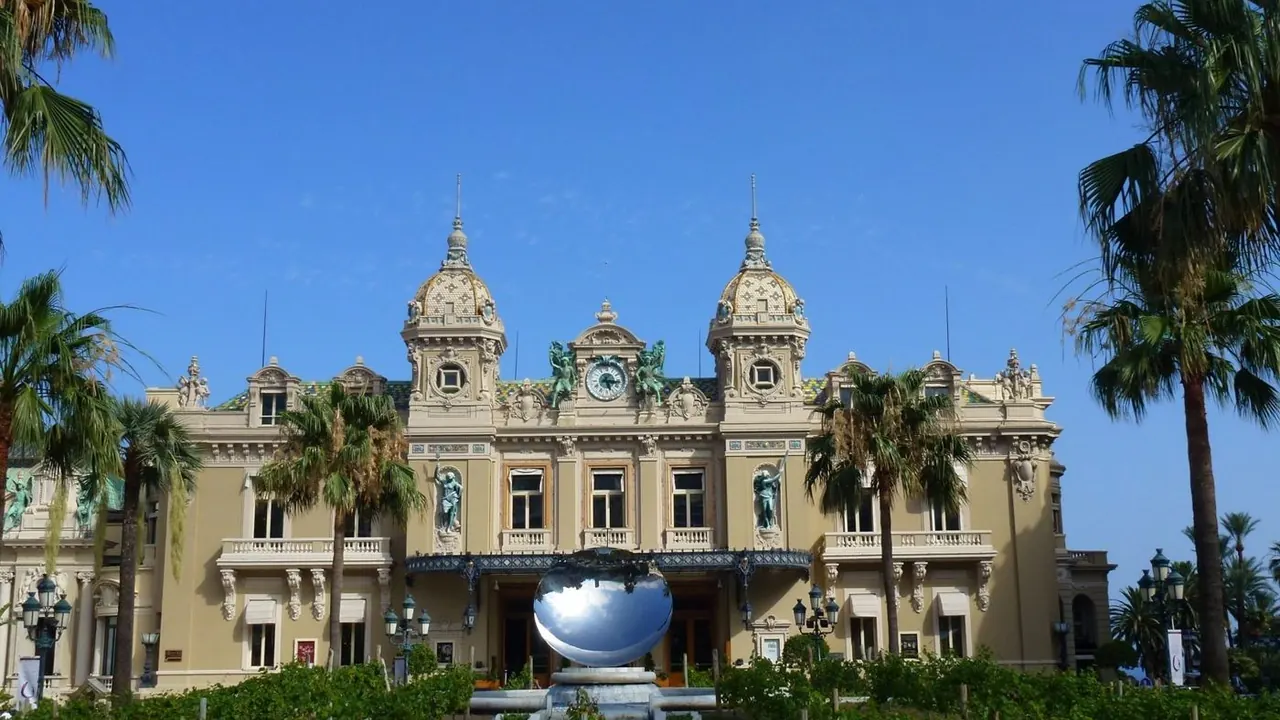
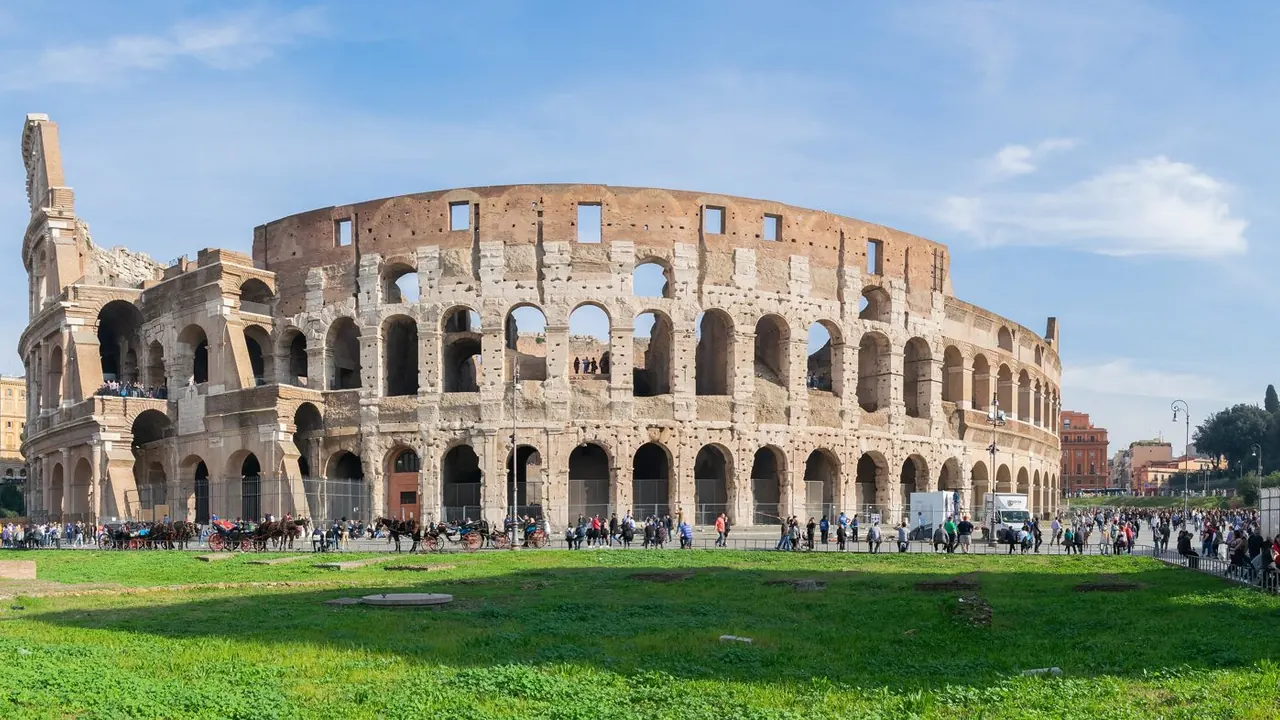
Photos: Monaco by otterboris, CC BY 3.0, cropped; Rome by Tournasol7, CC BY-SA 4.0, cropped.
Monaco or Rome?
Our verdict in twelve categories, each scored against the same fixed benchmark cities, and the climate month by month, so you can choose for your trip.
Choose Monaco for
- beaches
- getting around
- wellness
Monaco suits a short, polished stay for travellers who care more about setting than depth of sightseeing. It has clear water at Larvotto, cliff paths up to Èze, a seawater spa beside the Casino, and a compact town where public lifts do the climbing. It also works as a base for the Riviera, as long as the budget can take some of the steepest prices anywhere.
Choose Rome for
- culture and sights
- prices
- food and drink
Anyone who travels to see things and to eat well should pick Rome. The ancient city, the Vatican and the Baroque churches outweigh anything the principality offers, and the trattorias of Testaccio and Trastevere cook a cuisine of their own. Day-to-day costs are also far gentler, even though the beach is a train ride away and the streets are hot and loud.
Scoreboard
Twelve categories on one fixed scale from 0 to 100. The shaded stretch is the gap between the two.
Your match
Pick a travel style or drag the sliders, and both match scores follow your weighting.
Wins on beaches and getting around with your weighting.
Wins on culture and sights and prices with your weighting.
What matters to you?
Category by category
What the scores mean for a trip.
Beaches & swimming
Neither is a true beach destination, but in Monaco the sea is part of the stay. Larvotto is short and groomed, but its water is calm and clear enough to see the bottom. The coves of Cap d'Ail are a walk over the border, and the long beaches of Menton and Nice are a short train ride away.
From Rome, the sea means Ostia or Fregene, half an hour out by suburban train. There you find dark sand, rows of paid lido umbrellas and water that is rarely clear. Romans crowd there on summer weekends, and for pretty coves you have to go as far as Sperlonga, so a swim becomes an outing rather than part of the day.
Food & drink
Rome eats far better and far more freely. Its own cuisine, from carbonara and cacio e pepe to Jewish-style artichokes and the offal dishes of Testaccio, is at its best in plain trattorias. Street food such as supplì and pizza al taglio means a good meal at any hour.
Monaco's strength lies at the other end: starred hotel dining rooms and harbour terraces serving Riviera and Ligurian food. Its local bite is barbagiuan from the Condamine market. Casual eating is scarce and dinner means dressing up, which is why many visitors eat in Nice or Menton instead.
Culture & sights
This is the widest gap between the two cities. Rome has the Colosseum, the Forum, the Pantheon, St Peter's and the Sistine Chapel, as well as Bernini's piazzas and Caravaggios in side chapels, and a week barely makes a start on it.
Monaco's sights fit on the Rock and around the Casino: the Prince's Palace with its changing of the guard, Grace Kelly's grave in the cathedral, and the Oceanographic Museum of 1910. They are handsome and easy to see in a day or two, but the setting impresses more than what is on show.
Nightlife
Rome has the livelier and more varied evenings. Aperitivo leads on to crowded piazzas and wine bars in Trastevere, cocktail bars in Monti, cheap student drinking in San Lorenzo and an arty crowd in Pigneto, though there is not much clubbing.
Going out in Monaco is dressier and narrower: hotel bars around the Casino square and a few glossy clubs on the Larvotto seafront and at the port. It is busiest in summer and on Grand Prix weekend. Outside those times it goes to bed early, and there are no casual bars to wander between.
Nature & outdoors
Monaco has the more dramatic surroundings. Limestone mountains rise straight from the sea, mule paths climb from Èze-sur-Mer up to Èze, and the Tête de Chien cliff looks over the whole principality. The clear water makes snorkelling, diving and paddleboarding easy.
Rome's outdoors is gentler and full of history. There are the villa parks of Borghese and Pamphili, a bike ride along the Appian Way past tombs and aqueducts, and the crater lakes of the Alban Hills. Real mountains in the Apennines are about ninety minutes away.
Day trips
Both make excellent bases, with Rome slightly ahead for the weight of what lies within reach. Ostia Antica, Hadrian's Villa and the Villa d'Este at Tivoli are close by. Orvieto and the Etruscan tombs of Tarquinia lie to the north, and fast trains put Florence and Naples within about ninety minutes.
Monaco's trips are shorter hops along a single coast. Villefranche and Nice lie to the west, Menton to the east and Èze up the hill, with Antibes, Saint-Paul-de-Vence or Sanremo in Italy further out, and nearly all of it is reachable by train or bus.
Good for families
Monaco is the easier place with children. It is safe, small and clean, and the public lifts take the strain off the hills. The aquarium has sharks and turtles, and Larvotto's sheltered water suits small swimmers. With formal restaurants and little else on offer, though, a couple of days is plenty.
Rome welcomes children in every trattoria, and gladiators, catacombs and the Bioparco zoo in Villa Borghese all help hold their interest. The great sights are aimed at adults, however, and long queues, cobbles that defeat pushchairs and summer heat make for tiring days.
Getting around
Monaco is barely 3km end to end, and free public lifts and escalators link its levels, so walking works once you know the shortcuts. The station in the hillside connects you to the whole coast.
Rome is also a city for walking, with the Colosseum, the Pantheon and Piazza Navona close together, but it covers far more ground. The metro barely reaches the historic core, buses stall in traffic, and cobbles and scooters wear you down.
Shopping & style
Rome offers much more range. The big fashion houses line Via Condotti below the Spanish Steps and Via del Corso has the chains. Monti has vintage shops and young designers, Porta Portese holds a huge Sunday flea market, and leather and handmade shoes are good buys.
Shopping in Monaco is almost entirely the luxury cluster of the Carré d'Or around the Casino gardens, which you can walk in a quarter of an hour. Beyond that there is a small mall and the souvenir shops on the Rock. Window-shopping is part of the evening scene, but for variety people go to Nice.
Affordability
Neither city is cheap, but Monaco is in a different league. Hotels are priced for the very wealthy and even a café coffee is steep. Most budget travellers sleep in Nice, Menton or Beausoleil and come in for the day, making use of the free lifts, the gardens and the Rock.
In Rome the cost lies mainly in accommodation and the big ticketed sights. Day to day it is kind: standing espresso, pizza by weight, trattoria lunches and free water from the fountains, with churches full of art open to everyone.
Live music & performing arts
The two are well matched, and the difference is one of kind. Monaco has an opera company, an internationally known ballet company and a philharmonic orchestra, which is a lot for so small a state. The opera performs in the gilded Salle Garnier inside the Casino, where works by Massenet and Puccini had their premières. Its season runs mostly from winter to spring, at the same time as the Printemps des Arts.
Rome's classical life is spread more widely. In summer the Teatro dell'Opera moves outdoors to the Baths of Caracalla, and the Santa Cecilia orchestra plays at the Auditorium Parco della Musica. Church concerts and jazz clubs also offer music on an ordinary night, which Monaco rarely does.
Wellness & relaxation
Monaco is the more restful place. The large thalassotherapy centre beside the Casino carries on an old tradition of sea-bathing cures with heated seawater pools, and the grand hotels have big spas. The Japanese Garden and the quiet ramparts make for calm mornings outside Grand Prix week.
Rome has hotel spas and hammam-style day spas, but its centre is loud with scooters and crowds. For real thermal water you go out to Bagni di Tivoli or the free hot pools near Viterbo. In town, the villa gardens and the Aventine are the quiet places to stop.
When should you go?
Pick your month. The climate figures are measured averages, not a forecast.
Monaco in July
Rome in July
Daytime high, °C
Rainfall in the month, mm
Where the figures come from
Rome's sunshine is measured 31 km from the centre, at Vigna Di Valle.
Temperature and rainfall are climate normals, averaged over the years shown. Monaco: 1991-2020 normals, Nice (19.9 km from centre). Rome: 1991-2020 normals, Roma / Ciampino (15.1 km from centre).
Both cities follow the same Mediterranean pattern: dry, sunny summers, with the heaviest rain in October and November. Summer feels different in each, though. Monaco peaks at about 28°C in July and August. That is warm enough for long beach days without making its steep streets punishing, and the sea is good for swimming from June into early October. Spring is the gentler season for its mountain paths.
Rome runs hotter, at around 31°C in high summer, which makes midday sightseeing among the ruins tiring work. May and the stretch from late September into October are its best months for walking. The sea at Ostia gets as warm as Monaco's, reaching 25°C in August. Both cities turn wet late in autumn, Monaco slightly more so, with about 138mm in November. Winter is mild in both, with highs in the low teens. That suits museums in Rome and the opera season in Monaco.
Which traveller are you?
On a beach and sun trip, Monaco is the better pick. A swim fits into an ordinary day there, between a walk and lunch, and a whole coastline of beaches lies along the railway. From Rome, the sea is a separate excursion, made mainly to escape the summer heat.
For a culture and arts trip, Rome wins by a distance. Every era from the ancient empire to the Baroque stands on its streets, and even a long stay leaves much unseen. Monaco's sights are elegant, but a weekend covers them and the setting does most of the work.
On a trip on a tight budget, Rome is the realistic option. Rooms away from the centre and meals where Romans eat make a full week affordable, and much of the city's beauty costs nothing to look at. Monaco has almost no cheap tier at all, so budget travellers mostly look rather than stay.
Before you go
| Measure | Monaco | Rome |
|---|---|---|
| Official language | French | Italian |
| Currency | Euro (EUR) | Euro (EUR) |
| Sockets | CEF230 V, 50 Hz | CFL230 V, 50 Hz |
| Driving side | Right | Right |
| Time zone | UTC+1, UTC+2 in summer | UTC+1, UTC+2 in summer |
| Emergency number | 112 | 112 |
| Elevation | 68 m | 21 m |
| Main airport | Nice-Côte d'Azur Airport (NCE)18 km from centre130 non-stop destinations | Rome–Fiumicino Leonardo da Vinci International Airport (FCO)23 km from centre242 non-stop destinations |
| Public holidays this year | 12 days | 13 days |
By the numbers
| Measure | Monaco | Rome |
|---|---|---|
| City population | 38,857 | 2,748,109 |
| People per km² | 18,503 | 2,135 |
| Museums within 10 km | 14 | 178 |
| UNESCO World Heritage sites within 50 km | 2 | 7 |
| Swim season, months above 21 °C | 4 months | 5 months |
Where else could you go?
Every comparison below shares a destination with this one, so you can follow Monaco or Rome somewhere new.