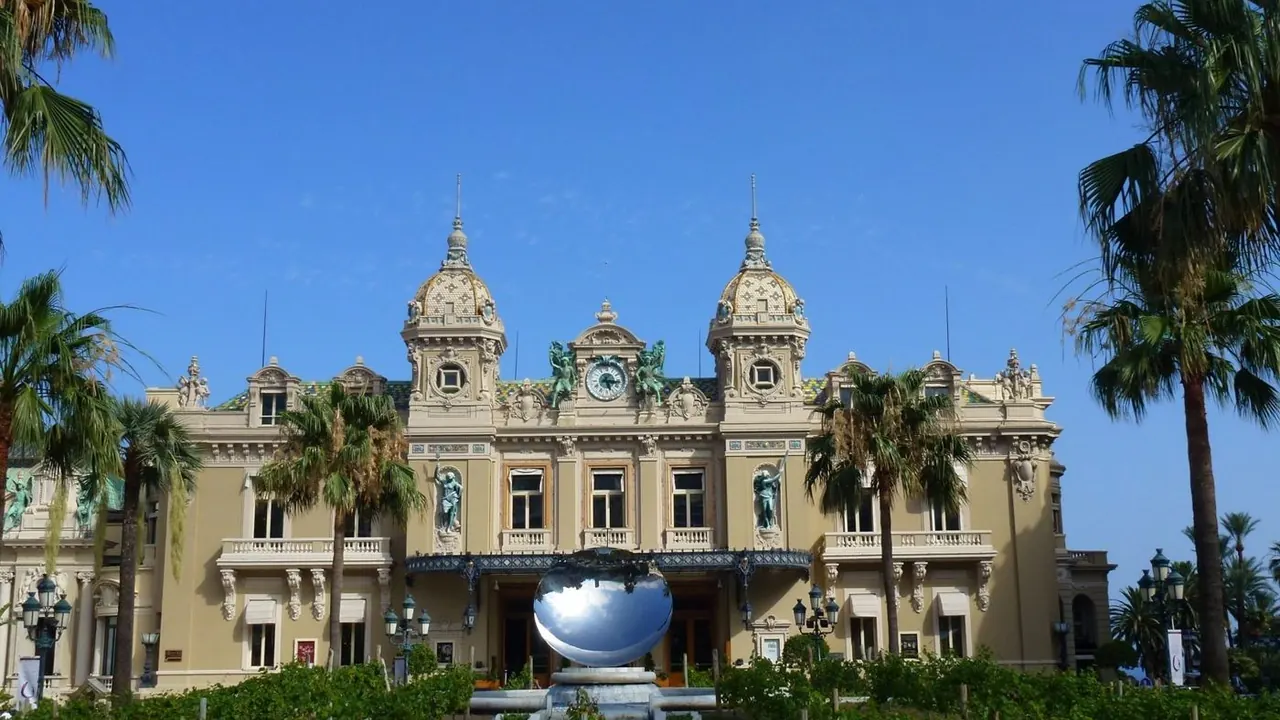
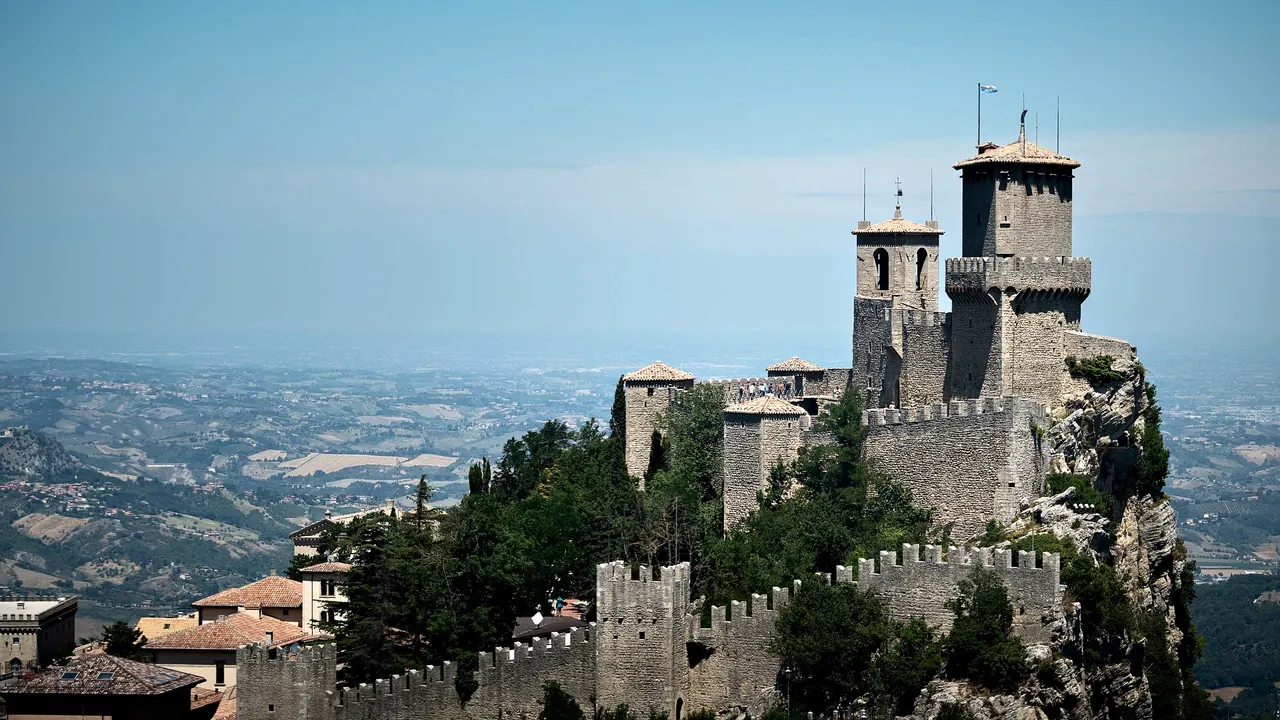
Photos: Monaco by otterboris, CC BY 3.0, cropped; San Marino by Tibor Szabo, Pexels License.
Monaco or San Marino?
Our verdict in twelve categories, each scored against the same fixed benchmark cities, and the climate month by month, so you can choose for your trip.
Choose Monaco for
- live music and the arts
- nightlife
- getting around
Monaco suits travellers who want the Riviera with everything close at hand. Its opera house, harbourside dining and dressed-up evenings sit in a principality you can cross on foot. The coastal railway then puts Nice, Menton, Èze and the Italian border within easy reach without a car. It is the better choice for almost every kind of trip, as long as the budget can take some of the steepest prices in Europe.
Choose San Marino for
- prices
San Marino is for the traveller who wants a walled medieval summit and the story of an ancient republic, at ordinary central Italian prices. It is quieter and plainer than Monaco, with little to do after dark and only modest food. With a car it makes a calm, reasonably priced base for San Leo, Urbino, Ravenna and the Romagna beaches.
Scoreboard
Twelve categories on one fixed scale from 0 to 100. The shaded stretch is the gap between the two.
Your match
Pick a travel style or drag the sliders, and both match scores follow your weighting.
Wins on live music and the arts and nightlife with your weighting.
Wins on prices with your weighting.
What matters to you?
Category by category
What the scores mean for a trip.
Beaches & swimming
Neither is a beach resort, but Monaco is at least on the water. Larvotto gives you a short, sheltered city beach with clear, calm sea. Private beach clubs, hotel pools and rocky platforms fill the gaps, and the coves of Cap d'Ail are a short walk over the border.
San Marino has no shore of its own. A beach day means going about half an hour down to Rimini or Riccione, with their long sand, rows of numbered umbrellas and shallow water. That suits children, but it is an outing, not a swim before breakfast.
Food & drink
Monaco eats better, though mostly at the top end. Its grand hotel dining rooms and polished Italian places cook Riviera and Ligurian food, and the Condamine market sells barbagiuan and socca for a cheaper bite.
San Marino offers honest Romagna cooking: tagliatelle, passatelli in broth, piadina and the Tre Monti wafer cake, with wine from its own small vineyards. The summit terraces tend to trade on the view, so the better meals are in family trattorias in Borgo Maggiore or over the Italian border.
Culture & sights
Both are compact, and each can be seen in a day or two at most. Monaco offers a little more. On the Rock are the palace guard ceremony, Grace Kelly's cathedral and the Oceanographic Museum, and across the harbour stand the Casino, the Belle Époque hotels and the national museum's villas.
San Marino's appeal is the whole town as a single sight: three towers on the crest of Monte Titano, the Palazzo Pubblico and the history of one of the oldest surviving republics. It is atmospheric, but most visitors finish it in half a day.
Nightlife
Monaco has a real night out, if a formal one. People dress up for the hotel bars around the Casino square and the glossy clubs on the Larvotto seafront and the port, and the scene peaks in summer and on Grand Prix weekend.
San Marino has almost nothing after dark. A few wine bars and terraces stay open for a quiet drink with the coast lights below, and anyone wanting clubs drives down to Rimini.
Nature & outdoors
Monaco's surroundings are far more dramatic. Limestone mountains rise straight from the sea, old mule paths climb to Èze, and coastal paths circle Cap d'Ail and Cap Martin. The clear water is good for snorkelling and diving, and the Mercantour is within driving distance.
San Marino offers a single ridge of about 740m with cliffs, woodland paths between the towers and wide views to the Adriatic. The Montefeltro hills beyond are good for gentle drives and cycling, but there are no long trails or sea to explore.
Day trips
Both make good bases. Monaco is easier because the train does the work: Nice and Villefranche lie to the west, Menton to the east, and Antibes, Cannes, Grasse and Sanremo in Italy are all reachable without a car.
San Marino's list is just as rich in history: the fortress of San Leo, Renaissance Urbino, Ravenna's mosaics and Rimini's Roman bridge. The only regular public link, though, is the bus down to Rimini, so the hill towns really need a hire car.
Good for families
Monaco is easier with children. It is spotless and small, and lifts take the strain off the climbs. The aquarium has sharks and turtles, and Larvotto's sheltered water suits young swimmers, though formal restaurants soon wear thin.
In San Marino, children enjoy the battlements and the cable car, but steps and summer crowds make pushchairs hard work. The real family attractions, Italia in Miniatura, Fiabilandia and the waterparks, are down on the coast and need a car.
Getting around
Free public lifts, escalators and stairways do most of the climbing in Monaco, a town only about 3km long that rises steeply from the sea. Local buses and the little solar ferry across the harbour fill the gaps. The station in the hillside puts the whole Riviera within reach by train, so you never need a car.
San Marino's car-free centre takes under half an hour to walk, but almost every street is a slope or a flight of steps. Only the cable car down to Borgo Maggiore makes the climb easier. Without a car you depend on the bus up from Rimini, and buses between the villages are infrequent.
Shopping & style
The Carré d'Or gives Monaco the better shopping, as long as luxury is what you want. Fashion houses, high jewellers and watchmakers fill a few streets around the Casino gardens, and a covered mall below adds a handful of mainstream labels. For anything more ordinary, people go to Nice.
San Marino's old town mostly sells souvenirs: ceramics, decorative crossbows, and the republic's stamps and coins, which collectors seek out. Lower taxes make perfume, watches, leather goods and spirits cheaper than in Italy, and an outlet centre on the valley floor adds fashion brands. There is little independent design or serious craft.
Affordability
This is the one area where San Marino wins clearly. Hotels are moderate outside August, trattorias in the lower villages are fairly priced, and the sights cost little. Only the summit terraces carry a premium.
Monaco is priced for the very wealthy, from hotel rooms to a café coffee. Its free pleasures are the lifts, the gardens and walking the Rock, and many visitors stay in Nice or Beausoleil and come in for the day.
Live music & performing arts
The gap here is wide. Monaco has its own opera company, orchestra and ballet, and the opera plays in the gilded Salle Garnier inside the Casino, the hall where Massenet and Puccini saw works first performed. That gives this tiny principality a real season from winter to spring, with shows by the sea in summer and jazz in autumn.
San Marino has nothing on that scale. It has a small theatre, the odd concert by local players and music in the squares on summer evenings. Its one big occasion is the Medieval Days festival, which is more street pageant than stage performance, so anyone wanting a night at the opera drives to Pesaro or Bologna.
Wellness & relaxation
Monaco offers more for a pampering stay. Its large seawater thalassotherapy centre beside the Casino and the grand hotel spas make a polished treatment day easy, and the Japanese Garden is calm in the morning.
San Marino has only a few hotel spas. Its restfulness is the quiet summit in the evening, walking the walls once the day visitors have gone. The nearest thermal baths are a separate trip into the Apennine valleys or down to the coast.
When should you go?
Pick your month. The climate figures are measured averages, not a forecast.
Monaco in July
San Marino in July
Daytime high, °C
Rainfall in the month, mm
Where the figures come from
San Marino's temperatures are measured 52 km from the centre, at Frontone.
San Marino has no rain gauge within 25 km of the centre, so its rainfall comes from a gridded climate dataset read at the city rather than from a gauge further away.
Temperature and rainfall are climate normals, averaged over the years shown. Monaco: 1991-2020 normals, Nice (19.9 km from centre). San Marino: 1991-2020 normals, Frontone (51.5 km from centre).
Monaco has the milder year. Winter days stay around 13°C, gentle enough for walking the Rock and the gardens, and the sea is warm enough for swimming from June to early October. July is the sunniest and driest month, with barely any rain. The wet season begins in September and peaks in October and November, when downpours can reach 138mm in a month. Spring and late autumn are the best times for the coastal and mountain paths.
San Marino, high on its mountain, has colder winters, with January days near 7°C and a raw wind on the ridge. Its summers are hotter, with July around 30°C, which makes the steep streets hard work in the afternoon. Rain is spread more evenly through the year than in Monaco, with the wettest spell again in autumn. The Adriatic below is pleasant for swimming from late June to early September. May, June and September are the most comfortable months on the summit.
Which traveller are you?
On a culture and arts trip, Monaco is the better pick. The Monte-Carlo Opera, the Philharmonic and Les Ballets de Monte-Carlo give it a real season, and the Oceanographic Museum and the Rock add sights. San Marino's small theatre and summer street music are no match.
For a food and nightlife trip, Monaco wins clearly. Its starred dining rooms, harbour terraces, Casino bars and seafront clubs make for long evenings. San Marino's summit goes quiet once the coaches leave, and the good trattorias are down in the lower villages.
On a tight budget, choose San Marino. Its hotels and trattorias are priced like provincial central Italy and its sights cost little. Monaco is among the most expensive places in the world, and budget visitors usually sleep across the French border.
Before you go
| Measure | Monaco | San Marino |
|---|---|---|
| Official language | French | Italian |
| Currency | Euro (EUR) | Euro (EUR) |
| Sockets | CEF230 V, 50 Hz | CFL230 V, 50 Hz |
| Driving side | Right | Right |
| Time zone | UTC+1, UTC+2 in summer | UTC+1, UTC+2 in summer |
| Emergency number | 112 | 112 |
| Elevation | 68 m | 675 m |
| Main airport | Nice-Côte d'Azur Airport (NCE)18 km from centre130 non-stop destinations | Bologna Guglielmo Marconi Airport (BLQ)114 km from centre98 non-stop destinations |
| Public holidays this year | 12 days | 18 days |
By the numbers
| Measure | Monaco | San Marino |
|---|---|---|
| City population | 38,857 | 4,040 |
| People per km² | 18,503 | 569 |
| Museums within 10 km | 14 | 19 |
| UNESCO World Heritage sites within 50 km | 2 | 2 |
| Swim season, months above 21 °C | 4 months | 4 months |
Where else could you go?
Every comparison below shares a destination with this one, so you can follow Monaco or San Marino somewhere new.
- Nicevs Monaco
- Antibesvs Monaco
- Cannesvs Monaco
- Saint-Tropezvs Monaco
- Assisivs San Marino
- Florencevs San Marino