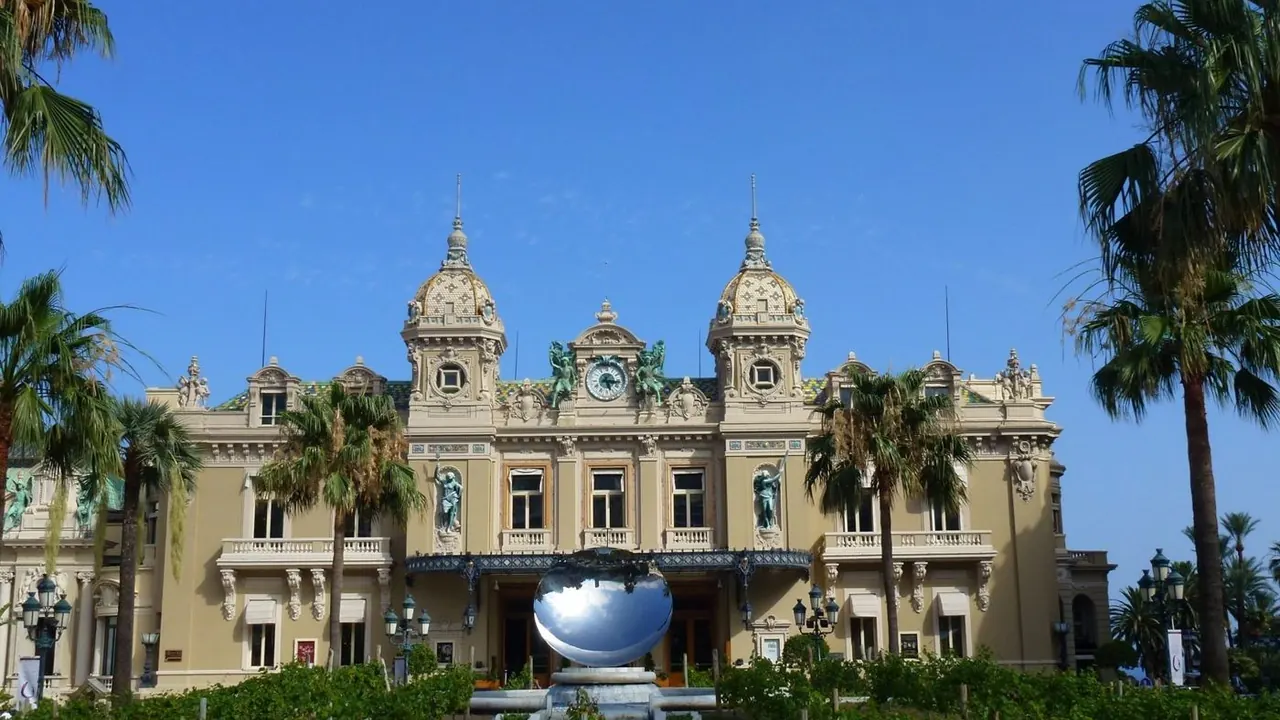
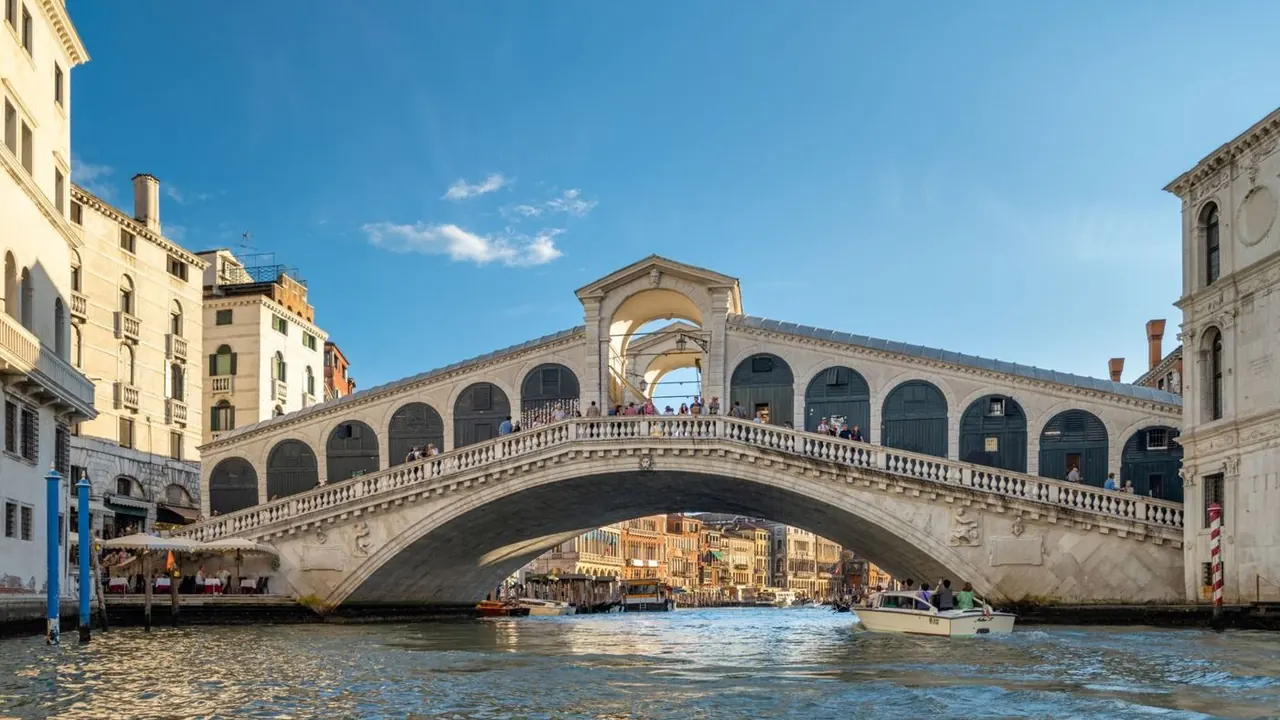
Photos: Monaco by otterboris, CC BY 3.0, cropped; Venice by David Vives, Pexels License.
Monaco or Venice?
Our verdict in twelve categories, each scored against the same fixed benchmark cities, and the climate month by month, so you can choose for your trip.
Choose Monaco for
- nature and the outdoors
- nightlife
- families
Monaco suits a short, polished stay on the Riviera. It works for a traveller who wants clear water for swimming, cliff paths and mountain views, a dressed-up evening around the Casino, and a train that puts Nice, Menton and Èze within easy reach. The free lifts make it easier with children and kinder on the legs than its slopes suggest, but you need a very deep wallet.
Choose Venice for
- culture and sights
- prices
- shopping
Venice is the place for anyone who travels for art and architecture. Its palaces, churches and galleries go far deeper than Monaco's compact set of sights, and its silence after dark rewards slow walkers rather than night owls. It is expensive too, though less punishing than Monaco, and the beach is a side trip rather than the reason to go.
Scoreboard
Twelve categories on one fixed scale from 0 to 100. The shaded stretch is the gap between the two.
Your match
Pick a travel style or drag the sliders, and both match scores follow your weighting.
Wins on nature and the outdoors and nightlife with your weighting.
Wins on culture and sights and prices with your weighting.
What matters to you?
Category by category
What the scores mean for a trip.
Beaches & swimming
Neither city is a beach resort, but Monaco is the easier place for a swim. Larvotto is short and groomed, with clear, calm water behind its breakwaters. The rocky platforms, the coves at Cap d'Ail and the train to the beaches of Menton and Nice add more choice.
Venice actually has more sand: the Lido runs for kilometres along the Adriatic. But it is a boat ride from the centre, much of it is lined with private cabanas, and the shallow water is greenish rather than clear. Children wading there will be happy, but most visitors give it a single hot afternoon.
Food & drink
The two are broadly level, but they feed you in opposite ways. Monaco's strength is the formal dining room: starred hotel restaurants and harbour terraces cooking Riviera and Ligurian food. Cheap, casual eating hardly exists apart from barbagiuan and socca at the Condamine market.
Venice is best eaten standing up, with cicchetti and a spritz at the bacari around the Rialto and in Cannaregio, then lagoon dishes such as cuttlefish risotto in its ink. Its trap is the menu-board restaurants around San Marco, so the good meals take some seeking out in the quieter sestieri.
Culture & sights
This is where the two differ most. Monaco has a neat, compact set of sights: the Prince's Palace and its guard ceremony, Grace Kelly's grave in the cathedral, the Belle Époque Oceanographic Museum and the Casino. The setting impresses more than the depth.
In Venice the whole city is the monument, with six centuries of palaces and churches standing on water. Inside them are the Basilica's gold mosaics, the Doge's Palace, the great Venetian painters at the Accademia and modern art at the Guggenheim. Monaco takes a day or two, while Venice can fill a week without repeating itself.
Nightlife
Monaco offers the bigger night, if a narrow one. The hotel bars around the Casino square and the glossy clubs along Larvotto and the port stay busy late in summer, and on Grand Prix weekend the harbour becomes one long party. Expect a dress code and a bill to match.
Venice's best hour is the early evening aperitivo along the Fondamenta della Misericordia. After that, students keep a few bars in Campo Santa Margherita going, and by midnight the canals are silent. Neither city has an underground scene. Monaco's overflow goes to Nice, Venice's to Jesolo or the mainland.
Nature & outdoors
Monaco is far better for the outdoors, even though the principality itself is built over from end to end. Limestone mountains rise straight behind it. You can climb to the Tête de Chien viewpoint or take the old mule path from Èze-sur-Mer up to Èze, follow the pine-shaded paths round Cap d'Ail and Cap Martin, or snorkel and paddleboard in clear water.
Venice's nature is flat and quiet. You can kayak or row among the salt marshes around Torcello and watch herons and flamingos, or cycle the sea walls of Pellestrina. Real mountains, the Dolomites, are more than two hours away.
Day trips
Both cities make excellent bases, but the trips are of different kinds. From Monaco you work along a coastline that crosses a border. Villefranche, Nice and Menton are a short train ride away, Èze and La Turbie a bus ride up the hill, and the Italian towns of Ventimiglia, Sanremo and Dolceacqua are close by.
From Venice the trips are to great art cities. Fast trains reach Giotto's chapel in Padua, Palladio's Vicenza and Verona's Roman arena, and Bologna is about two hours away. Venice also has the lagoon, so Murano's glass furnaces, Burano's painted houses and Torcello's cathedral make a day out by boat alone.
Good for families
Monaco is the more practical choice with children. It is safe, clean and small, the public lifts and escalators handle the climbing, and the aquarium's sharks and turtles hold attention. Larvotto's sheltered water suits small swimmers. Beyond that there is little for children, and the restaurants are formal.
Venice fires children's imaginations with water buses, no cars and alleys to get lost in, and Murano's glass-blowing goes down well. The daily practicalities are harder: stepped bridges at every turn, packed routes and humid summer heat. Few parks or playgrounds offer a break, so it suits short stays with older children.
Getting around
You walk in both places, but Monaco is less tiring. It is only about 3km end to end, and the steep climbs from the sea are eased by free public lifts, escalators and stairways. Buses and a little solar ferry across the harbour fill the gaps. The station connects the whole Riviera.
Venice is flat but slow going. Its lanes twist, dead-end at canals and get people lost, and hundreds of stepped bridges make luggage and pushchairs a trial. The vaporetti are scenic but slow and crowded. Water taxis are quicker, at a price.
Shopping & style
Monaco sells luxury and Venice sells craft. In Monte-Carlo the fashion houses, high jewellers and watchmakers stand together in the Carré d'Or around the Casino gardens, a quarter-hour's stroll from end to end. Up on the Rock there is little more than olive oil, sweets and souvenirs.
Venice has the wider range, with goods still made in the city: Murano glass, Burano lace, papier-mâché masks, marbled paper and velvet furlane slippers. Buy them from the workshops in Dorsoduro, Castello or on Murano, because the main routes are full of imported imitations. Big fashion names line Calle Larga XXII Marzo, but neither city does ordinary high-street shopping. For that, Monaco sends you to Nice and Venice to Mestre.
Affordability
Both are expensive, but Monaco is in a class of its own. Hotels are priced for the very rich and rise further on event weekends, and even a café coffee is steep. Budget visitors usually sleep in Nice, Menton or Beausoleil and come in for the day, using the free lifts and the cheap buses.
Venice is costly by Italian standards, especially around San Marco and at carnival, and water transport and church entry add up. Still, you can bring the costs down: eat cicchetti at the counter, stay in a quieter sestiere or in Mestre, and come in late autumn or winter.
Live music & performing arts
Both have a historic opera house, and on stage they are well matched. Monaco's Salle Garnier, built into the Casino, saw premières of Massenet and Puccini. Les Ballets de Monte-Carlo and the Philharmonic carry real weight, but the season is concentrated from winter to spring, with outdoor shows by the sea in summer.
Venice's La Fenice premiered works by Verdi and Rossini and runs a full year of opera, ballet and concerts. Spoken drama is on at the Teatro Goldoni, and Vivaldi concerts play in churches most evenings, some excellent and many routine. Neither city has much small-venue live music.
Wellness & relaxation
Monaco has more to offer for a treatment day. The thalassotherapy centre beside the Casino has heated seawater pools, carrying on an old tradition of sea-bathing cures, and several grand hotels have large spas. For an unhurried morning there are the Japanese Garden and the ramparts of the Rock.
Venice has hotel spas, in palazzi and on the Lido and Giudecca, but real thermal bathing means an hour's trip to Abano Terme. Its rest lies in the quiet. Early mornings in Castello, Cannaregio or on Giudecca are hushed, as long as you keep away from San Marco by day.
When should you go?
Pick your month. The climate figures are measured averages, not a forecast.
Monaco in July
Venice in July
Daytime high, °C
Rainfall in the month, mm
Where the figures come from
Venice has no rain gauge within 25 km of the centre, so its rainfall comes from a gridded climate dataset read at the city rather than from a gauge further away.
Venice's sunshine is measured 26 km from the centre, at Treviso / S. Angelo.
Temperature and rainfall are climate normals, averaged over the years shown. Monaco: 1991-2020 normals, Nice (19.9 km from centre). Venice: 1991-2020 normals, Venezia / Tessera (6.7 km from centre).
Monaco has the gentler year. Even in midwinter the days reach about 13°C, against 8°C in Venice, so a winter walk round the Rock is pleasant when Venice is cold and grey. Summer is Monaco's high point: July and August are almost dry and very sunny, and from June to September both seas are warm enough for swimming. Venice peaks at around 29°C in July and August, and the humid heat makes long days in its lanes hard work.
The rain falls in different patterns. Monaco's is heaviest from September to December and peaks at about 138mm in November, so its best walking months are spring and early summer, especially May and June, when the days are warm and the paths are dry. Venice has no dry season in the warm half of the year. Its rain is spread from April to November, with October the wettest at 87mm, and the least rain falls in January and March. Choose Venice by temperature instead: April and October are mild enough for a full day on foot, as long as you carry an umbrella. Monaco is also the sunnier of the two in every month.
Which traveller are you?
On a culture and arts trip, Venice wins easily. The Accademia, Titian in the Frari, Tintoretto at San Rocco and the Biennale add up to a week's looking or more. Monaco's palace, cathedral and Oceanographic Museum fill a day or two.
For an outdoors trip, choose Monaco. Limestone cliffs rise straight behind the town, old mule paths climb to Èze, coastal footpaths circle Cap Martin, and the clear sea suits snorkelling. Venice's outdoors is the flat lagoon, which you see best by kayak or rowing boat.
On a family trip with young children, Monaco is easier. It is small and safe, the free lifts handle the climbs, the aquarium is excellent and Larvotto's water is sheltered. In Venice, stepped bridges defeat pushchairs and there are few playgrounds.
Before you go
| Measure | Monaco | Venice |
|---|---|---|
| Official language | French | Italian |
| Currency | Euro (EUR) | Euro (EUR) |
| Sockets | CEF230 V, 50 Hz | CFL230 V, 50 Hz |
| Driving side | Right | Right |
| Time zone | UTC+1, UTC+2 in summer | UTC+1, UTC+2 in summer |
| Emergency number | 112 | 112 |
| Elevation | 68 m | 2 m |
| Main airport | Nice-Côte d'Azur Airport (NCE)18 km from centre130 non-stop destinations | Venice Marco Polo Airport (VCE)7 km from centre103 non-stop destinations |
| Public holidays this year | 12 days | 13 days |
By the numbers
| Measure | Monaco | Venice |
|---|---|---|
| City population | 38,857 | 250,369 |
| People per km² | 18,503 | 602 |
| Museums within 10 km | 14 | 52 |
| UNESCO World Heritage sites within 50 km | 2 | 5 |
| Swim season, months above 21 °C | 4 months | 4 months |
Where else could you go?
Every comparison below shares a destination with this one, so you can follow Monaco or Venice somewhere new.