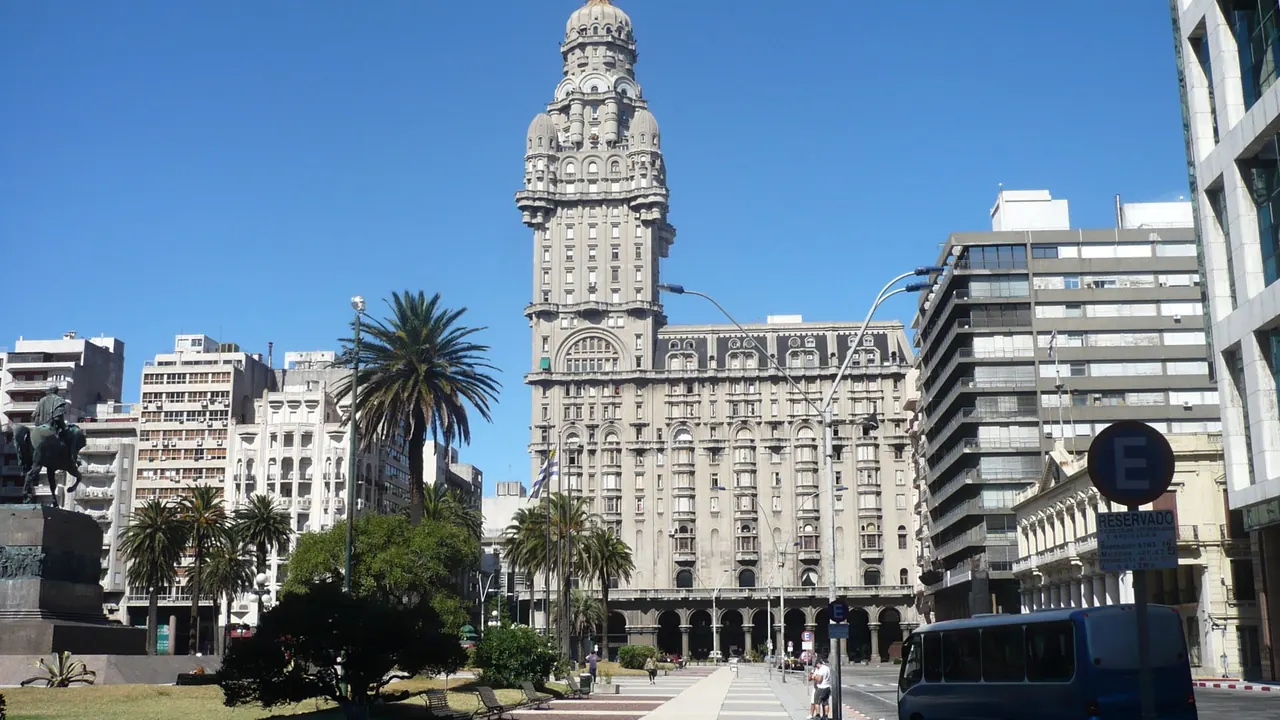
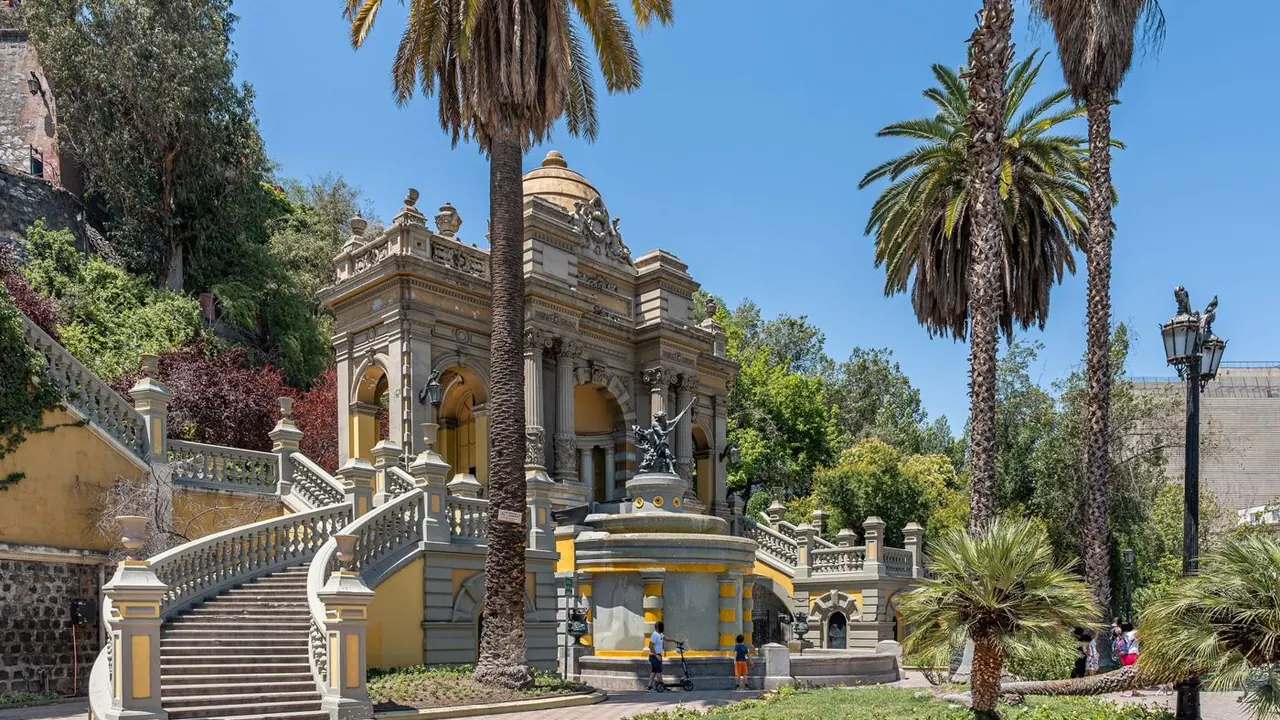
Photos: Montevideo by Andrés Franchi Ugart…, CC BY-SA 3.0, cropped; Santiago by Rjcastillo, CC BY-SA 4.0, cropped.
Montevideo or Santiago?
Our verdict in twelve categories, each scored against the same fixed benchmark cities, and the climate month by month, so you can choose for your trip.
Choose Montevideo for
- beaches
- culture and sights
- live music and the arts
Montevideo suits a slower trip by the water. You get summer afternoons on the city beaches along the Rambla, long evenings over beef grilled on embers and, in the southern summer, the murga and candombe of Carnaval. It asks little of a visitor and rewards those who want an easy, low-key city rather than a packed itinerary.
Choose Santiago for
- nature and the outdoors
- shopping
- prices
Pick Santiago if the mountains are the point. The Andes are close enough for hiking in the Cajón del Maipo or a winter ski day, Valparaíso and the wine valleys make strong outings, and the metro makes the city simpler to cover. It is also the livelier choice after dark and the gentler one on the wallet, though it has no beach of its own.
Scoreboard
Twelve categories on one fixed scale from 0 to 100. The shaded stretch is the gap between the two.
Your match
Pick a travel style or drag the sliders, and both match scores follow your weighting.
Wins on beaches and culture and sights with your weighting.
Wins on nature and the outdoors and shopping with your weighting.
What matters to you?
Category by category
What the scores mean for a trip.
Beaches & swimming
Montevideo has city beaches you can walk to, and Santiago has none. Along Montevideo's Rambla the sand runs from Ramírez and Pocitos out to Carrasco. In midsummer the shallow estuary is warm enough for a long swim, even if the water is brownish and swimming is sometimes advised against after heavy rain.
Santiago lies inland, about 120km from the coast. A swim there means a hotel pool, the public pools in the Parque Metropolitano or a day out to Viña del Mar, where the Humboldt Current keeps the Pacific cold.
Food & drink
Both are good places to eat, though neither offers a wide range, and both are short on international kitchens. The difference is what is on the plate. Montevideo is about beef cooked over wood embers, with the smoking grills of the Mercado del Puerto, the chivito and Tannat from the surrounding countryside.
Santiago looks to the Pacific, with conger eel soup, sea urchins and clams at the Mercado Central and around La Vega, and its wine lists of Carmenère, Cabernet and coastal whites go deeper. Lastarria and Barrio Italia add modern restaurants and a small fine-dining tier that cooks with Andean and Patagonian ingredients.
Culture & sights
Neither city has landmarks of world rank, and each takes two or three days to see properly. Montevideo's pleasure is its buildings: the Palacio Salvo on Plaza Independencia, the faded Art Deco façades of the Ciudad Vieja and the marble Palacio Legislativo. Smaller museums cover Torres García and the 1972 Andes air crash.
Earthquakes have destroyed much of colonial Santiago, so its strength lies in its museums and its recent history. The neoclassical La Moneda palace is where the 1973 coup is remembered. The Museo Chileno de Arte Precolombino is the standout collection, and the Museum of Memory and Human Rights takes a serious look at the dictatorship years.
Nightlife
Both cities eat late and go out later, but Santiago has more going on. Bellavista packs student bars, terraces and the main LGBTQ+ clubs in at the foot of Cerro San Cristóbal. Lastarria and Barrio Italia offer wine and cocktail bars, and there are bigger after-work bars around Avenida Suecia.
Montevideo's nights are friendly and smaller: pubs in Pocitos and Punta Carretas, a student crowd in Cordón and a cluster of late venues in the Ciudad Vieja. Weeknights are quiet, and in summer much of the party crowd leaves for the coast.
Nature & outdoors
This is where the two cities differ most. Santiago sits under the Andes, with real hikes on Cerro San Cristóbal and Cerro Manquehue inside the city, and rafting and trails to the El Morado glacier in the Cajón del Maipo. In winter the ski slopes of Valle Nevado and La Parva are within a day's reach. The drawbacks are winter smog and poor public transport to the trailheads.
Montevideo's outdoor life centres on the Rambla, a long waterfront promenade for evening walks, runs and bike rides, along with old parks such as Parque Rodó and the Prado. Beyond the city the land is flat and farmed, and the nearest hills offer only gentle walks.
Day trips
Santiago has the stronger choice of outings within easy reach. Valparaíso, with its funiculars and painted hillsides, is about an hour and a half away and combines well with Viña del Mar. The Maipo wine estates are on the city's edge, and the Casablanca Valley lies on the way to the coast.
Montevideo's best outings, Colonia del Sacramento and Punta del Este, are each two hours or more away, which makes for long days. The Canelones wineries and the seaside town of Atlántida are the closer, easier options.
Good for families
In both countries children are welcome at late dinners, so the difference lies in what there is to do. Santiago has the bigger attractions: the Museo Interactivo Mirador, the zoo and cable car on Cerro San Cristóbal and large pools in summer. Its hot afternoons and winter smog can be hard on small children, though.
Montevideo has nothing on that scale but is the easier place to spend time with children. There are calm, shallow beaches, scooter rides along the Rambla and pedal boats in Parque Rodó, all at a gentler pace.
Getting around
Santiago's metro is the deciding factor. Line 1 runs straight from the Centro through Providencia to Las Condes, and the easy walking districts are linked by leafy avenues. Trains are packed at rush hour, but the system is easy to understand.
Montevideo relies on buses whose routes confuse newcomers. Because the city stretches along the shore, getting from the Ciudad Vieja to Pocitos or Carrasco usually means a bus or a taxi. The flat old town and the Rambla are pleasant on foot or by bike, though.
Shopping & style
Santiago gives shoppers more to work with. There are big malls in the eastern districts, luxury labels in Vitacura and independent design and vintage shops in Barrio Italia. Pueblito Los Dominicos sells copper, lapis lazuli and Mapuche silver.
Montevideo is mostly about crafts such as leather, hand-knitted woollens and mate gourds. The Sunday market on Tristán Narvaja is the one shopping outing worth planning around. Imported fashion is expensive, and there is no luxury street.
Affordability
Neither is a budget destination, but Santiago is easier on the wallet. Market food, set lunches, local wine and the metro are cheap. Hotels in Providencia and Las Condes and day tours to the mountains are what push the bill up.
Montevideo surprises many visitors, with restaurants and hotels near Southern European levels and summer rooms in Pocitos priced like those in a European capital. Cheap buses, free museums and good-value steak with Tannat help balance it.
Live music & performing arts
Each city has a grand 19th-century theatre for opera, ballet and orchestral music, the Teatro Solís in Montevideo and the Teatro Municipal in Santiago, so the difference lies in the popular traditions. Montevideo's is Carnaval, more than a month of murga on neighbourhood stages and candombe drumming from Barrio Sur and Palermo. Tango milongas run all year.
Santiago's high point is the Santiago a Mil theatre festival in January. For the rest of the year it relies on live music, from nueva canción to rock in Bellavista, and cueca dancing comes out in September.
Wellness & relaxation
Neither city is a spa destination, and in both, treatments mostly mean a hotel spa. Montevideo's restfulness comes from its pace: mate on the Rambla walls at sunset and unhurried cafés. Uruguay's thermal springs are too far north for a day out.
Santiago is the more stressful city to be in, yet it has hot springs within reach. Termas de Colina is on its northern edge, and there are simple open-air pools up the Cajón del Maipo.
When should you go?
Pick your month. The climate figures are measured averages, not a forecast.
Montevideo in July
Santiago in July
Daytime high, °C
Rainfall in the month, mm
Temperature and rainfall are climate normals, averaged over the years shown. Montevideo: 1991-2020 normals, Carrasco (19.2 km from centre). Santiago: 1991-2020 normals, Santiago Q. Normal (3.1 km from centre).
The two cities have almost the same temperatures. Both reach about 28°C in January and fall to cool highs in the mid-teens in July, so both are comfortable for walking for most of the year and neither gets really cold. The difference is the rain. Montevideo has no dry season, and every month brings rain, often close to 100mm. Its beach season is January and February, when the estuary warms to about 24°C, and January is also its sunniest month. By April the water is cooling and the beaches are for walking.
Santiago is almost rainless from November to March, with long sunny days, though midsummer afternoons in the city get hot. Most of its rain falls between May and August, peaking at around 87mm in June, which is also the start of the ski season. Spring and autumn, roughly October to November and March to April, are the most pleasant months for both sightseeing and hiking.
Which traveller are you?
On a beach and sun trip, Montevideo is the clear pick. Sandy city beaches run along the Rambla from Pocitos to Carrasco and are good for swimming in January and February. From Santiago the coast is a two-hour trip, and the Pacific there is cold.
For an outdoors trip, Santiago wins easily. Real hikes start on Cerro San Cristóbal, the Cajón del Maipo offers rafting and trails to a glacier, and winter brings ski days. Montevideo has its waterfront promenade, but the land around it is flat and farmed.
On a tight budget, Santiago makes the money go further. Market lunches, empanadas, local wine and a cheap metro keep daily costs down. Montevideo's restaurants and hotels cost about what they would in Southern Europe, and summer rooms are dear.
Before you go
| Measure | Montevideo | Santiago |
|---|---|---|
| Official language | - | Spanish |
| Currency | Peso Uruguayo (UYU) | Chilean Peso (CLP) |
| Sockets | CFIL230 V, 50 Hz | CL220 V, 50 Hz |
| Driving side | Right | Right |
| Time zone | UTC-3 | UTC-4, UTC-3 in summer |
| Emergency number | 911 | Police 133/134, ambulance 131, fire 132 |
| Elevation | 41 m | 575 m |
| Main airport | Carrasco General Cesáreo L. Berisso International Airport (MVD)17 km from centre15 non-stop destinations | Comodoro Arturo Merino Benítez International Airport (SCL)14 km from centre67 non-stop destinations |
| Public holidays this year | 15 days | 16 days |
By the numbers
| Measure | Montevideo | Santiago |
|---|---|---|
| City population | 1,302,954 | 6,257,516 |
| People per km² | 1,785 | 7,468 |
| Museums within 10 km | 36 | 54 |
| UNESCO World Heritage sites within 50 km | 1 | 0 |
| Swim season, months above 21 °C | 4 months | - |
Where else could you go?
Every comparison below shares a destination with this one, so you can follow Montevideo or Santiago somewhere new.