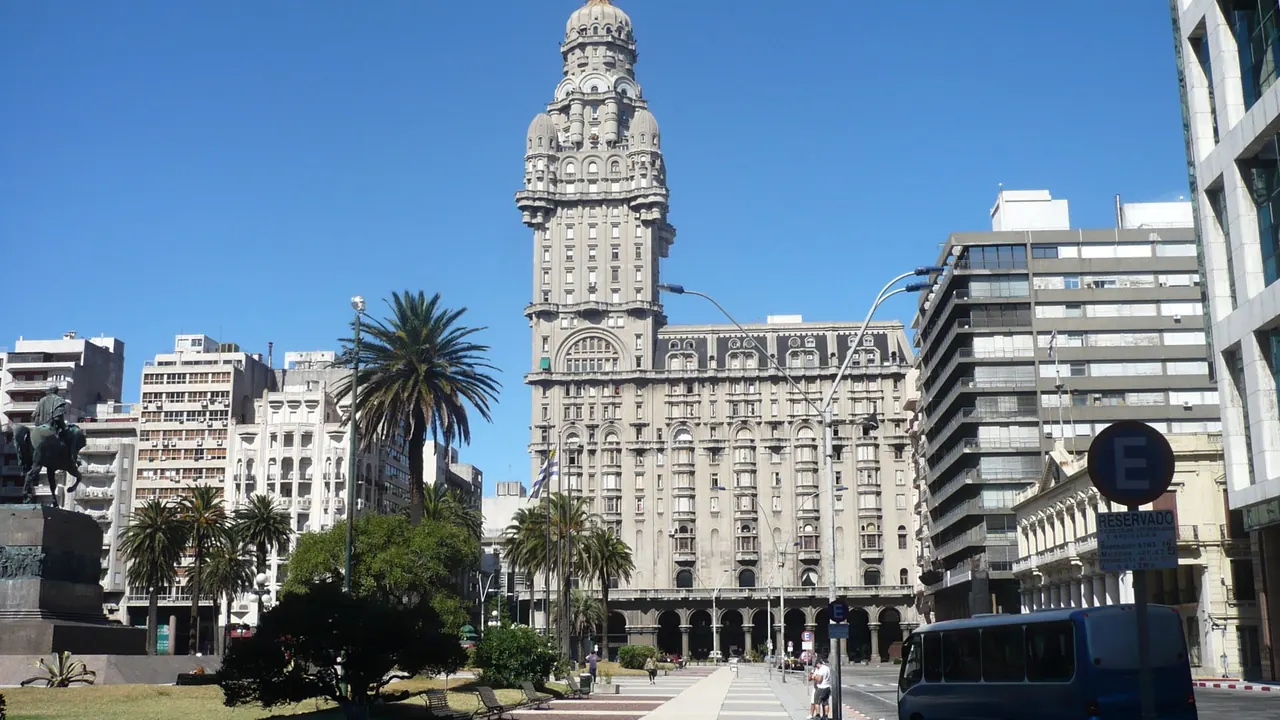
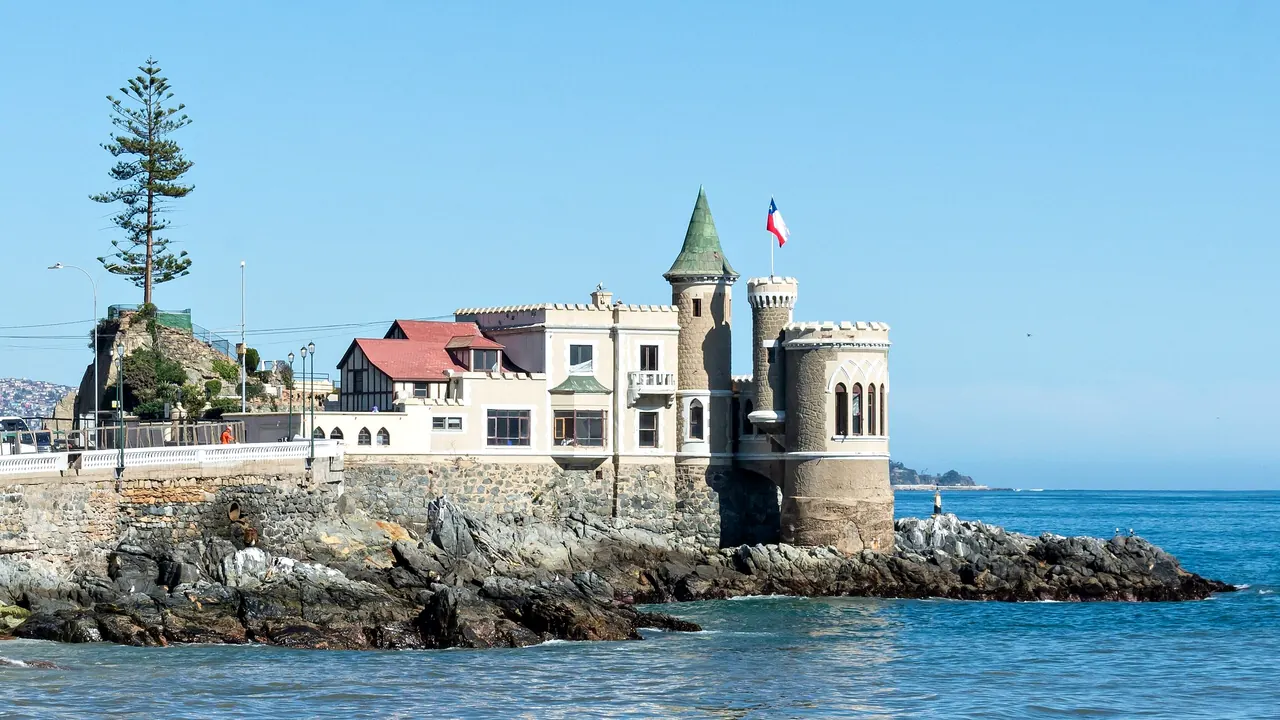
Photos: Montevideo by Andrés Franchi Ugart…, CC BY-SA 3.0, cropped; Vina del Mar by Carlos yo, CC BY-SA 4.0, cropped.
Montevideo or Vina del Mar?
Our verdict in twelve categories, each scored against the same fixed benchmark cities, and the climate month by month, so you can choose for your trip.
Choose Montevideo for
- culture and sights
- live music and the arts
- beaches
Montevideo is the better pick if you want a city first and a beach second. The old town, Teatro Solís, a month of Carnaval with murga and candombe, and long grill-house meals give it more depth for a stay of several days. In summer the warmer estuary water also makes a swim easier than anywhere on Chile's cold coast.
Choose Vina del Mar for
- nature and the outdoors
- day trips
- prices
Viña del Mar suits travellers who want the outdoors and plenty of easy outings. Dunes, sea lions, surf and the palm forest of La Campana sit close by, and Valparaíso is a short metro ride away. Its own sights are thin, so think of it as a base on the coast, and outside the peak summer weeks it costs less than Montevideo.
Scoreboard
Twelve categories on one fixed scale from 0 to 100. The shaded stretch is the gap between the two.
Your match
Pick a travel style or drag the sliders, and both match scores follow your weighting.
Too close to call, 2 points apart
Wins on culture and sights and live music and the arts with your weighting.
Wins on nature and the outdoors and day trips with your weighting.
What matters to you?
Category by category
What the scores mean for a trip.
Beaches & swimming
Both cities have a run of city beaches, but swimming is better in Montevideo. From Pocitos out to Carrasco the estuary warms enough in summer for a proper swim, even though the water is silty and brownish and sometimes closed after heavy rain.
Viña's sand is the more striking, with Reñaca the place to be seen and Las Salinas sheltered enough for children. The Humboldt Current keeps the Pacific cold, though, and the surf is strong, so most people sunbathe and take only short dips.
Food & drink
Montevideo has the stronger food culture, built on beef. Wood-fired parrillas in the iron hall of the Mercado del Puerto, the chivito and Tannat from the nearby wineries make a meal there something to plan a day around.
Viña cooks from the Pacific instead, with congrio, machas and shellfish empanadas along the Concón road and crisp whites from Casablanca. Away from that coast road its restaurants are ordinary, and the more interesting kitchens are in Valparaíso.
Culture & sights
Montevideo gives you two or three days of real sightseeing. Plaza Independencia, the Palacio Salvo, the cathedral and the old-town museums, the moving Andes crash museum among them, plus the marble parliament further out, give the city a character Viña does not try to match.
Viña's sights are the villas of a garden city: Palacio Vergara, Wulff Castle, the flower clock and the Fonck Museum with its Easter Island moai. They fill an afternoon, and anyone after history goes on to Valparaíso.
Nightlife
The two are evenly matched and keep the same late Southern Cone hours. Montevideo spreads its going out across neighbourhood bars in Pocitos, the student streets of Cordón and the old-town cluster, and it carries on through the year at a relaxed pace.
Viña is a seasonal party town. In January and February the Reñaca clubs run until dawn and the Art Deco casino adds some old resort glamour, but the rest of the year is quiet unless you head to Valparaíso.
Nature & outdoors
Viña has far more to offer outdoors. Within a short trip there are the high Concón dunes, pelicans and sea lions on the rocks, a surfable cold swell and, an hour inland, La Campana's native palm forest with views of the Andes.
Montevideo's main outdoor asset is the Rambla, a long, lovely promenade for evening runs and sunsets, along with some old parks. Beyond them the land is flat and farmed, and the gentle sierras near Minas are a long way to go for a short walk.
Day trips
Viña is better placed for day trips, mainly because Valparaíso, with its funiculars, painted hills and Neruda's La Sebastiana, is about fifteen minutes away by metro. The Casablanca wineries, Isla Negra and Santiago are all easy outings too.
Montevideo's best excursions take longer. Colonia del Sacramento and Punta del Este are both a couple of hours or more away, although the Canelones wineries and Atlántida are close at hand.
Good for families
Montevideo is a little easier with children. Its shallow, warm estuary beaches suit paddling, the long Rambla is good for scooters, and Parque Rodó has pedal boats and an old-fashioned fairground.
Viña welcomes families just as warmly and has calm Las Salinas, carriage rides and the moai that children love. With cold water and rough surf, though, a beach day there is mostly sand and paddling. Neither city has a big aquarium or theme park.
Getting around
The two are about equal, and neither has a full metro system. Montevideo has flat, walkable areas in its old town and centre, but the city stretches a long way along the shore, so getting out to Pocitos or Carrasco means a confusing bus or a cab.
Viña's compact grid is easy on foot, and the Merval line makes Valparaíso effortless. Reñaca and Concón, however, depend on one coast road that clogs in summer.
Shopping & style
Neither is a shopping destination, and in both you leave with crafts rather than fashion. Montevideo has more character, thanks to the Sunday sprawl of Tristán Narvaja and its leather, knitwear and silver-trimmed mate cups. Viña offers lapis lazuli and copper at beach stalls, plus malls stocked with international chains.
Affordability
Viña del Mar is the cheaper of the two, especially in autumn, winter and spring, when its sea-view rooms are much easier on a budget than at the height of summer. Empanadas, set lunches and the metro keep everyday costs down.
Montevideo costs about what Southern Europe does all year, and Pocitos hotels charge capital-city prices in summer. Cheap buses, free museums and a good-value steak dinner help.
Live music & performing arts
Montevideo offers far more live performance. Carnaval lasts over a month, with murga satire on the tablados and candombe drums in Barrio Sur. On top of that the Teatro Solís and SODRE host opera, ballet and orchestras, and milongas run all year.
Viña's moment is the February song festival in the Quinta Vergara amphitheatre, famous across the Spanish-speaking world. For the rest of the year the Teatro Municipal carries a modest programme.
Wellness & relaxation
Neither city has spas or baths of its own, so treatments mean a hotel spa in either. Montevideo is slightly more restful, with sunset mate on the Rambla walls and unhurried cafés all year. Viña's calm comes outside summer, when its gardens and Pacific promenades empty out.
When should you go?
Pick your month. The climate figures are measured averages, not a forecast.
Montevideo in July
Vina del Mar in July
Daytime high, °C
Rainfall in the month, mm
Where the figures come from
Vina del Mar has no rain gauge within 25 km of the centre, so its rainfall comes from a gridded climate dataset read at the city rather than from a gauge further away.
Temperature and rainfall are climate normals, averaged over the years shown. Montevideo: 1991-2020 (rainfall 1971-2000) normals, Carrasco (19.2 km from centre). Vina del Mar: 2010-2025 (rainfall 1991-2020) normals, Viña Del Mar / Montemar (10.8 km from centre).
Montevideo has a real summer. December to February are warm to hot, with highs near 28°C in January, long sunny days and the estuary warming to about 24°C, so this is beach season. March and November are pleasant for walking. Winter is cool and grey, and rain falls fairly evenly all year, with October the wettest month.
Viña del Mar never gets hot, with summer highs only around 22°C, but from November to March it is almost completely dry, which makes this its season for the beach and the coast paths. The Pacific stays cold all year and never rises above about 17°C. The rain comes in winter, peaking in June at 114mm, so May to August is the time least suited to a visit. Both cities are mild enough in spring and autumn for walking their streets.
Which traveller are you?
On a culture and arts trip, Montevideo is the clear choice. The Ciudad Vieja, the Torres García museum, opera at Teatro Solís and the long Carnaval season of murga and candombe add up to much more than Viña's short list of palaces and the Fonck Museum.
For an outdoors trip, choose Viña del Mar. The Concón dunes, the coast walk to Roca Oceánica with its sea lions, wetsuit surfing and the trails of La Campana are all close by. Montevideo's flat farmland offers little beyond the Rambla.
On a tight budget, Viña del Mar goes further, provided you avoid January, February and long weekends, when sea-view rooms fill up. Montevideo's hotels charge European prices in summer, and imported goods are dear all year.
Before you go
| Measure | Montevideo | Vina del Mar |
|---|---|---|
| Official language | - | Spanish |
| Currency | Peso Uruguayo (UYU) | Chilean Peso (CLP) |
| Sockets | CFIL230 V, 50 Hz | CL220 V, 50 Hz |
| Driving side | Right | Right |
| Time zone | UTC-3 | UTC-4, UTC-3 in summer |
| Emergency number | 911 | Police 133/134, ambulance 131, fire 132 |
| Elevation | 41 m | 2 m |
| Main airport | Carrasco General Cesáreo L. Berisso International Airport (MVD)17 km from centre15 non-stop destinations | Comodoro Arturo Merino Benítez International Airport (SCL)82 km from centre67 non-stop destinations |
| Public holidays this year | 15 days | 16 days |
By the numbers
| Measure | Montevideo | Vina del Mar |
|---|---|---|
| City population | 1,302,954 | 332,875 |
| People per km² | 1,785 | 2,760 |
| Museums within 10 km | 36 | 17 |
| UNESCO World Heritage sites within 50 km | 1 | 1 |
| Swim season, months above 21 °C | 4 months | None |
Where else could you go?
Every comparison below shares a destination with this one, so you can follow Montevideo or Vina del Mar somewhere new.
- Valparaisovs Vina del Mar
- Santiagovs Vina del Mar
- Punta del Estevs Montevideo
- Colonia del Sacramentovs Montevideo
- Buenos Airesvs Montevideo
- Mendozavs Vina del Mar