Morocco
Atlas Mountains
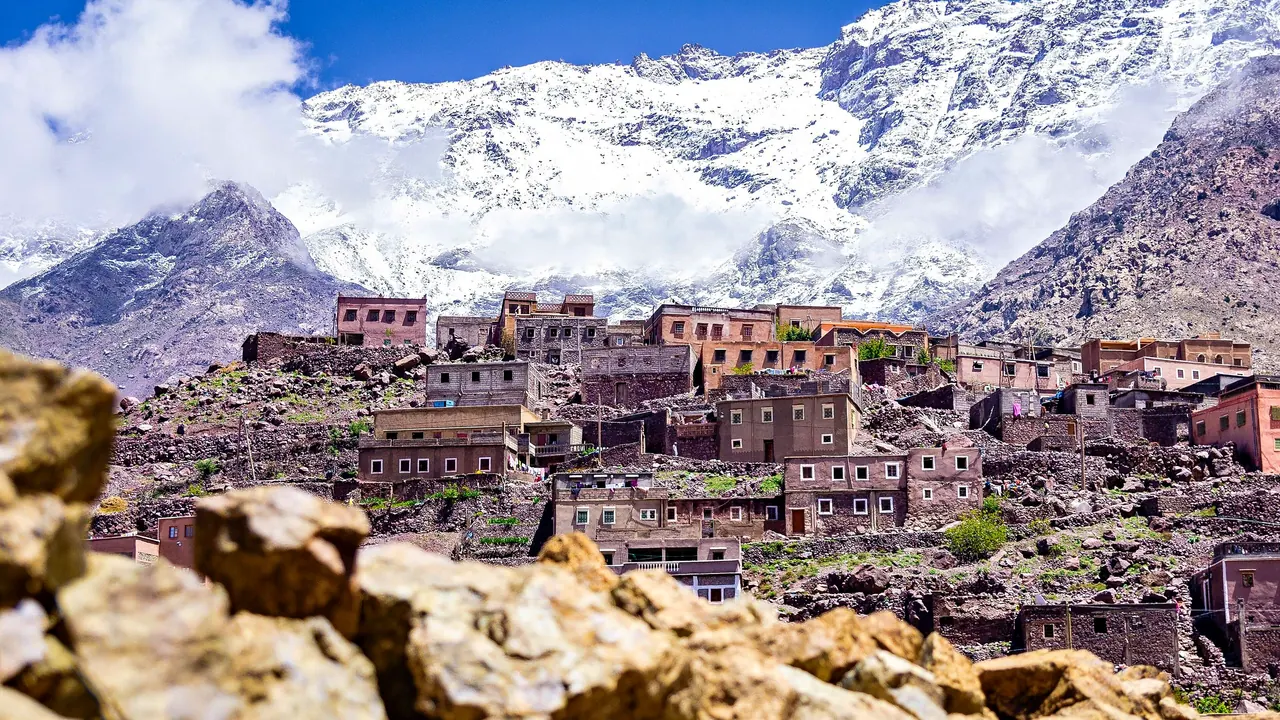
A Berber village of earth houses below snowy High Atlas peaks
- Nature & outdoors85
- Affordability82
- Day trips60
Photo: Yann Macherez, CC BY-SA 4.0, cropped
Match
37
Every category weighted equally
- Beach & sun38
- Culture & arts35
- Food & nightlife29
- Family trip42
- Outdoors49
- Relax & unwind41
- Shopping & style33
- On a budget42
Atlas Mountains in twelve categories
Our verdict on each, scored 0 to 100 against the same fixed benchmark cities, so a score means the same thing on every page.
Beaches & swimming. Scores 5 out of 100.
Food & drink. Scores 30 out of 100.
Culture & sights. Scores 42 out of 100.
Nightlife. Scores 3 out of 100.
Nature & outdoors. Scores 85 out of 100.
Day trips. Scores 60 out of 100.
Good for families. Scores 30 out of 100.
Getting around. Scores 20 out of 100.
Shopping & style. Scores 30 out of 100.
Affordability. Scores 82 out of 100.
Live music & performing arts. Scores 12 out of 100.
Wellness & relaxation. Scores 48 out of 100.
Atlas Mountains category by category
Beaches & swimming
5These are mountains, and the coast is a long drive away. The nearest water is in cold river pools in the valleys, the reservoir lakes such as Bin el Ouidane and Lalla Takerkoust, and the swimming pools of the better kasbah lodges. Anyone who wants a beach should add a separate stay on the Atlantic coast.
Food & drink
30Most meals in the Atlas are cooked in the guesthouse where you sleep, and the cooking is good. Expect tagines slow-cooked over charcoal, Friday couscous, flatbread baked in clay ovens, fresh walnuts, almonds and honey from the valleys, and sweet mint tea poured with ceremony at every stop. Along the southern slopes there are dates from the oases, and the Anti-Atlas produces argan oil and amlou.
What the region lacks is choice. Villages have a café or two and a weekly souk, and towns such as Ouarzazate and Azrou offer simple grills and soup kitchens. A visitor eats well, but the same few dishes come round again, and there is very little wine or fine dining.
Culture & sights
42The heritage here is built from earth and stone. The finest single sight is Ait Ben Haddou, a fortified village of mud-brick kasbahs climbing a hill above a river on the southern side of the Tizi n'Tichka pass. Nearby, the crumbling Telouet kasbah still has painted ceilings and carved stucco. In the Ourika and Imlil valleys, the stepped villages of the High Atlas are part of the scenery.
Further afield there is the twelfth-century Almohad mosque at Tinmel on the Tizi n'Test road, the Taourirt kasbah in Ouarzazate, the kasbahs of the Dades valley and the fortified communal granaries of the Anti-Atlas. These are rewarding but spread thinly across long mountain drives, and there are very few museums.
Nightlife
3There is essentially no nightlife. Evenings are spent over dinner and tea on a guesthouse terrace under a very dark, starry sky, and most trekkers are asleep early before a dawn start. Alcohol is hard to find outside a few hotels.
Nature & outdoors
85The High Atlas is serious mountain country. Toubkal, the highest peak in North Africa at 4,167m, is climbed in two or three days from Imlil, and the walking routes from the same village run through walnut groves, terraced barley fields and passes between red-earth villages. Further east, the Ait Bouguemez valley offers gentler trekking, and the Dades and Todra gorges cut deep canyons into the southern flank. The Ouzoud falls drop in tiers into a green ravine.
The Middle Atlas around Ifrane and Azrou is quite different, with cedar forest, limestone plateaus and troops of Barbary macaques. Spring and autumn are the best seasons for walking. In winter snow covers the high peaks and there is simple skiing at Oukaimeden, while in summer the heights stay cool when the plains are baking.
Day trips
60What you can reach depends on where you stay. From the Ourika valley, Imlil or the Asni area, Marrakech is about an hour to an hour and a half away, and its medina, souks and palaces make an outstanding day out. From Ouarzazate and Skoura on the southern side, you can drive along the kasbah route through the Dades valley to the palm oases, and the edge of the desert comes within reach.
The Middle Atlas, around Ifrane and Azrou, is the best base for outings. Fes and Meknes are each roughly an hour away, and the Roman ruins of Volubilis are not much further. Between these clusters, however, the drives are long, so most visitors pick one side of the range.
Good for families
30The Atlas suits adventurous families with older children better than families with toddlers. Short walks with a mule to carry bags, the macaques in the Middle Atlas cedar forest, the Ouzoud falls and nights in a kasbah all go down well, and Berber families are warm towards children.
There is nothing built for children, however. Mountain roads are long and twisting, which is hard on carsick passengers, the village paths are steep and rough, and comforts and medical care are basic once you leave the larger towns. A lodge with a pool in the Ourika valley or near Ouarzazate is the easiest base.
Getting around
20You need wheels to get around, and the mountain roads are slow. Most visitors hire a car or a driver from Marrakech, or join a tour. The Tizi n'Tichka and Tizi n'Test passes twist for hours over the range, and the minor roads into the high valleys are narrow and sometimes washed out after storms. Shared grand taxis and minibuses link the villages, but they are cramped and leave when they are full.
Once you reach a trekking village such as Imlil, the car stays behind and you continue on foot, often with a mule for luggage. Winter snow can close the high passes for a day or more.
Shopping & style
30Shopping here is for crafts at the source. Hand-knotted and flat-woven Berber rugs come from the villages around Taznakht and the Anti-Atlas, and women's cooperatives press argan oil and make cosmetics from it. The Middle Atlas sells cedar woodwork, and fossil and mineral stalls line the roads around Ouarzazate and Erfoud.
The weekly souks in Asni and the Ourika valley are mainly for livestock, produce and household goods, and are worth seeing for that reason. Roadside shops on the passes can be persistent, and there are no shopping streets beyond the basics.
Affordability
82Travelling here is cheap. Guesthouses in the trekking villages usually include dinner and breakfast in the room rate, local meals and grand taxis cost very little, and a mountain guide with a mule is affordable even for a small group. Costs rise with private drivers from Marrakech, organised tours and the handful of luxury kasbah lodges in the valleys close to the city, but a visitor who travels simply spends little.
Live music & performing arts
12Music here belongs to village life, not to stages. Ahwash circle dances in the High Atlas and Ahidous in the Middle Atlas are performed at weddings and harvest festivals, and the Imilchil marriage moussem draws visitors into the eastern mountains in late summer. Otherwise, live music means a guesthouse evening with drums and singing, and there are no theatres or concert halls.
Wellness & relaxation
48The Atlas is restful mostly because of its pace. Days follow the light, mobile signal fades in the high valleys, and evenings on a roof terrace above terraced fields are very quiet. Kasbah lodges in the Ourika valley and near Imlil offer hammams, massage and pools, and yoga and walking retreats use the foothills as their setting.
Villages have simple wood-fired hammams, which are welcome after a day's walk but basic. Anyone after a serious spa stay will find more in the plains below, while the mountains offer silence and a slow rhythm.
Where to stay in Atlas Mountains
For a first visit, most people stay on the Marrakech side of the High Atlas, where the city is around an hour or so away. Imlil suits walkers. The road ends here, bags go on by mule, and the village is the starting point for Toubkal and for paths between terraced villages. Guesthouses are simple and evenings end early. The Ourika valley is gentler, with lodges that have pools, hammams and gardens. That makes it the easiest choice for families and for a quiet, comfortable stay.
Across the Tizi n'Tichka pass, Ouarzazate and the palm oasis of Skoura suit travellers exploring by car. Ait Ben Haddou and Telouet are close by, and the kasbah route runs east through the Dades valley towards the gorges and the edge of the desert. As a town, Ouarzazate has more services than the villages, while Skoura is quieter among its palms.
The Middle Atlas around Ifrane and Azrou makes a good second visit, or a base for anyone who wants to combine the mountains with Fes and Meknes, each about an hour away. Cedar forest, macaques and easy walks make it good for families. The drives between these three areas are long, so most visitors choose one and stay there, adding a second base only on a longer trip.
When should you go?
Pick a month to see what it is like. The climate figures are measured averages, not a forecast.
Atlas Mountains in July
Daytime high, °C
Rainfall in the month, mm
The whole year
Shaded against this destination’s own year: the deepest cell is its best month for that figure and the palest its weakest.
Where the figures come from
Atlas Mountains has no weather station within reach, so its figures come from a gridded climate model rather than a measured record, and read a broad area rather than one spot.
Temperature and rainfall are climate normals, averaged over the years shown. Atlas Mountains: 1991-2020 normals, TerraClimate 4 km grid at the town, no weather station within 90 km.
Before you go
| Measure | Atlas Mountains |
|---|---|
| Official language | Arabic, Standard Moroccan Tamazight |
| Currency | Moroccan Dirham (MAD) |
| Sockets | CE50 Hz |
| Driving side | Right |
| Time zone | UTC+1 |
| Emergency number | Police 19/112, ambulance 15, fire 15 |
| Main airport | Marrakesh Menara Airport (RAK)113 non-stop destinations |
| Public holidays this year | 11 days |
Compare Atlas Mountains with
Every comparison with a written verdict behind it.