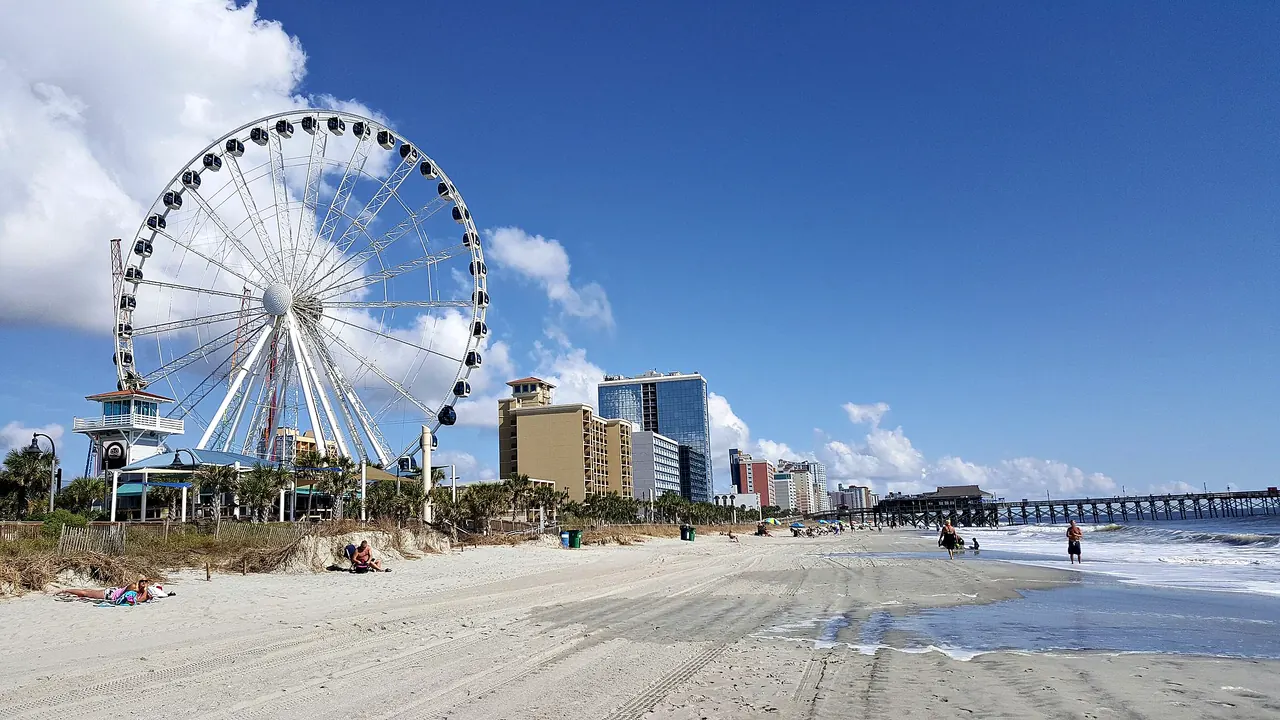
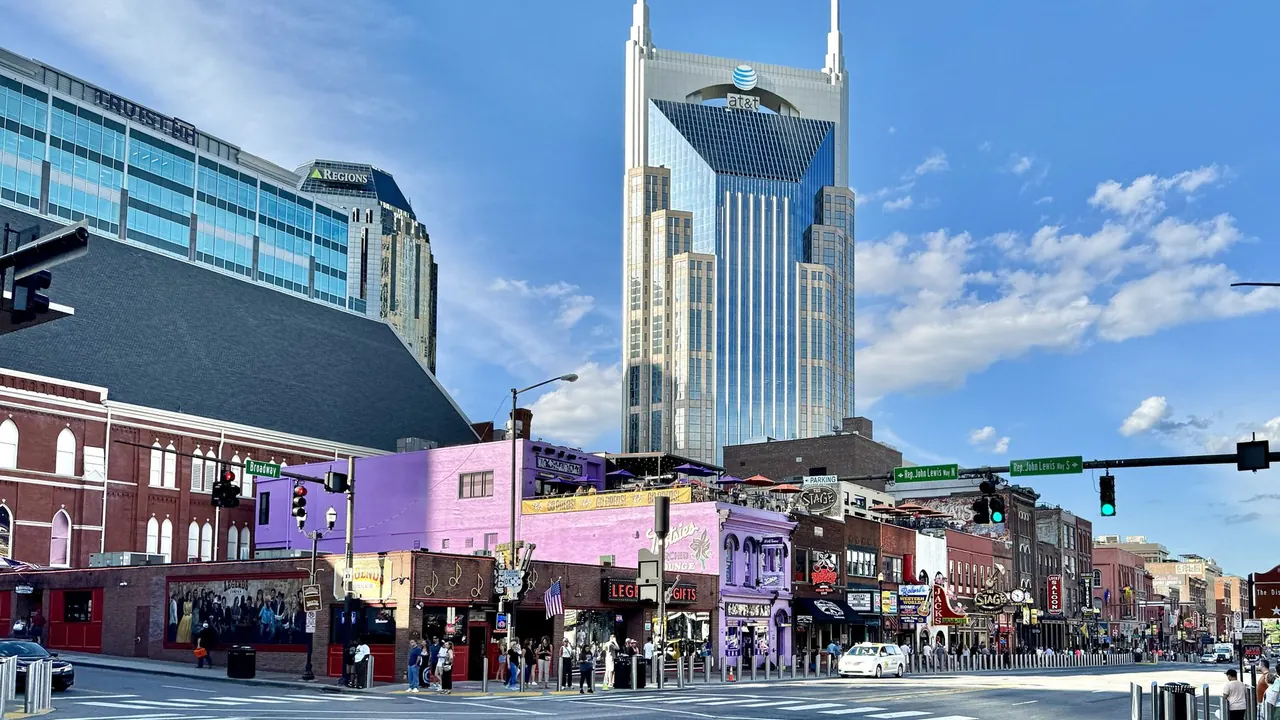
Photos: Myrtle Beach by The ed17, CC BY-SA 4.0, cropped; Nashville by Warren LeMay, CC BY-SA 2.0, cropped.
Myrtle Beach or Nashville?
Our verdict in twelve categories, each scored against the same fixed benchmark cities, and the climate month by month, so you can choose for your trip.
Choose Myrtle Beach for
- beaches
- families
- prices
Myrtle Beach is the choice when the trip is built around sand and warm sea. The Grand Strand gives families wide, shallow beaches, resort pools, mini-golf and an aquarium. Its large supply of condos with kitchens keeps costs down, especially outside July. You will drive everywhere, and the culture and food are thin.
Choose Nashville for
- live music and the arts
- culture and sights
- nightlife
Travellers who come for music and nights out are better served by Nashville. The songwriter rooms, the Ryman, the Opry and the honky-tonks of Lower Broadway make up a live scene that few American cities can match. Hot chicken and meat-and-three cooking sit alongside it, and the music museums fill the days. It costs more, and there is no beach at all.
Scoreboard
Twelve categories on one fixed scale from 0 to 100. The shaded stretch is the gap between the two.
Your match
Pick a travel style or drag the sliders, and both match scores follow your weighting.
Too close to call, 2 points apart
Wins on beaches and families with your weighting.
Wins on live music and the arts and culture and sights with your weighting.
What matters to you?
Category by category
What the scores mean for a trip.
Beaches & swimming
There is no contest here. Myrtle Beach sits on about 100km of wide, pale sand with shallow, gently shelving water that warms through the summer. If you want more space, the dune-backed stretches at Surfside, Garden City and the state parks are much quieter.
Nashville is far inland. Percy Priest and Old Hickory lakes have small swimming areas and warm water in summer, but locals spend the day on a pontoon boat rather than on a towel on the sand. It makes an afternoon out, not a reason to come.
Food & drink
Nashville eats better. Hot chicken is a dish worth travelling for, and the meat-and-three cafeterias and barbecue cover the Southern basics. East Nashville, Germantown and the Gulch add chef-led cooking, and Nolensville Pike has Kurdish, Mexican and Vietnamese places.
Myrtle Beach's strip runs to seafood buffets, pancake houses and chains. The best meals are the local shrimp, oysters and flounder on the Murrells Inlet waterfront and the Calabash-style fried fish over the state line. They are enjoyable, but you will have tried them all in a couple of evenings.
Culture & sights
Nashville has far more to see by day. Music runs through it, from the Country Music Hall of Fame to the National Museum of African American Music and a daytime tour of the Ryman. The Parthenon replica, the Frist in its Art Deco post office, the Hermitage and Belle Meade add art and the harder history of the region.
Myrtle Beach is a twentieth-century resort with little of its past on show. Brookgreen Gardens is worth a morning for its sculpture among the live oaks and its record of the people enslaved on the plantation. Add the Moorish-style Atalaya next door and you have seen most of it.
Nightlife
Nashville offers the bigger night out. On Lower Broadway the multi-storey honky-tonks have a band on every floor and run as one long party at weekends. The dive bars and cocktail lounges of East Nashville are a calmer alternative.
Myrtle Beach's evenings are seasonal and resort-style: beach bars, rooftop decks and a cluster of dance clubs at the entertainment complexes, a kind of late night that Nashville largely lacks. The shag clubs of North Myrtle Beach are its most local touch, but outside summer much of the town goes quiet early.
Nature & outdoors
Both offer gentle, low-lying countryside rather than drama, but of different kinds. Myrtle Beach is coastal: dunes, maritime forest and salt marsh with herons and alligators at Huntington Beach State Park. There is kayaking in the cypress swamps, dolphin cruises and dozens of golf courses.
Nashville has wooded hills and limestone creeks instead. There are trails at Radnor Lake and the Warner Parks, canoeing on the Harpeth and cycling on the Natchez Trace Parkway. Walkers will find more around Nashville, while birdwatchers and paddlers do better on the coast.
Day trips
Both need a car, and both have a solid spread of history within about two hours. From Myrtle Beach the prize is Charleston, a long but rewarding day, with Georgetown's old port and the quiet village of Pawleys Island closer to hand.
Nashville's outings are shorter and more varied. Franklin's Main Street and Civil War battlefields are half an hour away, the Tennessee whiskey distilleries around Lynchburg are further out, and Chattanooga sits at the far edge of a day.
Good for families
Myrtle Beach is built around children in a way Nashville is not, from the old wooden roller coaster at the seaside amusement park to resort suites with kitchens that make mealtimes easy. The catch is midsummer, when the heat, slow traffic on the main roads and driving between every attraction can wear young travellers down. Beach mornings and quieter afternoons work best.
Nashville rewards a few days of planning around its attractions. Most children are impressed by the full-scale Parthenon in Centennial Park, and the Country Music Hall of Fame runs family activities. In summer, the splash pads in the big parks and the water park by Percy Priest Lake take the edge off the heat.
Getting around
Nashville is a little easier. Its compact downtown puts Broadway, the Ryman, the Hall of Fame, the riverfront and the Gulch within a short walk of each other. The Opry, the Hermitage and outer neighbourhoods such as 12 South all mean a drive or a ride-hail.
Myrtle Beach depends on the car along almost its whole length, with attractions strung out along multi-lane highways that have few pavements. Walking works only within a resort area or along the sand itself.
Shopping & style
Neither city is a shopping destination, but each sells something different. Myrtle Beach means outlet centres, huge beachwear stores and the Market Common, and its one local craft is the sweetgrass baskets sold on the coast road south.
Nashville deals in boots, hats, guitars and letterpress concert posters. The independent boutiques and record shops of 12 South and East Nashville make for a more personal browse.
Affordability
Myrtle Beach goes further on a budget. Its huge number of motels and condos keeps rooms cheap outside the summer peak, and a kitchen cuts what you spend on food. A car is unavoidable, though, and July is expensive.
Nashville's downtown hotels are expensive, especially at weekends when groups fill them, and ride-hailing costs add up. The music on Broadway is free, and staying midweek and away from downtown also helps.
Live music & performing arts
This is Nashville's strongest card. There are the Opry and the Ryman's pews and acoustics, songwriter nights where writers play their own hits, and rooms for bluegrass and Americana. The symphony plays at the Schermerhorn, and the Tennessee Performing Arts Center has ballet and opera, so there is something on most nights.
Myrtle Beach offers polished variety theatres with country, gospel and Christmas revues, knight and pirate dinner shows, and cover bands in the beach bars. That makes a good family evening, but there is nothing in the way of serious drama or classical music.
Wellness & relaxation
Neither city has a bathing tradition, and neither is a place to properly unwind. Myrtle Beach has a slight edge thanks to its resort spas and the slower pace around Pawleys Island. In spring and autumn a long beach walk there is genuinely restful.
Nashville's spas are in hotels and the wealthier neighbourhoods, and its downtown runs on noise. Leafy Belmont and Hillsboro are quiet, but rest is not why people come.
When should you go?
Pick your month. The climate figures are measured averages, not a forecast.
Myrtle Beach in July
Nashville in July
Daytime high, °C
Rainfall in the month, mm
Where the figures come from
Myrtle Beach has no rain gauge within 25 km of the centre, so its rainfall comes from a gridded climate dataset read at the city rather than from a gauge further away.
Temperature and rainfall are climate normals, averaged over the years shown. Myrtle Beach: 1971-2000 (rainfall 1991-2020) normals, Myrtle Beach Air Force Base (5.5 km from centre). Nashville: 1991-2020 normals, Nashville Airport (9.6 km from centre).
Myrtle Beach is a summer place. The sea is pleasant for swimming from late May, reaches about 28°C in July and August and stays warm into October, while the air is hot and humid through the middle of the year. Those same months bring the heaviest rain, up to 187mm in August. From November to April the water is too cold for most swimmers, though the milder days still suit golf and long walks on the sand.
Nashville is best in spring and autumn, roughly April to May and late September to October, when walking between downtown sights and on the park trails is comfortable. July and August reach about 32°C with sticky humidity, and winter highs fall to around 9°C. Rain is spread fairly evenly through the year rather than piling up in summer, so no month is reliably dry, but none is especially wet either.
Which traveller are you?
On a beach and sun trip, Myrtle Beach is the only real option. It has about 100km of flat sand and warm, gentle Atlantic water all summer. Nashville has a handful of swimming areas on its reservoir lakes, good for a hot afternoon at most.
For a culture and arts trip, Nashville is the clear choice. The Country Music Hall of Fame, the Frist and the Parthenon fill the days, and the Opry, the Ryman, songwriter nights and the symphony fill the evenings. Myrtle Beach has Brookgreen Gardens and variety shows.
On a family trip with young children, Myrtle Beach is the place built for it, with gentle surf, resort lazy rivers, water parks, an aquarium and endless themed mini-golf. Nashville has a good zoo and science centre, but its best-known street is aimed at adult drinkers.
Before you go
| Measure | Myrtle Beach | Nashville |
|---|---|---|
| Currency | US Dollar (USD) | US Dollar (USD) |
| Sockets | AB120 V, 60 Hz | AB120 V, 60 Hz |
| Driving side | Right | Right |
| Time zone | UTC-5, UTC-4 in summer | UTC-6, UTC-5 in summer |
| Emergency number | 911 | 911 |
| Elevation | 8 m | 182 m |
| Main airport | Myrtle Beach International Airport (MYR)5 km from centre60 non-stop destinations | Nashville International Airport (BNA)10 km from centre122 non-stop destinations |
| Public holidays this year | 12 days | 13 days |
By the numbers
| Measure | Myrtle Beach | Nashville |
|---|---|---|
| City population | 35,682 | 689,447 |
| People per km² | 591 | 506 |
| Museums within 10 km | 2 | 12 |
| UNESCO World Heritage sites within 50 km | 0 | 0 |
| Swim season, months above 21 °C | 6 months | - |
Where else could you go?
Every comparison below shares a destination with this one, so you can follow Myrtle Beach or Nashville somewhere new.