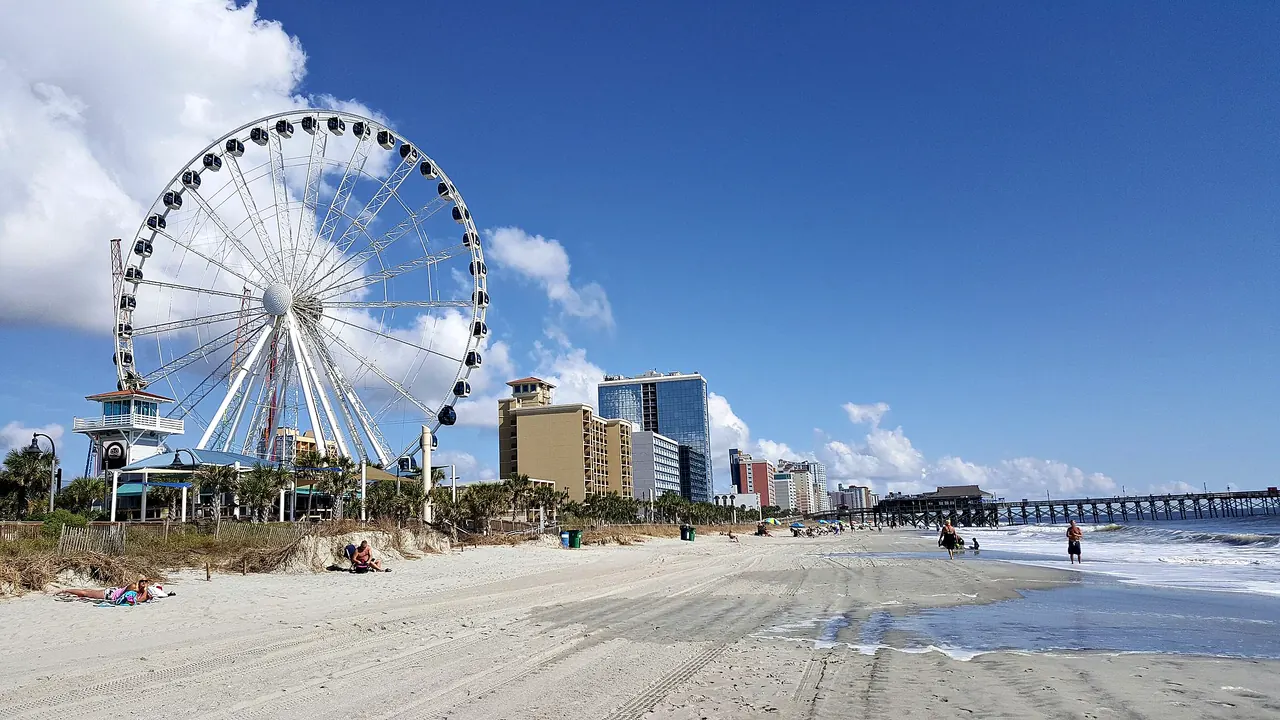
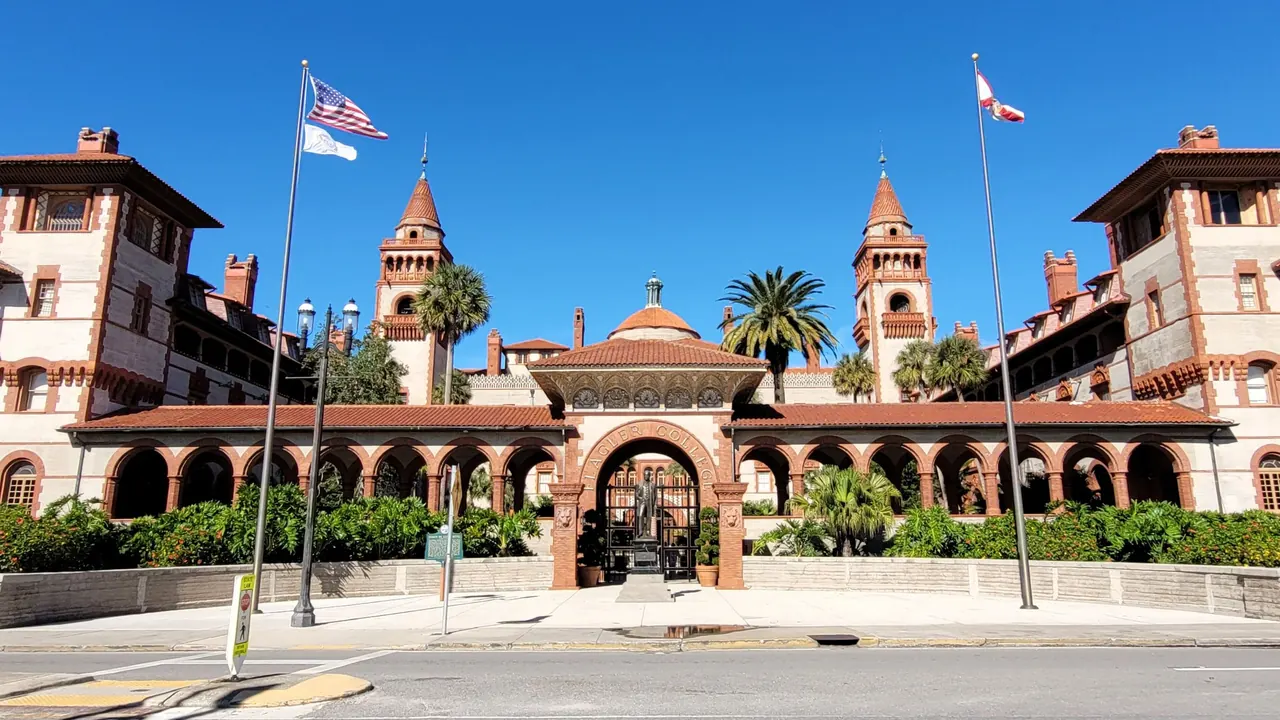
Photos: Myrtle Beach by The ed17, CC BY-SA 4.0, cropped; St. Augustine by Farragutful, CC BY-SA 4.0, cropped.
Myrtle Beach or St. Augustine?
Our verdict in twelve categories, each scored against the same fixed benchmark cities, and the climate month by month, so you can choose for your trip.
Choose Myrtle Beach for
- families
- prices
- beaches
Myrtle Beach suits a classic beach vacation with children or a group of friends: long days on a far bigger stretch of sand, resort pools, amusement parks and mini-golf, and louder evenings around the boardwalk. Rooms cost less too, and with a kitchen in the condo a week by the sea stays affordable. Just expect to drive everywhere.
Choose St. Augustine for
- culture and sights
- getting around
- live music and the arts
If history matters as much as the beach, St. Augustine is the better choice. Its Spanish fort, old lanes and Gilded Age hotels reward a few days of walking, the island beaches are a short drive away, and the milder winters make it a good trip out of season. It costs more and winds down earlier in the evening, which suits couples and slower travellers.
Scoreboard
Twelve categories on one fixed scale from 0 to 100. The shaded stretch is the gap between the two.
Your match
Pick a travel style or drag the sliders, and both match scores follow your weighting.
Too close to call, level with your weighting
Wins on families and prices with your weighting.
Wins on culture and sights and getting around with your weighting.
What matters to you?
Category by category
What the scores mean for a trip.
Beaches & swimming
Both have the same kind of flat, pale Atlantic sand and the same warm summer sea, but at Myrtle Beach the beach is the destination itself. The Grand Strand runs about 100km, with piers and a boardwalk at the centre and dune-backed calm at Surfside, Garden City and the state parks, and most hotels open straight onto it.
St. Augustine's beaches on Anastasia Island, from the state park dunes down to Crescent Beach, are good but come second to the old town, a short drive across the Bridge of Lions. They suit a trip that mixes sightseeing with afternoons by the water. Myrtle Beach suits one spent almost entirely on the sand.
Food & drink
Neither is a place to travel for food, and in both seafood carries the menu. Myrtle Beach cooks for volume, with buffets and pancake houses along the strip, and its best meals are a drive away at the Murrells Inlet waterfront or in Calabash-style fry houses. St. Augustine has a more distinct local flavour in the Minorcan datil pepper, used in its spicy clam chowder and pilau, and a few chef-led places around the old town and San Marco give dinner a little more polish.
Culture & sights
This is where the two part company most. St. Augustine has more than four centuries of history on the ground: the coquina Castillo de San Marcos on the bayfront, the lanes and walled gardens of the Spanish quarter, and the Gilded Age layer of Flagler College and the Lightner Museum, enough for two or three unhurried days.
Myrtle Beach grew up as a twentieth-century resort, and its sights lie mostly to the south of town: Brookgreen Gardens, with sculpture among live oaks on a former rice plantation, and the Moorish-style Atalaya. A single day covers them.
Nightlife
Myrtle Beach offers the bigger night out: beach bars and rooftop decks around the boardwalk, dance clubs in the entertainment complexes that stay open late, and the shag still danced in North Myrtle Beach's old Main Street clubs. It is loud and seasonal, and some weeks get rowdy.
St. Augustine's evenings are smaller and earlier, spent in courtyard pubs and cocktail bars around St. George Street and the bayfront. With almost no clubs, it suits a drink after dinner rather than dancing into the small hours.
Nature & outdoors
The two share the same low coastal country of dunes, salt marsh and maritime forest, with no hills, and in both the summer heat sends walkers out early. Myrtle Beach adds the blackwater cypress swamps of the Waccamaw River, alligators and herons at Huntington Beach State Park, and dozens of golf courses.
St. Augustine's outdoors are more about water close to town: paddleboarding on the Anastasia lagoon, long marsh trails in the Guana Tolomato Matanzas reserve and kayak trips among dolphins in the creeks, plus a coast road south that is good for cycling.
Day trips
Both need a car for every outing, and both offer a modest list. From Myrtle Beach the standout is Charleston, a long day two hours south, with Georgetown's rice-culture history and Wilmington's riverfront nearer to hand.
St. Augustine's options are more varied in kind than in quality: Jacksonville's museums and gardens close by, Victorian Fernandina Beach, and long but popular days at Kennedy Space Center or the Orlando theme parks.
Good for families
Myrtle Beach is built for children: gentle surf, resort pools with lazy rivers, the aquarium, the observation wheel on the boardwalk, water parks, an amusement park with a wooden coaster and pirate-themed mini-golf at every turn. The cost is driving everywhere and steering clear of spring break weeks.
St. Augustine works for families too, on a smaller scale. The Alligator Farm, the cannon firings at the Castillo and the lighthouse climb fill a few days nicely, but families after rides have to drive to Orlando.
Getting around
Myrtle Beach is spread along multi-lane highways with few pavements, so walking is limited to the boardwalk blocks and the beach itself, and summer traffic on Kings Highway can be slow. A car is needed for almost everything else.
St. Augustine also depends on a car for the beaches and anything further away, but it has a walkable core. The fort, St. George Street, Flagler College and the bayfront are minutes apart on flat streets, and sightseeing trolleys loop past them, so most visitors park once and see the old town on foot.
Shopping & style
Myrtle Beach has more shopping by sheer size: two large outlet centres, waterfront complexes, The Market Common with its town-centre feel, and enormous beachwear stores along the highway. St. Augustine has only one outlet mall, but its old town has more character. The galleries, antique dealers and craft shops of Aviles Street, along with the local datil-pepper sauces, make better souvenirs than the fudge and T-shirts of St. George Street. Neither is a place to come for fashion.
Affordability
Myrtle Beach is the cheaper stay, thanks to its sheer stock of motels, hotels and condos, many with kitchens, and outside July and long weekends oceanfront rooms can be very good value.
In St. Augustine the historic inns and old-town hotels are in steady demand and climb steeply at weekends and in season, so savings mean a highway motel or a midweek visit. Meals, attractions and tipping cost much the same in both, and you will want a car either way.
Live music & performing arts
Myrtle Beach goes for spectacle. Its large theatres stage country, gospel and Christmas revues, and there are dinner shows with knights or pirates, all polished and aimed at families.
St. Augustine's evenings lean more towards music: touring rock, country and folk acts at the open-air amphitheatre in the woods on Anastasia Island, and acoustic sets on old-town bar patios most nights. Neither town has opera, an orchestra season or serious theatre, so for those you would need to go to a bigger city.
Wellness & relaxation
Neither has a bathing tradition, and in both a spa day means hotel treatment rooms. The difference is the setting: Myrtle Beach's resort spas sit beside a loud summer strip, with real calm only around Pawleys Island or in spring and autumn, while St. Augustine offers quiet B&B verandas, courtyard gardens and an easy evening stroll along the bayfront seawall.
When should you go?
Pick your month. The climate figures are measured averages, not a forecast.
Myrtle Beach in July
St. Augustine in July
Daytime high, °C
Rainfall in the month, mm
Where the figures come from
Myrtle Beach has no rain gauge within 25 km of the centre, so its rainfall comes from a gridded climate dataset read at the city rather than from a gauge further away.
St. Augustine has no rain gauge within 25 km of the centre, so its rainfall comes from a gridded climate dataset read at the city rather than from a gauge further away.
St. Augustine's sunshine is measured 73 km from the centre, at Jacksonville International.
Temperature and rainfall are climate normals, averaged over the years shown. Myrtle Beach: 1971-2000 (rainfall 1991-2020) normals, Myrtle Beach Air Force Base (5.5 km from centre). St. Augustine: 2006-2020 (sunshine 1991-2020, rainfall 1991-2020) normals, St Augustine / Kingsley Mobile Home Park (7.6 km from centre).
Myrtle Beach is a warm-season resort. The sea is warm enough for long swims from June to September and reaches 28°C in July and August, but from November to April it is too cold for most swimmers. Summer is also the wettest stretch, with August the rainiest month at 187mm, much of it in storms. Winter days are cool, around 12°C in January, which is fine for a walk on the sand but not for the beach.
St. Augustine lies further south and has the milder year. The swimming season starts in May and runs into October, and winter days stay comfortable for walking the old town, around 18°C in January. High summer is hot and humid in both places, and the late summer weeks bring the heaviest rain. For sightseeing, the long sunny days of spring and the cooler weeks of late autumn are the best time to go.
Which traveller are you?
On a culture and arts trip, St. Augustine is the clear pick. The Castillo de San Marcos, the Spanish quarter, Flagler College and the Lightner Museum fill days of sightseeing on foot, while Myrtle Beach's few sights fit into a single outing.
On a family trip with children, Myrtle Beach comes out ahead. Gentle surf, resort pools with lazy rivers, water parks, the aquarium and endless themed mini-golf keep children busy for a week, more than St. Augustine's alligators and fort can manage.
For a trip on a tight budget, Myrtle Beach makes the money go further. Its huge supply of motels and condos with kitchens keeps rooms and meals cheaper, especially out of season, whereas St. Augustine's old-town inns charge steeply at weekends and in peak months.
Before you go
| Measure | Myrtle Beach | St. Augustine |
|---|---|---|
| Currency | US Dollar (USD) | US Dollar (USD) |
| Sockets | AB120 V, 60 Hz | AB120 V, 60 Hz |
| Driving side | Right | Right |
| Time zone | UTC-5, UTC-4 in summer | UTC-5, UTC-4 in summer |
| Emergency number | 911 | 911 |
| Elevation | 8 m | 152 m |
| Main airport | Myrtle Beach International Airport (MYR)5 km from centre60 non-stop destinations | Jacksonville International Airport (JAX)76 km from centre48 non-stop destinations |
| Public holidays this year | 12 days | 11 days |
By the numbers
| Measure | Myrtle Beach | St. Augustine |
|---|---|---|
| City population | 35,682 | 14,329 |
| People per km² | 591 | 433 |
| Museums within 10 km | 2 | 12 |
| UNESCO World Heritage sites within 50 km | 0 | 0 |
| Swim season, months above 21 °C | 6 months | 8 months |
Where else could you go?
Every comparison below shares a destination with this one, so you can follow Myrtle Beach or St. Augustine somewhere new.
- Daytona Beachvs St. Augustine
- Wilmingtonvs Myrtle Beach
- Charlestonvs Myrtle Beach
- Orlandovs St. Augustine
- Cocoa Beachvs St. Augustine
- Savannahvs St. Augustine