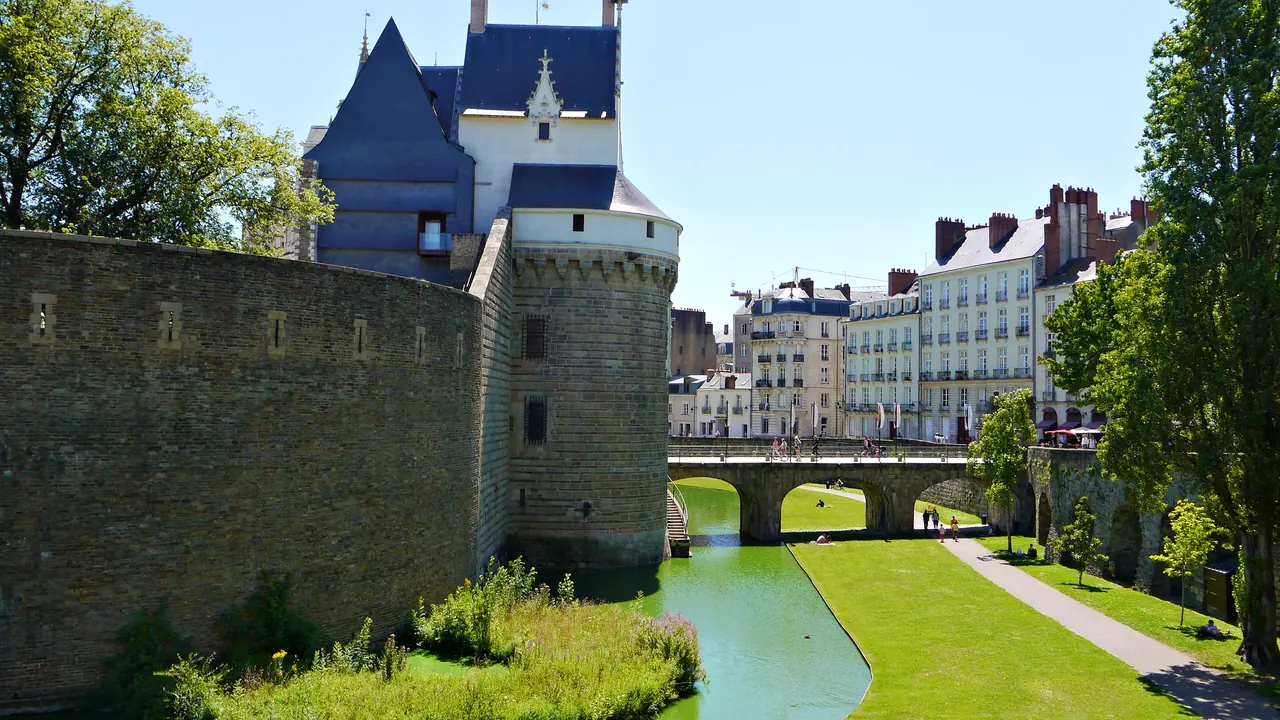
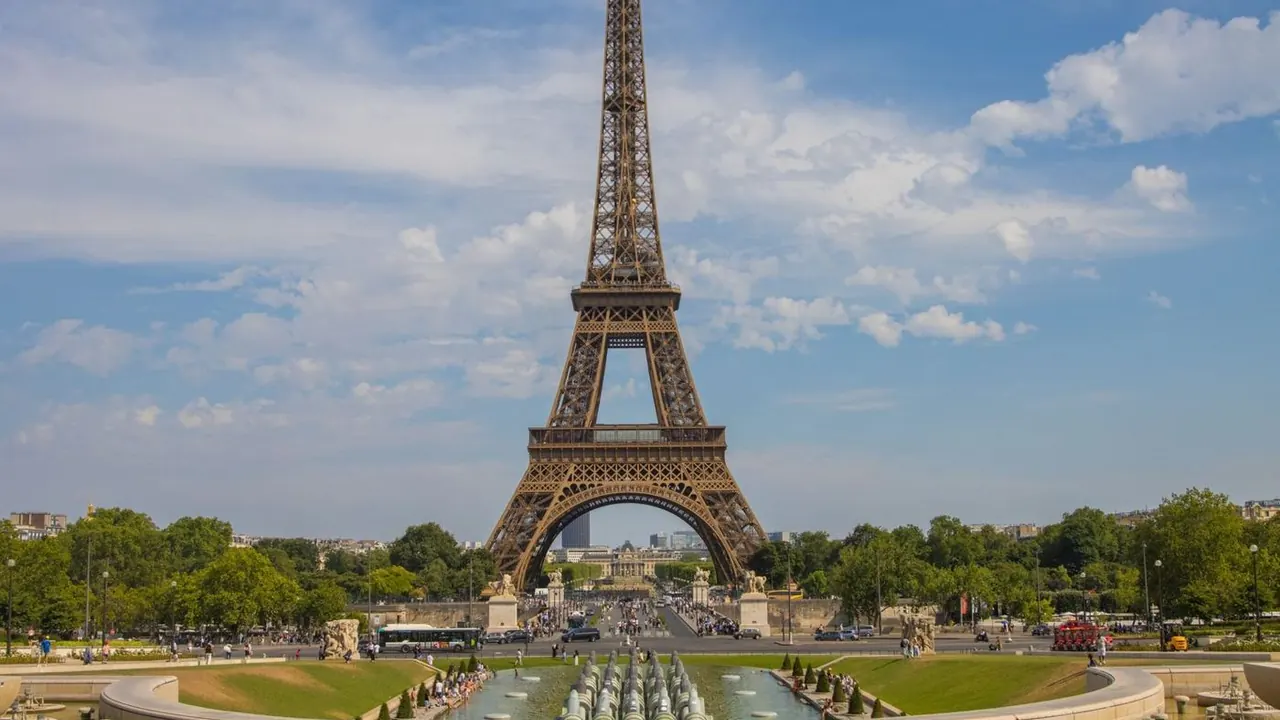
Photos: Nantes by Carole44, CC BY-SA 3.0, cropped; Paris by Efrem Efre, Pexels License.
Nantes or Paris?
Our verdict in twelve categories, each scored against the same fixed benchmark cities, and the climate month by month, so you can choose for your trip.
Choose Nantes for
- beaches
- prices
- nature and the outdoors
Nantes suits a slower, cheaper trip through western France. It is a compact river city with a ducal castle and a mechanical elephant for the children, and the Atlantic beaches at La Baule and Pornic are an hour away. It also makes a good base for Guérande's salt marshes, the Muscadet vineyards and the lower Loire, and a stay costs noticeably less.
Choose Paris for
- shopping
- culture and sights
- food and drink
Paris is the choice when the city itself is the point of the trip. Its museums, food, shopping and stages are in a different league from Nantes, and Versailles, Chartres and Reims are all within easy reach for a day. You pay more and queue at the famous sights, but for culture, eating out and a proper night out Paris clearly comes out ahead.
Scoreboard
Twelve categories on one fixed scale from 0 to 100. The shaded stretch is the gap between the two.
Your match
Pick a travel style or drag the sliders, and both match scores follow your weighting.
Wins on beaches and prices with your weighting.
Wins on shopping and culture and sights with your weighting.
What matters to you?
Category by category
What the scores mean for a trip.
Beaches & swimming
Neither city is on the sea, but Nantes is much closer to it. La Baule's long, sheltered sand and the coves around Pornic are about an hour away by train, close enough for an easy beach day in late summer, though the Atlantic stays cool.
From Paris, the nearest real coast is Normandy, about two hours away, and the Channel is colder still. In town there is sand on the riverbanks, swimming in the Bassin de la Villette and the Seine, and handsome Art Deco pools. They are good for cooling off, but they are no substitute for the sea.
Food & drink
Food in Nantes has a clear regional character. There is pike-perch with beurre blanc, a sauce born in the city, along with oysters from the nearby coast, buckwheat galettes and a glass of Muscadet, and the Talensac market is the place to see it all. You will eat well, but the food alone is not a reason to go.
In Paris it is. Neighbourhood boulangeries, street markets such as Aligre, small inventive neo-bistros in the east of the city, the haute cuisine tradition, natural wine bars, couscous in Belleville and Vietnamese pho in the south-east add up to a range no regional city can match.
Culture & sights
Nantes offers two or three satisfying days. There is the moated castle of the Dukes of Brittany with its history museum, the cathedral with the tomb of Francis II, the Musée d'Arts and the merchants' houses of the Ile Feydeau. The city is open about its part in the slave trade, at the castle and at the riverside memorial, which gives the visit real weight.
Paris works on another scale. The Louvre alone could fill a week, and with the Orsay, the Orangerie, Sainte-Chapelle and the Haussmann boulevards, even a long stay leaves much unseen. The cost is the queues at the famous sights, so it pays to book ahead.
Nightlife
Thanks to its students, Nantes is livelier at night than its size suggests. Evenings start on the terraces and in the pubs of the Bouffay lanes and move on to late bars and clubs in the old dock warehouses on the Ile de Nantes. Midweek outside term, it is quiet.
Paris offers far more choice. Oberkampf, the Canal Saint-Martin and Belleville are the places for bars, South Pigalle for cocktails and the Marais for its gay scene, and the house and techno clubs run until dawn. Doors can be selective and drinks are dear.
Nature & outdoors
Both cities are flat, and the outdoors around them is gentle rather than dramatic. Around Nantes the theme is water: the wooded banks of the Erdre by boat or canoe, the Loire à Vélo cycle route, the reed marshes of the Brière and cliff walks on the Côte Sauvage.
Paris has formal gardens, the hill and lake at the Buttes-Chaumont and the large woods of Boulogne and Vincennes. Fontainebleau's forest and climbing boulders are forty minutes away by train. Nantes is the choice for marsh and coast, Paris for forest.
Day trips
Nantes is a good base for its corner of France. Guérande and its salt marshes, Angers with the Apocalypse Tapestry, Clisson among the vineyards and Vannes on the Gulf of Morbihan are all within easy reach.
Paris has the longer list. Versailles, Fontainebleau and Chartres are each about an hour away or less, and Giverny and Provins are easy trips. Fast trains reach Reims, Rouen and even Brussels for the day. Both cities can reach the Loire châteaux, Nantes by way of Saumur and Paris by way of Tours.
Good for families
Nantes cannot match Paris for things to do with children, but day to day it is the easier city. The centre is flat, the trams take a buggy without fuss, and the Machines de l'Ile has the walking elephant and the sea-creature carousel. Puy du Fou and the safari park at Port-Saint-Père are a drive away.
Overall, Paris is the stronger family destination because there is so much more to fill the days. It has Disneyland and Parc Astérix, the hands-on Cité des Sciences, the natural history galleries, and puppet shows and toy sailboats in the Luxembourg gardens. The price is metro stations with only stairs, small hotel rooms and long queues.
Getting around
Nantes is small, flat and easy to walk, with the castle, Bouffay and the Ile de Nantes all within half an hour of each other on foot. Its tram lines and busway take minutes to learn, river shuttles cross the Loire, and the riverside paths suit a bike.
Paris comes out ahead because its network is far denser. The metro puts a station a few minutes from almost anywhere, the RER runs to the airports, Versailles and Disneyland, and the centre is one of the great walking cities as well. The drawbacks are stairs, rush-hour crowds and pickpockets on the busy lines.
Shopping & style
Shopping in Nantes takes a pleasant afternoon. There is the three-level Passage Pommeraye, chain fashion on Rue Crébillon and independent shops around Bouffay and Decré, and salted-butter biscuits or Guérande salt make good things to take home.
Paris is one of the world's great shopping cities. The flagships on Avenue Montaigne, Galeries Lafayette and Le Bon Marché, the Marais designers, the Saint-Ouen flea market and the bouquinistes along the Seine make shopping a reason to go in its own right.
Affordability
Nantes is the cheaper stay, with the prices of a large regional French city. Hotels cost far less than in the capital and are easy to find, and the trams and short walks keep transport cheap. Dinners and drinks cost the usual French amounts, and the coast is dearer in high summer.
In Paris the hotel is the biggest cost, often for a small room, and terrace drinks and museum tickets add up. The free collections in the city's own museums, bakery lunches and picnics by the river help keep costs down.
Live music & performing arts
Nantes has more going on than its size suggests. It has opera at the Théâtre Graslin, the national orchestra, the Lieu Unique in the old biscuit factory, and La Folle Journée, a winter festival of short classical concerts. Its giant street puppets give it a taste for spectacle in the open air.
Paris has depth at every level: ballet at the Palais Garnier, opera at the Bastille, the Philharmonie, jazz cellars on the rue des Lombards, cabaret in Pigalle and concerts in old music halls. Much of the theatre is in French, which matters less for music and dance.
Wellness & relaxation
Neither city is made for a restful break, and neither has a bathing tradition of its own. For Nantes, the answer is on the coast, at the long-established thalassotherapy centres of La Baule and Pornic, about an hour away. The city's easy pace helps too.
Paris has the hammam instead, above all the tiled steam rooms and mint tea of the Grande Mosquée, along with plenty of hotel spas. The city itself is loud and fast, so calm comes in short spells, such as an hour in the Luxembourg gardens.
When should you go?
Pick your month. The climate figures are measured averages, not a forecast.
Nantes in July
Paris in July
Daytime high, °C
Rainfall in the month, mm
Temperature and rainfall are climate normals, averaged over the years shown. Nantes: 1991-2020 normals, Nantes (6.6 km from centre). Paris: 1991-2020 (sunshine 1961-1990) normals, Paris-Montsouris (4.6 km from centre).
Both cities have a mild northern French climate. Summers are warm rather than hot, with highs of about 25°C in Nantes and 26°C in Paris in July and August, so neither is ever too hot for walking the streets. Nantes has its sunniest weather in high summer, and the Atlantic reaches about 19°C by August. Beach days from Nantes are mainly a late-summer thing, and even then the water is bracing.
The two differ most in autumn and winter. From October Nantes turns wet, and the rain builds to about 101mm in December. Paris has a steadier spread of rain through the year, and its wettest month is May, at 75mm. Winters are cool and grey in both cities. For sightseeing, late spring and September suit both cities well, and Paris is the better bet of the two for a dry winter weekend.
Which traveller are you?
On a beach and sun trip, Nantes is the sensible base. La Baule, Pornic and Saint-Brevin make easy beach days in late summer, and you come back to the city for the evening. From Paris, sea swimming means a separate trip to the Normandy coast.
For a shopping trip, Paris is the clear choice. Plan it by neighbourhood: one day for couture and the great department stores, another for Saint-Germain's bookshops and the old covered passages, plus chocolate and cheese to carry home. Nantes fills an afternoon.
On a trip on a tight budget, Nantes makes the money go further. The same nights cost less, the sights are close together and the coast and vineyards are short train rides away. In Paris, saving means hotels in the outer arrondissements and the free city museums.
Before you go
| Measure | Nantes | Paris |
|---|---|---|
| Official language | French | French |
| Currency | Euro (EUR) | Euro (EUR) |
| Sockets | CE230 V, 50 Hz | CE230 V, 50 Hz |
| Driving side | Right | Right |
| Time zone | UTC+1, UTC+2 in summer | UTC+1, UTC+2 in summer |
| Emergency number | 112 | 112 |
| Elevation | 2 m | 27 m |
| Main airport | Nantes Atlantique Airport (NTE)8 km from centre97 non-stop destinations | Charles de Gaulle International Airport (CDG)22 km from centre277 non-stop destinations |
| Public holidays this year | 11 days | 11 days |
By the numbers
| Measure | Nantes | Paris |
|---|---|---|
| City population | 327,734 | 2,103,778 |
| People per km² | 5,027 | 19,960 |
| Museums within 10 km | 11 | 251 |
| UNESCO World Heritage sites within 50 km | 0 | 5 |
| Swim season, months above 21 °C | None | - |
Where else could you go?
Every comparison below shares a destination with this one, so you can follow Nantes or Paris somewhere new.