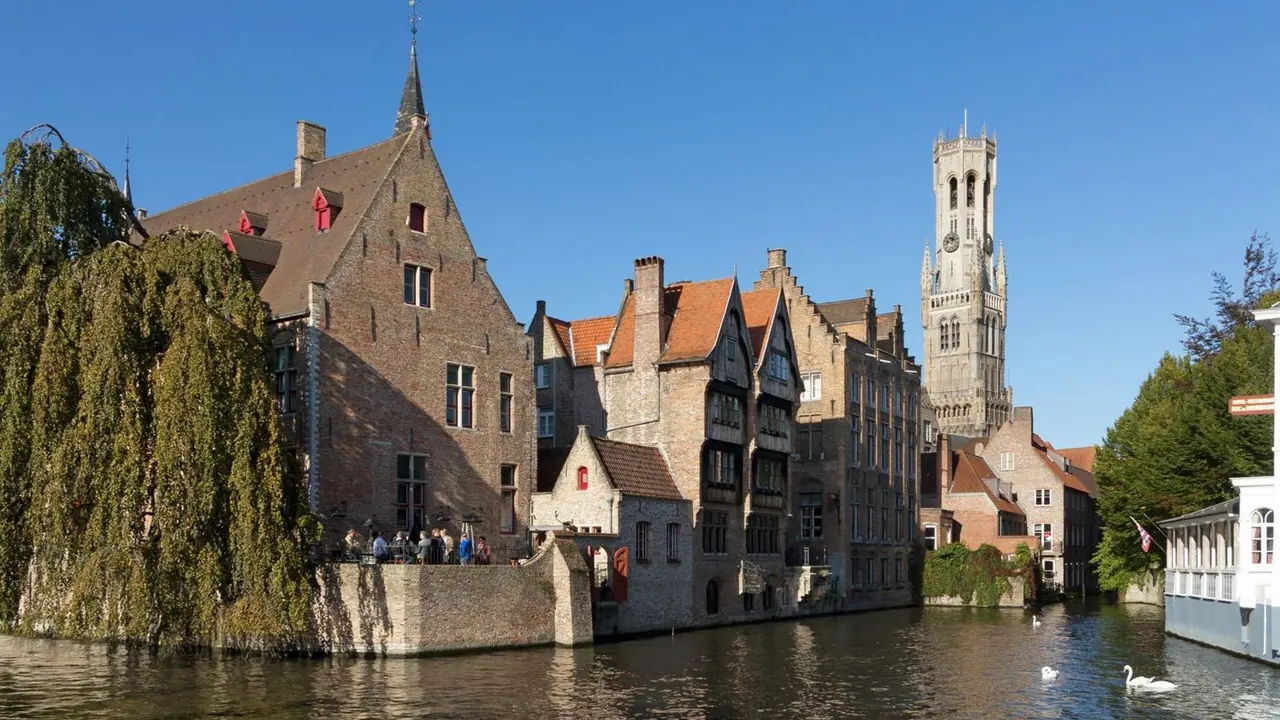
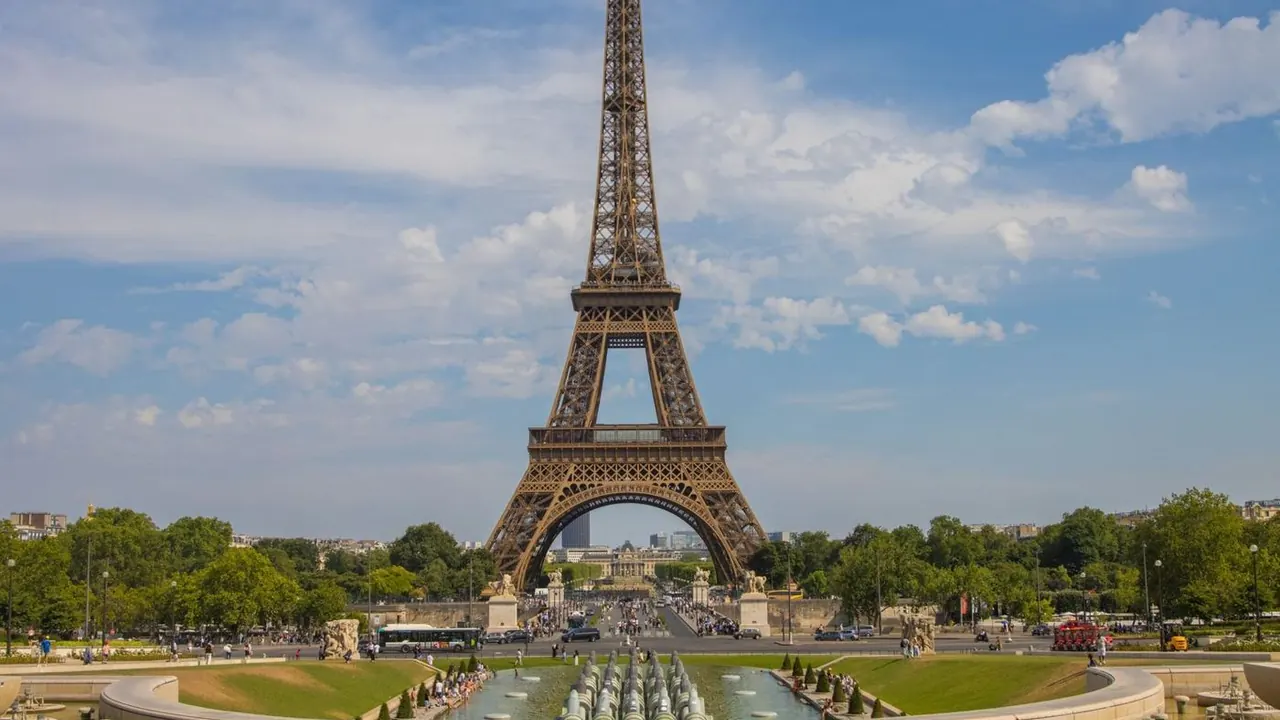
Photos: Bruges by Michielverbeek, CC BY-SA 4.0, cropped; Paris by Efrem Efre, Pexels License.
Bruges or Paris?
Our verdict in twelve categories, each scored against the same fixed benchmark cities, and the climate month by month, so you can choose for your trip.
Choose Bruges for
- beaches
- prices
Bruges suits a slower, smaller trip: two or three days among canals, guildhalls and Flemish Primitives, evenings over Trappist ale in a brown café, and quiet streets once the day-trippers leave. It is also the better base for an afternoon on the North Sea sand and for quick train hops to Ghent and Brussels. It costs a little less than Paris, although neither city is cheap.
Choose Paris for
- nightlife
- shopping
- live music and the arts
Paris is the choice for almost any other kind of trip. Its museums, food, shopping and stage are far beyond anything Bruges offers. Its nights run on until dawn, and children have Disneyland, the Cité des Sciences and the boats on the Luxembourg pond. Plan a week there rather than a weekend, and expect the crowds and the cost that come with it.
Scoreboard
Twelve categories on one fixed scale from 0 to 100. The shaded stretch is the gap between the two.
Your match
Pick a travel style or drag the sliders, and both match scores follow your weighting.
Wins on beaches and prices with your weighting.
Wins on nightlife and shopping with your weighting.
What matters to you?
Category by category
What the scores mean for a trip.
Beaches & swimming
Neither city is a beach destination, but Bruges at least has real sand within reach. Blankenberge is a quarter of an hour away by train, and the coast tram links wide, flat beaches and promenades along the whole Belgian shore. The North Sea there is cool and windy, though.
Paris has only its summer riverbank beaches, the swimming spots on the Bassin de la Villette and in the Seine, and some fine Art Deco pools. The Normandy coast at Deauville is about two hours away, which makes it a separate excursion rather than an afternoon off.
Food & drink
Bruges eats and drinks well, but the range is narrow. You get Trappist and abbey beers in wood-panelled cafés, mussels with frites, beef stewed in beer, waterzooi and serious chocolate. The cooking gets better away from the Markt, and the best fine dining is out in the villages around the city.
Paris is in another class. Daily life runs on boulangeries, cheese shops and street markets such as Aligre. The range goes from zinc-counter bistros and natural wine bars up to haute cuisine, with North African, Vietnamese and West African cooking in Belleville, the 13th and the north-east. Both cities have the same trap: tired set menus right next to the main sights.
Culture & sights
Bruges is a complete medieval town, and its whole canal-ringed centre is on the UNESCO list. It has the Belfry, the Burg and the Begijnhof, plus a small but superb collection of Flemish Primitives in the Groeninge Museum and St John's Hospital. Two full days cover most of it.
Paris works on a far larger scale. The Louvre, the Musée d'Orsay, the Pompidou and the Orangerie are each worth a day, and Notre-Dame and the Sainte-Chapelle match any Gothic building in Flanders. The Haussmann boulevards and the Marais make the walks between them a sight in their own right. That is the real difference: you can see all of Bruges, but in Paris even a week only scratches the surface.
Nightlife
Evenings in Bruges end in a brown café or a vaulted cellar over strong ale. There is a little late life around the Eiermarkt and 't Zand, and then a walk along the lit canals before most of the town goes to sleep around midnight.
Paris offers a real night out. Bars fill Oberkampf, the Canal Saint-Martin and Belleville, South Pigalle has the cocktail bars, and the Marais has its gay scene. When the bars close, the clubs and the summer barges play house and techno until dawn. Expect choosy door staff and expensive drinks.
Nature & outdoors
Bruges sits in flat polder country made for easy cycling. The classic rides are the poplar-lined towpath to Damme and the quiet lanes towards the Dutch border, and the Zwin salt marsh on the coast is known for its birds.
Paris has more green space within reach, though it is no wilder. The Buttes-Chaumont, the Bois de Boulogne and the Bois de Vincennes have room for running and rowing. The forest of Fontainebleau, about forty minutes away by train, has marked trails and sandstone boulders famous among climbers. Neither city has hills or big landscapes nearby.
Day trips
Bruges is a very good base for a city its size. Ghent is under half an hour away by train and Brussels about an hour, with Antwerp a little further, and Damme is a bike ride along the canal. The Belgian coast, the First World War cemeteries around Ypres and, across the French border, Lille make for a long and varied list, and most of these are short enough hops to be back by evening.
Paris goes further, both in distance and in the kinds of trip. Versailles, Fontainebleau and Chantilly put royal palaces and their gardens within an hour. Chartres has its stained glass, and Giverny and Auvers-sur-Oise follow Monet and Van Gogh. Fast trains add the Champagne houses of Reims, old Rouen and the Loire châteaux beyond Tours, and that range of palaces, wine country and painters' gardens is what Bruges cannot match.
Good for families
Bruges is small, safe and easy to walk. Children like the canal boats, the carriages and the swans on the Minnewater, and there is Boudewijn Seapark and sandcastles on the coast. After that the city is mostly paintings and churches, and pushchairs struggle on the cobbles.
Paris keeps children busy for much longer. Disneyland and Parc Astérix are a short train ride out, and the Cité des Sciences and the natural history galleries at the Jardin des Plantes can each fill a whole day. The Luxembourg gardens have puppet shows, carousels and toy boats. The downsides are metro stairs, small hotel rooms and long queues.
Getting around
Bruges hardly needs a transport system. You can cross everything inside the canal ring on foot in about half an hour, the centre is flat and mostly car-free, and bikes are easy to hire. The drawbacks are the walk or bus ride to the station outside the ring, and the cobbles, which are hard on wheels and suitcases.
Paris is the better city to get around, even though it is far bigger. Its centre is one of the great walks, along the Seine from the Louvre to the Eiffel Tower. The dense metro puts a station a few minutes from almost anywhere, and the RER to the airports and Versailles and the bike-share fill the gaps. The price is stairs, packed trains at rush hour and pickpockets on the tourist lines.
Shopping & style
In Bruges you mostly come home with chocolate, Belgian beer and glasses, and perhaps some lace, although much of what is sold is imported. The high street on Steenstraat is mostly chains, but the market on 't Zand and the flea market by the Dijver are nice to browse.
Paris is one of the world's great shopping cities. Between the couture flagships on Avenue Montaigne and the Faubourg Saint-Honoré, Galeries Lafayette and Le Bon Marché, the Marais concept stores, the covered passages and the Saint-Ouen flea market, shopping alone could fill a trip.
Affordability
A stay in Bruges comes out cheaper than one in Paris, mainly because its big costs are easier to avoid. Those costs are hotels inside the canal ring at weekends and restaurants on the main squares. Staying midweek or near the station, and eating away from the Markt, cuts the bill a good deal.
Paris costs more across the board. Rooms are small and expensive, drinks on a terrace add up, and the big museums charge full admission. There are real ways to save, though: bakeries, picnics by the river, and the free permanent collections in the city's own museums.
Live music & performing arts
Bruges does well for its size in one field. The Concertgebouw and the summer early music festival are the highlights, alongside chamber music, contemporary dance, the Stadsschouwburg theatre and the Belfry carillon. Beyond that, evening choices are few.
Paris has two opera houses, with the Paris Opera Ballet at the Palais Garnier, plus the Philharmonie, the Comédie-Française, jazz cellars around the rue des Lombards and cabaret in Pigalle. Most of the theatre is in French, which rules it out for many visitors, but music and dance need no translation.
Wellness & relaxation
Neither city has a spa tradition, so both rely on hotel spas and day spas. The difference is in what else they offer. Paris adds hammams, the best known being the tiled steam rooms of the Grande Mosquée.
Bruges offers calm itself. The Begijnhof, the Minnewater park and the Sint-Anna quarter are very peaceful early and late in the day. Fast, loud Paris only gives you that kind of quiet in short spells, in the Luxembourg gardens or by the Seine.
When should you go?
Pick your month. The climate figures are measured averages, not a forecast.
Bruges in July
Paris in July
Daytime high, °C
Rainfall in the month, mm
Where the figures come from
Bruges has no rain gauge within 25 km of the centre, so its rainfall comes from a gridded climate dataset read at the city rather than from a gauge further away.
Bruges's sunshine is measured 37 km from the centre, at Vlissingen.
Temperature and rainfall are climate normals, averaged over the years shown. Bruges: 2009-2025 (sunshine 1991-2020, rainfall 1991-2020) normals, Zeebrugge / Zeemanshaard (15.8 km from centre). Paris: 1991-2020 normals, Paris-Montsouris (4.6 km from centre).
Summer in Bruges is mild rather than hot. Highs reach about 22°C in July and August, and the North Sea only gets to 19°C in August, so the coast is for paddling rather than long swims. Spring is the smart choice: April is the driest month, and May and June get the most sunshine. From late summer the rain builds and stays through the winter. The short, grey days from November to February are better spent in museums and beer cafés than on long walks.
Paris is a few degrees warmer all year and reaches about 26°C in high summer, which is still comfortable for walking. Its rain is spread more evenly, and May is the wettest month. Late spring and early autumn give the best run of mild days for the streets and parks. Winter is cool in both cities, but Paris stays slightly milder.
Which traveller are you?
For a short city break, Bruges is the easier fit. In a weekend you can walk the canal ring end to end, see its great paintings and still have time for a slow evening. Two days in Paris means picking one museum and leaving ten unseen.
On a food and nightlife trip, Paris is the clear choice. You can plan whole days around eating: a market in the morning, a long bistro lunch, a glass in a wine bar at dusk, then bars and clubs until late. Bruges gives you one fine night of ale.
On a tight budget, Bruges makes the money go a little further. Sleep just outside the canal ring, spend the days on foot, and put the savings into a train to Ghent. In Paris it means bread and cheese by the Seine and free city museums like the Carnavalet, and a small room still costs more.
Before you go
| Measure | Bruges | Paris |
|---|---|---|
| Official language | French, German, Dutch | French |
| Currency | Euro (EUR) | Euro (EUR) |
| Sockets | CE230 V, 50 Hz | CE230 V, 50 Hz |
| Driving side | Right | Right |
| Time zone | UTC+1, UTC+2 in summer | UTC+1, UTC+2 in summer |
| Emergency number | 112 | 112 |
| Elevation | 2 m | 27 m |
| Main airport | Brussels Airport (BRU)94 km from centre191 non-stop destinations | Charles de Gaulle International Airport (CDG)22 km from centre277 non-stop destinations |
| Public holidays this year | 14 days | 11 days |
By the numbers
| Measure | Bruges | Paris |
|---|---|---|
| City population | 118,509 | 2,103,778 |
| People per km² | 840 | 19,960 |
| Museums within 10 km | 38 | 251 |
| UNESCO World Heritage sites within 50 km | 3 | 4 |
| Swim season, months above 21 °C | None | - |
Where else could you go?
Every comparison below shares a destination with this one, so you can follow Bruges or Paris somewhere new.