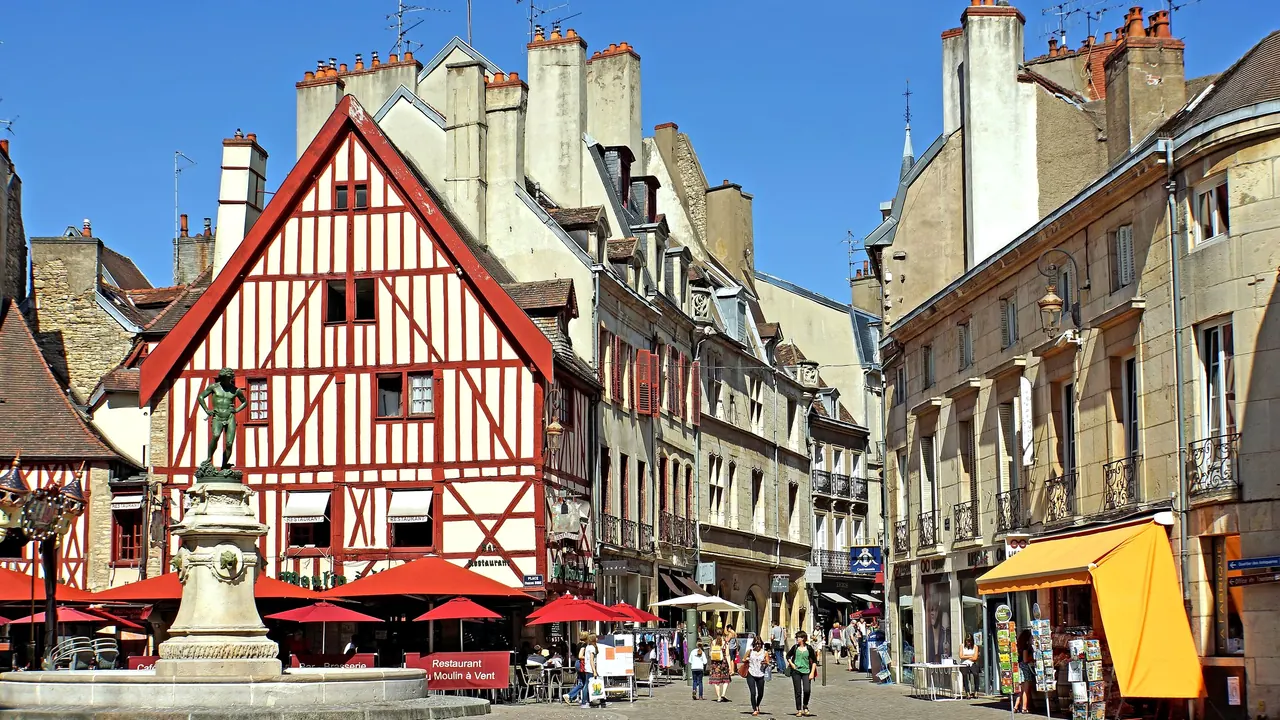
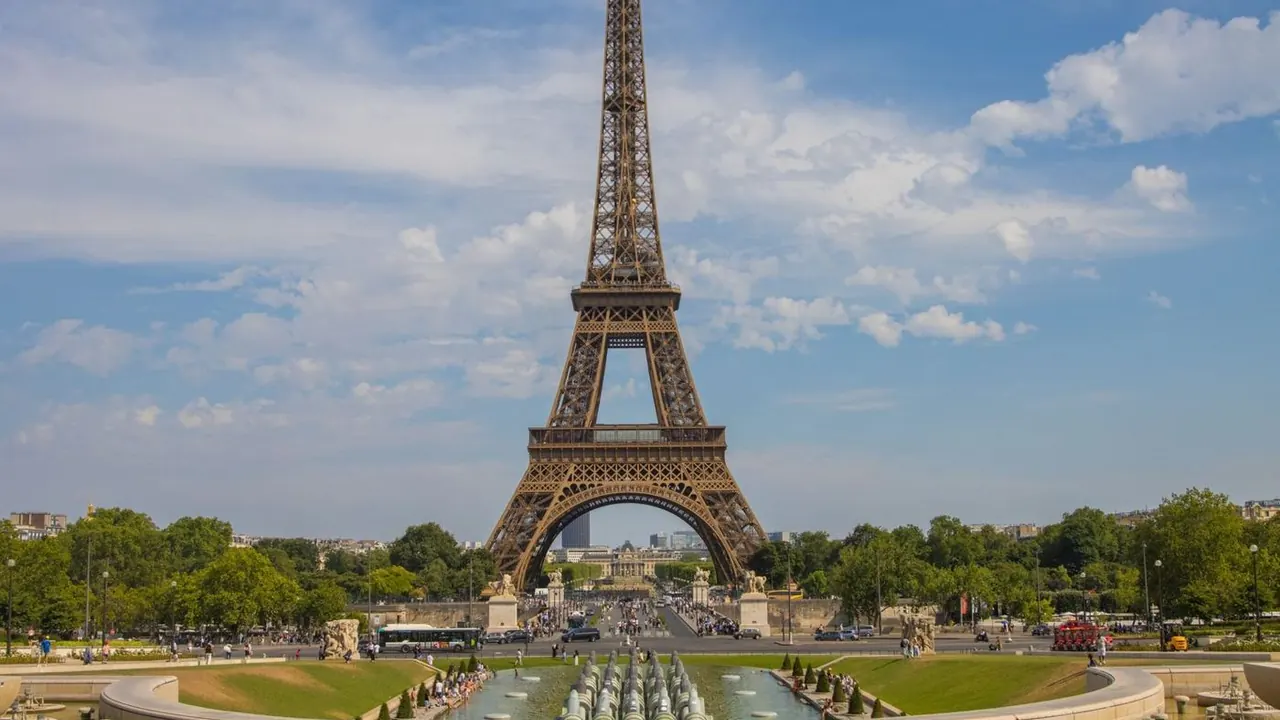
Photos: Dijon by Dennis G. Jarvis, CC BY-SA 2.0, cropped; Paris by Efrem Efre, Pexels License.
Dijon or Paris?
Our verdict in twelve categories, each scored against the same fixed benchmark cities, and the climate month by month, so you can choose for your trip.
Choose Dijon for
- prices
- beaches
Dijon suits a slower trip built around Burgundy's food and vineyards. You get a few days in the old town of the dukes, a morning at Les Halles, then the wine route south to Beaune by train or bike. It costs noticeably less than the capital, you can cross the centre in minutes, and it works best for couples and wine lovers who want to know one region well rather than see a lot.
Choose Paris for
- shopping
- nightlife
- live music and the arts
Paris is the choice when you want range. It is stronger on almost every front: the Louvre and the Orsay, the bar streets of the east, two opera houses, Avenue Montaigne and a children's day at the Cité des Sciences, with food that goes far beyond French regional cooking. In return the stay is more expensive and more crowded. That is easier to accept on a first visit to France, or when the people travelling together want different things.
Scoreboard
Twelve categories on one fixed scale from 0 to 100. The shaded stretch is the gap between the two.
Your match
Pick a travel style or drag the sliders, and both match scores follow your weighting.
Wins on prices and beaches with your weighting.
Wins on shopping and nightlife with your weighting.
What matters to you?
Category by category
What the scores mean for a trip.
Beaches & swimming
Neither city is a beach destination. Dijon has Lac Kir, a reservoir on the western edge of town with a supervised lawn-and-sand bathing area. Paris turns stretches of its riverbanks into beaches in summer, and you can swim in the Bassin de la Villette and in the Seine itself.
The real difference is how easily you can get to the sea. From Paris, the Normandy coast around Deauville is about two hours by train. Dijon is several hours from any coast.
Food & drink
Dijon gives you Burgundy at its most concentrated: boeuf bourguignon, jambon persillé, Époisses from the stalls at Les Halles, village wines by the glass, and the city's own mustard and cassis. It does that one thing very well and offers little beyond it.
Paris has all of this and much more. It runs from zinc-counter bistros and the inventive neo-bistros of the eastern districts to haute cuisine and fine patisserie, with North African couscous in Belleville and Vietnamese pho in the south-east of the city. For variety and depth, Paris is well ahead, while Dijon is a specialist in its own region.
Culture & sights
Dijon fills two or three good days. There is the palace of the dukes of Burgundy, the carved Valois tombs in the Musée des Beaux-Arts, and the gargoyles and lucky owl of Notre-Dame, all in a well-kept half-timbered centre without queues.
Paris is on another level. The Louvre alone could take a week, and the Orsay, the Sainte-Chapelle and a dozen other museums would each be the main attraction in a smaller city. All of it is set among Haussmann's boulevards, the old townhouses of the Marais and the UNESCO-listed Seine embankments.
Nightlife
Evenings in Dijon centre on the student bars of Rue Berbisey and the terraces around Place Émile Zola. A night out means wine, beer and a late dinner, and outside term time the streets are quiet by midnight.
Paris goes on much later and offers far more. You can start with a bottle on the Canal Saint-Martin, move on to the crowded bars of Oberkampf and Belleville or the cocktail bars of South Pigalle, then finish in house and techno clubs that stay open until dawn.
Nature & outdoors
The two are on a par, and both offer gentle country rather than drama, but of different kinds. Dijon is closer to open country. The limestone combes on the western edge of town have trails and climbing cliffs, the canal towpath and the vineyard cycle route lead towards Beaune, and the granite hills of the Morvan are about an hour and a half away.
Paris offers parks and woods: the Buttes-Chaumont, the Bois de Boulogne and the Bois de Vincennes. The forest of Fontainebleau, with its sandstone boulders popular with climbers, is about forty minutes away by train. Paris suits a run through a formal garden, Dijon a day on a bike among the vines.
Day trips
Day trips are one of Dijon's strengths. The Route des Grands Crus runs south to Beaune, and Fontenay Abbey and the ramparts of Semur-en-Auxois are to the north-west. Many of the wine villages, though, are only reachable by car, bike or tour.
Paris has even more within easy reach, and most of it by train: Versailles, Chartres, Giverny and Fontainebleau, and by fast train the Champagne houses of Reims, the old town of Rouen and the Loire châteaux from Tours. Paris gives breadth and easy access, while Dijon lets you explore one wine region in depth.
Good for families
Dijon is safe, small and easy to walk with a pushchair. It has a planetarium in the Jardin de l'Arquebuse and paddling at Lac Kir, but little else is made for children, and its usual wine and fine-art itineraries are aimed at adults.
Paris has much more to fill the days: Disneyland and Parc Astérix, the Cité des Sciences, the Jardin d'Acclimatation, the menagerie at the Jardin des Plantes and toy sailboats on the Luxembourg pond. The cost is everyday hassle, with stairs in the metro, crowded trains and small hotel rooms.
Getting around
You can walk across Dijon's centre in minutes, and two tram lines reach the outskirts, but the wine villages away from the railway need a car, a bike or a tour. Paris is a great walking city on a much larger scale. A metro station is rarely far away and the RER runs to Versailles and the airports, although stairs and rush-hour crowds take some patience.
Shopping & style
In Dijon you mostly shop for food and drink: mustard, pain d'épices, crème de cassis, cheese from Les Halles and bottles from the Burgundy wine merchants. Rue de la Liberté adds French chains and a department store.
Paris is worth the trip for its shops alone. It has the flagships of the great fashion houses on Avenue Montaigne, the department stores Galeries Lafayette and Le Bon Marché, independent designers in the Marais, the covered passages and the vast Saint-Ouen flea market. Even for edible gifts, its specialist shops offer chocolate and tea as well as mustard and cheese.
Affordability
Dijon is clearly the cheaper stay. Hotel rooms are moderately priced, bistro set lunches are good value and wine by the glass costs less than in most of France. Costs climb only with fine dining, cellar tastings and guided wine tours.
Paris costs much more, with small, expensive hotel rooms, pricey drinks on terraces and full-price museum tickets. Saving money there takes effort: bakeries, picnics by the Seine, the free permanent collections of the city's own museums and a room in the outer arrondissements.
Live music & performing arts
The Opéra de Dijon stages opera, concerts and dance in the Grand Théâtre and the Auditorium, and the city also has a national drama centre and a venue for touring bands. That is a good season for a provincial city, though it thins out in summer.
Paris offers far more choice on any given night. There is the Palais Garnier with its ballet, the Opéra Bastille, the Philharmonie, chamber concerts in the Sainte-Chapelle, jazz cellars near the rue des Lombards and cabaret in Pigalle. Much of its theatre is in French, but its music and dance need no translation.
Wellness & relaxation
Neither city has thermal springs, but Paris offers more ways to be pampered. There is the tiled hammam of the Grande Mosquée, smaller neighbourhood hammams and a choice of luxury hotel spas and day spas.
Dijon has only a few hotel spas, some in the wine villages offering grape-based treatments. Its slow provincial pace is restful in its own way, while in Paris rest comes in short breaks between the crowds.
When should you go?
Pick your month. The climate figures are measured averages, not a forecast.
Dijon in July
Paris in July
Daytime high, °C
Rainfall in the month, mm
Temperature and rainfall are climate normals, averaged over the years shown. Dijon: 1991-2020 normals, Dijon (7 km from centre). Paris: 1991-2020 normals, Paris-Montsouris (4.6 km from centre).
Neither city has a beach season. Both have cold winters and warm summers, but Dijon goes further at both ends. Winter highs there are 6°C against 8°C in Paris, and July is slightly warmer at 27°C. From June to early September Dijon is at its best for long lunches on terraces and cycling the vineyards. July is its sunniest month, with more than 250 hours of sunshine, while December is short and grey.
Rain makes the bigger difference. Dijon is the wetter city, especially in October and November at around 77mm a month, so late autumn is a weaker time for days out among the vines. Paris stays noticeably drier through the autumn. In both cities April to October is comfortable for walking, and May is the wettest month of spring.
Which traveller are you?
On a trip on a tight budget, Dijon is the easier choice. A comfortable stay costs far less than in the capital, and its best pleasures cost little: market mornings, the old centre on foot, a day on the canal towpath. Paris demands constant compromise.
For a shopping trip, Paris wins outright. Luxury fashion, vintage clothes, antiques and old prints could fill several days on their own. Dijon only suits a shopper whose list is mostly edible and who wants to bring home a case of Burgundy.
On a family trip with children, Paris keeps them busier, with theme parks, hands-on museums and parks to break up the sightseeing. Dijon is calmer and easier to manage, but young children will soon tire of a trip built around wine and art.
Before you go
| Measure | Dijon | Paris |
|---|---|---|
| Official language | French | French |
| Currency | Euro (EUR) | Euro (EUR) |
| Sockets | CE230 V, 50 Hz | CE230 V, 50 Hz |
| Driving side | Right | Right |
| Time zone | UTC+1, UTC+2 in summer | UTC+1, UTC+2 in summer |
| Emergency number | 112 | 112 |
| Elevation | 220 m | 27 m |
| Main airport | Lyon Saint-Exupéry Airport (LYS)178 km from centre141 non-stop destinations | Charles de Gaulle International Airport (CDG)22 km from centre277 non-stop destinations |
| Public holidays this year | 11 days | 11 days |
By the numbers
| Measure | Dijon | Paris |
|---|---|---|
| City population | 161,830 | 2,103,778 |
| People per km² | 3,890 | 19,960 |
| Museums within 10 km | 8 | 251 |
| UNESCO World Heritage sites within 50 km | 1 | 4 |
Where else could you go?
Every comparison below shares a destination with this one, so you can follow Dijon or Paris somewhere new.