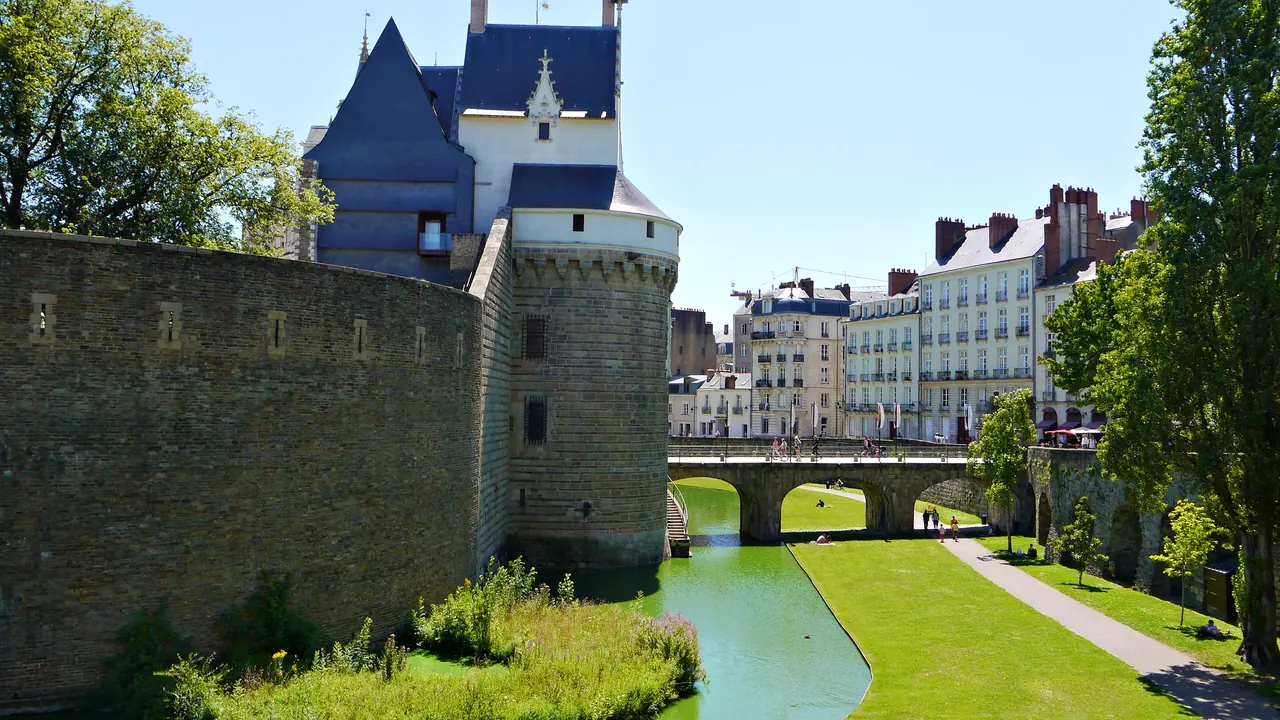
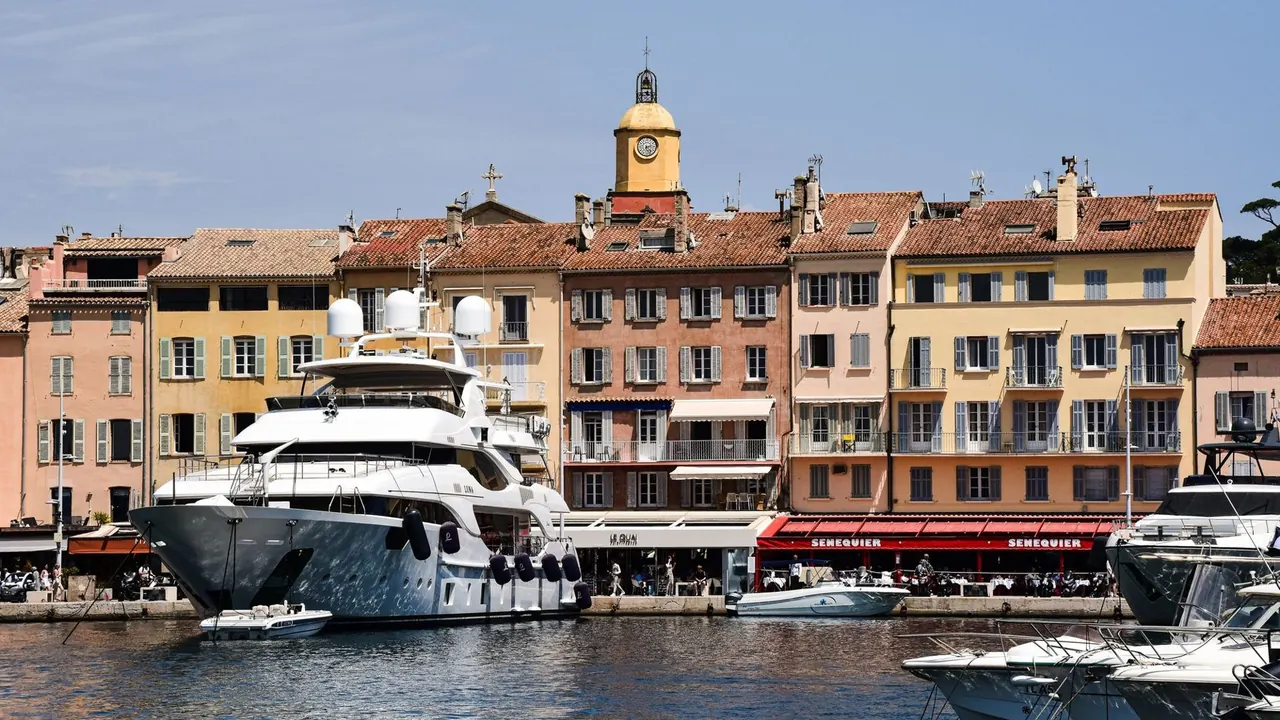
Photos: Nantes by Carole44, CC BY-SA 3.0, cropped; Saint-Tropez by AXP Photography, Pexels License.
Nantes or Saint-Tropez?
Our verdict in twelve categories, each scored against the same fixed benchmark cities, and the climate month by month, so you can choose for your trip.
Choose Nantes for
- getting around
- prices
- live music and the arts
Nantes suits a traveller who wants a proper city to explore. The ducal castle and the museums fill two or three days, there is a real stage for opera and music, and trams make getting about easy. Fast trains reach Angers and Rennes, and Guérande, the Loire châteaux and the vineyards are all close. It is also the gentler choice for families and for anyone watching costs.
Choose Saint-Tropez for
- beaches
- nature and the outdoors
- shopping
For a summer of sand and sea, Saint-Tropez is the place. The draw is Pampelonne and the coves to the south, the coast path round the capes, and polished nights at the beach clubs and on the harbour, with luxury boutiques to match. Go knowing that it is very expensive, hard to get around without a car, and short on culture once you have seen the Annonciade.
Scoreboard
Twelve categories on one fixed scale from 0 to 100. The shaded stretch is the gap between the two.
Your match
Pick a travel style or drag the sliders, and both match scores follow your weighting.
Wins on getting around and prices with your weighting.
Wins on beaches and nature and the outdoors with your weighting.
What matters to you?
Category by category
What the scores mean for a trip.
Beaches & swimming
Nantes is an inland river city. Its beaches at La Baule, Pornic and the Jade coast are an outing of about an hour, on a cool Atlantic with a short season. They are wide, clean and good for a family day, but they are a side trip.
Saint-Tropez revolves around the beach in summer. Pampelonne's long pale sand, the quieter coves at Escalet, Cap Taillat and Gigaro, and the clearer, warmer Mediterranean make swimming the centre of the day from June to September. Small town beaches such as Les Graniers are there for a quick dip.
Food & drink
Nantes is the better place to eat day to day. It has beurre blanc, which was born here, oysters from the nearby coast, galettes and crisp Muscadet from the vineyards just outside town. Fairly priced bistros line the Bouffay lanes and the streets around Graslin, and the Talensac market shows off the region's produce.
Saint-Tropez has polished Provençal cooking, rosé lunches on the sand and the tarte tropézienne, and its top tables are genuinely good. Below that level, many quayside places trade on the view, simple meals are hard to find, and in winter much of the town shuts.
Culture & sights
Nantes has far more to see. There is the moated Château des Ducs de Bretagne with its frank history museum, the Gothic cathedral, the Musée d'Arts, the leaning merchant façades of the Ile Feydeau and the Memorial to the Abolition of Slavery. Together they fill two or three days.
Saint-Tropez has one fine museum, the Annonciade, with its Signac and Fauvist paintings. Add the maritime museum in the citadel and the lanes of La Ponche and you have a day's worth. People come for the setting more than the heritage.
Nightlife
Nantes cannot match Saint-Tropez on a summer night, but it offers something the Riviera town lacks: a scene that runs all year and needs no dress code. Students fill the pubs and wine bars of Bouffay, and later the crowd drifts to the riverside bars and clubs in the old docks on the Ile de Nantes. It is easy to join, though it stays a regional city's night out.
From June to September, Saint-Tropez is clearly the stronger place to go out. Long afternoons at the Pampelonne beach clubs lead to champagne on the harbour terraces and then to a few famous clubs that stay open until dawn, all glamour and table service. Once the season ends the harbour goes quiet, and the choice narrows to a café on the Place des Lices.
Nature & outdoors
Around Nantes the landscape is flat and watery, and the pleasures are gentle. You can take a boat on the Erdre, cycle the Loire à Vélo route, watch birds in the Brière marshes or walk the Côte Sauvage near Le Croisic.
Saint-Tropez has the more striking outdoors. The Sentier du Littoral runs past pine-backed coves to the capes of Camarat and Taillat, and the Massif des Maures has cork-oak forests. You can sail and snorkel in the gulf, and the national park islands of Port-Cros and Porquerolles are within reach. Summer heat and the risk of fire can close some trails.
Day trips
Nantes has the wider range of outings, most of them reachable by train. They include Guérande and its salt marshes, Angers and the Apocalypse Tapestry, Saumur and the Loire châteaux, Vannes and Rennes, and Clisson, the Italian-style town among the Muscadet vineyards.
From Saint-Tropez the trips are shorter and lighter: the hilltop villages of Ramatuelle and Gassin, Grimaud's castle, the canals of Port Grimaud by boat, and wine tastings at nearby estates. Porquerolles or Fréjus make a full day. All of it depends on roads that jam in high summer.
Good for families
Nantes is the easier base for a family. The mechanical elephant and the sea-creature carousel at the Machines de l'Ile are made for children, and the Jardin des Plantes has playgrounds. The safari park at Port-Saint-Père and Puy du Fou are within driving distance, and the trams make life easy with a buggy.
Saint-Tropez has gently shelving sand at Pampelonne and Gigaro and a small, safe old town, but little else for children. The prices, the traffic and the adult crowd at the beach clubs lead many families to stay across the gulf instead.
Getting around
Nantes is simple to get around. The centre is flat and compact, with trams, a busway and river shuttles across the Loire. The central station has fast trains to Paris and regional trains to the coast.
Saint-Tropez itself takes a few minutes to cross on foot, but there is no railway, the buses are slow and the beaches lie several kilometres out. Most visitors rely on a car, a scooter or taxis. In July and August the road along the gulf jams for hours, and the passenger boats from Sainte-Maxime and Port Grimaud are often the best way in.
Shopping & style
Saint-Tropez has the stronger shopping for its size. Big fashion houses keep summer shops behind the port, alongside resort wear and jewellery, and the hand-stitched Tropézienne sandal is made in small workshops in the old town. Beyond luxury, though, the choice is narrow, and many shops close in winter.
Nantes is more ordinary but open all year. It has the three-level Passage Pommeraye, chain stores on Rue Crébillon and independent shops around Bouffay and Decré. Its souvenirs are things to eat and drink, such as salted-butter biscuits, berlingots and Guérande salt.
Affordability
Nantes is priced like any large French regional city, which puts it well below the Riviera. A bed costs much less than in Paris, and because the sights sit close together, many days pass with almost no transport spending. The main outlay is dinner and drinks at ordinary French levels, and summer day trips to La Baule or Pornic come at seaside prices.
Saint-Tropez is at the very top of the Mediterranean range, and July and August are when it costs most: lunch on the quay, a lounger at a Pampelonne beach club and an evening cocktail all carry luxury-resort mark-ups. With no railway and few buses, taxis or parking add a daily charge that Nantes does not have. Sleeping in a village across the gulf, picnicking from the Place des Lices market and using the public stretches of sand all help, as do late spring and autumn, but the town never turns inexpensive.
Live music & performing arts
Nantes has real stage life. There is La Folle Journée in winter, opera at the Théâtre Graslin, the national orchestra and contemporary work at the Lieu Unique, along with the city's tradition of giant street puppetry.
Saint-Tropez has summer concerts in gardens and on the citadel and the Bravade procession in May, but very little the rest of the year.
Wellness & relaxation
Neither town has a bathing tradition, so both rely on spas. Nantes sends you out to the seawater thalassotherapy centres at La Baule and Pornic, or to slow afternoons by the Erdre.
Saint-Tropez keeps its spas in luxury hotels and villas for their guests, and how calm it feels depends on the season. It is loud in high summer but restful in May, June and September, when there is pétanque under the plane trees.
When should you go?
Pick your month. The climate figures are measured averages, not a forecast.
Nantes in July
Saint-Tropez in July
Daytime high, °C
Rainfall in the month, mm
Where the figures come from
Saint-Tropez has no rain gauge within 25 km of the centre, so its rainfall comes from a gridded climate dataset read at the city rather than from a gauge further away.
Saint-Tropez's sunshine is measured 62 km from the centre, at Nice.
Temperature and rainfall are climate normals, averaged over the years shown. Nantes: 1991-2020 normals, Nantes (6.6 km from centre). Saint-Tropez: 1999-2020 (sunshine 1991-2020, rainfall 1991-2020) normals, Le Luc (24.2 km from centre).
Nantes has a mild Atlantic climate with no real heat. Summer days reach about 25°C, so June to September is comfortable for walking, and the drier, sunnier stretch runs from late spring through August. The Atlantic stays cool, only about 19°C even in August, so beach days are bracing. From October the rain sets in, and winter is grey and damp rather than truly cold.
Saint-Tropez is much sunnier all year. July and August reach about 32°C and are almost dry, with the sea at about 24°C. That is ideal for the beach but hot for walking in the afternoon. June and September are still warm enough to swim and easier on foot, and spring is a good time for the coast path. Autumn turns wet, with November the rainiest month at around 155mm, but winter days are milder and brighter than in Nantes.
Which traveller are you?
For a beach and sun trip, Saint-Tropez wins clearly. Pampelonne and the southern coves have warm, clear water and long, dry summers. From Nantes the sand is an hour away, on a cool Atlantic with a short season.
On a trip on a tight budget, Nantes is the realistic choice. Hotels are easy to find, the trams cost little and the lunch menus are good value. Saint-Tropez prices everything, from rooms to a coffee on the port, for the yachting crowd.
For a culture and arts trip, Nantes offers far more: the ducal castle and its museum, the Musée d'Arts, opera at the Graslin and La Folle Journée. Saint-Tropez has the Annonciade's paintings and little live performance.
Before you go
| Measure | Nantes | Saint-Tropez |
|---|---|---|
| Official language | French | French |
| Currency | Euro (EUR) | Euro (EUR) |
| Sockets | CE230 V, 50 Hz | CE230 V, 50 Hz |
| Driving side | Right | Right |
| Time zone | UTC+1, UTC+2 in summer | UTC+1, UTC+2 in summer |
| Emergency number | 112 | 112 |
| Elevation | 2 m | 0 m |
| Main airport | Nantes Atlantique Airport (NTE)8 km from centre97 non-stop destinations | Nice-Côte d'Azur Airport (NCE)64 km from centre130 non-stop destinations |
| Public holidays this year | 11 days | 11 days |
By the numbers
| Measure | Nantes | Saint-Tropez |
|---|---|---|
| City population | 327,734 | 3,582 |
| People per km² | 5,027 | 320 |
| Museums within 10 km | 11 | 4 |
| UNESCO World Heritage sites within 50 km | 0 | 0 |
| Swim season, months above 21 °C | None | 3 months |
Where else could you go?
Every comparison below shares a destination with this one, so you can follow Nantes or Saint-Tropez somewhere new.
- Cannesvs Saint-Tropez
- Antibesvs Saint-Tropez
- Nicevs Saint-Tropez
- Monacovs Saint-Tropez
- Marseillevs Saint-Tropez
- Avignonvs Saint-Tropez