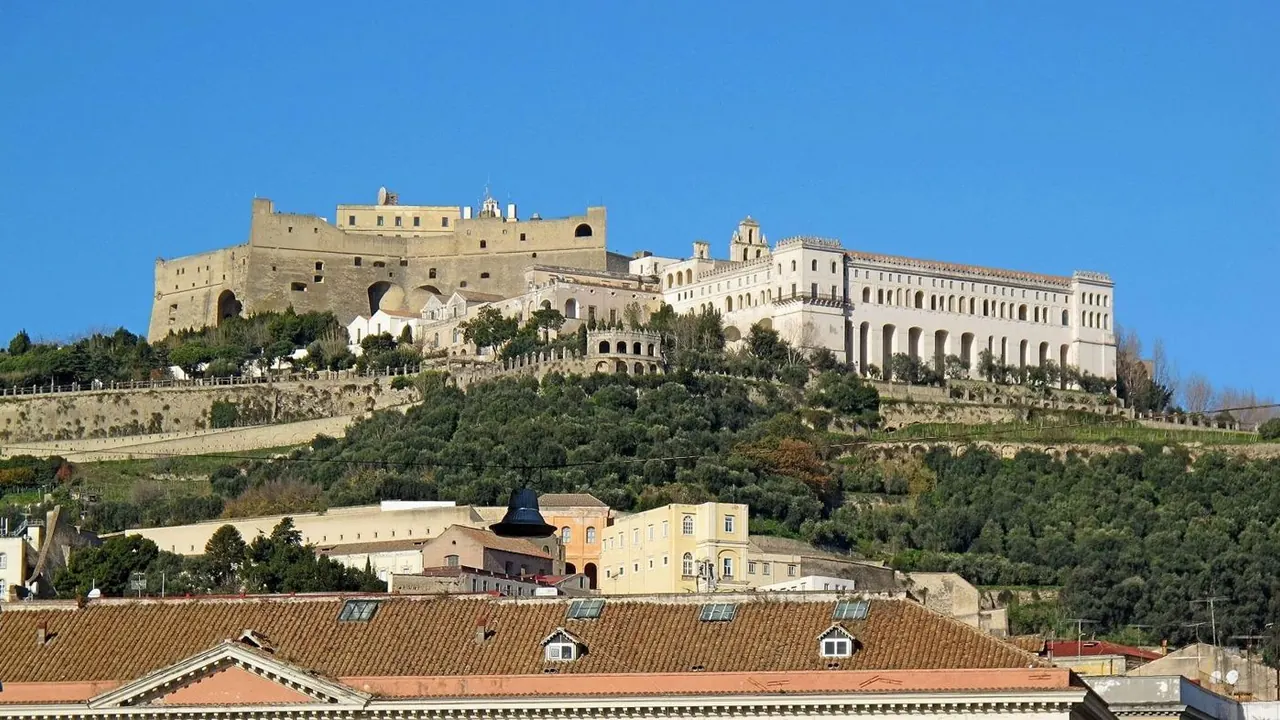
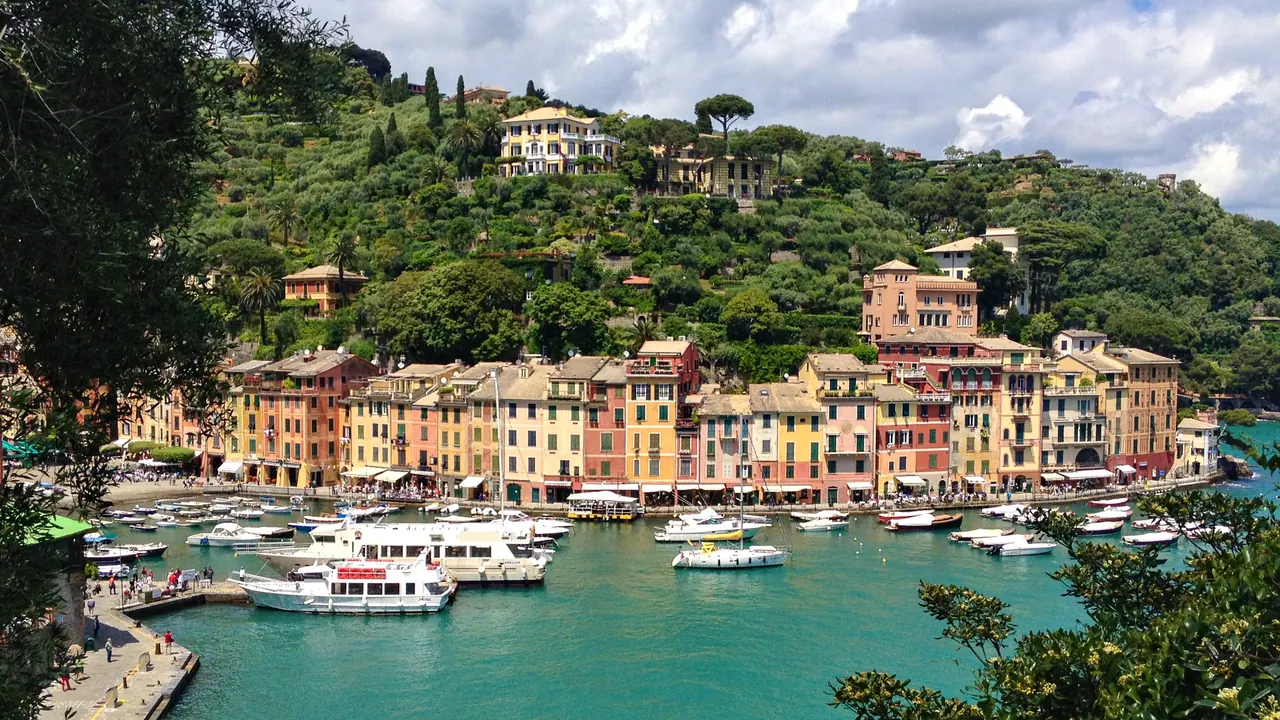
Photos: Naples by pietro scerrato, CC BY 3.0, cropped; Portofino by Michal Osmenda, CC BY 2.0, cropped.
Naples or Portofino?
Our verdict in twelve categories, each scored against the same fixed benchmark cities, and the climate month by month, so you can choose for your trip.
Choose Naples for
- culture and sights
- live music and the arts
- prices
Naples suits travellers who want a lot from a week and don't mind noise. It has a Greek street grid full of churches, the great archaeological museum, opera at San Carlo, pizza where it was invented, and Pompeii, Herculaneum and the islands close by. It is intense and sometimes hard work, but it costs far less and offers far more to do.
Choose Portofino for
- beaches
Portofino is for a short, beautiful stay built around the sea and the headland: swimming off clear rocks, walking the park trails to San Fruttuoso and taking long lunches facing the harbour. There is little to see indoors and almost nothing after dark, and it is very expensive. It best suits couples with money to spend, or anyone happy to sleep in Santa Margherita and come over for the day.
Scoreboard
Twelve categories on one fixed scale from 0 to 100. The shaded stretch is the gap between the two.
Your match
Pick a travel style or drag the sliders, and both match scores follow your weighting.
Wins on culture and sights and live music and the arts with your weighting.
Wins on beaches with your weighting.
What matters to you?
Category by category
What the scores mean for a trip.
Beaches & swimming
Neither has a proper town beach, but Portofino has the better swimming on its doorstep. The water off the rocks towards the lighthouse is deep and clear, Paraggi is a sheltered bay a short walk away, and the pebble cove at San Fruttuoso is a boat ride round the point. All of these spots are small, though, and they fill up in summer.
In Naples you swim off the rocks below the Lungomare or at the small lidos in Posillipo, and the water near the port is not always clean. The clear coves are on Procida, Ischia and Capri, so a good swim becomes a day out by ferry.
Food & drink
Naples is one of Italy's great places to eat. You get soft Neapolitan pizza in loud rooms with shared tables, fried street food, sfogliatelle and babà, and the Pignasecca and Porta Nolana markets full of buffalo mozzarella and fish. Eating well there needs neither planning nor much money.
Portofino serves Ligurian food such as trofie with pesto, Recco's cheese focaccia and fritto misto on terraces above the harbour. But you pay for the view of the yachts, and the cooking is rarely more than solid. Keen eaters go to Camogli or the trattorie up in the hills.
Culture & sights
This is one of the widest gaps between the two. Naples has a street grid laid out by the Greeks and packed with Gothic and Baroque churches. It also has the National Archaeological Museum with the finds from Pompeii, the Veiled Christ in the Cappella Sansevero, and a whole city of tunnels and catacombs underneath. That is enough for a week.
In Portofino the sight is the harbour itself. Castello Brown, the church of San Giorgio and the abbey at San Fruttuoso add a day at most, and there are no real museums.
Nightlife
Naples has proper nights out, even though they happen mostly in the street. Students drink on the steps around Piazza Bellini, and a smarter crowd fills the alleys of Chiaia until well past midnight. Serious clubs are few.
Portofino more or less ends the evening after aperitivo and dinner on the harbour. A few dressy bars face the yachts in summer, and outside July and August the village goes quiet early. For anything later you would go to Rapallo or Genoa.
Nature & outdoors
Both are excellent outdoors, but the landscapes are very different. Around Naples it is volcanoes: the crater rim of Vesuvius, the old craters of the Phlegraean Fields with Astroni's oak woods and Lake Avernus, and the Path of the Gods above the Amalfi Coast for a long day.
In Portofino the nature starts at your door. The protected headland has cliff trails to San Fruttuoso and Camogli, some sections with chains. The marine reserve offshore offers diving among red coral walls and down to the bronze Christ of the Abyss.
Day trips
Naples has the stronger list by some way. Pompeii and Herculaneum are each under an hour away on the Circumvesuviana, with the quieter Roman villas at Oplontis and Stabiae on the same line, and the Bourbon palace at Caserta is a short train ride inland. Ferries from Molo Beverello reach Capri, Ischia and Procida, and Sorrento is the gateway to Positano, Amalfi and Ravello.
Portofino's outings are gentler and mostly along the coast. You can reach Camogli and Santa Margherita by boat, Sestri Levante's two bays by train, Genoa's palaces and medieval lanes in under an hour, and the Cinque Terre by summer ferry. They make lovely days out, but none of them matches walking the streets of a buried Roman town.
Good for families
Neither is easy with small children, but Naples has more to keep them busy. There are the zoo and Edenlandia in Fuorigrotta and the science museum at Bagnoli, and older children enjoy the tunnels, the funiculars and Pompeii. The downside is scooters, broken pavements and crowded summers.
Portofino is calm and safe, but it has no playgrounds and its paths are steep steps that don't work with a pushchair. The only sand nearby is at Paraggi, mostly in paid beach clubs. Families visiting either place often stay somewhere easier nearby, such as Sorrento or Rapallo.
Getting around
Getting around is similar in both, in that you walk and never need a car, but the problems are different. Naples is a big city with a metro line, four funiculars up to Vomero and Posillipo, slow buses and a crowded old train round the bay, and you share every lane with scooters.
Portofino takes a few minutes to cross on foot. The hard part is getting there: there is one narrow road from Santa Margherita, very little parking and buses that are packed in summer. From spring to autumn the ferry is the pleasant way in.
Shopping & style
Naples has more to buy, and much of it you won't find anywhere else. There are tailored suits and silk ties from workshops in Chiaia, nativity figures on Via San Gregorio Armeno, and coral and cameos from Torre del Greco. Via Toledo and the Galleria Umberto I cover the high street.
Portofino fits big fashion and jewellery houses and resort wear into a few lanes behind the harbour, and you can see it all in under an hour. For markets or a longer browse, people go to Chiavari or Genoa.
Affordability
Naples is far cheaper than Portofino, even once you add the trips out. Pizza, street food, coffee standing at the bar and a plain trattoria lunch all cost little, the metro and funiculars are cheap, and the historic centre has plenty of modest B&Bs. The bigger costs come when you leave the city: ferries to Capri, a night on the Amalfi Coast and the entry fees at Pompeii and Herculaneum. Those are extras on a trip that is cheap at its base.
Portofino is one of the most expensive places to stay in Italy, and it is the village itself that costs the most. Its few hotels are luxury properties above the harbour, and you pay a heavy premium for the setting at a table on the piazzetta, a lounger at Paraggi, boat hire and parking. The headland trails and the local bus are about the only cheap things, so many visitors base themselves in Rapallo or Camogli and come over for the day.
Live music & performing arts
Naples has the Teatro di San Carlo, the oldest opera house in Europe still in use, with a full season of opera, ballet and concerts. There is also chamber music in the churches of the old centre, and Neapolitan song at small shows and in the trattorias.
Portofino has almost nothing beyond the occasional summer concert in the piazzetta or at the castle. For an evening of opera you have to go into Genoa to the Teatro Carlo Felice.
Wellness & relaxation
Neither is a natural place to unwind, for different reasons. Naples is loud, but its volcanic ground produces real thermal water. There is a spa at Agnano on the edge of the city, and Ischia, an hour away by hydrofoil, is a spa island with thermal pools terraced through gardens.
Portofino has no bathing tradition, and its spas belong to the luxury hotels. What it offers instead is quiet: early mornings, shaded paths and the months either side of summer, once the tour boats have gone.
When should you go?
Pick your month. The climate figures are measured averages, not a forecast.
Naples in July
Portofino in July
Daytime high, °C
Rainfall in the month, mm
Where the figures come from
Naples has no rain gauge within 25 km of the centre, so its rainfall comes from a gridded climate dataset read at the city rather than from a gauge further away.
Naples's sunshine is measured 28 km from the centre, at Grazzanise.
Portofino's temperatures are measured 31 km from the centre, at Genova / Sestri.
Portofino has no rain gauge within 25 km of the centre, so its rainfall comes from a gridded climate dataset read at the city rather than from a gauge further away.
Temperature and rainfall are climate normals, averaged over the years shown. Naples: 2005-2020 (sunshine 1991-2020, rainfall 1991-2020) normals, Napoli / Capodichino (4.6 km from centre). Portofino: 1991-2020 normals, Genova / Sestri (31 km from centre).
Naples is the hotter and sunnier of the two. July and August reach 30°C to 31°C, which makes midday walking in the old centre tiring, and these are also the driest and sunniest weeks of the year. The sea is warm enough to swim from June to early October and peaks near 26°C. May and late September are the most comfortable months for sightseeing. The rain builds through the autumn and is heaviest in November.
Portofino is a few degrees milder all summer, topping out at 28°C in August. That makes June to September pleasant for swimming, and the trails are usable early and late in the day. Spring is the best time for hiking. Avoid October and November if you can: the headland is much wetter than Naples then, with over 200mm of rain a month.
Which traveller are you?
For a culture and arts trip, Naples wins easily. The archaeological museum, the churches of the historic centre, the tunnels underground and a night of opera at San Carlo fill several days. Portofino has a castle, a harbour and an abbey you can see in a day.
On a trip on a tight budget, Naples is the sensible choice. Pizza, street food, coffee at the bar and public transport all cost little, and the centre has plenty of simple B&Bs. Portofino is one of Italy's costliest places to stay.
For a beach and sun trip, Portofino has the edge, although neither has a long sandy beach. You swim from the rocks by the lighthouse in clear, deep water, with Paraggi and San Fruttuoso close by. In Naples the clean water is a ferry ride away.
Before you go
| Measure | Naples | Portofino |
|---|---|---|
| Official language | Italian | Italian |
| Currency | Euro (EUR) | Euro (EUR) |
| Sockets | CFL230 V, 50 Hz | CFL230 V, 50 Hz |
| Driving side | Right | Right |
| Time zone | UTC+1, UTC+2 in summer | UTC+1, UTC+2 in summer |
| Emergency number | 112 | 112 |
| Elevation | 17 m | 20 m |
| Main airport | Naples International Airport (NAP)7 km from centre131 non-stop destinations | Genoa Cristoforo Colombo Airport (GOA)32 km from centre25 non-stop destinations |
| Public holidays this year | 13 days | 13 days |
By the numbers
| Measure | Naples | Portofino |
|---|---|---|
| City population | 913,462 | 355 |
| People per km² | 7,676 | 142 |
| Museums within 10 km | 65 | 14 |
| UNESCO World Heritage sites within 50 km | 5 | 2 |
| Swim season, months above 21 °C | 5 months | 4 months |
Where else could you go?
Every comparison below shares a destination with this one, so you can follow Naples or Portofino somewhere new.