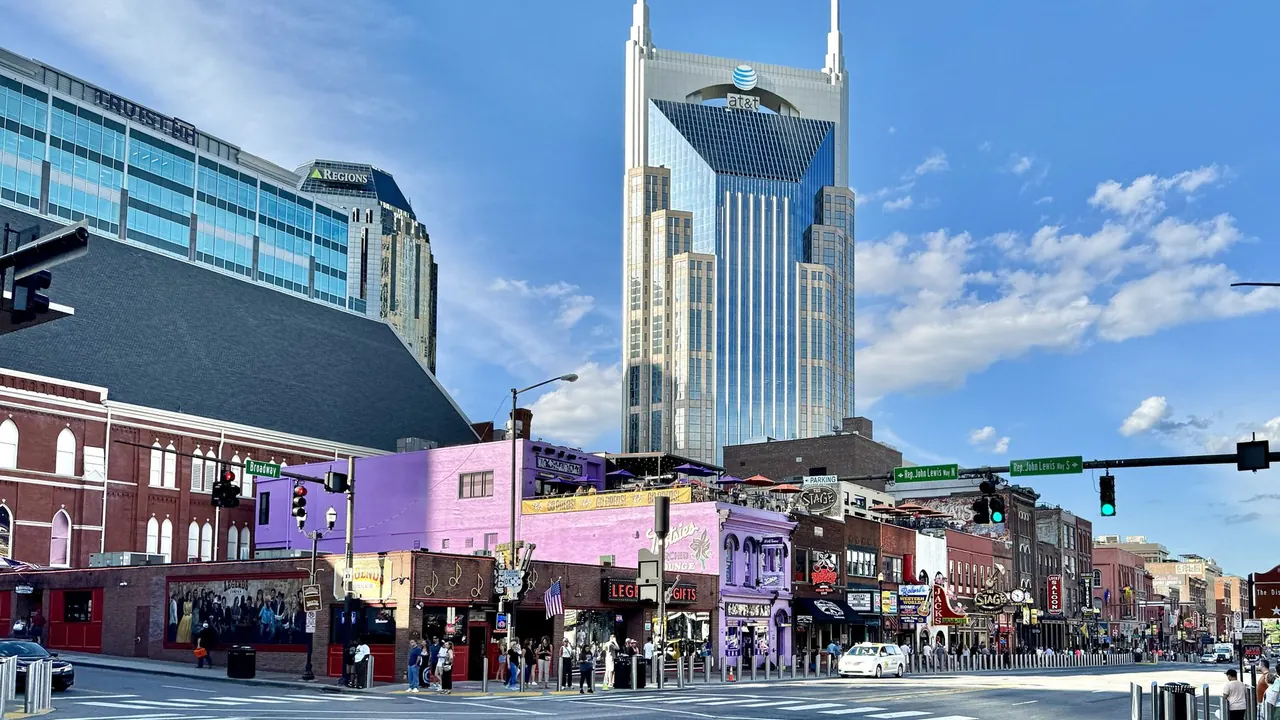
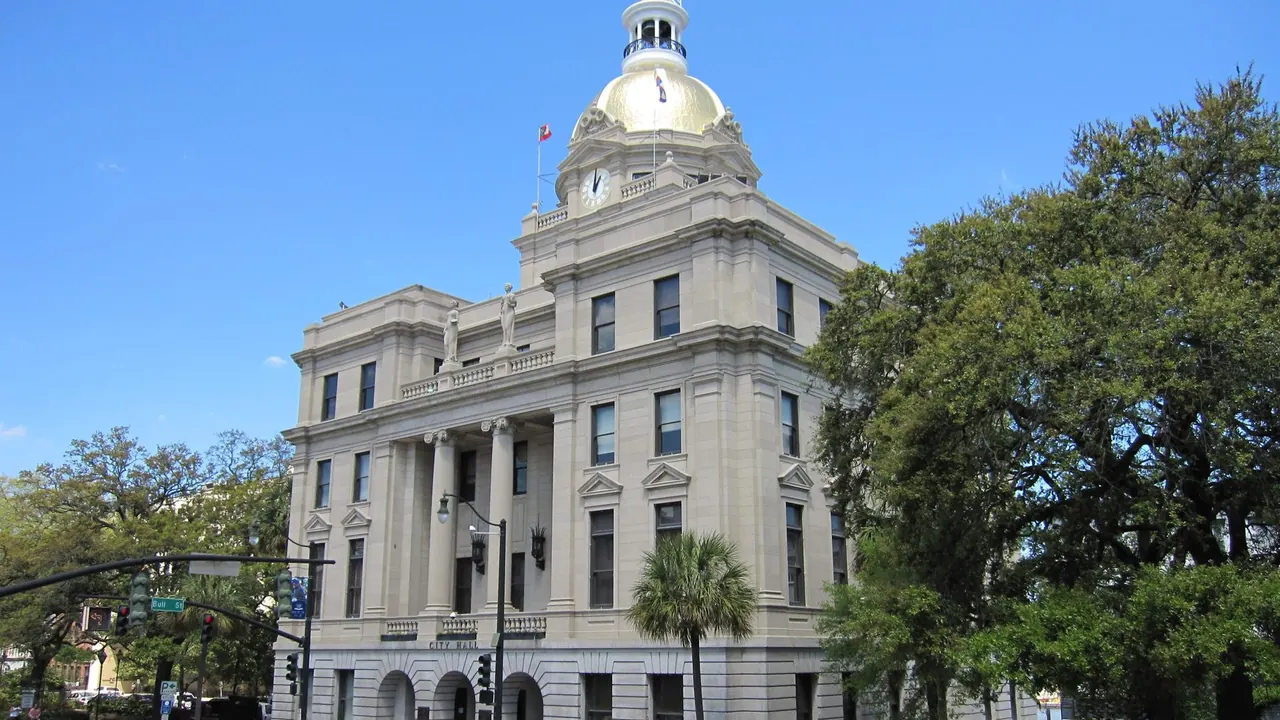
Photos: Nashville by Warren LeMay, CC BY-SA 2.0, cropped; Savannah by Chris M Morris, CC BY 2.0, cropped.
Nashville or Savannah?
Our verdict in twelve categories, each scored against the same fixed benchmark cities, and the climate month by month, so you can choose for your trip.
Choose Nashville for
- live music and the arts
- nightlife
- families
Nashville is the pick for anyone travelling for music and a night out. The Grand Ole Opry, the Ryman and the songwriter rooms give it live music most cities cannot match, and Lower Broadway keeps going long after Savannah has gone quiet. Groups celebrating something and anyone happy to spend evenings on their feet in a honky-tonk will get more from it. You will spend more time in cars, though, and there is little calm.
Choose Savannah for
- beaches
- getting around
- wellness
Savannah suits travellers who want the place itself to be the attraction. Its garden squares, live oaks and old houses reward slow walking, the historic core needs no car, and Tybee Island adds a beach day that Nashville simply cannot offer. Couples, a slower weekend and anyone after atmosphere rather than spectacle will find it the gentler and more rewarding of the two.
Scoreboard
Twelve categories on one fixed scale from 0 to 100. The shaded stretch is the gap between the two.
Your match
Pick a travel style or drag the sliders, and both match scores follow your weighting.
Wins on live music and the arts and nightlife with your weighting.
Wins on beaches and getting around with your weighting.
What matters to you?
Category by category
What the scores mean for a trip.
Beaches & swimming
Savannah has a real beach day within reach. Tybee Island is about half an hour's drive away, with broad flat sand, gentle water for paddling children and a summer sea warm enough for long swims. The water is marsh-tinted rather than clear, and the town is low-key, but it is still the Atlantic.
Nashville is landlocked. Its nearest water is Percy Priest and Old Hickory lakes, where swimming areas are small and the local habit is a day on a pontoon boat. That makes a pleasant summer afternoon, but nothing to plan a trip around.
Food & drink
The two eat about equally well, but from different Southern traditions. Nashville's is inland and fried: hot chicken by the heat level, meat-and-three cafeterias, barbecue and Tennessee whiskey. Its chef-led kitchens in East Nashville and the Gulch, and the immigrant cooking along Nolensville Pike, give it slightly more range.
Savannah cooks from the coast: shrimp and grits, she-crab soup, Lowcountry boil and oyster roasts in the cooler months, often served family-style at long tables. Its finer restaurants sit in restored townhouses in the historic district, which makes a dinner out feel more like an occasion.
Culture & sights
Savannah is the richer place for sightseeing, because the whole historic district is the sight. Oglethorpe's grid of moss-hung squares, the ironwork, Factors Walk, the Telfair Museums and Bonaventure Cemetery make walking itself the main activity, and the Owens-Thomas House deals honestly with slavery.
Nashville's sights centre on one subject. The Country Music Hall of Fame and the Ryman tour are excellent if you love the genre, and the Parthenon replica and the Frist add variety. Beyond Second Avenue, though, the city is mostly modern, with little of Savannah's sense of place.
Nightlife
Nashville goes out harder and later. Lower Broadway's multi-storey honky-tonks have a band on every floor and crowds into the small hours, and East Nashville's dive bars and cocktail lounges give a quieter alternative. Both cities draw bachelorette groups, but Nashville is built around them.
Savannah's evenings are looser and shorter. To-go cups let you drift between River Street, City Market and townhouse cocktail bars, but most of the city winds down well before Broadway does. St Patrick's Day is the great exception.
Nature & outdoors
The two are about level, but the landscapes could hardly differ more. Nashville sits in wooded hills with limestone creeks, so outdoors means forest walks at Radnor Lake and the Warner Parks, an easy paddle on the Harpeth or a drive down the Natchez Trace.
Savannah is flat salt marsh and barrier islands, best seen from a kayak at high tide or on a dolphin-spotting boat trip, with herons and wood storks for birders. Both are hard work in the summer heat, and both are at their best in spring and autumn.
Day trips
Savannah has the stronger day trips. Charleston is about two hours away, and Beaufort, Hilton Head, Fort Pulaski and the Golden Isles of Jekyll and St Simons give a run of coastal and historic outings, all by car.
Nashville's list is pleasant but smaller in scale. Franklin's Main Street and battlefields are the highlight, Leiper's Fork and Murfreesboro are nearby, and the whiskey distilleries around Lynchburg make a distinctive day out. Chattanooga is the only larger destination, and it sits at the far edge of a day's drive.
Good for families
Both work with children, and Nashville has a slight edge in attractions built for them. The zoo at Grassmere, the Adventure Science Center's planetarium, the Lane Motor Museum and a lakeside water park fill rainy or hot days. Lower Broadway is no place for children at night, though, and you will spend long stretches in the car.
Savannah has no zoo, aquarium or theme park. Instead it offers shaded squares, trolley tours, the free river ferry, forts and ghost walks for older children, and a gentle beach and sea-turtle centre on Tybee. Families who like walking will find it easier going.
Getting around
Savannah is much easier on foot. The historic district is flat and compact, and most hotels, restaurants and sights are a short walk apart through shaded squares, with a free shuttle and ferry to fill the gaps. Only Tybee, Wormsloe and Bonaventure need wheels.
Nashville's walkable core is small, covering Broadway, the Ryman and the Gulch. The Opry, the Hermitage and neighbourhoods such as East Nashville and 12 South are all drives apart. With buses only and heavy rush-hour traffic, most visitors end up relying on ride-hailing or a hire car.
Shopping & style
Neither is a shopping destination, and what you will find differs. Nashville has a clear theme: boots, hats and rhinestone shirts on Broadway, serious guitar shops and Hatch Show Print's letterpress posters, with boutiques and record shops in 12 South.
Savannah's browse is gentler. Broughton Street's boutiques, art-school work, antique dealers and bookshops around the squares make it the better place for a small gift than for a statement purchase.
Affordability
Both are pricey by Southern standards, with Savannah slightly easier on the budget. Its main pleasures, walking the squares, Forsyth Park and the cemeteries, cost nothing, but highway motels mean adding a car.
Nashville's downtown hotels jump at weekends when groups arrive, and ride-hailing across a spread-out city adds up. Its saving is that the honky-tonk music on Broadway has no cover charge.
Live music & performing arts
Here Nashville is far ahead. The Grand Ole Opry plays several nights a week, the Ryman hosts touring acts in its famous pews, Broadway has bands from late morning, and songwriter nights let you hear hits from the people who wrote them. The Schermerhorn and the Tennessee Performing Arts Center cover symphony, ballet and opera.
Savannah's moment is the spring music festival in its historic theatres and churches, plus an autumn jazz weekend in Forsyth Park. Arrive at other times and you may find only a few bar bands and buskers.
Wellness & relaxation
Savannah is the better place to slow down, though neither has a spa culture beyond hotel and day spas. Its calm comes from the pace: benches under the oaks, inn porches and garden courtyards, best midweek in spring or autumn.
Nashville's downtown is built for noise. Rest there means retreating to leafy Belmont or Hillsboro, which feels like an escape from the city rather than part of it.
When should you go?
Pick your month. The climate figures are measured averages, not a forecast.
Nashville in July
Savannah in July
Daytime high, °C
Rainfall in the month, mm
Temperature and rainfall are climate normals, averaged over the years shown. Nashville: 1991-2020 normals, Nashville Airport (9.6 km from centre). Savannah: 1991-2020 normals, Savannah Airport (9.9 km from centre).
Nashville has real seasons. Winters are chilly, with January highs around 9°C. Summer is hot and humid from June to August, which makes long walks across town hard going. April, May, September and October are the comfortable months for walking and being outdoors. Rain is spread fairly evenly through the year, with spring a little wetter, so no month is reliably dry.
Savannah is milder in winter, at around 16°C in January, which makes it the better choice from November to March, though the sea is too cool for swimming then. Summer is hotter than in Nashville, at up to 34°C, and June to August brings the heaviest rain, with June close to 169mm, mostly in afternoon thunderstorms. The sea at Tybee reaches about 29°C in July and August and stays warm into September, so June to September is the beach season. For walking the squares, spring and mid-autumn are best.
Which traveller are you?
On a beach and sun trip, Savannah is the only real option. Tybee Island is half an hour away, with wide sand and a warm summer sea. Nashville's reservoir lakes offer a pontoon boat and a swim, but nothing like a coast.
For a relaxing and wellness trip, Savannah is the gentler choice. A quiet inn on a shaded square, a bench under the oaks and an unhurried historic district give you rest. Nashville's centre is built around noise and late nights.
For travellers who come for live music, Nashville is in a different league. The Opry, the Ryman, bands in every Broadway honky-tonk from late morning and intimate songwriter nights fill every evening. Savannah's music is mostly concentrated in its spring festival.
Before you go
| Measure | Nashville | Savannah |
|---|---|---|
| Currency | US Dollar (USD) | US Dollar (USD) |
| Sockets | AB120 V, 60 Hz | AB120 V, 60 Hz |
| Driving side | Right | Right |
| Time zone | UTC-6, UTC-5 in summer | UTC-5, UTC-4 in summer |
| Emergency number | 911 | 911 |
| Elevation | 182 m | 15 m |
| Main airport | Nashville International Airport (BNA)10 km from centre122 non-stop destinations | Savannah Hilton Head International Airport (SAV)12 km from centre39 non-stop destinations |
| Public holidays this year | 13 days | 12 days |
By the numbers
| Measure | Nashville | Savannah |
|---|---|---|
| City population | 689,447 | 147,780 |
| People per km² | 506 | 524 |
| Museums within 10 km | 12 | 19 |
| UNESCO World Heritage sites within 50 km | 0 | 0 |
| Swim season, months above 21 °C | - | 6 months |
Where else could you go?
Every comparison below shares a destination with this one, so you can follow Nashville or Savannah somewhere new.