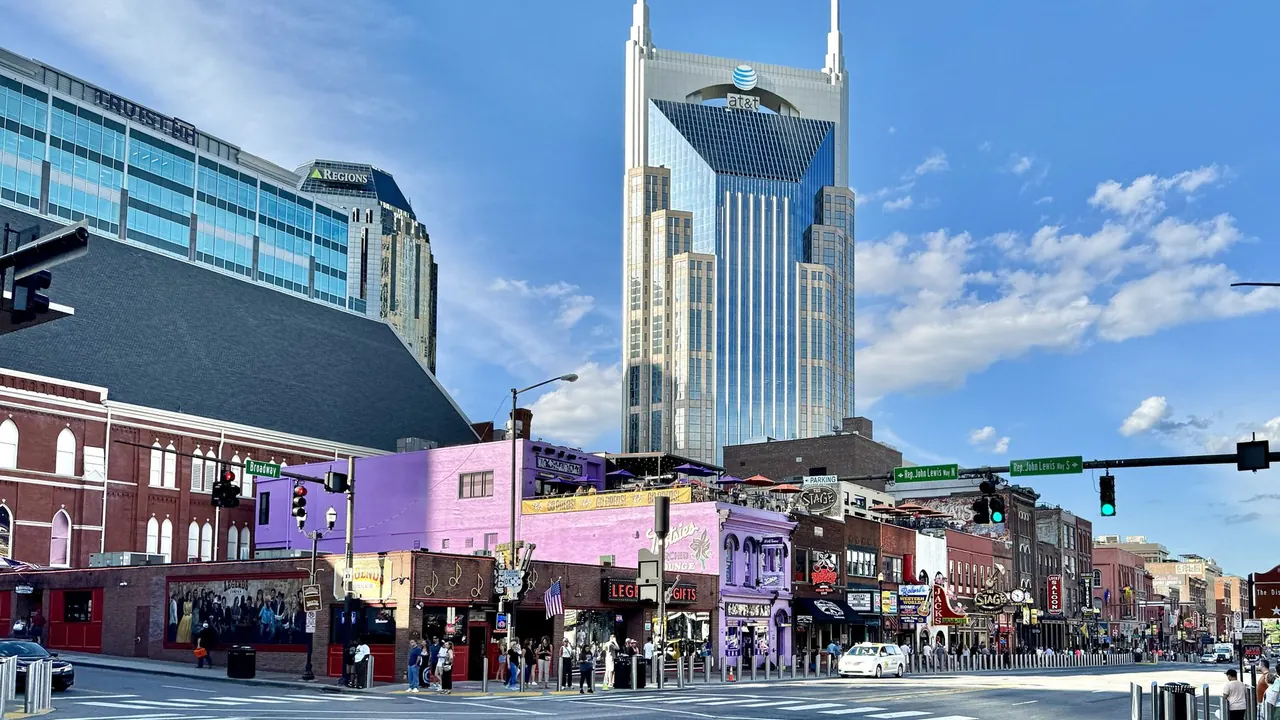
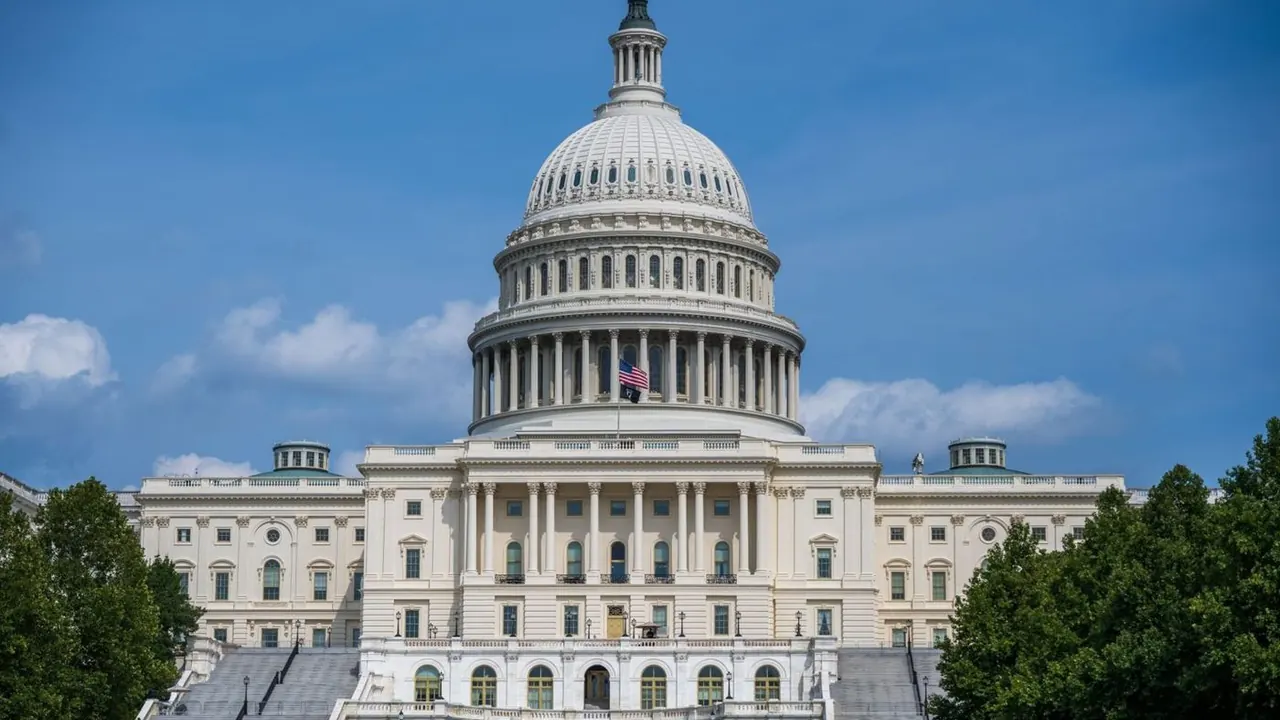
Photos: Nashville by Warren LeMay, CC BY-SA 2.0, cropped; Washington DC by Guohua Song, Pexels License.
Nashville or Washington DC?
Our verdict in twelve categories, each scored against the same fixed benchmark cities, and the climate month by month, so you can choose for your trip.
Choose Nashville for
- live music and the arts
- nightlife
- beaches
Nashville suits a trip built around music and evenings out. The Opry, the Ryman, the songwriter rooms and the honky-tonks of Lower Broadway give it a live scene that Washington cannot match. Hot chicken and meat-and-three cooking give its food a strong regional character. It works best for adults and groups of friends who are happy to take a car or ride-hail between neighbourhoods.
Choose Washington DC for
- getting around
- culture and sights
- day trips
Washington is the better choice for sightseeing and for families. The free Smithsonian museums and the monuments of the Mall can fill a week, the Metro makes a car unnecessary, and Alexandria, Baltimore, the Civil War battlefields and Philadelphia all make good days out. The nights are quieter, but the days are much fuller.
Scoreboard
Twelve categories on one fixed scale from 0 to 100. The shaded stretch is the gap between the two.
Your match
Pick a travel style or drag the sliders, and both match scores follow your weighting.
Wins on live music and the arts and nightlife with your weighting.
Wins on getting around and culture and sights with your weighting.
What matters to you?
Category by category
What the scores mean for a trip.
Beaches & swimming
Neither city works for a beach trip. Nashville's reservoir lakes, Percy Priest and Old Hickory, are on the edge of town and are good for a summer afternoon of swimming or pontoon boating. Washington's nearest sand is the small, brackish Chesapeake beaches around Annapolis, about an hour away, and the Atlantic resorts are a weekend away rather than an afternoon out. So Nashville's water is closer to hand, and in Washington it takes a proper outing.
Food & drink
Both cities eat well, but in different ways. Nashville has a cuisine of its own: hot chicken, meat-and-three cafeterias, barbecue and biscuits. Around that core there are chef-led kitchens in East Nashville and the Gulch, and Kurdish, Mexican and Vietnamese places along Nolensville Pike.
Washington has less local identity and a wider range: Ethiopian cooking around Shaw and U Street, pupusas in Columbia Heights, Chesapeake crab and oysters in season, and serious tasting menus. Go to Nashville for one strong tradition and to Washington for variety. In both cities downtown is the weakest area, with bar food on Broadway and business steakhouses near Washington's offices.
Culture & sights
Washington is far ahead here. The Smithsonian museums, the National Gallery, the Capitol, the Library of Congress and the memorials along the Reflecting Pool can easily fill a week, and nearly all of them are free.
Nashville's sights are fewer and mostly about music: the Country Music Hall of Fame, the National Museum of African American Music and a daytime tour of the Ryman. The Parthenon replica, the Frist and the Hermitage add some variety, but two or three days covers them, and the mostly modern city has little to match the old streets of Georgetown or Capitol Hill.
Nightlife
Nashville gives the bigger night out, and a very particular one. Lower Broadway's multi-storey honky-tonks have a band on every floor, and at weekends the strip runs as one long party into the small hours. East Nashville's dive bars and cocktail lounges are the quieter alternative.
In Washington the night out is more spread out and depends more on the day of the week. There are cocktail bars and late dance spots on 14th Street and U Street, rowdier bars in Adams Morgan and the LGBTQ+ scene around Dupont Circle, but early in the week it is mostly after-work drinks. Washington has more DJs and clubs, while Nashville has far more live bands in its bars.
Nature & outdoors
Washington has better outdoors close at hand. Rock Creek Park and the C&O Canal towpath give long walks and bike rides from the centre. Great Falls, half an hour upriver, adds cliff-top paths and whitewater, and Shenandoah's ridges are within reach for a day.
Nashville's countryside is gentler. Radnor Lake, the Warner Parks, the Cumberland greenways and easy paddling on the Harpeth make pleasant outings, and the Natchez Trace Parkway suits cycling and slow drives. It is a nice setting rather than a reason to go.
Day trips
The country around Washington offers far more. Old Town Alexandria and Mount Vernon are close by, and Baltimore is under an hour by train. Gettysburg, Antietam and Harpers Ferry are all within a couple of hours, and Philadelphia's Independence Hall makes a long but worthwhile day by fast train.
Nashville's list is shorter and on a smaller scale: Franklin's Main Street and Civil War houses half an hour south, the village of Leiper's Fork, and the whiskey distilleries around Lynchburg. Almost all of it needs a car, whereas several of Washington's best trips can be made by rail.
Good for families
Washington is the easier city with children. The dinosaur halls at Natural History, the rockets at Air and Space and the National Zoo cost nothing, the Mall gives them space to run, and every Metro station has a lift for buggies. The main drawback is the long, exposed walks between sights in summer.
Nashville has good attractions of its own in the zoo at Grassmere, the Adventure Science Center and the Lane Motor Museum. They are spread out and reached by car, though, and the heart of the city, Lower Broadway, is designed for adults drinking late.
Getting around
Washington is much easier to get around without a car. The Metro runs to Arlington, Alexandria and the airport, the flat grid is good for walking, and bike-share links the monuments. Georgetown, with no station of its own, is the main awkward spot.
Nashville's walkable core is small: Broadway, the Ryman, the Hall of Fame and the Gulch. Beyond it there are only buses. The Opry, the Hermitage, East Nashville and 12 South each mean a ride-hail or a hire car, and the interstates are heavy with traffic at rush hour.
Shopping & style
Washington has the wider range of shops, though neither city is a shopping destination. Georgetown's M Street and Wisconsin Avenue mix chains, boutiques and antique shops, CityCenterDC has the luxury labels, and Eastern Market adds weekend craft stalls.
Nashville is strong in one niche: boots, hats and rhinestone shirts on Broadway, guitar shops, and the letterpress concert posters of Hatch Show Print. For Western wear or an instrument it beats Washington, but outside that niche the choice is thinner, with 12 South's boutiques the main alternative.
Affordability
Both cities are expensive, with costly central hotels, big-city restaurant bills and tips on top. Where you save is different. In Nashville the music is free, since the Broadway honky-tonks charge no cover, while in Washington the sightseeing is free, from the Smithsonian to the Capitol tours. Washington's Metro also makes it practical to stay out in Arlington, whereas staying outside downtown Nashville means paying for more ride-hailing.
Live music & performing arts
Nashville is the city for live music. The Grand Ole Opry, the Ryman's famous acoustics, bands on Broadway from late morning and songwriter nights in small rooms make music the point of a trip. The symphony at the Schermerhorn and the Tennessee Performing Arts Center cover classical music, ballet and opera.
Washington's strength is theatre: Arena Stage, the Shakespeare Theatre Company, Ford's Theatre and the Folger, along with the National Symphony and the opera. U Street's restored theatres and summer evenings at Wolf Trap bring good concerts, but Nashville's music scene goes much deeper.
Wellness & relaxation
Neither city is a place to rest, and neither has a spa tradition beyond hotel and day spas. In Washington, the quiet moments come from its open spaces: the Tidal Basin early in the morning, the gardens of Dumbarton Oaks and the National Arboretum. In Nashville, a calmer stay means basing yourself in the leafy streets of Belmont or Hillsboro, well away from the noise of Broadway.
When should you go?
Pick your month. The climate figures are measured averages, not a forecast.
Nashville in July
Washington DC in July
Daytime high, °C
Rainfall in the month, mm
Temperature and rainfall are climate normals, averaged over the years shown. Nashville: 1991-2020 normals, Nashville Airport (9.6 km from centre). Washington DC: 1991-2020 normals, Washington National Airport (5 km from centre).
The two cities follow a similar year. From June to August both reach highs of around 32°C with heavy humidity, which is too sticky for long walks between sights. Winters are cold enough to keep sightseeing short. The best months for walking are April, May, September and October. Nashville is a couple of degrees warmer for most of the year, so its spring starts earlier, with a mild March, and its autumn lasts a little longer. Washington's winters are colder but drier.
The bigger difference is in the rain. From November to May, Nashville is clearly the wetter city, with the most rain in May at about 124mm. Washington's driest month is February, at about 65mm. In summer and early autumn the two are close: Nashville gets a little more in June and August, and Washington a little more in July, September and October. Neither city is a beach destination. Washington's nearby water reaches about 26°C, but only in July and August is it warm enough to swim. If you want to spend your days on the Mall or along Broadway, go in spring or autumn rather than midsummer.
Which traveller are you?
On a food and nightlife trip, Nashville is the better pick. Its honky-tonks run late with live bands on every floor, and its hot chicken, barbecue and meat-and-three cooking taste of the place. Washington eats more widely but goes out less.
On a family trip with children, Washington wins easily. Natural History, Air and Space and the National Zoo are free and made for young visitors, the Mall has room to run, and the Metro takes buggies, while Nashville means car journeys and an adult-oriented centre.
For music lovers, especially fans of country, bluegrass and Americana, Nashville is the obvious choice. The Opry, the Ryman, the Country Music Hall of Fame and the songwriter nights in small rooms add up to something Washington's theatre-led scene does not offer.
Before you go
| Measure | Nashville | Washington DC |
|---|---|---|
| Currency | US Dollar (USD) | US Dollar (USD) |
| Sockets | AB120 V, 60 Hz | AB120 V, 60 Hz |
| Driving side | Right | Right |
| Time zone | UTC-6, UTC-5 in summer | UTC-5, UTC-4 in summer |
| Emergency number | 911 | 911 |
| Elevation | 182 m | 72 m |
| Main airport | Nashville International Airport (BNA)10 km from centre122 non-stop destinations | Ronald Reagan Washington National Airport (DCA)5 km from centre105 non-stop destinations |
| Public holidays this year | 13 days | 11 days |
By the numbers
| Measure | Nashville | Washington DC |
|---|---|---|
| City population | 689,447 | 689,545 |
| People per km² | 506 | 3,896 |
| Museums within 10 km | 12 | 98 |
| UNESCO World Heritage sites within 50 km | 0 | 0 |
| Swim season, months above 21 °C | - | 3 months |
Where else could you go?
Every comparison below shares a destination with this one, so you can follow Nashville or Washington DC somewhere new.