Photos: Naxos by Manfred Werner (Tsui), CC BY-SA 4.0, cropped; Skiathos by Giles Laurent, CC BY-SA 4.0, cropped.
Naxos or Skiathos?
Our verdict in twelve categories, each scored against the same fixed benchmark cities, and the climate month by month, so you can choose for your trip.
Choose Naxos for
- culture and sights
- food and drink
- day trips
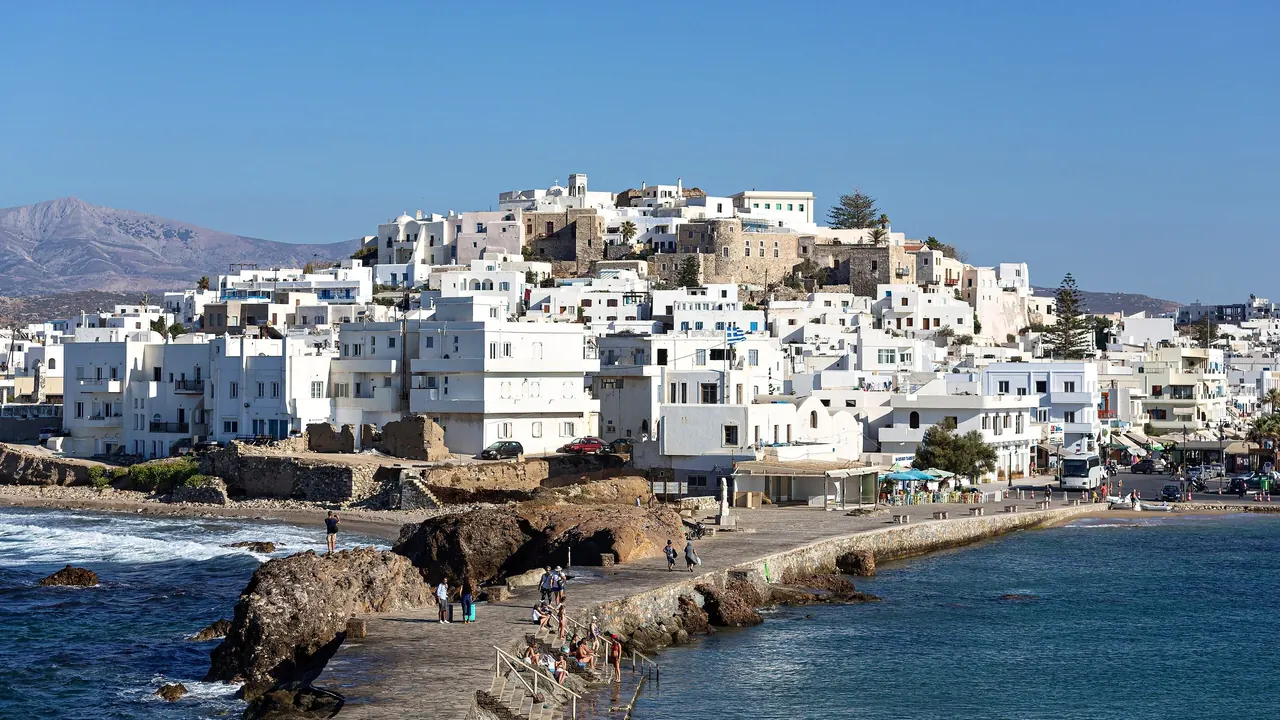
Naxos suits travellers who want a beach vacation with more in it. The sand along its west coast is as good as anything on Skiathos, but behind it rise marble villages, Byzantine chapels, a Venetian kastro and real mountains, and the food is grown on the island. It rewards a car, a slower pace and a curiosity about what lies inland, and its central place in the Cyclades makes hopping to Paros or the Small Cyclades easy.
Choose Skiathos for
- nightlife
- getting around
- beaches
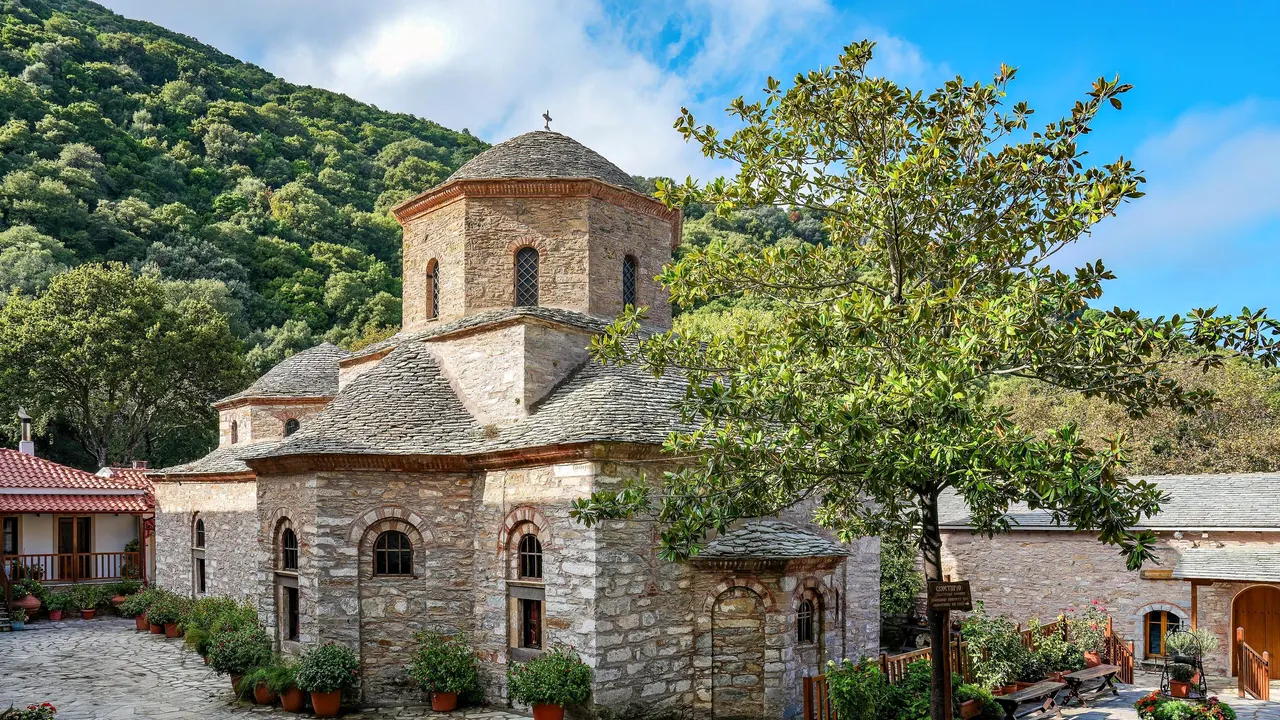
Skiathos is the simpler and livelier choice. The airport sits at the edge of town, the beaches line one short coast road, and pine forest comes down to the water almost everywhere. Evenings in Skiathos Town go on far later than anything on Naxos, so it suits a young crowd or anyone who wants sand by day and bars by night, as long as they don't expect much sightseeing.
Scoreboard
Twelve categories on one fixed scale from 0 to 100. The shaded stretch is the gap between the two.
Your match
Pick a travel style or drag the sliders, and both match scores follow your weighting.
Wins on culture and sights and food and drink with your weighting.
Wins on nightlife and getting around with your weighting.
What matters to you?
Category by category
What the scores mean for a trip.
Beaches & swimming
The two are evenly matched for sand, but the beaches look different. Naxos has an almost unbroken chain of pale, open strands down its west coast, from Agios Prokopios and Plaka to the dunes of Mikri Vigla and Alyko, with water so shallow you can wade a long way out. When the meltemi blows, that open coast can stay choppy for days.
Skiathos has more variety in a smaller space. Its beaches are pine-fringed coves and curves like Koukounaries, with the calm south coast for easy swimming and the north coast for wilder bays, plus white-pebbled Lalaria by boat. The popular sunbed beaches get busier, but a boat or scooter soon finds a quieter one.
Food & drink
Naxos eats noticeably better because it grows its own. Its potatoes, graviera and arseniko cheeses, kitron liqueur from Halki and the grilled meat and stews of the mountain villages give its food a strong sense of place.
Skiathos offers honest island cooking, grilled octopus, Sporades-style pies and fish on the harbour, but many menus are written for package visitors. Neither island has much range beyond Greek cooking. The difference is that on Naxos a drive inland to Apiranthos or Koronos often leads to a meal worth remembering.
Culture & sights
This is where the two islands are furthest apart. Naxos has layers of history across the whole island: the temple doorway of the Portara over the harbour, the Venetian kastro with its museum of Cycladic figurines, the Temple of Demeter near Sangri, the giant kouroi lying in their ancient quarries and dozens of Byzantine chapels in the Tragaea valley.
Skiathos has a handful of modest sights: the Papadiamantis house museum, Evangelistria Monastery in the woods and the clifftop ruins of the Kastro, which is the most rewarding of them. On Naxos culture fills a good part of the trip. On Skiathos it is a pleasant break from the beach.
Nightlife
Skiathos is the island for a night out. The bar street climbing from the harbour fills after midnight, waterfront clubs run until dawn in high summer, and Banana Beach holds afternoon parties for a young international crowd.
Naxos is gentler. Chora's harbourfront and the lanes under the kastro have cocktail and music bars and a couple of late clubs, and Plaka does sunset sessions, but the evening is mostly a long dinner. Anyone who wants to dance all night from a Naxos base usually takes a ferry to another island.
Nature & outdoors
Both are greener than most Aegean islands, but in different ways. Naxos is a mountain island: Mount Zas climbs to about 1,000m above Filoti, mule paths link the marble villages, and the north and east coasts are rocky and empty. The meltemi makes Mikri Vigla a serious kitesurfing and windsurfing spot.
Skiathos is gentle and wooded, with pine and oak over its hills, footpaths between monasteries, and the Strofilia lagoon wetland behind Koukounaries. Its outdoor life leans towards the sea, with boat trips to the north-coast caves, kayaking, and the marine park off Alonissos.
Day trips
Naxos has more places to go. From the middle of the Cyclades, Paros is under an hour away, the quiet Small Cyclades make easy days out, and Mykonos with Delos or even Santorini are possible. The drive through Halki, Filoti and Apiranthos to Apollonas adds a full day on the island itself.
From Skiathos the obvious trip is Skopelos, with its stacked harbour town and the clifftop chapel of Agios Ioannis, and Alonissos makes a longer day. Pelion on the mainland is better kept for an overnight stay. On both islands, outings depend on boats running in summer and calm seas.
Good for families
Naxos is the slightly easier island with small children. Its west-coast sand shelves so gradually that toddlers can paddle far out, sheltered Agios Georgios is within walking distance of Chora, and the beaches have space even in August, though the meltemi makes the open ones rough some days.
Skiathos has calm, gentle beaches around Koukounaries and a short airport transfer, which matters with tired children. Older children like the low-landing planes. Against that, the coast road is busy with scooters and quad bikes and has few pavements. Neither island has attractions built for children.
Getting around
Skiathos is easier to get around because everything is close. One road of about 12km joins the town to Koukounaries, the bus stops at numbered beaches, water taxis go from the old harbour, and the airport and ferries are both at the edge of town. Only the north coast and the Kastro need a scooter, a jeep or a boat.
Naxos covers far more ground. Chora is walkable and summer buses reach the west-coast beaches and main villages, but the chapels, the interior and the empty coasts really need a car. The winding drive to Apollonas takes well over an hour.
Shopping & style
Neither island is a shopping destination, but Naxos has more worth bringing home. Below the kastro, Chora's old market lanes sell jewellery, ceramics and linen. The real finds are edible, such as graviera, kitron and thyme honey from village co-operatives, along with weaving and marble work in Apiranthos and Halki.
Skiathos Town's main street is resort shopping, with sandals, summer clothes, souvenirs and some olive oil and honey. It is good for an evening stroll, and most of it closes for the winter.
Affordability
The two cost about the same, as mid-priced Greek islands where family-run studios keep a stay within reach. Naxos is a touch easier on the budget, with village rooms in the hills and plenty of space away from the beachfront.
On Skiathos, the extras add up faster in peak season, since sunbeds, boat trips and car hire are part of most days there. On both islands August is the dearest month, and June or September bring prices down while the sea is still warm.
Live music & performing arts
The music worth staying up for on Naxos is at the village panigyria, the summer saints' day festivals where island violin and lute play late and whole villages dance. A summer festival also puts on concerts and theatre in a restored Venetian tower inland, and there are small recitals in Chora's kastro.
Skiathos has a smaller summer programme at the open-air theatre on the Bourtzi peninsula, as well as saints' day dancing in the villages and live sets in a few bars. Neither island has a theatre or concert season, so on both the music is something you come across rather than plan for.
Wellness & relaxation
Resting on Naxos means going up into the mountains or down to the quiet south. The hamlets around Halki and the emptier southern beaches settle into swim, siesta and a long dinner, and a few small yoga retreats on the southwest coast add some structure.
On Skiathos the calm comes from pine shade and slow mornings, but Skiathos Town is loud at night in high season, so peace means staying on the north coast or well outside town. Neither island has a bathing tradition, and on both, spa treatments mostly mean the larger resort hotels.
When should you go?
Pick your month. The climate figures are measured averages, not a forecast.
Naxos in July
Skiathos in July
Daytime high, °C
Rainfall in the month, mm
Where the figures come from
Naxos's temperatures are measured 79 km from the centre, at Santorini Island / Monólithos.
Naxos has no rain gauge within 25 km of the centre, so its rainfall comes from a gridded climate dataset read at the destination rather than from a gauge further away.
Skiathos's temperatures are measured 60 km from the centre, at Anchialos Airport.
Skiathos has no rain gauge within 25 km of the centre, so its rainfall comes from a gridded climate dataset read at the destination rather than from a gauge further away.
Temperature and rainfall are climate normals, averaged over the years shown. Naxos: 2000-2025, 12 years observed (rainfall 1991-2020) normals, Santorini Island / Monólithos (78.8 km from centre). Skiathos: 1998-2020 (rainfall 1991-2020) normals, Anchialos Airport (59.8 km from centre).
Both islands are summer places, with swimming from June into early October, but their summers differ. Naxos stays a little cooler and almost bone dry, with highs near 30°C and practically no rain from June to September, though the meltemi can blow hard on the west coast. Skiathos runs hotter, around 32°C in July and August, and its sea warms to about 26°C in August, a couple of degrees above Naxos. It also gets the odd summer shower, and the rain comes back sooner there, from September.
Spring and autumn are the best seasons for walking on both. May and October are pleasant on Naxos, which stays dry later into the autumn. In winter Naxos is the milder island, a few degrees warmer than Skiathos, where highs fall to about 13°C. It is also the wetter of the two from December to February, so Skiathos is cooler at that time of year but slightly drier.
Which traveller are you?
On a culture and arts trip, Naxos is the clear pick. The Portara, the Venetian kastro, the unfinished kouroi at Flerio and the frescoed chapels of the Tragaea fill several days of driving, while Skiathos's few sights take a couple of days.
On a family trip with young children, Naxos edges ahead. Its west-coast beaches shelve shallowly over soft sand for a long way, Agios Georgios is walkable from Chora, and the island lacks the scooter-heavy coast road and loud bar streets of Skiathos Town.
For a food and nightlife trip, it depends on which half matters more. Skiathos wins on the nights, with a packed bar street and waterfront clubs until morning. If the long dinner is the point, though, Naxos eats better, with its village tavernas and local cheeses.
Before you go
| Measure | Naxos | Skiathos |
|---|---|---|
| Official language | Greek | Greek |
| Currency | Euro (EUR) | Euro (EUR) |
| Sockets | CF230 V, 50 Hz | CF230 V, 50 Hz |
| Driving side | Right | Right |
| Time zone | UTC+2, UTC+3 in summer | UTC+2, UTC+3 in summer |
| Emergency number | 112 | 112 |
| Main airport | Naxos Island National Airport (JNX)3 non-stop destinations | Skiathos Island National Airport (JSI)37 non-stop destinations |
| Public holidays this year | 15 days | 15 days |
By the numbers
| Measure | Naxos | Skiathos |
|---|---|---|
| Population | 17,930 | - |
| People per km² | 42 | - |
| Swim season, months above 21 °C | 5 months | 5 months |
Where else could you go?
Every comparison below shares a destination with this one, so you can follow Naxos or Skiathos somewhere new.