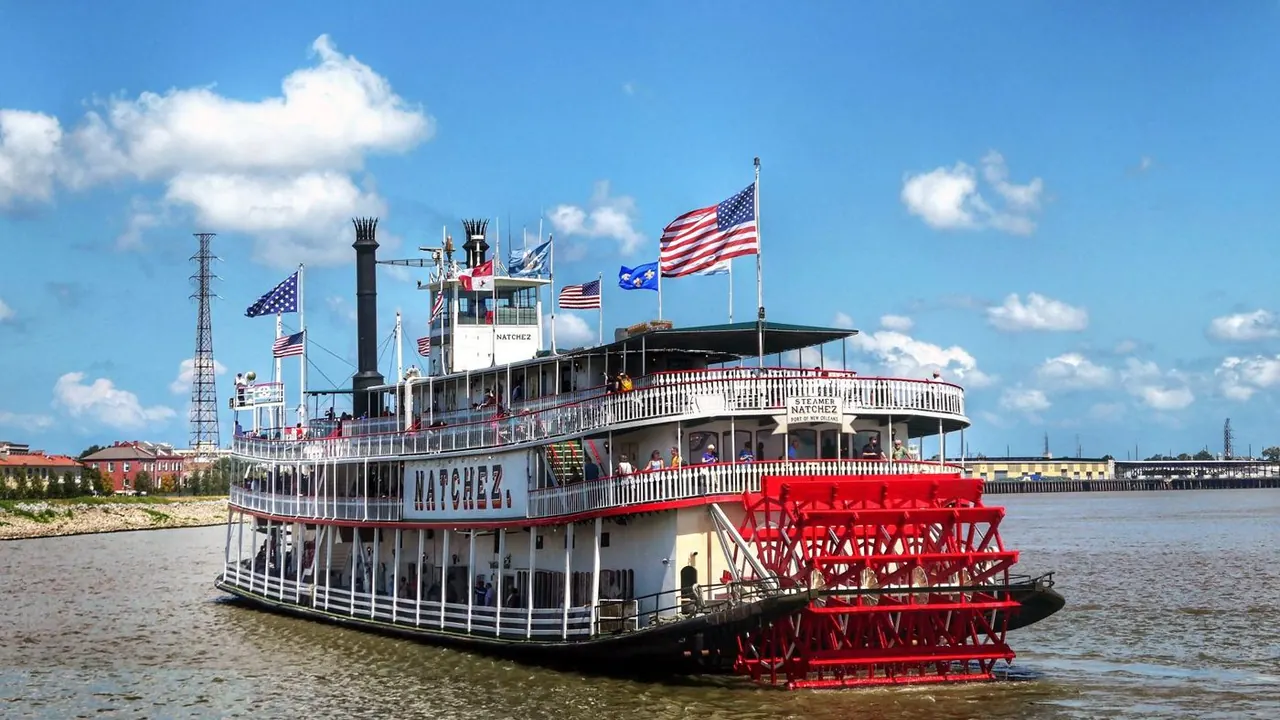
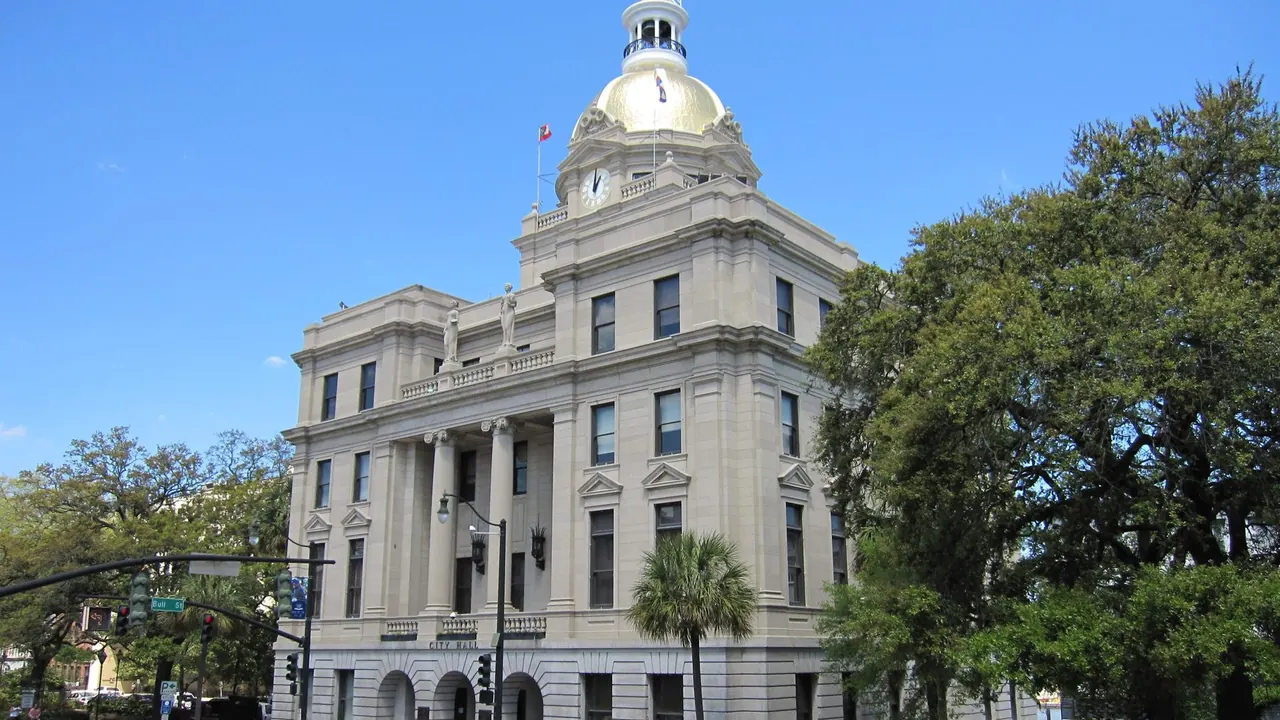
Photos: New Orleans by Bernard Spragg, CC0; Savannah by Chris M Morris, CC BY 2.0, cropped.
New Orleans or Savannah?
Our verdict in twelve categories, each scored against the same fixed benchmark cities, and the climate month by month, so you can choose for your trip.
Choose New Orleans for
- live music and the arts
- nightlife
- food and drink
New Orleans is the choice for travellers who come to eat, drink and listen. Its Creole and Cajun kitchens, the music clubs of Frenchmen Street and a night with no closing time make it a city to stay up late in, and the French Quarter gives the days a historic backdrop few American cities can match. Leave the swimsuit at home: this is a trip for the table and the street, not the sand.
Choose Savannah for
- beaches
- wellness
- day trips
Savannah suits a slower, gentler trip. Its squares under live oaks are for strolling rather than partying, a quiet inn on a southern square is truly restful, and Tybee Island puts a proper Atlantic beach half an hour away. With a car it also makes the better base for outings to Charleston, Beaufort and the Sea Islands, though anyone who wants live music every night will find the evenings short.
Scoreboard
Twelve categories on one fixed scale from 0 to 100. The shaded stretch is the gap between the two.
Your match
Pick a travel style or drag the sliders, and both match scores follow your weighting.
Wins on live music and the arts and nightlife with your weighting.
Wins on beaches and wellness with your weighting.
What matters to you?
Category by category
What the scores mean for a trip.
Beaches & swimming
Savannah has a beach worth planning around, and New Orleans does not. Tybee Island lies about half an hour from Savannah's squares, with wide, flat Atlantic sand for long walks and paddling, even if the marshes tint the water.
From New Orleans the nearest sand is on the Mississippi Gulf Coast at Bay St. Louis or Gulfport, well over an hour away, and the water there is shallow and brownish. Nobody bathes in Lake Pontchartrain or the river, so most visitors make do with the hotel pool.
Food & drink
Eating is a main reason to visit New Orleans, and Savannah's table, while enjoyable, does not reach the same depth. Creole and Cajun cooking give New Orleans a cuisine entirely its own. It runs from gumbo and étouffée in century-old French Quarter dining rooms to po'boy shops in Mid-City, Vietnamese cooking in the eastern suburbs and the Sazerac, which was invented in the city.
Savannah's Lowcountry cooking means shrimp and grits, she-crab soup and family-style platters, with a small group of chef-led restaurants south of Forsyth Park. It fills a long weekend well but has less to discover after that. Both cuisines are rich and Southern, and the cooler months bring good oysters to both.
Culture & sights
The two are evenly matched, and in both the best way to see the sights is on foot rather than in a long list of museums. New Orleans has the more layered heritage, with Creole and Caribbean roots. You find it in the iron balconies of the French Quarter, the Cabildo where Louisiana passed to the United States, the Garden District mansions, the above-ground tombs and the large National WWII Museum.
Savannah is calmer and more orderly. Oglethorpe's 1733 plan of garden squares survives almost whole, lined with Federal and Greek Revival houses, and the Telfair Museums, the Owens-Thomas House and Bonaventure Cemetery add depth. Choose New Orleans for a richly mixed past, Savannah for one complete and consistent townscape.
Nightlife
New Orleans has far more to offer after dark. There is no closing time and drinks may be carried on the street, so nights run from the neon of Bourbon Street to the music bars of Frenchmen Street and the dive bars of the Bywater until dawn. Carnival season turns the whole city into one long party.
Savannah has the same to-go cups and bar-hopping around River Street and City Market. The scene is smaller, though, and apart from St Patrick's Day most of it is quiet well before the early hours. In both cities a night out is sociable and on foot rather than built around clubs.
Nature & outdoors
Both sit in flat, watery country with no hills, but Savannah's surroundings are a little easier to enjoy. Kayaking the salt marsh at high tide, dolphin-watching trips, the oak avenue at Wormsloe and the cycle path to Tybee are all close by.
New Orleans has cypress swamps and bayous, where boat tours pass alligators, and the boardwalks of the Barataria Preserve. In town, the live oaks and lagoons of City Park make a good retreat. In both cities the heat from June to September pushes outdoor plans into spring and autumn.
Day trips
Savannah has the better choice of outings, as long as you have a car. Charleston is about two hours north, and Beaufort and Hilton Head are closer. Jekyll and St Simons islands lie down the Georgia coast, and Fort Pulaski makes an easy half day.
From New Orleans the highlight is the River Road plantations, where the Whitney tells the history of the people enslaved there. Baton Rouge and the Gulf towns of Bay St. Louis and Ocean Springs are also within reach. Cajun country around Lafayette rewards the effort but stretches a single day, and beyond these the choice runs thin.
Good for families
Neither city is built around children, and they come out roughly level, with different strengths. New Orleans has more big attractions: Audubon Zoo, the Aquarium of the Americas, and the amusement park and children's museum in City Park, plus streetcar rides and family spots along the Mardi Gras parade route. The drawback is the night, when Bourbon Street and some areas are best avoided.
Savannah has no zoo or aquarium of that size, but it is gentler on parents. It has shaded squares, the free ferry, trolley tours, forts, and a real beach on Tybee with a sea-turtle centre. In both cities the summer heat tires young children quickly.
Getting around
On foot the two are much alike, each with a flat, compact historic centre where most of what a visitor wants is close together. New Orleans adds its historic streetcars, which are slow but a pleasure on the St. Charles line through the Garden District. Visitors still rely on ride-hailing for the airport and outlying neighbourhoods, and some stretches between neighbourhoods are not for walking at night.
Savannah's grid of squares is simpler to find your way around, and a free shuttle and a small river ferry help. Everything beyond it, from Tybee to Wormsloe, needs a car or a tour.
Shopping & style
New Orleans gives shoppers more reason to linger. Royal Street's antique dealers and galleries and the miles of independent and vintage shops along Magazine Street make a real outing, and Mardi Gras masks and costumes are souvenirs no other city does as well.
Savannah's Broughton Street, shops selling art-school work and antique dealers scattered among the squares make a pleasant browse rather than a reason to come. Neither city has much in the way of designer labels, and both have tourist stretches selling pralines and hot sauce.
Affordability
Neither is a budget destination, and the costs are close, with New Orleans slightly easier on the wallet. Its cheap staples help: po'boys, red beans and rice, neighbourhood bars and the streetcar. Rooms near the Quarter and high hotel taxes are the big expense, especially at Mardi Gras and Jazz Fest.
Savannah's historic-district inns are priced for a popular weekend escape, and the cheaper motels by the highway mean paying for a car. In both cities a summer visit brings rates down, and the best pleasures, walking the streets and squares, are free.
Live music & performing arts
Live music is where the two differ most. New Orleans, the birthplace of jazz, has bands every night of the year in the clubs on Frenchmen Street and the old traditional jazz hall in the Quarter. Brass-band second lines fill the neighbourhoods on Sundays, and Jazz Fest and the French Quarter Festival add to the calendar.
In Savannah the music centres on the spring music festival in historic theatres and churches and an autumn jazz festival in Forsyth Park. Outside those dates a visitor may find little to attend. Neither city has much opera or serious theatre beyond touring shows.
Wellness & relaxation
Neither city has spas beyond hotel and day spas, so the difference comes down to pace. Savannah is simply easier to unwind in, with benches under the oaks of its squares and porches on old inns. A quiet inn on a southern square, midweek in spring or autumn, is the most restful choice.
New Orleans has slow mornings in courtyard guesthouses and lazy streetcar rides along St. Charles Avenue. Still, the Quarter at night works against rest, and few people come here to recover.
When should you go?
Pick your month. The climate figures are measured averages, not a forecast.
New Orleans in July
Savannah in July
Daytime high, °C
Rainfall in the month, mm
Temperature and rainfall are climate normals, averaged over the years shown. New Orleans: 1991-2020 normals, New Orleans Airport (2.7 km from centre). Savannah: 1991-2020 normals, Savannah Airport (9.9 km from centre).
The two cities follow almost the same pattern of heat. Winters are mild in both, with January highs of about 17°C, pleasant for walking but far too cool for swimming. From June to September both sit at 30°C or above, and the humidity makes midday sightseeing hard work. In either city the most comfortable months for the streets are March, April, October and November.
Rain is where they differ. New Orleans is wetter in most months and wettest in June, at 194mm, while in October the two are level. Savannah has a drier spring, a shorter summer wet season and a dry November. The sea is warm enough for bathing from June to September off both coasts, a touch warmer on the Gulf than off Tybee, but only Savannah has a beach worth a day of its own.
Which traveller are you?
On a food and nightlife trip, New Orleans wins clearly. You get gumbo, crawfish boils and chargrilled oysters by day, then Frenchmen Street and corner bars with no closing time. Savannah's Lowcountry cooking is good, but its evenings end early.
For a beach and sun trip, Savannah is the obvious pick. Tybee Island's wide, flat sand is half an hour away and easy for paddling. From New Orleans the nearest beach is over an hour's drive, and the Gulf water there is shallow and murky.
On a relaxing and wellness trip, Savannah is easier to unwind in, with shaded squares, inn porches and garden courtyards, especially midweek. New Orleans has its slow courtyard mornings too, but the Quarter at night pulls hard in the other direction.
Before you go
| Measure | New Orleans | Savannah |
|---|---|---|
| Currency | US Dollar (USD) | US Dollar (USD) |
| Sockets | AB120 V, 60 Hz | AB120 V, 60 Hz |
| Driving side | Right | Right |
| Time zone | UTC-6, UTC-5 in summer | UTC-5, UTC-4 in summer |
| Emergency number | 911 | 911 |
| Elevation | -2 m | 15 m |
| Main airport | Louis Armstrong New Orleans International Airport (MSY)18 km from centre51 non-stop destinations | Savannah Hilton Head International Airport (SAV)12 km from centre39 non-stop destinations |
| Public holidays this year | 14 days | 12 days |
By the numbers
| Measure | New Orleans | Savannah |
|---|---|---|
| City population | 383,997 | 147,780 |
| People per km² | 423 | 524 |
| Museums within 10 km | 16 | 19 |
| UNESCO World Heritage sites within 50 km | 0 | 0 |
| Swim season, months above 21 °C | 7 months | 6 months |
Where else could you go?
Every comparison below shares a destination with this one, so you can follow New Orleans or Savannah somewhere new.