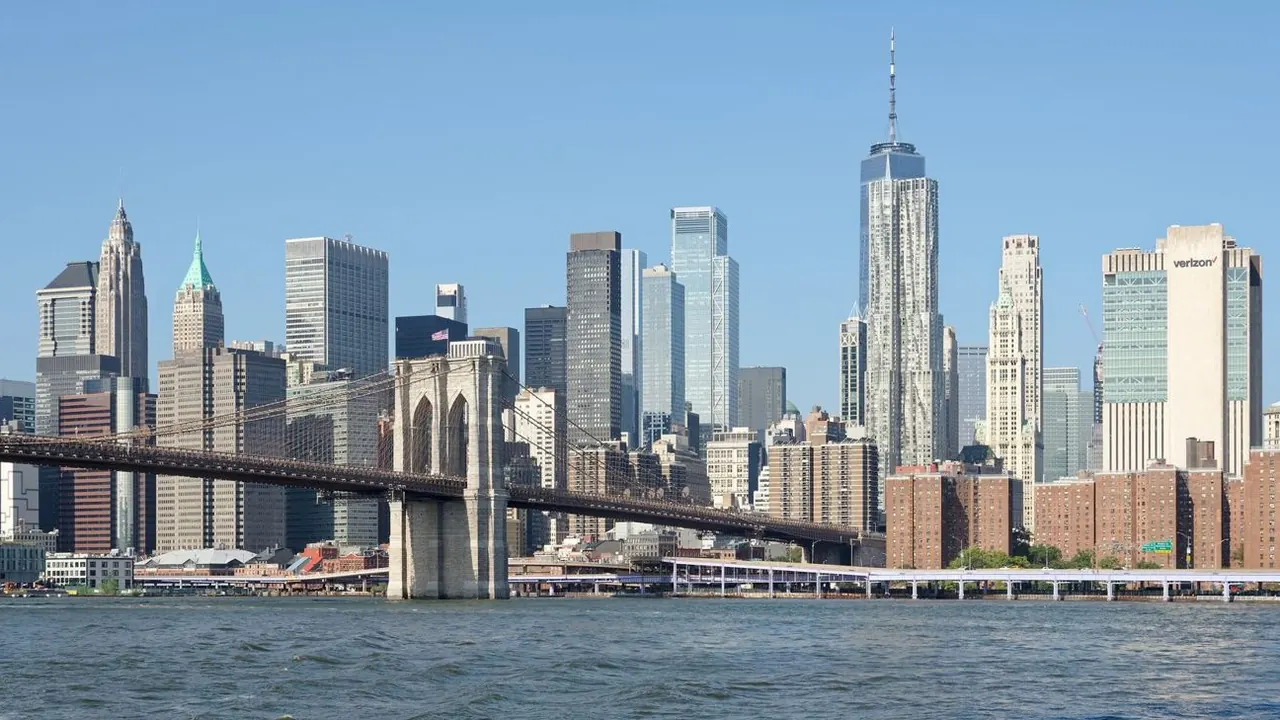
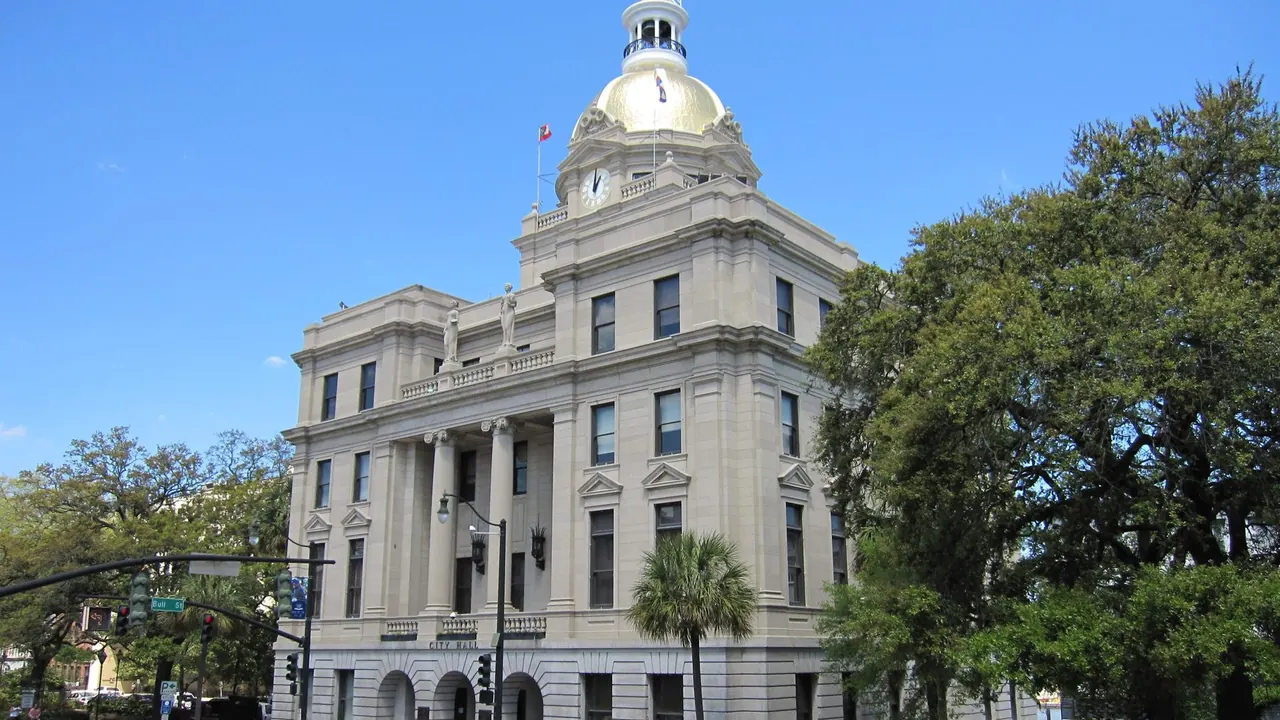
Photos: New York by Jakub Hałun, CC BY 4.0, cropped; Savannah by Chris M Morris, CC BY 2.0, cropped.
New York or Savannah?
Our verdict in twelve categories, each scored against the same fixed benchmark cities, and the climate month by month, so you can choose for your trip.
Choose New York for
- live music and the arts
- shopping
- nightlife
New York is the choice for a trip built on range and intensity. The museums, Broadway and Lincoln Center, food cooked by nearly every community on earth, nights that run past dawn in Brooklyn and shopping from Fifth Avenue to Williamsburg vintage all fit inside one subway network. It suits travellers who want to pack in as much as possible and can accept steep bills, crowds and noise as part of the deal.
Choose Savannah for
- prices
- beaches
Savannah rewards a slower, smaller trip. Its appeal lies in its setting: an eighteenth-century grid of shaded squares, Lowcountry cooking, evenings that stay relaxed and a warm, easy-going beach at Tybee. Choose it for a long weekend of walking, eating and sitting under the oaks, especially in spring or autumn. It costs less than New York, though it is still not cheap, and a car helps once you leave the historic district.
Scoreboard
Twelve categories on one fixed scale from 0 to 100. The shaded stretch is the gap between the two.
Your match
Pick a travel style or drag the sliders, and both match scores follow your weighting.
Wins on live music and the arts and shopping with your weighting.
Wins on prices and beaches with your weighting.
What matters to you?
Category by category
What the scores mean for a trip.
Beaches & swimming
Neither city is a beach destination, but they offer different kinds of beach day. New York's beaches are part of the city. You can take the subway to the boardwalk and old rides at Coney Island or the surfing crowd at the Rockaways, though the water stays cool even in midsummer and weekends are packed.
Savannah's beach takes a half-hour drive to Tybee Island, where the sea is noticeably warmer and the season longer. The wide, flat sand suits small children, but the marsh-tinted water and low-key beach-town setting will not impress anyone hoping for clear water.
Food & drink
New York is in another league for eating. You can spend a week on Fujianese food in Flushing, Tibetan and Colombian cooking in Jackson Heights and Italian on Arthur Avenue, then add tasting-menu counters, delis and corner slices. Savannah has nothing to match that breadth.
Savannah's strength is depth in a single tradition. Shrimp and grits, she-crab soup, Lowcountry boil and family-style Southern tables are the reason to eat there, with a small group of chef-led kitchens in restored townhouses. Expect to have explored it well within a long weekend, and to walk past River Street's fried seafood.
Culture & sights
New York's culture is about world-class collections and famous landmarks: the Met, MoMA, the Guggenheim and the Cloisters, the Statue of Liberty and the Brooklyn Bridge. It could fill a far longer stay than Savannah, and most of its history on show dates from the nineteenth and twentieth centuries.
In Savannah the town plan itself is the main sight. Oglethorpe's grid of moss-hung squares, the ironwork houses and Factors Walk are best enjoyed slowly on foot. The Telfair Museums and the Owens-Thomas House, with its honest account of slavery, add depth, but in a day or two you will have seen the core.
Nightlife
New York's nights are on a different scale. You can move from East Village dive bars to West Village wine bars and rooftop views in Long Island City, then on to warehouse parties in Bushwick that last until morning, with trains running all night to get you home.
Savannah's evenings are relaxed, sociable and short. Carrying a drink between River Street, City Market and the townhouse cocktail rooms is half the fun, but there is little clubbing and most places close well before the early hours. Weekend bachelorette crowds and St Patrick's Day are the loud exceptions.
Nature & outdoors
New York comes out slightly ahead, mainly because of its large parks and the real hiking within reach by train. Central Park and Prospect Park give long woodland loops, and Breakneck Ridge in the Hudson Highlands offers steep rocky climbs above the river about ninety minutes away, at their best in October colour.
Savannah's outdoors is flat and water-based. You can paddle through salt-marsh creeks, take dolphin-watching boats or go birding for wood storks, with Wormsloe's oak avenue for an easier outing. There are no hills, and summer heat and insects make it hard work.
Day trips
New York has the more varied day trips, and more of them work without a car. Philadelphia's colonial old town is about ninety minutes away by train, and Princeton's Gothic campus and Yale's museums in New Haven are on the rail lines too. Up the Hudson, Dia Beacon is easy to reach by train, while Storm King's sculpture park and the Gilded Age estates at Hyde Park need a short drive from the station.
Savannah also has good trips, but nearly all of them depend on driving. Charleston is about two hours away. Antebellum Beaufort, Fort Pulaski's brick walls and the millionaires' village on Jekyll Island are closer. Without a car, you will see very little beyond the city.
Good for families
New York has far more to keep children busy. The dinosaur halls and planetarium at the Natural History museum, the Bronx Zoo, the aquarium by the Coney Island rides and the free Staten Island Ferry would each make a day. The difficulties are practical: subway stairs with a pushchair, cramped hotel rooms and Midtown crowds.
Savannah is easier to manage but has less on offer. Trolley tours, ghost walks, the forts and the Girl Scouts founder's birthplace work well for older children, and Tybee's gentle beach suits the youngest. There is no big zoo or aquarium, and the summer heat tires small legs quickly.
Getting around
Both cities are good for walking, but New York lets you go much further without a car. Manhattan's grid is easy to navigate on foot, and the round-the-clock subway, ferries and bike docks reach almost everywhere, even if the express and local lines take some learning.
Savannah's historic district is flat, compact and lovely to walk, with a free shuttle and a river ferry to help. Step outside it to Bonaventure, Wormsloe or Tybee, though, and you will need a car, a taxi or a tour.
Shopping & style
New York is one of the world's great shopping cities and Savannah is not. The historic department stores, the luxury houses on Madison Avenue, SoHo's cast-iron fashion streets and the vintage and record shops of Greenpoint can easily become the main reason for a trip.
In Savannah, shopping is a gentle afternoon on Broughton Street, with boutiques, work by art-school students and graduates, and antique dealers in the squares. River Street mostly sells pralines and souvenirs.
Affordability
Savannah is the less costly of the two, though neither is a bargain. New York's small Manhattan rooms, theatre tickets and high museum entry fees make it one of the most expensive trips anywhere. Slices, food carts, the free ferry and staying in Queens or Brooklyn help keep costs down.
Savannah's historic-district inns are priced as a popular weekend destination, and tax and tip push meal bills up. Still, its main pleasures of squares, parks and cemeteries are free, and midweek stays bring prices down further, although a car adds to the budget.
Live music & performing arts
No city offers more performance than New York. Broadway and Off-Broadway, the Met Opera and New York City Ballet at Lincoln Center, orchestras at Carnegie Hall, Village jazz clubs and Harlem gospel mean every night has several strong options.
Savannah's live arts depend on timing. Plan around the spring music festival, held in historic theatres and churches, or the autumn jazz event in Forsyth Park, and there is plenty to see. At other times you will find touring shows at the Lucas or Trustees, a few bar bands and buskers.
Wellness & relaxation
The two are evenly matched, but they offer very different ways to unwind. New York has a real bathing culture, with a century-old Russian and Turkish bathhouse in the East Village, banyas in Brighton Beach and Korean spas nearby, set against a city whose noise and pace work against rest.
Savannah has no bathing tradition and only a few spas. Its calm comes from its unhurried pace: a bench under the oaks or an inn porch on a quiet southern square, best midweek in spring.
When should you go?
Pick your month. The climate figures are measured averages, not a forecast.
New York in July
Savannah in July
Daytime high, °C
Rainfall in the month, mm
Temperature and rainfall are climate normals, averaged over the years shown. New York: 1991-2020 normals, LaGuardia Airport (12.9 km from centre). Savannah: 1991-2020 normals, Savannah Airport (9.9 km from centre).
New York has four sharp seasons. Winters are cold, around 5°C by day in January, so street-walking then is a matter of wrapping up. The best months for exploring on foot are May, early June, September and October, when autumn colour arrives. July and August are hot and humid, and those are also the only months when the Atlantic, at about 23°C, is pleasant for a swim. Rain is spread evenly through the year, with no real dry season.
Savannah runs much warmer. January days reach about 16°C, so winter is mild enough for walking the squares, though the sea is too cool for swimming. Spring, from March to May, and October to November are the best times overall. Midsummer is very hot, around 34°C in July, and June is the wettest month at about 169mm, with afternoon thunderstorms. The sea at Tybee stays warm from June to September. For beach time Savannah has the longer and warmer season. For walking, New York is better in high summer and Savannah far better in winter.
Which traveller are you?
On a beach and sun trip, Savannah has the edge. New York's Atlantic is fine for a swim from late June to early September, but Tybee's sea runs several degrees warmer, about 29°C at its peak, over a longer season.
For a short city break, New York makes every hour count: the all-night subway links a morning museum, an evening show and a late dinner in Queens. Savannah's squares are easy on foot, but Tybee and Bonaventure need a drive.
On a tight budget, Savannah goes further, though it is not cheap. New York's rooms and restaurant bills stay high however carefully you plan, while Savannah's squares, Forsyth Park and riverfront cost nothing. Its cheaper highway motels do mean paying for a car.
Before you go
| Measure | New York | Savannah |
|---|---|---|
| Currency | US Dollar (USD) | US Dollar (USD) |
| Sockets | AB120 V, 60 Hz | AB120 V, 60 Hz |
| Driving side | Right | Right |
| Time zone | UTC-5, UTC-4 in summer | UTC-5, UTC-4 in summer |
| Emergency number | 911 | 911 |
| Elevation | 25 m | 15 m |
| Main airport | John F. Kennedy International Airport (JFK)21 km from centre189 non-stop destinations | Savannah Hilton Head International Airport (SAV)12 km from centre39 non-stop destinations |
| Public holidays this year | 13 days | 12 days |
By the numbers
| Measure | New York | Savannah |
|---|---|---|
| City population | 8,804,190 | 147,780 |
| People per km² | 7,256 | 524 |
| Museums within 10 km | 157 | 19 |
| UNESCO World Heritage sites within 50 km | 2 | 0 |
| Swim season, months above 21 °C | 3 months | 6 months |
Where else could you go?
Every comparison below shares a destination with this one, so you can follow New York or Savannah somewhere new.