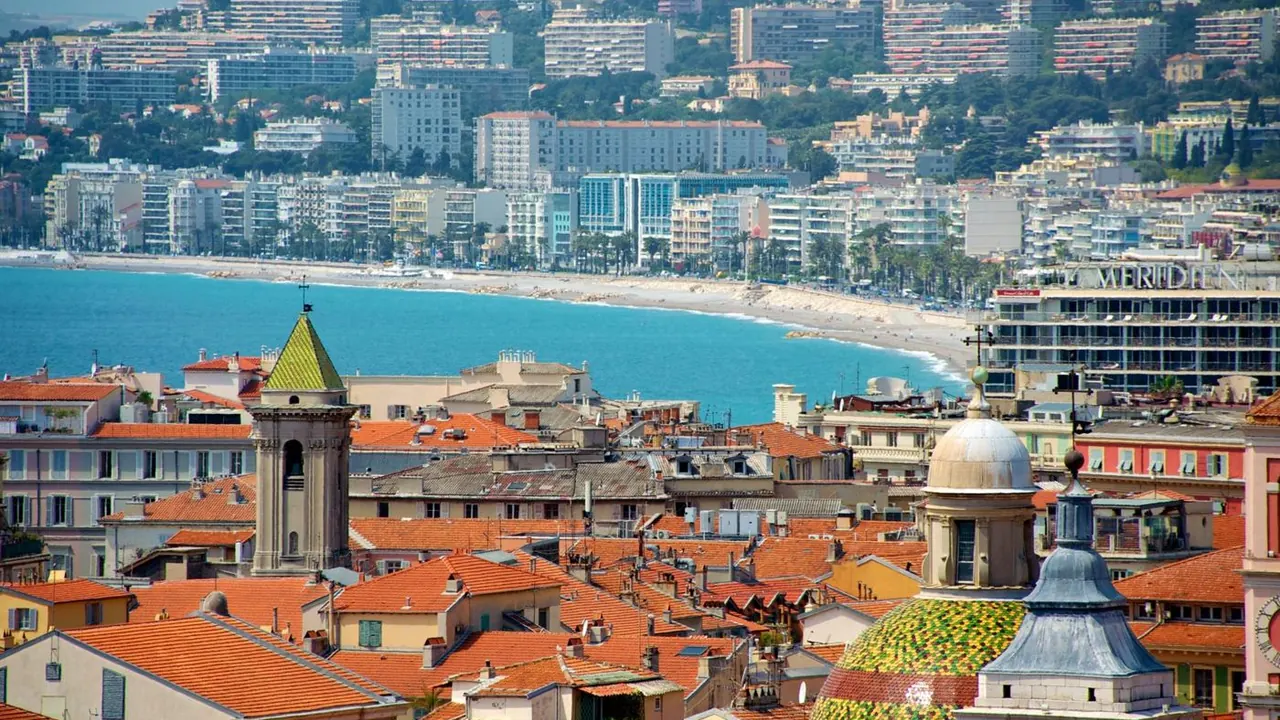
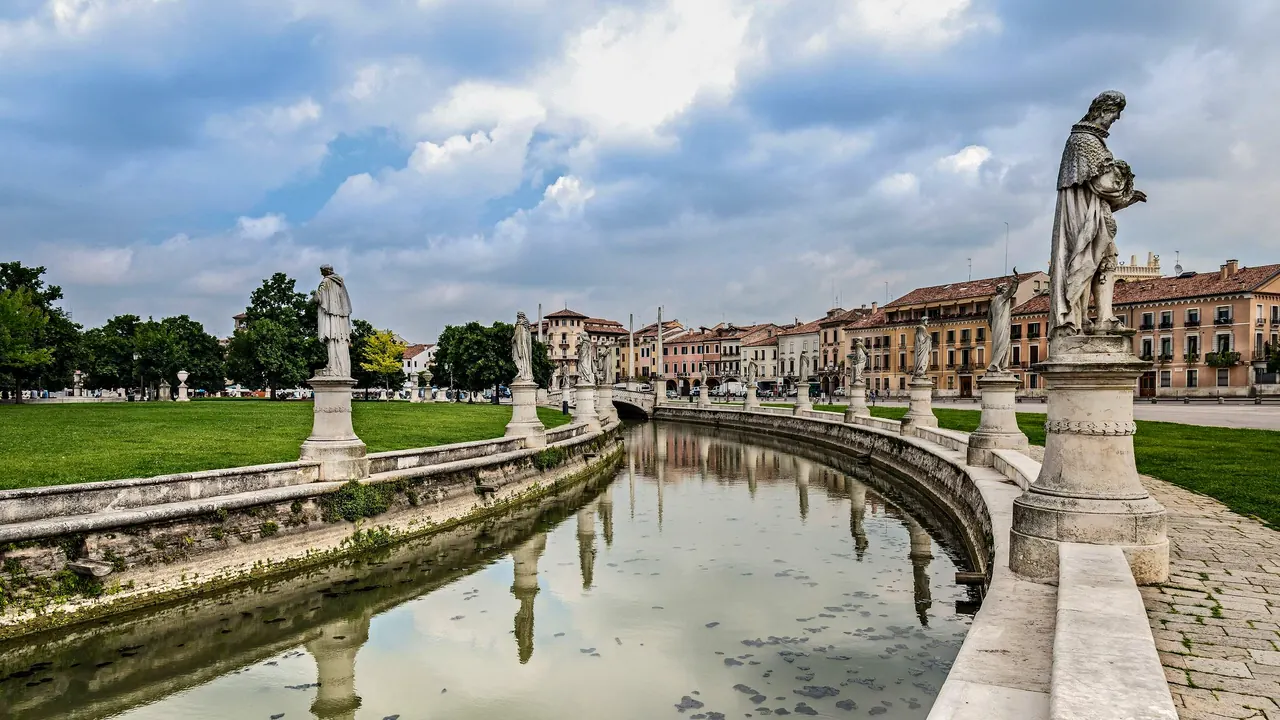
Photos: Nice by Daniel Stockman, CC BY-SA 2.0, cropped; Padua by Didier Descouens, CC BY-SA 4.0, cropped.
Nice or Padua?
Our verdict in twelve categories, each scored against the same fixed benchmark cities, and the climate month by month, so you can choose for your trip.
Choose Nice for
- beaches
- nature and the outdoors
- families
Choose Nice if the sea is part of the plan. It suits travellers who want to swim off the promenade in the morning, walk a coastal path or head towards the Alps in the afternoon, and finish with socca in the old town. Families and outdoor types will find more to do here, and the Riviera towns are a short train ride away. The catch is the cost, which runs higher.
Choose Padua for
- wellness
- prices
- culture and sights
Padua is the better pick for a trip built around art and the wider region. Giotto's frescoes and the Basilica of Saint Anthony sit at the heart of a compact centre. Venice, Verona and Bologna are an easy train ride away, and the thermal pools of Abano are just outside town. It is cheaper to sleep in and calmer in mood, but there is no sea on the doorstep.
Scoreboard
Twelve categories on one fixed scale from 0 to 100. The shaded stretch is the gap between the two.
Your match
Pick a travel style or drag the sliders, and both match scores follow your weighting.
Wins on beaches and nature and the outdoors with your weighting.
Wins on wellness and prices with your weighting.
What matters to you?
Category by category
What the scores mean for a trip.
Beaches & swimming
Nice has a 7km pebble shore right below the city, with clear water from June to October. For sand and calmer water, the coves at Villefranche and Cap Ferrat are a short ride east. You can fit a swim into any day without planning.
Padua is inland, so the sea means an hour's trip to Sottomarina or the Venice Lido. Those flat, shallow strips of umbrellas suit paddling children more than anyone looking for scenery. The water gets about as warm as at Nice, but going there is an outing, not part of daily life.
Food & drink
Both cities are places to eat well and simply rather than grandly, and in both a morning market is at the centre of things. Nice's cooking looks towards Liguria: socca from wood ovens, pissaladière and stuffed vegetables, with the Cours Saleya market and the little Bellet vineyards above the town.
Padua's food is Venetian home cooking: bigoli with duck sauce, baccalà and risotto with peas. Its real strength is the drinking ritual, with the standing spritz in Piazza delle Erbe and the grand Caffè Pedrocchi. In Nice, the promenade terraces are the places to avoid. In Padua, don't expect much fine dining.
Culture & sights
Padua has the more important sights. Giotto's Scrovegni Chapel marks a turning point in European painting and belongs to a UNESCO-listed group of fresco cycles. Add the Basilica of Saint Anthony with Donatello's bronzes, the anatomical theatre at Palazzo Bo and a botanical garden dating from 1545.
Nice's strength is modern art: the Matisse and Chagall museums in Cimiez and MAMAC, set against a baroque old town and Belle Époque villas. It makes a good two or three days, but nothing there matches the art-historical weight of a morning in the Scrovegni.
Nightlife
Neither is a clubbing city, and in both the night out means drinks in the old centre. Nice's version runs later and draws more visitors, with pubs and cocktail bars in Vieux Nice and beach clubs in summer. Monaco and Cannes are close for something glossier.
Padua's nights are driven by students and the aperitivo, with spritz glasses in the squares around the Palazzo della Ragione. It is liveliest during university term and goes quiet in high summer, which is the reverse of Nice's year.
Nature & outdoors
Nice has far more within easy reach. There are coastal paths around Cap Ferrat, corniche roads for cyclists, the red rocks of the Esterel and the high lakes of the Mercantour. In winter you can ski at Isola 2000 and be back by the sea the same day.
Padua sits on a flat plain. The Euganean Hills, about 15km away, have good trails and cycling among vineyards, and the Brenta towpaths make easy rides. For proper mountain walking, though, you need to drive to Monte Grappa or Asiago.
Day trips
Nice gives you a run of very different places along a single coast. Monaco's palace and Oceanographic Museum are about twenty minutes away, then come Èze on its rock and lemon-coloured Menton. To the west lie Antibes, Cannes and the Lérins islands, and inland Grasse and Saint-Paul-de-Vence. Italy starts just past Menton, and you need no car for any of it.
Padua comes out ahead because of what its rail lines reach. Venice is close enough to visit on several separate days. Vicenza's Palladian buildings, Verona and Bologna are each an hour or less away, and every one of them is a city with days of sights of its own. Closer to home, the Brenta villas and the walled towns of Este and Montagnana fill the quieter days.
Good for families
Nice gives children much more to do. The sea, the play areas and water jets of the Promenade du Paillon, Parc Phoenix and an easy outing to Monaco's Oceanographic Museum will fill several days, although the pebbles are hard on small feet.
Padua is flat, safe and welcoming, but it has little made for children beyond Prato della Valle and the botanical garden's glasshouses. Families there rely on day trips to Gardaland, Lake Garda or the Adriatic.
Getting around
Both are easy without a car. In Nice, the sights lie within a flat half-hour walk, a tram runs from the airport to the centre, and coastal trains handle the Riviera. Its weak point is the summer crush on those trains and on the coast roads.
Padua's centre is even more compact, with arcades for shelter from sun and rain and bicycles as an ordinary way to get about. Its station sits on main lines in every direction, which puts the whole region within short train rides.
Shopping & style
Nice has more range. There are chain stores on Avenue Jean Médecin, luxury houses around rue Paradis, and Provençal soaps, olive oil and candied fruit in Vieux Nice. On Mondays the Cours Saleya becomes an antiques market, and Monaco and Cannes are close for serious spending.
Padua's shopping is quieter: Italian shoes and fashion under the arcades, plus bookshops that serve the university. Its best buys are edible, with cheese and Euganean wine from the delicatessens below the Palazzo della Ragione, and once a month an antiques market fills Prato della Valle.
Affordability
Padua is clearly the cheaper stay. Hotel prices are reasonable, which is why many visitors to Venice sleep here, trattoria meals are fairly priced, and getting around the centre costs nothing. Rooms do get dearer during trade fairs and graduation season.
Nice is expensive for southern Europe, especially from June to September, when seafront rooms, beach loungers and promenade terraces add up. Cheap trams and trains, low museum fees and socca help, and spring and late autumn are easier on the budget.
Live music & performing arts
Nice has the fuller calendar. The red-and-gold Opéra de Nice stages opera and ballet, the Nice Jazz Festival brings big names every July, and Carnival fills February with parades and flower battles.
Padua's programme is smaller and more intimate. Teatro Verdi offers drama and some opera, and there are chamber concerts in the frescoed Sala dei Giganti and the Basilica of Saint Anthony. For major opera, the Fenice in Venice and the Arena in Verona are easy to reach.
Wellness & relaxation
In Nice, rest comes mostly from the sea and the light. The water, the long promenade and the mild winters do most of the work, and for treatments you are limited to the big seafront hotels or a thalassotherapy centre further along the coast. It suits people who unwind outdoors, but the city loses that calm in the crowds and heat of July and August.
Padua has something Nice cannot match: a proper spa stay. The hot springs of Abano and Montegrotto, at the foot of the Euganean Hills, supply whole hotels built around warm pools and mud cures, so you can book a week of treatments or just go for an afternoon. Because the water comes out of the ground hot, a soak is as good on a foggy January day as in spring, while rest in Nice depends on good weather.
When should you go?
Pick your month. The climate figures are measured averages, not a forecast.
Nice in July
Padua in July
Daytime high, °C
Rainfall in the month, mm
Where the figures come from
Padua's temperatures are measured 35 km from the centre, at Treviso / Istrana.
Padua has no rain gauge within 25 km of the centre, so its rainfall comes from a gridded climate dataset read at the city rather than from a gauge further away.
Padua's sunshine is measured 36 km from the centre, at Treviso / S. Angelo.
Temperature and rainfall are climate normals, averaged over the years shown. Nice: 1991-2020 normals, Nice (8 km from centre). Padua: 1991-2020 normals, Treviso / Istrana (35.4 km from centre).
Nice has the gentler year. Winter days are mild enough for walking the promenade, and summer highs sit around 28°C with very little rain and long hours of sunshine. The sea is warm enough to swim from June into October and reaches about 25°C in August. Late spring and September are the easiest months. The exception is autumn: October and November bring the year's heaviest rain, up to 138mm in a month.
Padua has much bigger swings between seasons. Winters are cold and grey, with January highs near 8°C and fog on the plain. July and August reach 31°C and feel close and humid for sightseeing. Rain is spread through the year instead of arriving all at once in autumn, and every month is less sunny than on the Riviera. April, May, September and October are the best months for walking. The Adriatic is warm in high summer, but it is a day trip away.
Which traveller are you?
On a beach and sun trip, Nice is the clear choice. The sea is at the end of the street and the summers are drier and sunnier. Sandy coves at Villefranche, Beaulieu and Juan-les-Pins are short rides away, while Padua's nearest beach is an hour off.
For a relaxing and wellness trip, Padua comes out well ahead. The thermal pools and mud treatments of Abano and Montegrotto are close enough to fit around sightseeing, and the arcaded centre moves slowly. Nice offers little beyond hotel spas.
On a tight budget, Padua makes the money go further. Rooms cost noticeably less than on the Riviera, standing spritzes and market food are cheap, and you can walk everywhere in the centre. Nice can be done cheaply with socca and trams, but beds near the sea are dear.
Before you go
| Measure | Nice | Padua |
|---|---|---|
| Official language | French | Italian |
| Currency | Euro (EUR) | Euro (EUR) |
| Sockets | CE230 V, 50 Hz | CFL230 V, 50 Hz |
| Driving side | Right | Right |
| Time zone | UTC+1, UTC+2 in summer | UTC+1, UTC+2 in summer |
| Emergency number | 112 | 112 |
| Elevation | 0 m | 12 m |
| Main airport | Nice-Côte d'Azur Airport (NCE)6 km from centre130 non-stop destinations | Venice Marco Polo Airport (VCE)39 km from centre103 non-stop destinations |
| Public holidays this year | 11 days | 13 days |
By the numbers
| Measure | Nice | Padua |
|---|---|---|
| City population | 357,737 | 206,496 |
| People per km² | 4,975 | 2,220 |
| Museums within 10 km | 17 | 29 |
| UNESCO World Heritage sites within 50 km | 2 | 5 |
| Swim season, months above 21 °C | 4 months | 4 months |
Where else could you go?
Every comparison below shares a destination with this one, so you can follow Nice or Padua somewhere new.