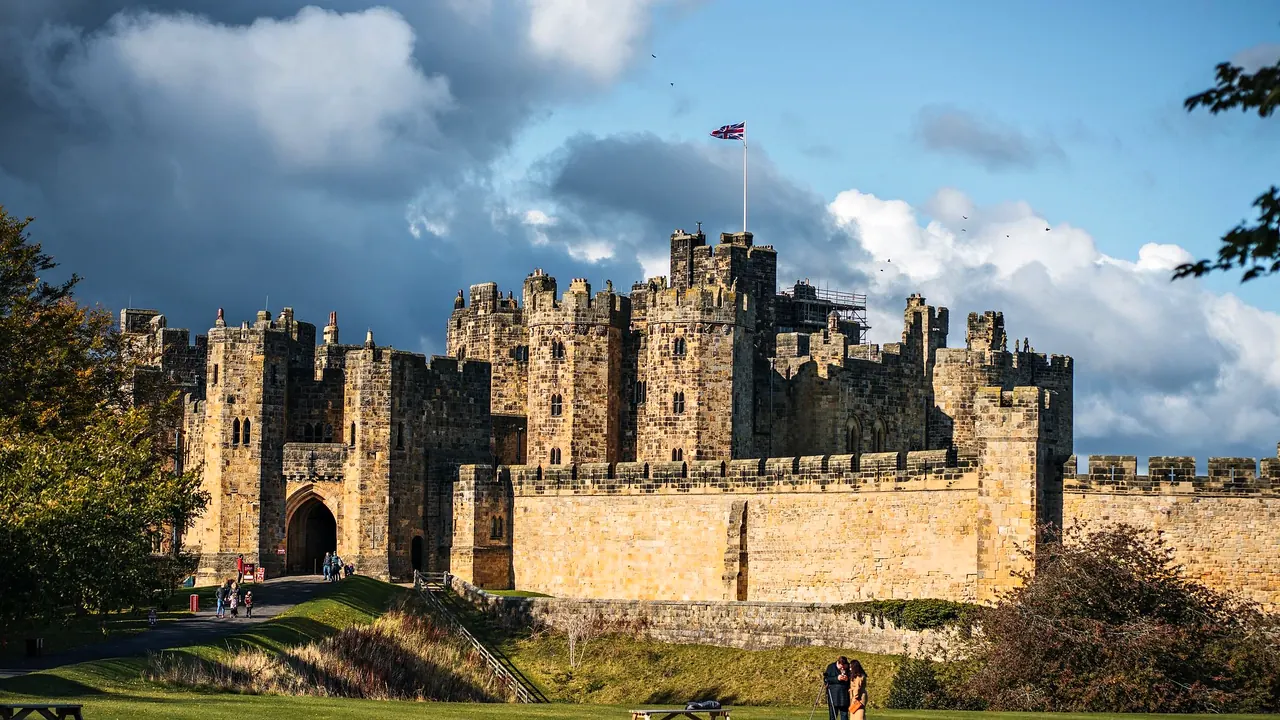
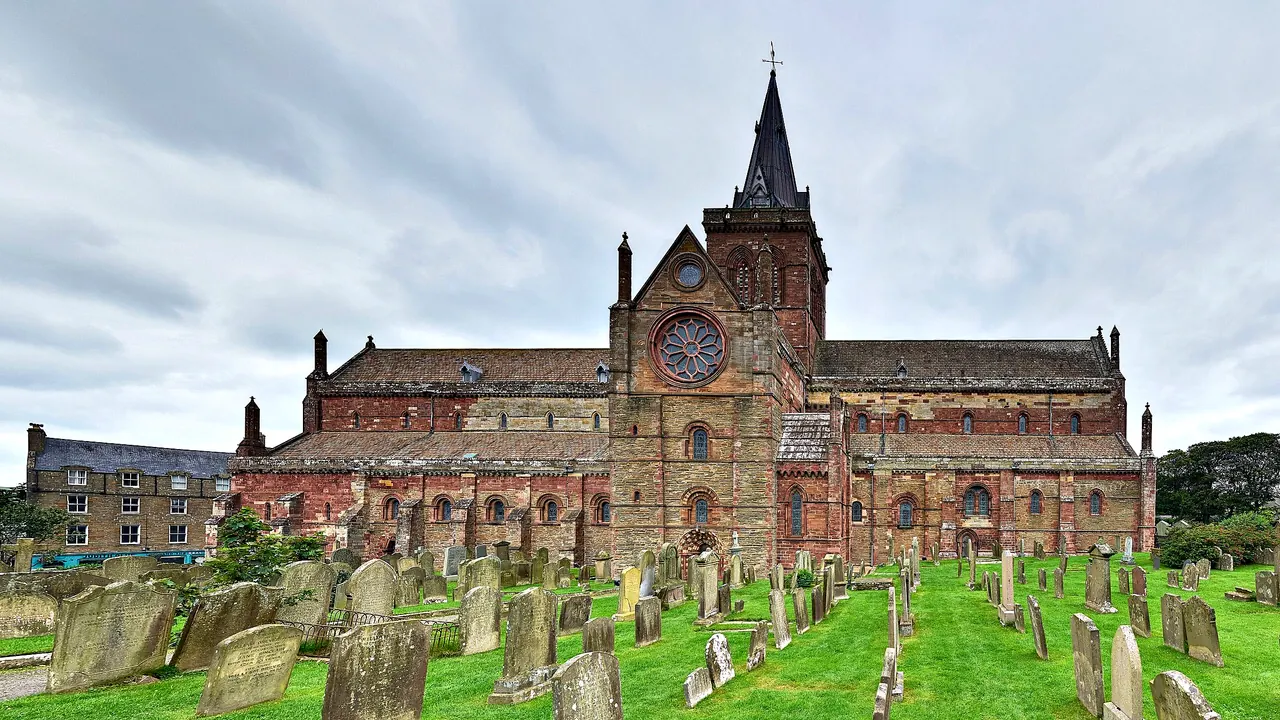
Photos: Northumberland by Clément Proust, Pexels License; Orkney by Virtual-Pano, CC BY-SA 4.0, cropped.
Northumberland or Orkney?
Our verdict in twelve categories, each scored against the same fixed benchmark cities, and the climate month by month, so you can choose for your trip.
Choose Northumberland for
- day trips
- families
- nature and the outdoors
Northumberland suits travellers who want a full, varied rural trip without much logistics. Its castles and the Roman frontier on Hadrian's Wall sit within an easy drive of each other, the Farne Islands and the Cheviots give it the stronger outdoors, and children have more laid on for them. Edinburgh, Durham and Newcastle are all close enough for a day out, so it works well for families and for anyone who wants to mix countryside with the odd city day.
Choose Orkney for
- shopping
- culture and sights
- nightlife
Orkney is the choice for travellers drawn by remoteness and very deep prehistory. Skara Brae, Maeshowe and the stone circles make up a Neolithic landscape that Northumberland cannot match, and island-hopping by small ferry is part of the appeal. Getting there and moving between islands takes more planning, and there is less for children, but walkers, wreck divers and lovers of island craft and quiet will find it worth the effort.
Scoreboard
Twelve categories on one fixed scale from 0 to 100. The shaded stretch is the gap between the two.
Your match
Pick a travel style or drag the sliders, and both match scores follow your weighting.
Wins on day trips and families with your weighting.
Wins on shopping and culture and sights with your weighting.
What matters to you?
Category by category
What the scores mean for a trip.
Beaches & swimming
Both coasts have fine, empty sand and cold water, but Northumberland's beaches are the slightly more usable of the two. The sea there is a degree or so warmer, the main villages have some lifeguarded stretches, and the beaches at Bamburgh, Embleton and Druridge Bay come with castles and dunes behind them for a day of walking, kites and paddling.
Orkney's beaches, at Waulkmill Bay, Birsay and on Sanday and Westray, can look startlingly bright, with pale shell sand and turquoise shallows. The water rarely allows more than a quick plunge, and the wind is stronger. Choose them for shell-hunting and watching seals, not for sitting out on the sand.
Food & drink
The two eat at much the same level, and both cook from local produce. In Northumberland that means kippers from Craster's smokehouses, crab sandwiches in the fishing villages and Lindisfarne oysters, served mostly in coaching inns and village pubs, and Newcastle is close by when you want more choice.
Orkney has no such city to fall back on. It makes up for that with hand-dived scallops, island beef and cheese, and two whisky distilleries in Kirkwall. On the outer islands you may find a single place to eat or none at all, so cooking from the butcher and fish shop is part of the trip.
Culture & sights
These two are about level for sightseeing, but they cover different stretches of history. Northumberland is about the medieval border and Rome: Bamburgh, Alnwick and Dunstanburgh castles, the Elizabethan walls of Berwick, and Housesteads and Vindolanda on Hadrian's Wall, with Lindisfarne recalling the early Christian saints.
Orkney goes back thousands of years further. Skara Brae, Maeshowe and the Ring of Brodgar form a Neolithic landscape that is rare anywhere in Europe, and Norse sites, St Magnus Cathedral in Kirkwall and the Italian Chapel bring the story forward. Both need a car and several days to see properly.
Nightlife
Nights out are equally modest in both: a few pubs and hotel bars, no clubs, and most places quiet early. The difference is what lies beyond. From Northumberland, Newcastle is a short train ride away for a proper night out. In Orkney the best evenings may be a fiddle session in Stromness or a walk under the midsummer sky that barely darkens.
Nature & outdoors
Northumberland has the broader outdoors. Boats from Seahouses reach the puffins and grey seals of the Farne Islands, and the coast path runs past dunes and castles. Inland, the rounded Cheviots, the Coquet valley and Kielder's forest, lake and dark skies give it walking, cycling and sailing as well as birdwatching.
Orkney's landscape is low and treeless, and its drama is at the edges. The Old Man of Hoy, the cliffs at Yesnaby and Marwick Head and the seabird colonies on Westray are grand, and sea kayaking and wreck diving in Scapa Flow are real draws. The wind and rain set tighter limits on what you can do on any given day.
Day trips
Northumberland is much better placed for days out. Edinburgh is under an hour by train from Berwick, the abbeys of the Scottish Borders are a short drive west, and from the south of the county Newcastle, Durham and Beamish are all within easy reach, alongside market towns such as Alnwick and Rothbury.
In Orkney a day trip means island-hopping. You take a small ferry to Rousay's cairns, Westray's castle or Hoy's hills, or the tiny plane to Papa Westray. These are lovely days, but each one is planned around ferry times and fills up with only a few sights.
Good for families
Northumberland gives children far more. Alnwick Castle has costumed activities and broomstick training, the Alnwick Garden has its giant treehouse, Kielder has forest play trails, and the causeway crossing to Holy Island and the Farne boat trips make it feel like an adventure. The weakness is that there is little to do indoors when it rains.
Orkney is just as safe and calm, with seals, puffins and the replica house at Skara Brae. Beyond the Kirkwall pool, though, nothing is aimed at children, and the wetter weather can keep families indoors for days. It suits only children who are happy outdoors.
Getting around
In both places a car is the realistic answer, and on quiet roads the driving is easy. Northumberland adds two rail lines, the east coast main line for Alnwick and Berwick and the Tyne Valley line for Hadrian's Wall. Its one quirk is the Holy Island causeway, which floods twice a day.
Orkney's Mainland is compact, with Kirkwall, Stromness and the Neolithic sites all close together. Reaching the outer islands depends on booked car ferries and small planes, both of which the weather can cancel.
Shopping & style
Orkney is the better place to buy something worth taking home. Along Albert Street in Kirkwall and the main street of Stromness, jewellers work silver into Norse and Neolithic designs, and there is knitwear, pottery and the straw-backed Orkney chair. A craft trail leads to workshops across the Mainland.
Northumberland's shopping is more everyday: the high streets and weekly markets of Hexham and Alnwick, farm shops and smokehouse counters. The exception is Alnwick's old railway station, whose vast second-hand bookshop is worth a visit in itself.
Affordability
Both cost what rural Britain costs, and both have plenty of free sights, from beaches and cliffs to the Wall and the stone circles. Northumberland is a touch easier on the budget, because the Tyne Valley and inland market towns are cheaper bases than the coast. Orkney adds a flight or ferry to reach it and inter-island crossings once there, and its small stock of rooms raises summer rates.
Live music & performing arts
Both keep a living folk tradition and neither has a large venue of its own. Northumberland's music is the smallpipes, heard at pub sessions, small festivals and dances. All year round there is something modest on: touring theatre, music and film at the arts centres in Hexham and Berwick and the small playhouse in Alnwick. Orchestras and big touring shows are a short trip away in Newcastle and Gateshead.
Orkney packs most of its performance into a few weeks. The St Magnus International Festival brings classical music and drama to the cathedral around midsummer, and the folk festival fills Stromness in late spring. Outside those weeks there are occasional concerts and fiddle sessions, so time your visit if live music matters to you.
Wellness & relaxation
Northumberland offers a little more for someone who wants treatments, with spas at a handful of country-house and coastal hotels, where Orkney has only a few hotel treatments and the Kirkwall pool. Both are really places to rest rather than be pampered. A cottage stay timed to the tides on the Northumberland coast and long, light island evenings in Orkney make for the same kind of quiet.
When should you go?
Pick your month. The climate figures are measured averages, not a forecast.
Northumberland in July
Orkney in July
Daytime high, °C
Rainfall in the month, mm
Where the figures come from
Northumberland has no rain gauge within 25 km of the centre, so its rainfall comes from a gridded climate dataset read at the destination rather than from a gauge further away.
Temperature and rainfall are climate normals, averaged over the years shown. Northumberland: 1991-2020 normals, Boulmer (7 km from centre). Orkney: 1991-2020 normals, Kirkwall Airport (4.9 km from centre).
Neither destination ever gets hot, so the question is how mild and how dry. Northumberland is a little warmer through the year, reaching about 18°C in July and August, and its drier months run from March to May. Late summer and autumn bring more rain there, with August and November the wettest. Orkney tops out around 16°C, but its rainfall pattern is starker. April to July is fairly dry, then from October to January it is wet, windy and dark, with well over 100mm a month.
May is Orkney's sunniest month and the light evenings run long into summer, which makes late spring and early summer its best window, also when the seabirds are nesting. Northumberland's season is a little longer and stretches comfortably from May into September. In both, the North Sea or Atlantic only reaches about 15°C at best, so beach days mean walking and paddling rather than swimming. Winter in either is for hardy walkers only.
Which traveller are you?
On a family trip with children, Northumberland is the safer choice, especially with younger ones who need more than scenery. More is laid on for them, the drives between sights are short and the weather is drier. Orkney suits only children happy with beaches, wildlife and wind.
For an outdoors trip, Northumberland suits anyone who wants a different activity every day, from hills and forest to shore and sea, and fewer days lost to the weather. Orkney is for walkers and wreck divers content to build a week around sea cliffs, seabirds and Scapa Flow.
For a culture trip, the choice comes down to which past draws you. Northumberland rewards anyone interested in medieval border history and Rome. For prehistory, Orkney is the place: Northumberland has nothing like walking through Skara Brae or stooping into Maeshowe.
Before you go
| Measure | Northumberland | Orkney |
|---|---|---|
| Official language | English | English |
| Currency | Pound Sterling (GBP) | Pound Sterling (GBP) |
| Sockets | G230 V, 50 Hz | G230 V, 50 Hz |
| Driving side | Left | Left |
| Time zone | UTC, UTC+1 in summer | UTC, UTC+1 in summer |
| Emergency number | 112 or 999 | 112 or 999 |
| Main airport | Newcastle International Airport (NCL)80 non-stop destinations | Kirkwall Airport (KOI)9 non-stop destinations |
| Public holidays this year | 8 days | 10 days |
By the numbers
| Measure | Northumberland | Orkney |
|---|---|---|
| Population | 323,820 | 22,270 |
| People per km² | 65 | 22 |
| Swim season, months above 21 °C | None | None |
Where else could you go?
Every comparison below shares a destination with this one, so you can follow Northumberland or Orkney somewhere new.
- Edinburghvs Northumberland
- Lake Districtvs Northumberland
- Yorkshire Dalesvs Northumberland
- Scottish Highlandsvs Orkney
- Peak Districtvs Northumberland
- Isle of Skyevs Orkney