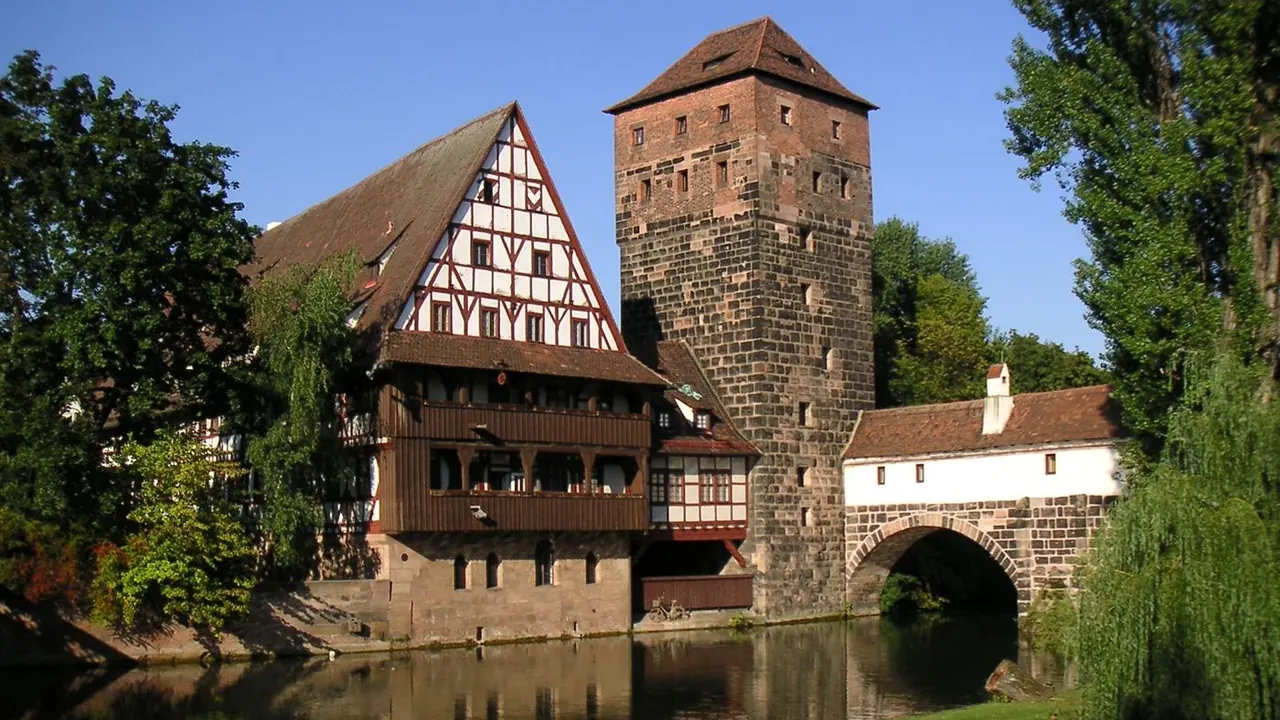
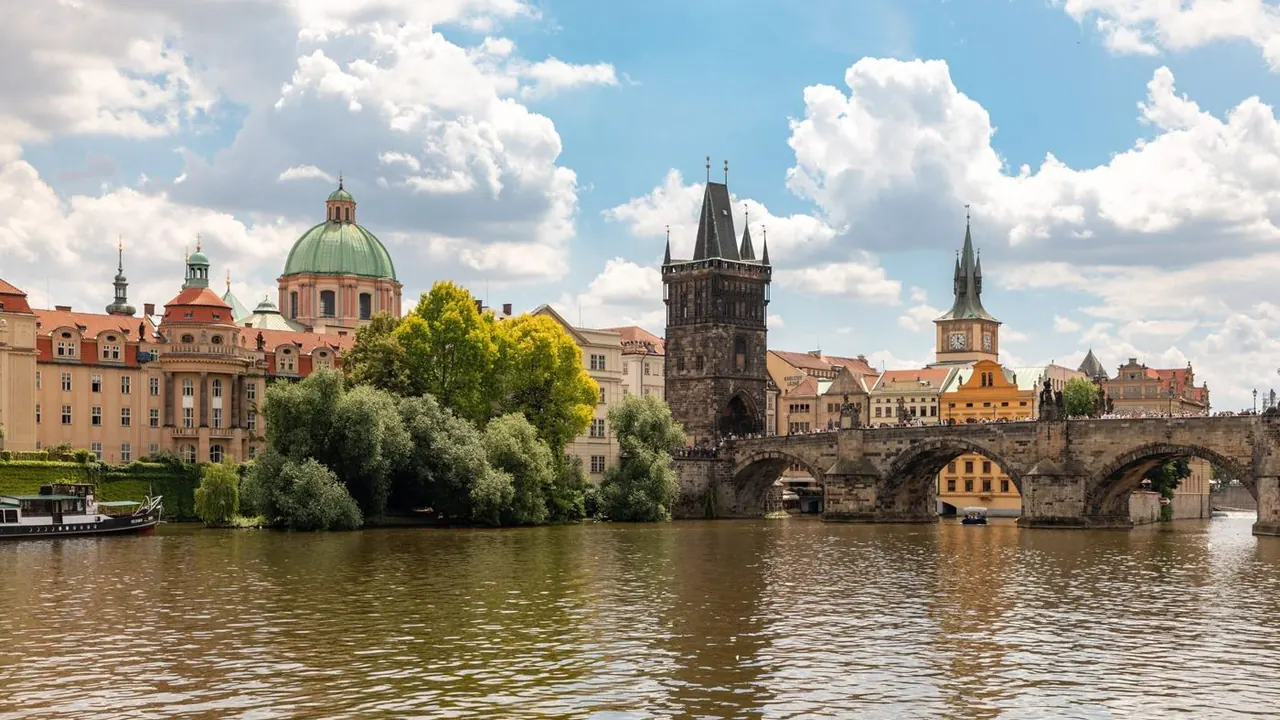
Photos: Nuremberg by Horst Gutmann, CC BY 2.0, cropped; Prague by Dietmar Rabich, CC BY-SA 4.0, cropped.
Nuremberg or Prague?
Our verdict in twelve categories, each scored against the same fixed benchmark cities, and the climate month by month, so you can choose for your trip.
Choose Nuremberg for
- families
- wellness
- beaches
Nuremberg suits a calmer trip built around a walled old town, Franconian beer and a different excursion every day. It works especially well with children, thanks to the toy heritage, the railway museum and a zoo in old quarries, and the thermal spas next door in Fürth give tired parents somewhere to recover. Choose it if you want an easy base for Bamberg, Regensburg and the Romantic Road more than a big night out.
Choose Prague for
- nightlife
- live music and the arts
- culture and sights
Prague is the stronger choice when the city itself is the reason to go. Its centre survived largely intact, from the Castle hill down through Mala Strana to the Old Town, and three opera houses and the Rudolfinum fill its evenings with music. Pub nights in Zizkov and techno in Holesovice give it a real nightlife, and everyday spending goes further, as long as you eat and sleep a few tram stops away from the tourist core.
Scoreboard
Twelve categories on one fixed scale from 0 to 100. The shaded stretch is the gap between the two.
Your match
Pick a travel style or drag the sliders, and both match scores follow your weighting.
Wins on families and wellness with your weighting.
Wins on nightlife and live music and the arts with your weighting.
What matters to you?
Category by category
What the scores mean for a trip.
Beaches & swimming
Neither city is a swimming destination, and on hot days both send you to reservoirs. From Nuremberg it is about an hour to the Franconian Lake District, where the Brombachsee has grassy shores, small sandy strips and room for sailing. Prague has one option right on its edge, the Dzban reservoir in the Sarka valley, and the wooded Slapy reservoir on the Vltava, about an hour south, feels more like a cabin vacation by a lake than a beach.
Food & drink
Both cities eat heavy, pork-based food and build their tables around beer, so the difference is in the details. Nuremberg has its finger-sized bratwurst grilled over beechwood, Schäufele on Sundays and Lebkuchen all year, and the Franconian countryside has more small breweries than almost anywhere, with smoky Kellerbier served in beer gardens by the Pegnitz.
Prague's beer culture is about carefully poured Pilsner-style lager, often from tanks, alongside svickova, goulash and cheap chlebicky lunches. The real difference is where you eat: Nuremberg's old town taverns serve the real thing, while Prague's centre is full of tourist menus, so the good meals are out in Vinohrady, Karlin or Letna.
Culture & sights
Prague has more to see. Its whole centre is a UNESCO site that kept its historic fabric, from St Vitus Cathedral and Golden Lane on the Castle hill to the Baroque palaces of Mala Strana, the statues on the Charles Bridge and the synagogues of Josefov. Its Cubist and Art Nouveau buildings add a layer that few cities have.
Nuremberg is smaller and more of it was rebuilt after the war, but it has its strengths: the Kaiserburg, the city walls, Dürer's house and the Germanisches Nationalmuseum, the largest museum of German art and cultural history, which can fill a day on its own. Its twentieth-century sites, the Rally Grounds and Courtroom 600, give it a weight of history that Prague handles instead with a day trip to Terezin.
Nightlife
Prague is the better city for a night out. Its pubs stay full until late, Zizkov's plain neighbourhood bars are cheap and local, and there is a real club scene, from big all-night venues near Wenceslas Square to a techno and alternative circuit in Holesovice's industrial buildings.
Nuremberg offers a pleasant evening rather than a reason to come. The old town has taverns and wine bars, and Gostenhof's small alternative bars are the liveliest part, but there are only a few clubs. It is quieter on weekend nights than Prague's often rowdy Old Town.
Nature & outdoors
Both are set in gentle landscapes without mountains, and they are on an equal footing outdoors. Prague has more greenery within the city, with Petrin Hill's orchards, the old royal hunting park of Stromovka and the rocky Divoka Sarka gorge all reachable by tram. Nuremberg's Reichswald forest begins at the edge of town, but its best walking is in Franconian Switzerland, about an hour away, known for its limestone towers, caves and serious rock climbing. Prague's equivalents are the sandstone gateways of Bohemian Switzerland and the Bohemian Karst around Karlstejn.
Day trips
Both are excellent bases for day trips, with different kinds of destinations. From Nuremberg, the trips are to historic towns: Bamberg, Regensburg and Würzburg are each about an hour by train, and the walled towns of Rothenburg and Dinkelsbühl are a little further. A fast train even makes Munich a day out.
Prague's excursions are more about castles in the countryside: Karlstejn, Konopiste and Krivoklat, plus the silver-mining town of Kutna Hora with its ossuary. Distances are longer, though, with Dresden and Karlovy Vary about two hours away and Cesky Krumlov really needing an overnight stay.
Good for families
Nuremberg is better with children. Centuries of toy-making give it the Toy Museum, the railway museum has full-size locomotives, and there is a play park in Zirndorf as well as a children's Christmas market with a little steam train in Advent.
Prague's storybook look and its moving astronomical clock delight children, and the zoo at Troja, with its chairlift up the hillside, is one of Europe's best. Beyond that, the offer is thinner, and the crowded summer lanes and long castle stairs are harder going with a pushchair.
Getting around
Both are easy without a car, but the scale is different. In Nuremberg, almost everything is inside walls about 1.5km across, with the station at the southern gate, and the U-Bahn and S-Bahn are only needed for the zoo, the Rally Grounds or Fürth. Prague is bigger and its transport does more work: three metro lines, trams that run through the night and even the Petrin funicular, all on one ticket. In Prague, though, you also have to watch for pickpockets on the trams through Mala Strana.
Shopping & style
Neither city is a shopping destination, and the souvenirs are what tell them apart. Nuremberg's are Lebkuchen in decorated tins, tin figures and crafts from the Handwerkerhof, and its Christkindlesmarkt is the time to buy, while Königstraße is chain stores. Prague has more range: luxury labels on Parizska, Bohemian crystal, garnets and marionettes, and small design and vintage shops in Holesovice and Vinohrady. In Prague, though, you have to get past a centre full of identical souvenir stalls.
Affordability
Prague is the cheaper of the two, mainly in everyday spending. A pub lunch, beer and tram rides cost little, especially in Zizkov or Karlin, although hotels in the historic core and restaurants with river views are priced for tourists.
Nuremberg is fairly priced for Western Europe and has cheap beer and transport too, but its hotel rooms become scarce and expensive during the big trade fairs and the Advent market. Planning around those dates matters more there than in Prague.
Live music & performing arts
Prague is in a different league for music. It has three opera stages, including the Estates Theatre, where Don Giovanni had its premiere, and the Czech Philharmonic plays at the Rudolfinum. Black-light theatre and marionette shows need no Czech, and there are church concerts almost every night.
Nuremberg's Staatstheater, in its Art Nouveau opera house, offers good opera, ballet and drama, and its summer events are its highlights: the open-air orchestra concert in Luitpoldhain, the free Bardentreffen folk festival and a big rock festival at the Zeppelinfeld.
Wellness & relaxation
Nuremberg is the better choice for a proper soak. The large thermal spa with sauna gardens in Fürth is a short U-Bahn ride away, and the saline pools of Bad Windsheim are about an hour west, although German saunas are usually mixed and nude.
Prague's own options are hotel spas, massage studios and novelty beer baths, with the real spa towns far off in western Bohemia. Its quieter pleasures are coffee houses, the Baroque gardens below the castle and Kampa island, much as Nuremberg offers slow afternoons in its beer gardens.
When should you go?
Pick your month. The climate figures are measured averages, not a forecast.
Nuremberg in July
Prague in July
Daytime high, °C
Rainfall in the month, mm
Temperature and rainfall are climate normals, averaged over the years shown. Nuremberg: 1991-2020 normals, Nuernberg (5.5 km from centre). Prague: 1991-2020 normals, Praha-Libus (8.1 km from centre).
The two cities share much the same climate. Both reach about 25°C in July and August, the only stretch warm enough for an afternoon at a lake or reservoir, and summer brings the most sunshine in both. It also brings the most rain. Nuremberg's wettest month is July at 77mm, while Prague is clearly wetter in early and late summer, with around 80mm in both June and August, so pack for heavy showers there. May and September, at around 20°C, are the most comfortable months for walking all day in either city.
Winters are cold and grey in both. Nuremberg has more rain from November to February, while Prague is drier but slightly colder, with January highs of 2°C. Daylight is short in both through those months, so sightseeing comes in brief bursts between warm taverns, pubs and museums.
Which traveller are you?
On a culture and arts trip, Prague is the clear pick. It has an intact UNESCO centre, Cubist and Art Nouveau buildings and three opera stages, so the days are full of sights and the evenings of music, while Nuremberg's programme is regional by comparison.
For a family trip with young children, Nuremberg is easier and more rewarding. Its toy and railway museums, a zoo with a dolphin house and a play park in Zirndorf beat Prague's thinner offer, and the smaller, less crowded centre spares you some of the pushchair battles.
On a food and nightlife trip, Prague gives more after dark. The eating is equally hearty in both, but Zizkov's cheap pubs, Vinohrady's wine bars and Holesovice's techno venues are a real night out, while Nuremberg winds down after a relaxed round of bars.
Before you go
| Measure | Nuremberg | Prague |
|---|---|---|
| Official language | German | Czech |
| Currency | Euro (EUR) | Czech Koruna (CZK) |
| Sockets | CF230 V, 50 Hz | CE230 V, 50 Hz |
| Driving side | Right | Right |
| Time zone | UTC+1, UTC+2 in summer | UTC+1, UTC+2 in summer |
| Emergency number | 112 | 112 |
| Elevation | 209 m | 235 m |
| Main airport | Nuremberg Airport (NUE)5 km from centre56 non-stop destinations | Václav Havel Airport Prague (PRG)12 km from centre178 non-stop destinations |
| Public holidays this year | 12 days | 13 days |
By the numbers
| Measure | Nuremberg | Prague |
|---|---|---|
| City population | 531,159 | 1,397,880 |
| People per km² | 2,848 | 2,817 |
| Museums within 10 km | 50 | 88 |
| UNESCO World Heritage sites within 50 km | 1 | 1 |
Where else could you go?
Every comparison below shares a destination with this one, so you can follow Nuremberg or Prague somewhere new.