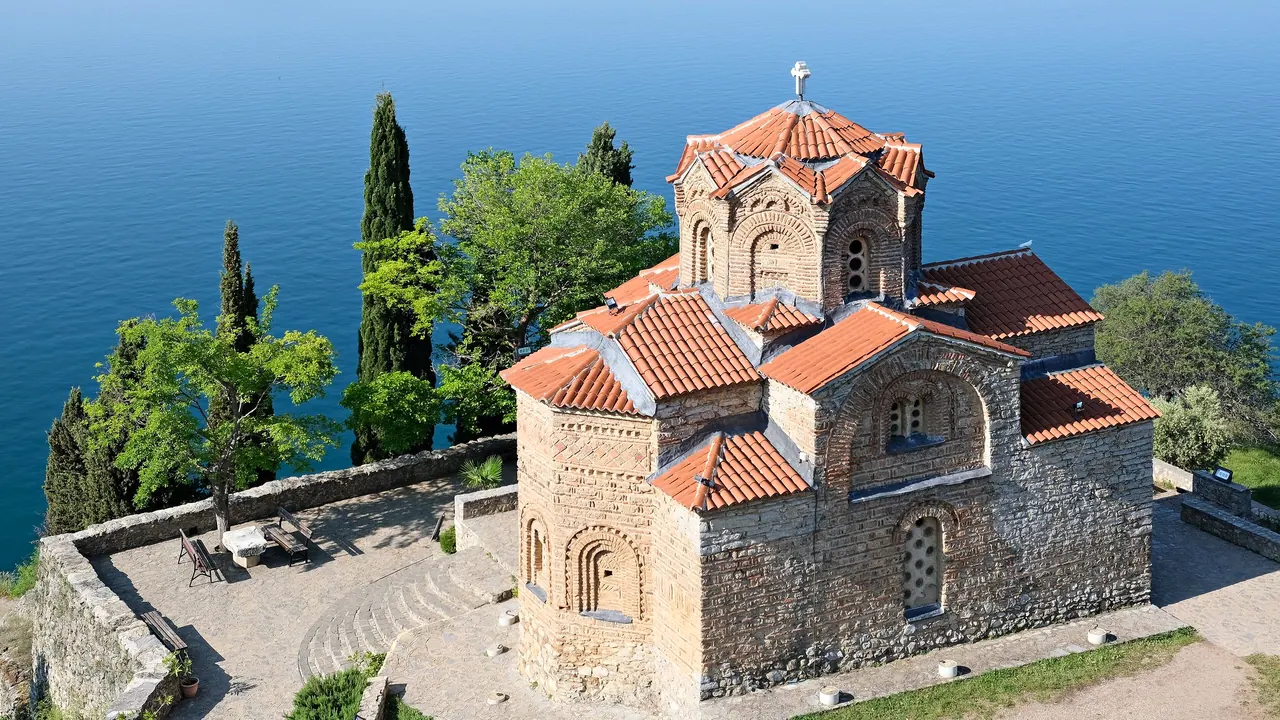
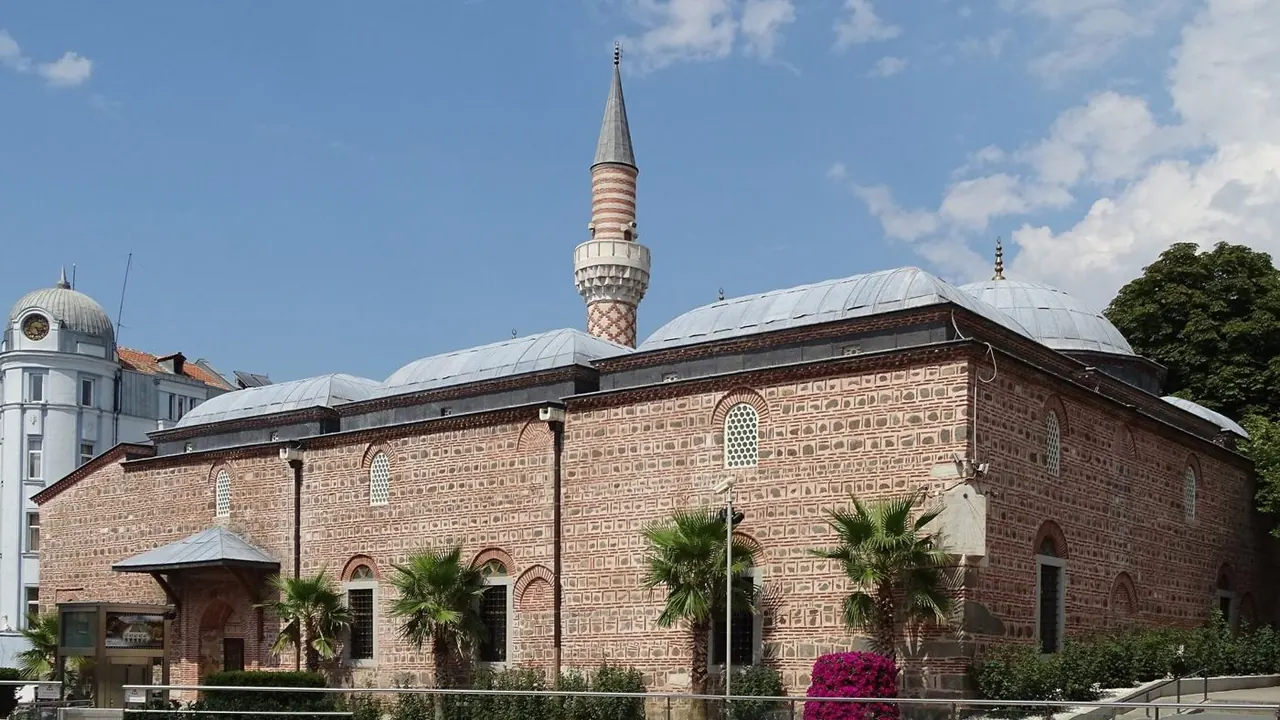
Photos: Ohrid by kallerna, CC BY-SA 4.0, cropped; Plovdiv by Ad Meskens, CC BY-SA 4.0, cropped.
Ohrid or Plovdiv?
Our verdict in twelve categories, each scored against the same fixed benchmark cities, and the climate month by month, so you can choose for your trip.
Choose Ohrid for
- beaches
- families
- prices
Ohrid suits travellers who want a summer trip built around water. You can swim from coves below the old town in clear, calm, salt-free lake water, then spend the evening among frescoed churches with mountains rising all round. It is a slow, scenic stay rather than a busy one, and it works best between late June and mid-September.
Choose Plovdiv for
- live music and the arts
- day trips
- food and drink
Plovdiv is the better choice for a city trip with more going on. Roman ruins sit under the main street, Kapana's wine and craft beer bars stay busy all year, and summer opera is staged in the ancient theatre. It also makes a strong base for monasteries, Thracian tombs and mineral spas across central Bulgaria. What it lacks is a sea or lake beach, so a swim means a pool, the rowing canal or a mountain reservoir.
Scoreboard
Twelve categories on one fixed scale from 0 to 100. The shaded stretch is the gap between the two.
Your match
Pick a travel style or drag the sliders, and both match scores follow your weighting.
Too close to call, 1 point apart
Wins on beaches and families with your weighting.
Wins on live music and the arts and day trips with your weighting.
What matters to you?
Category by category
What the scores mean for a trip.
Beaches & swimming
Ohrid has real swimming, even though it is in a lake. The water is clear and calm, with small coves below Kaneo and the town beach at Potpeš within walking distance. Longer stretches with loungers lie further south at Lagadin and Gradište. The shore is pebble, concrete and wooden jetties rather than sand, and the season runs only from late June to mid-September.
Plovdiv has nothing comparable. Locals cool off in outdoor pools, at the rowing canal or at reservoirs in the Rhodopes, and the Black Sea is several hours' drive away. If daily swims matter, Ohrid wins easily.
Food & drink
Both cities serve Balkan home cooking with a narrow range and little fine dining, but Plovdiv eats better. Old Town mehanas serve clay-pot kavarma and banitsa, Kapana adds modern bistros, and the Thracian Valley puts Mavrud and Rubin reds on every list, with wineries a short drive out.
Ohrid's speciality is lake fish such as belvica, along with dishes like tavče gravče. The best meals are in family-run places in the upper old town or in villages along the shore, because the waterfront menus largely repeat one another.
Culture & sights
Both have hilltop old towns that are equally rewarding, but different in character. Ohrid's is about Orthodox faith and learning: the medieval frescoes of St Sophia, St John at Kaneo on its rock above the water, and Plaošnik with its link to the Cyrillic tradition. All of it can be walked slowly in a day or two.
Plovdiv's strength is its layers of history. There is the Roman theatre, the stadium beneath the main street and the mosaics of the two basilicas. Above them sit painted National Revival merchant houses and the Archaeological Museum with its Thracian finds. Choose Ohrid for churches and icons, and Plovdiv for ruins and museums.
Nightlife
Plovdiv has the livelier evenings, and they last all year. Kapana's craft beer, wine and cocktail bars spill onto the pavements, and students keep the area busy through term. Neither city has a serious club scene.
Ohrid depends on the season. In high summer the promenade café-bars and the beach clubs on the southern shore run late, but from autumn to spring most nights end over wine at dinner.
Nature & outdoors
In Ohrid the lake and the mountains are part of the town. The clear water lies at the foot of the old town, and Galičica National Park climbs steeply behind it to viewpoints over both Ohrid and Prespa and to summits above 2,000m. Paragliders launch from the ridge, kayaks are easy to hire, and a gentle shore path runs south.
Plovdiv's own landscape is the rocky tepeta hills, good for short climbs and views over the rooftops. The forested gorges and trails of the Rhodopes begin about 20km south, the higher Central Balkan range is an hour north, and Pamporovo's ski slopes are within reach in winter. All of that is a drive away, though, and a car makes it far easier.
Day trips
Plovdiv is the better base for excursions. Bachkovo Monastery, the Roman walls of Hisarya and the Thracian temple at Starosel are all within an hour. Kazanlak's tomb and the Valley of Roses, the painted village of Koprivshtitsa and Sofia itself are each about an hour and a half away.
Ohrid's outings are fewer and slower to reach. They include St Naum by summer boat, Struga, Bitola with the mosaics of Heraclea, and cross-border days to Korçë in Albania.
Good for families
Neither town has zoos, theme parks or much else built for children, and both old quarters are steep and cobbled. What differs is how the days are filled. In Ohrid, summer means hours in clear, calm lake water, boat rides along the shore and the prehistoric pile village at the Bay of Bones.
Plovdiv offers parks instead, with the singing fountains of Tsar Simeon Garden, Lauta park and the playgrounds by the rowing canal. Its long, car-free main street is easy with a pushchair, though midsummer heat on the plain can tire young children.
Getting around
Plovdiv is easier to get around. A long car-free street runs from the station side of town to the Old Town, with Kapana, the Roman ruins and most museums a short stroll off it. Ohrid's centre is walkable too, but the beaches further south and St Naum depend on infrequent buses and summer boats, so staying outside town usually means taxis or a hire car.
Shopping & style
Neither is a place to go shopping, and both are best for crafts. Ohrid has one thing that is entirely its own, the Ohrid pearl, made by a few family workshops, along with filigree silver and carved wood. Plovdiv has more variety, with high-street chains and malls, small design studios in Kapana, and rose oil cosmetics and local wine to take home.
Affordability
Both are among the cheapest places in Europe to visit, with inexpensive guesthouses, cheap taxis and low entrance fees. Ohrid's lakefront rooms cost more in July and August, so late spring and early autumn are the best value. In Plovdiv, much of the pleasure costs nothing at all, from the ruins along the main street to evenings in Kapana.
Live music & performing arts
Ohrid's stage is a summer one, while Plovdiv keeps performing all year. In Ohrid almost everything rests on the Ohrid Summer Festival, held since the early 1960s, with concerts, opera and theatre in St Sophia and the ancient theatre, plus a choral festival of sacred and folk singing. Outside summer there is little beyond folk music in restaurants.
Plovdiv has more to choose from. Its opera company, philharmonic orchestra and drama theatre perform through the year, mostly in Bulgarian, and there is an established jazz festival. In summer the Roman theatre hosts opera and concerts under the stars, and a night there is worth planning a visit around.
Wellness & relaxation
Neither has thermal baths in town, but Plovdiv has proper bathing within reach. The mineral pools of Hisarya are about 45 minutes away, and the spa resort of Velingrad in the Rhodopes is around an hour and a half. Locals also take pride in aylyak, the art of taking things slowly, which shows in long hours over coffee under the plane trees.
Ohrid's nearest springs, near Debar, are a long drive away. Wellness there means hotel spas and the calm of the lake in May, June and September.
When should you go?
Pick your month. The climate figures are measured averages, not a forecast.
Ohrid in July
Plovdiv in July
Daytime high, °C
Rainfall in the month, mm
Where the figures come from
Ohrid has no rain gauge within 25 km of the centre, so its rainfall comes from a gridded climate dataset read at the city rather than from a gauge further away.
Plovdiv has no rain gauge within 25 km of the centre, so its rainfall comes from a gridded climate dataset read at the city rather than from a gauge further away.
Plovdiv's sunshine is measured 75 km from the centre, at Kurdjali.
Temperature and rainfall are climate normals, averaged over the years shown. Ohrid: 1999-2017 (rainfall 1991-2020) normals, Ohrid (0.2 km from centre). Plovdiv: 1997-2020 (sunshine 1991-2020, rainfall 1991-2020) normals, Plovdiv (1.2 km from centre).
Ohrid is at its best from June to early September. Daytime highs reach around 28°C, rain is at its lightest and the lake shore becomes the place to spend the day. Spring and early autumn are mild and good for walking. From October the rain picks up sharply, reaching over 90mm a month by November and December, and winters are cold and grey.
Plovdiv runs a few degrees hotter. Highs peak around 31°C in July and August, with over 300 hours of sunshine a month, which makes midday sightseeing on the open plain hard work. May, June and September are the comfortable months for walking the streets. Rain is lighter and spread more evenly through the year than in Ohrid, and winters are similarly chilly, with January highs around 5°C.
Which traveller are you?
On a beach and sun trip, Ohrid is the clear pick. Its clear lake gives calm daily swimming from coves, jetties and pebble strips in July and August. Plovdiv is far inland, and the sea is a journey of several hours away.
For a food and nightlife trip, Plovdiv has more to offer. Kapana's bistros, wine bars and craft beer places stay busy all year, and Thracian Valley reds go with every meal. Ohrid's menus repeat each other, and its evenings come alive only in high summer.
On a relaxing and wellness trip, Plovdiv has the edge. The mineral pools of Hisarya and Velingrad are within easy reach, and the city's unhurried coffee culture sets a gentle pace. Ohrid has hotel spas and a calm lake, but no bathing tradition of its own.
Before you go
| Measure | Ohrid | Plovdiv |
|---|---|---|
| Official language | Albanian, Macedonian | Bulgarian |
| Currency | Denar (MKD) | Euro (EUR) |
| Sockets | CF230 V, 50 Hz | CF230 V, 50 Hz |
| Driving side | Right | Right |
| Time zone | UTC+1, UTC+2 in summer | UTC+2, UTC+3 in summer |
| Emergency number | 112 | 112 |
| Elevation | 695 m | 172 m |
| Main airport | Ohrid St. Paul the Apostle Airport (OHD)9 km from centre14 non-stop destinations | Plovdiv International Airport (PDV)12 km from centre8 non-stop destinations |
| Public holidays this year | 12 days | 15 days |
By the numbers
| Measure | Ohrid | Plovdiv |
|---|---|---|
| City population | 38,818 | 333,994 |
| People per km² | 100 | 3,274 |
| Museums within 10 km | 11 | 18 |
| UNESCO World Heritage sites within 50 km | 2 | 0 |
Where else could you go?
Every comparison below shares a destination with this one, so you can follow Ohrid or Plovdiv somewhere new.