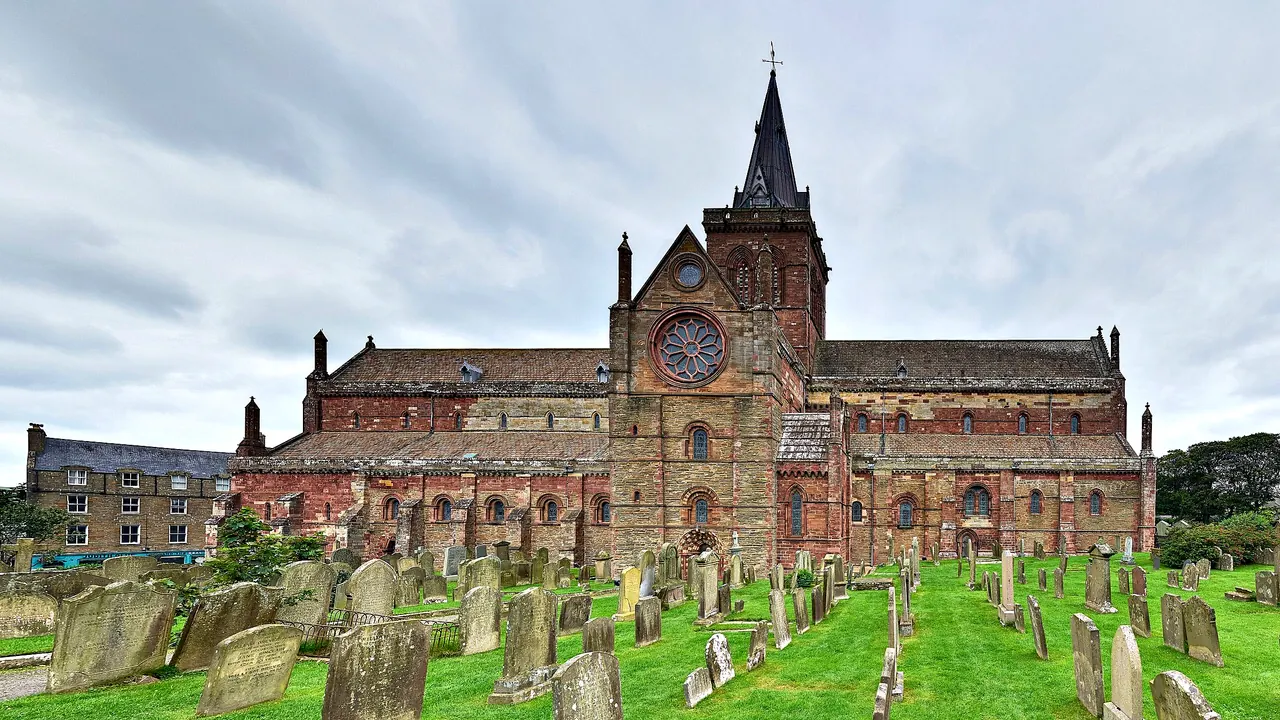
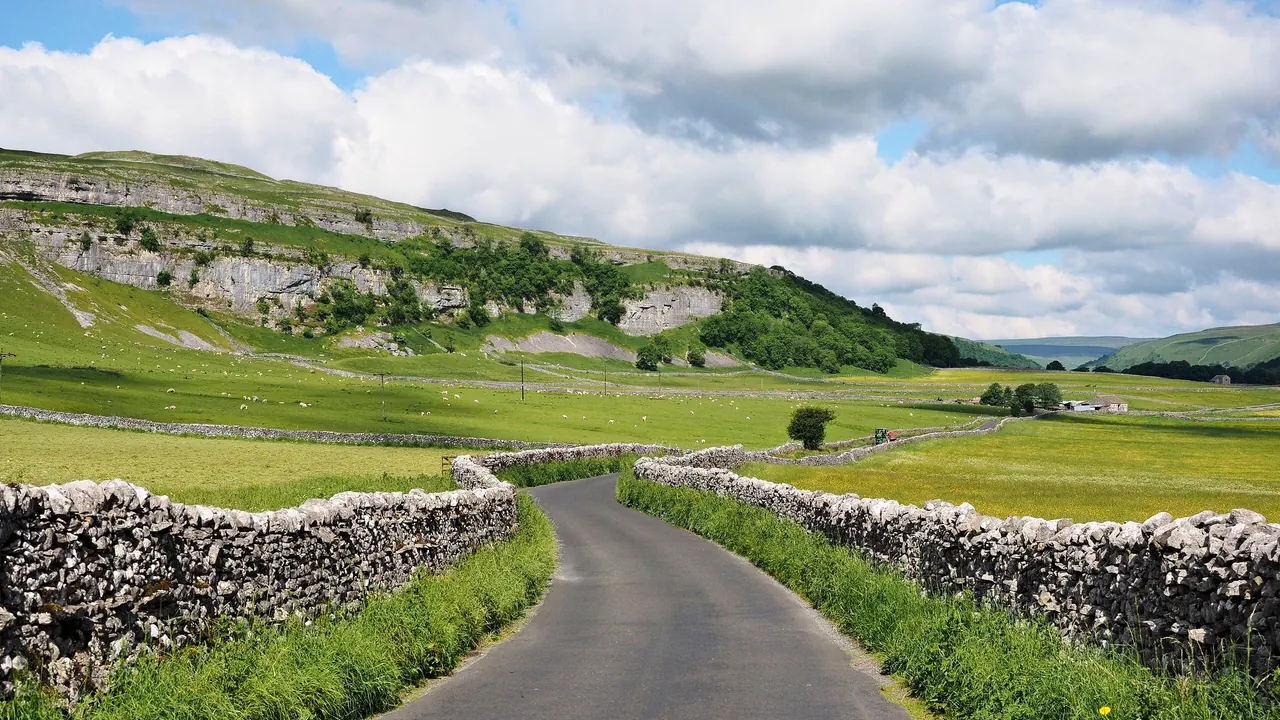
Photos: Orkney by Virtual-Pano, CC BY-SA 4.0, cropped; Yorkshire Dales by Kreuzschnabel, CC BY-SA 3.0, cropped.
Orkney or Yorkshire Dales?
Our verdict in twelve categories, each scored against the same fixed benchmark cities, and the climate month by month, so you can choose for your trip.
Choose Orkney for
- culture and sights
- beaches
- getting around
Orkney is the choice for travellers drawn by deep history and remoteness. The Neolithic sites of the West Mainland, Skara Brae, Maeshowe and the Ring of Brodgar, together with St Magnus Cathedral in Kirkwall, carry a weight of heritage the Dales cannot match. Add island-hopping, seabird cliffs and empty shell-sand beaches, and you have a slow trip of several days with a car, for people happy with few restaurants and quiet evenings.
Choose Yorkshire Dales for
- day trips
- wellness
- nature and the outdoors
Walkers and families will usually do better in the Yorkshire Dales. The limestone country around Malham, the Three Peaks and the caves near Ingleton make for more varied days on foot. The towns around the edge, from York and Harrogate to Durham and Haworth, fill any wet day. Summers are warmer, the region is easier to reach, and a country inn with a fire is never far away.
Scoreboard
Twelve categories on one fixed scale from 0 to 100. The shaded stretch is the gap between the two.
Your match
Pick a travel style or drag the sliders, and both match scores follow your weighting.
Wins on culture and sights and beaches with your weighting.
Wins on day trips and wellness with your weighting.
What matters to you?
Category by category
What the scores mean for a trip.
Beaches & swimming
Neither is a beach destination, but at least Orkney has the sand. There are pale shell beaches at Waulkmill Bay and Birsay and long, empty strands on Sanday, good for walking and seal-watching. Swimming there means a quick dip in a sea that stays cold all summer.
The Dales are inland, and the nearest coast is a long drive away. Swimming there means river pools on the Wharfe near Grassington and Burnsall and below the falls around Keld. The water is cold, and you can only swim when the river is not running high after rain.
Food & drink
Both eat best from their own produce rather than from a restaurant scene. Orkney's strength is the sea, with hand-dived scallops, crab and lobster, plus the whisky distilleries in Kirkwall. The Dales rely on Wensleydale cheese, moorland game and the bitter brewed in Masham.
The difference is in where you sit down to eat. The Dales have a handful of ambitious dining pubs in Wharfedale and a country inn in most villages. Beyond Kirkwall and Stromness, Orkney's choices quickly run out, so cooking for yourself with food from local butchers and fish shops is more often part of the plan.
Culture & sights
Orkney has much the deeper heritage. Skara Brae, Maeshowe and the Ring of Brodgar on the West Mainland are among the most important prehistoric sites in Europe. Kirkwall adds a sandstone cathedral begun in 1137, and the Italian Chapel tells a wartime story.
The Dales offer later history, spread more thinly: Skipton and Richmond castles, Bolton Priory and Jervaulx, the Ribblehead Viaduct and the lead-mining remains of Swaledale. They make a good touring circuit, but nothing there matches the age or concentration of Orkney's Neolithic core.
Nightlife
Orkney's evenings have more character of their own. In a Kirkwall or Stromness pub, a fiddle session can run on into a midsummer night that barely gets dark. The Dales offer the classic country-pub evening, with a fire and a pint of local bitter among walkers comparing routes, and Skipton is a little livelier at weekends. Neither has clubs, and for a real night out from the Dales you have to go to Leeds.
Nature & outdoors
The Dales offer more variety on foot. There is limestone at Malham Cove and Gordale Scar, the Three Peaks above Ribblesdale and long routes such as the Pennine Way. Around Gaping Gill lies one of Britain's great caving areas, enough to keep walkers and cavers busy for weeks.
Orkney's land is low and treeless, and its drama is at the cliff edges: the Old Man of Hoy, seabird colonies at Marwick Head and Noup Head, puffins, seals and the occasional orca. Its unique asset is under water, the scuttled German fleet in Scapa Flow.
Day trips
The Dales lie within reach of some of northern England's best sights. Fountains Abbey, Harrogate and Ripon are close to the eastern dales, and York and Durham can be reached in about an hour or less. Haworth and Saltaire lie to the south.
From Orkney, a day out means a ferry or a small plane to another island: Rousay for its cairns, Westray for its sandy bays, or Papa Westray for the Knap of Howar. These are memorable but quieter days, each planned around the ferry times.
Good for families
The Dales have more laid on for children. There are show caves near Ingleton and Clapham, a heritage steam railway near Skipton, farm parks, river paddling at Bolton Abbey and the castles at Skipton and Richmond. Older children can try caving and gorge scrambling.
Orkney is calmer and suits outdoor families who are content with rock pools, seals, puffins and short ferry crossings. Apart from the pool in Kirkwall, little there is made for children, and a run of windy days is harder to fill.
Getting around
You need a car in both, but the driving is different. On the Orkney Mainland the roads are quiet and everything lies within half an hour of everything else. The outer islands need booked ferries or small planes, and the weather can cancel either.
In the Dales the lanes are narrow, walled and often single-track, and they jam at Malham and Bolton Abbey on summer weekends. The Settle to Carlisle railway offers another way in, and because many walks start from the village door, a base without a car can work.
Shopping & style
Shopping is a sideline in both. Orkney's is the more distinctive, with silver jewellery in Norse and Neolithic designs, knitwear and the straw-backed Orkney chair along Kirkwall's Albert Street. The Dales offer market days in Skipton, Richmond and Hawes, outdoor-gear and antique shops, and Harrogate and York close by for anything more.
Affordability
Most of the difference in cost lies in getting there and getting around. Orkney means a flight or a ferry across the Pentland Firth, then a hire car and crossings between the islands. Rooms are few, so in summer they are expensive and need booking early.
The Dales are a drive or a train ride from the cities of northern England, and campsites, bunkhouses and youth hostels let groups and families cut costs. In both places the hills, cliffs, stone circles and ruins are free to see.
Live music & performing arts
Both come alive mainly at festival time. Orkney has the bigger occasion in the St Magnus International Festival around midsummer, along with the Folk Festival in Stromness and a living fiddle tradition. The Dales have a real theatre, the tiny Georgian Theatre Royal in Richmond from 1788, as well as the Swaledale and Grassington festivals.
Wellness & relaxation
Neither has a bathing culture of its own, but the Dales come closer. Country-house hotels with spas are scattered through the valleys, and the Victorian Turkish Baths in Harrogate are a short drive from Nidderdale and Wharfedale.
Orkney has almost no pampering beyond a few hotel treatments. Its kind of rest is emptiness: quiet roads, long light evenings and a book by the window. It suits people who unwind in solitude rather than in comfort.
When should you go?
Pick your month. The climate figures are measured averages, not a forecast.
Orkney in July
Yorkshire Dales in July
Daytime high, °C
Rainfall in the month, mm
Where the figures come from
Yorkshire Dales's temperatures are measured 40 km from the centre, at Leeming.
Yorkshire Dales's station stands 153 m below the place it is measured for, so that place is likely a little cooler than the figures say.
Yorkshire Dales has no rain gauge within 25 km of the centre, so its rainfall comes from a gridded climate dataset read at the destination rather than from a gauge further away.
Temperature and rainfall are climate normals, averaged over the years shown. Orkney: 1991-2020 normals, Kirkwall Airport (4.9 km from centre). Yorkshire Dales: 1991-2020 normals, Leeming (39.7 km from centre).
Orkney is at its best from May to August. Late spring is the sunniest time and among the driest, with seabirds crowding the cliffs. July and August are the warmest months but only reach about 16°C, and the sea peaks at around 13°C, so the beaches are for walking. From October the rain climbs past 120mm a month, the days shorten sharply and the wind sets in, which makes winter a hard time to tour the islands.
The Dales are noticeably warmer in summer, reaching about 21°C in July, which is good walking weather, but they are wetter all year round. April and May are the driest and among the sunniest months for the fells. Late summer brings the purple heather but also more than 100mm of rain a month. Winter is cold and the wettest stretch, and December is the dampest month of all.
Which traveller are you?
On a culture and arts trip, Orkney is the stronger pick. Here you walk through houses and tombs built five thousand years ago, then hear fiddle music in a Stromness pub. The Dales have medieval castles and Georgian market towns, which are rewarding but smaller in scale.
On a family trip with children, Orkney suits families happy to make their own fun with wildlife, ferries and empty beaches. The Dales are easier going. They have more attractions built for children, cottages and campsites in quiet villages, and more ways to fill a rainy day.
For an outdoors trip, Orkney's appeal is narrower but special: seabirds on the cliff tops, sea kayaking and some of Europe's best wreck diving. The Dales offer more range on foot, from riverside walks to a long day over three summits, plus caving and steep passes for cyclists.
Before you go
| Measure | Orkney | Yorkshire Dales |
|---|---|---|
| Official language | English | English |
| Currency | Pound Sterling (GBP) | Pound Sterling (GBP) |
| Sockets | G230 V, 50 Hz | G230 V, 50 Hz |
| Driving side | Left | Left |
| Time zone | UTC, UTC+1 in summer | UTC, UTC+1 in summer |
| Emergency number | 112 or 999 | 112 or 999 |
| Main airport | Kirkwall Airport (KOI)9 non-stop destinations | Leeds Bradford Airport (LBA)69 non-stop destinations |
| Public holidays this year | 10 days | 8 days |
By the numbers
| Measure | Orkney | Yorkshire Dales |
|---|---|---|
| Population | 22,270 | - |
| People per km² | 22 | - |
| Swim season, months above 21 °C | None | None |
Where else could you go?
Every comparison below shares a destination with this one, so you can follow Orkney or Yorkshire Dales somewhere new.
- Lake Districtvs Yorkshire Dales
- Peak Districtvs Yorkshire Dales
- Northumberlandvs Yorkshire Dales
- Snowdoniavs Yorkshire Dales
- Scottish Highlandsvs Orkney
- Cotswoldsvs Yorkshire Dales