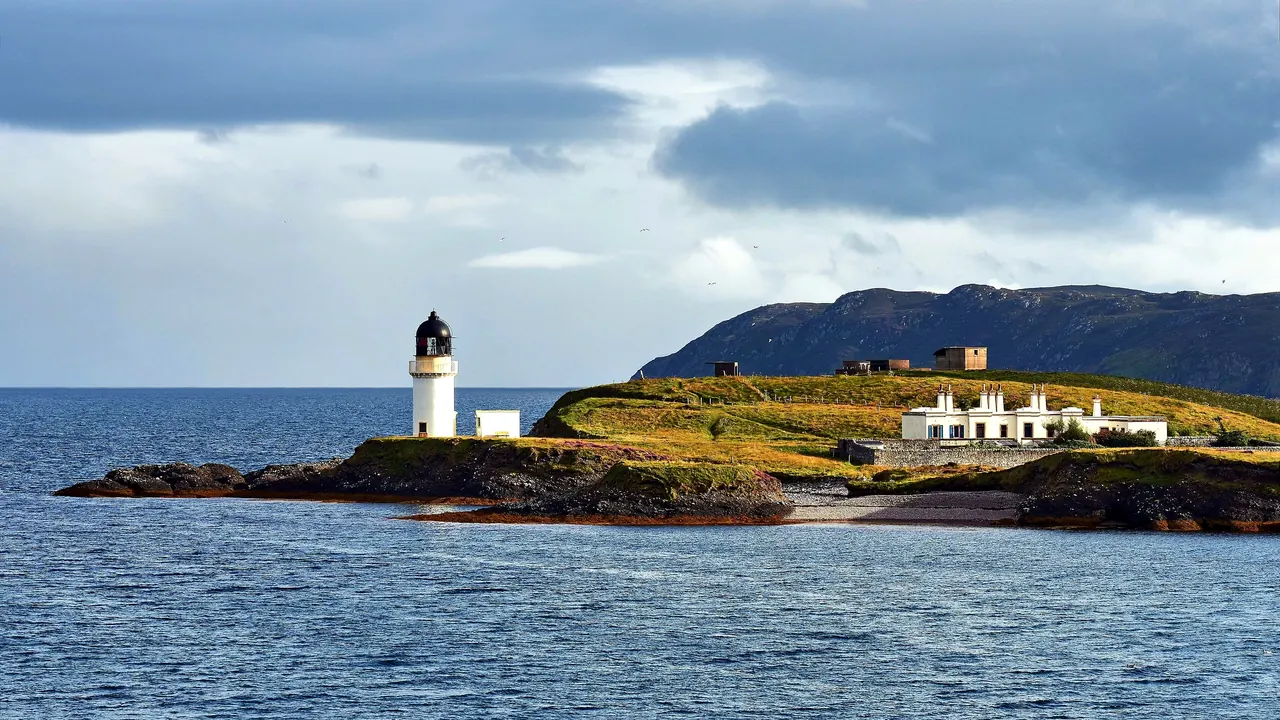
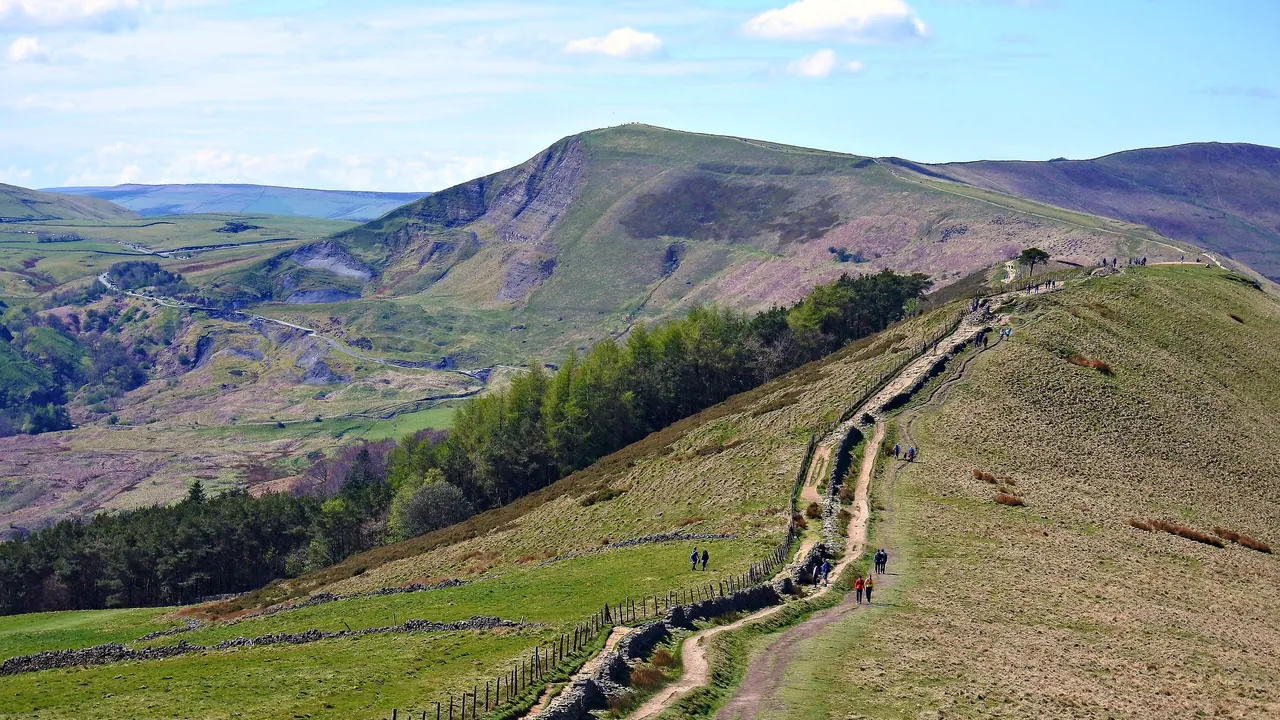
Photos: Outer Hebrides by Virtual-Pano, CC BY-SA 4.0, cropped; Peak District by Donnchadh H, CC BY 2.0, cropped.
Outer Hebrides or Peak District?
Our verdict in twelve categories, each scored against the same fixed benchmark cities, and the climate month by month, so you can choose for your trip.
Choose Outer Hebrides for
- beaches
- shopping
- nature and the outdoors
The Outer Hebrides are for travellers who want distance and emptiness. Expect white strands like Luskentyre with nobody else on them, eagles over Harris, otters along quiet shores and the Calanais stones in low evening light. It is a slow trip of single-track drives and hopping between islands by causeway and ferry, usually staying in a self-catering cottage and packing waterproofs. It suits couples, walkers and wildlife lovers who want to feel properly away and don't need much else to do.
Choose Peak District for
- day trips
- families
- wellness
If you want more to fill the days, choose the Peak District. The walking is as good in its own way, and around it sit Chatsworth and Haddon Hall, show caves and railway trails for children, Buxton's spa water and opera house, and Manchester and Sheffield close enough for a change of scene. It is easier to reach and easier to vary, though the busiest villages fill up on summer weekends.
Scoreboard
Twelve categories on one fixed scale from 0 to 100. The shaded stretch is the gap between the two.
Your match
Pick a travel style or drag the sliders, and both match scores follow your weighting.
Wins on beaches and shopping with your weighting.
Wins on day trips and families with your weighting.
What matters to you?
Category by category
What the scores mean for a trip.
Beaches & swimming
The Outer Hebrides have real beaches, and some of the finest in Britain: Luskentyre and Seilebost on Harris, Uig Sands on Lewis and the twin bays of Vatersay. They are often empty and turn turquoise in sunshine. The catch is the Atlantic, which stays cold enough in summer that swimming means a quick dip or a wetsuit.
The Peak District sits in the middle of England, so the choices are the heated open-air pool at Hathersage or a dip in a limestone river. If you want sand underfoot, only the islands have it.
Food & drink
Neither is a place to travel to for the food, but eating out is easier in the Peak District. Stone pubs across the Hope Valley and the Dales serve real ale, and there is Bakewell pudding, Hartington cheese, a few ambitious country-house dining rooms and farm shops around Chatsworth.
The Hebrides have better raw ingredients, such as langoustines, scallops, smoked salmon and Stornoway black pudding, but far fewer places to eat them. Many close on Sundays and in winter. Plan to cook for yourself and buy seafood from the pier or the smokehouse.
Culture & sights
The Peak District has more to see, and on a grander scale. Chatsworth has its art collection and park, Haddon Hall is medieval and largely intact, Buxton has its Georgian Crescent, and Arkwright's mills at Cromford began the factory age. Add the story of Eyam and the summer well dressings, and two full days of sightseeing come easily.
The Hebrides go further back in time but have less to see: the Calanais stones, Dun Carloway broch, the blackhouses at Gearrannan and Arnol, and Kisimul Castle reached by boat. Gaelic, spoken every day, gives the islands a living culture the Peak cannot match, but the sights are few and far apart.
Nightlife
Both are places for early nights. In the Hebrides the evening is a hotel bar or one of Stornoway's few pubs, perhaps with a traditional music session, and Sundays on Lewis and Harris are almost silent. The Peak has fire-lit village pubs full of walkers and a few later bars in Buxton and Matlock. Its real advantage is that Sheffield and Manchester are about an hour away for a proper night out.
Nature & outdoors
Both are among the best places in Britain for being outdoors, in very different ways. The Hebrides are wilder and emptier: bare gneiss, peat and countless lochans, the Clisham above North Harris, and eagles, otters and corncrakes. There is also surf off Lewis, sea kayaking in sheltered sounds, and summer boats to the seabird cliffs of St Kilda.
The Peak District is gentler and better set up for walkers. It has gritstone edges such as Stanage that climbers know worldwide, the Kinder plateau and the start of the Pennine Way, and green limestone dales, caves and traffic-free railway trails. Go to the islands for wildlife and solitude, and to the Peak for a wide choice of routes close together.
Day trips
This is where the two differ most. From the Peak District you can reach big cities and grand houses: Manchester and Sheffield by train, Derby, Nottingham and the Potteries, Hardwick Hall, Bolsover Castle and Calke Abbey. York and Chester are a long day out.
Day trips in the Hebrides mean moving along the island chain by causeway and short ferry, from Berneray down to Eriskay and Barra. Each trip usually ends at a village and a stretch of coast, and the only real outing to a town is the ferry to Skye for Portree.
Good for families
The Peak District is much better set up for children. There are show caves at Castleton and Buxton, the cable car to the Heights of Abraham, vintage trams at Crich, Chatsworth's adventure playground, and Alton Towers a short drive south. Flat railway trails make cycling together easy.
The Hebrides suit outdoorsy families who are happy with empty beaches, rock pools, seals and eagles. Beyond the leisure-centre pool in Stornoway there is little for a rainy day, and long single-track drives can test young passengers.
Getting around
In both places most visitors drive, but the driving is different. In the Hebrides the road runs about 210km down the island chain, much of it single-track, with causeways and ferry crossings to book. Traffic is light, but buses are rare and nothing is walkable beyond a village.
The Peak has railway lines to Edale, Hathersage, Buxton and Matlock, so walking trips without a car are genuinely possible. Its trouble is the opposite of emptiness: narrow moorland roads and full car parks at Castleton, Bakewell and Dovedale on sunny weekends.
Shopping & style
The Hebrides have one thing worth travelling for: Harris Tweed, bought from weavers' sheds beside their homes on Lewis and Harris. Small studios sell knitwear and pottery, and island gin and smoked fish make good things to take home. The Peak's shopping is more practical, with outdoor gear in Hathersage, Blue John jewellery in Castleton, antiques in Ashbourne and Leek, and Bakewell's market.
Affordability
The Peak District is the cheaper of the two. Prices are those of rural England, with youth hostels, bunkhouses and campsites spread across the park, and the hills cost nothing to walk. Entry charges at stately homes and show caves add up for a family.
The Hebrides cost more to reach and to stay in. Car hire and vehicle ferries are expensive, rooms are scarce in summer, and food costs more because it is shipped in. Self-catering, campervans and travelling in spring or early autumn soften the bill.
Live music & performing arts
Buxton gives the Peak District the edge. Its Edwardian Opera House by Frank Matcham has a programme through the year, and in July the Buxton International Festival brings opera and a large fringe, with Sheffield and Manchester close by for more.
In the Hebrides, music is part of everyday life rather than something on a stage. The Hebridean Celtic Festival comes to Stornoway in July, and otherwise there are ceilidhs in village halls, a small arts centre and whatever pub session you happen to catch.
Wellness & relaxation
The Peak District has a real spa tradition. Buxton's warm springs feed a thermal spa in the Georgian Crescent, St Ann's Well lets anyone fill a bottle from the spring, and country-house hotels add treatment rooms. Midweek, the quiet dales make slowing down easy.
The Hebrides offer rest of another kind: empty roads, light late into the evening and a cottage by a sea loch. There is almost nothing in the way of spas or treatments, though.
When should you go?
Pick your month. The climate figures are measured averages, not a forecast.
Outer Hebrides in July
Peak District in July
Daytime high, °C
Rainfall in the month, mm
Where the figures come from
Peak District's temperatures are measured 43 km from the centre, at Manchester Airport.
Peak District has no rain gauge within 25 km of the centre, so its rainfall comes from a gridded climate dataset read at the destination rather than from a gauge further away.
Temperature and rainfall are climate normals, averaged over the years shown. Outer Hebrides: 1991-2020 normals, Stornoway (4.1 km from centre). Peak District: 1991-2020 normals, Manchester Airport (43.1 km from centre).
The two share a summer season but feel very different in it. Where most visitors stay in the Outer Hebrides, daytime highs peak at about 16°C in July and August, and the sea never gets beyond about 13°C, so beach days mean walking and paddling rather than swimming. May and June are the islands' best months. They are the driest and sunniest of the year, with long light evenings. From October the rain builds steadily to around 144mm in January, and winter days are short, wet and windy.
The Peak District is noticeably warmer in summer, reaching about 21°C in July. That is good weather for long walks, though rain is spread fairly evenly through the year, so showers are never far off. Late spring through September gives the most sunshine. Autumn and winter turn wetter, and snow can lie on the high moors, but villages and market towns stay pleasant to walk round in all but the worst weather.
Which traveller are you?
On a beach and sun trip, the Outer Hebrides are the only option of the two. Harris, Uig and Vatersay have long white sands and turquoise shallows, although the Atlantic is cold. The Peak District has no coast at all.
On a family trip with children, the Peak District is far easier. It has show caves, the cable car at Matlock Bath, vintage trams at Crich, Chatsworth's farmyard and flat cycling trails. The islands offer rock pools and seals but little else on a wet day.
For a relaxing and wellness trip, the Peak District has more to offer. Buxton has warm mineral springs and a thermal spa in its Crescent, and country-house hotels have spas of their own. The Hebrides give you deep quiet but almost nowhere for a treatment or a bath.
Before you go
| Measure | Outer Hebrides | Peak District |
|---|---|---|
| Official language | English | English |
| Currency | Pound Sterling (GBP) | Pound Sterling (GBP) |
| Sockets | G230 V, 50 Hz | G230 V, 50 Hz |
| Driving side | Left | Left |
| Time zone | UTC, UTC+1 in summer | UTC, UTC+1 in summer |
| Emergency number | 112 or 999 | 112 or 999 |
| Main airport | Stornoway Airport (SYY)6 non-stop destinations | Manchester Airport (MAN)211 non-stop destinations |
| Public holidays this year | 10 days | 8 days |
By the numbers
| Measure | Outer Hebrides | Peak District |
|---|---|---|
| Population | 26,720 | 35,901 |
| People per km² | 9 | 25 |
| Swim season, months above 21 °C | None | - |
Where else could you go?
Every comparison below shares a destination with this one, so you can follow Outer Hebrides or Peak District somewhere new.
- Isle of Skyevs Outer Hebrides
- Yorkshire Dalesvs Peak District
- Snowdoniavs Peak District
- Cotswoldsvs Peak District
- Scottish Highlandsvs Outer Hebrides
- Lake Districtvs Peak District