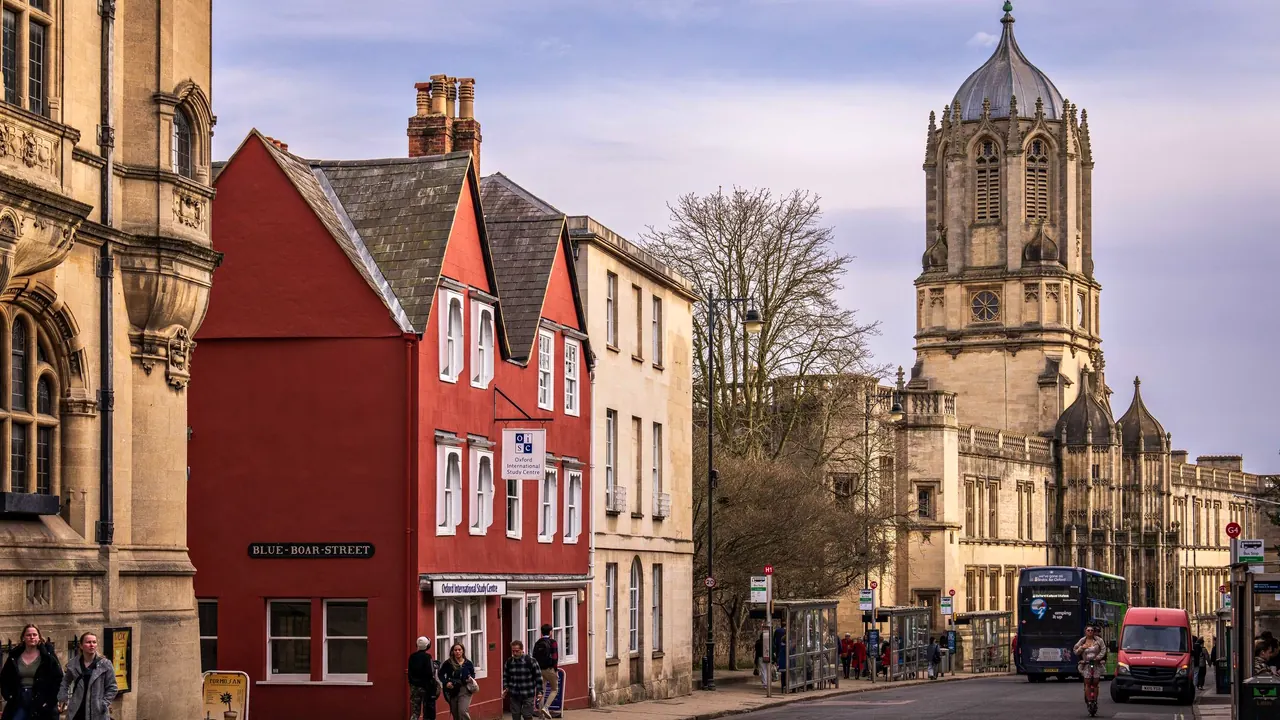
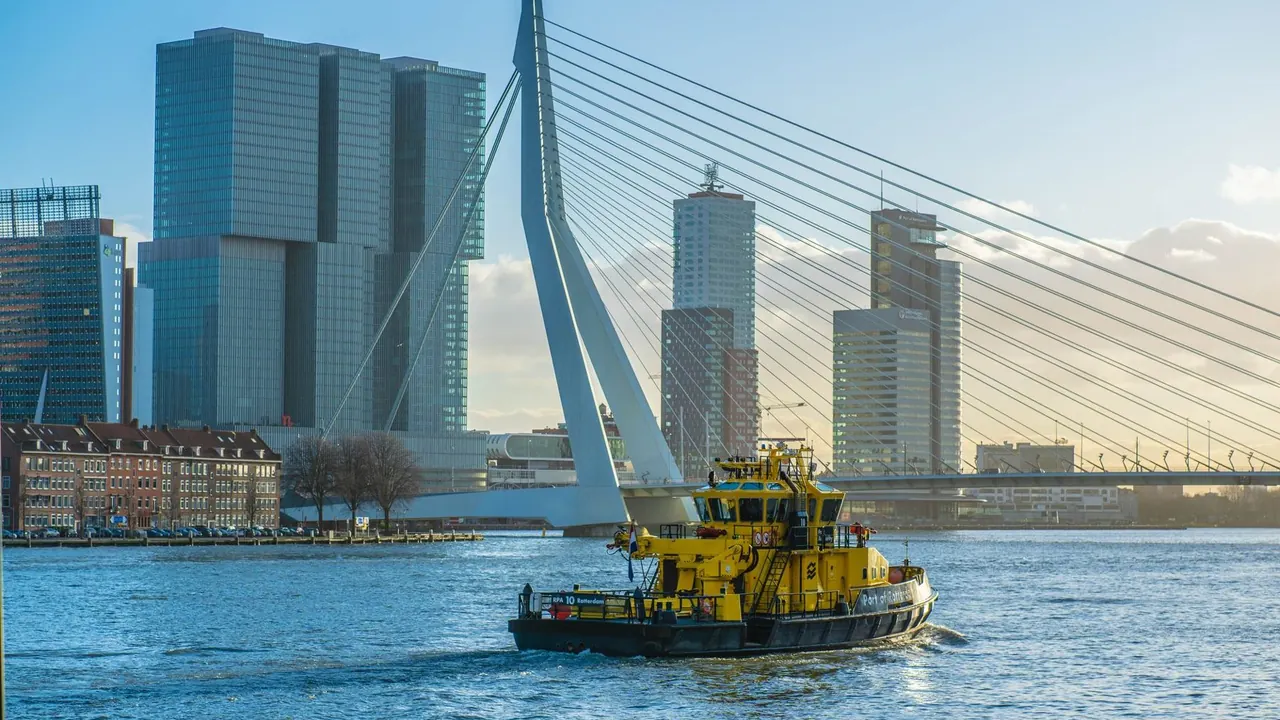
Photos: Oxford by Mark Stebnicki, Pexels License; Rotterdam by Bas Geerlings, Pexels License.
Oxford or Rotterdam?
Our verdict in twelve categories, each scored against the same fixed benchmark cities, and the climate month by month, so you can choose for your trip.
Choose Oxford for
- culture and sights
- nature and the outdoors
Oxford suits travellers who want a small, old city to explore slowly on foot. The college quads, chapels and libraries are packed into a few streets, the museums are far stronger than the city's size suggests, and Evensong in a college chapel is an evening you won't forget. It works best if you're happy to end the day with a pint by the river, and if you want Blenheim and the Cotswolds close by.
Choose Rotterdam for
- beaches
- nightlife
- families
Rotterdam is the better pick for a more modern trip with more going on after dark. You come to look at postwar and contemporary buildings rather than medieval ones. The food comes from Surinamese, Turkish and Indonesian kitchens rather than pub menus, and the techno and house nights are a reason to stay out late. Families get more to do, the Dutch sauna complexes help you unwind, and hotel rooms are easier to find.
Scoreboard
Twelve categories on one fixed scale from 0 to 100. The shaded stretch is the gap between the two.
Your match
Pick a travel style or drag the sliders, and both match scores follow your weighting.
Wins on culture and sights and nature and the outdoors with your weighting.
Wins on beaches and nightlife with your weighting.
What matters to you?
Category by category
What the scores mean for a trip.
Beaches & swimming
Neither city is a beach destination, but Rotterdam at least has a beach. Hoek van Holland is a wide, sandy North Sea strand backed by dunes, with large ships passing close by, and the metro takes you there. The cold water and constant wind mean most people walk on the sand rather than swim.
Oxford is a long way from any coast. Swimming there means a cool summer dip in the Thames at Port Meadow or the Cherwell, getting in from a grassy bank, or a session at the open-air pool at Hinksey.
Food & drink
Rotterdam has more variety. Its food reflects its history as a port with large immigrant communities, from Surinamese roti and Turkish bakeries to Cape Verdean and Indonesian kitchens. The Markthal and the Binnenrotte market are easy places to graze, and the waterside terraces in Katendrecht add something extra.
Oxford's strengths are more traditional: real ale and solid British cooking in beamed taverns and towpath pubs, a Sunday roast by the Thames, and the stalls of the Covered Market. Cowley Road gives you some range, but expect to eat well rather than memorably.
Culture & sights
Oxford is the richer city for sightseeing. Christ Church, the Radcliffe Camera, the Divinity School and the cloisters of Magdalen and Merton form a historic centre that is still in use, and the Ashmolean and the Pitt Rivers would stand out in a much larger city.
Rotterdam is interesting in a different way. Because the 1940 bombing cleared the old centre, the sights are mostly modern: the Erasmus Bridge, the Cube Houses, the mirrored Depot Boijmans and the towers across the Maas. Its museums are good rather than outstanding, and the older city survives mainly in Delfshaven.
Nightlife
Rotterdam is the better city for a night out. The bars around Witte de Withstraat and the Oude Haven are fine, but its real strength is clubbing. This is where gabber began, and the warehouse and harbour venues host techno and house nights that draw people from across the Netherlands.
Oxford is a pub town. Old taverns and riverside terraces are lovely for a drink after dinner, Cowley Road has a few late bars, and things go quiet when students leave for the summer.
Nature & outdoors
Oxford has a slight edge for walkers. Port Meadow, Christ Church Meadow and the University Parks are a short walk from the colleges, and punting on the rivers is a classic local pastime. Within an hour you can be on the Cotswold footpaths, in the Chiltern beech woods or on the ancient Ridgeway.
Rotterdam's outdoors is flat and shaped by people, and it suits cyclists and anyone who likes water. You can ride along the dykes into the polders, sail or run in the Kralingse Bos, and canoe the tidal creeks of the Biesbosch. There are no hills to climb.
Day trips
Both make excellent bases, but for different regions. From Oxford you can visit Blenheim Palace, the honey-stone Cotswold villages, Stratford, Bath and Windsor, or take the train to London in about an hour. Some of the Cotswold villages are much easier with a car or a tour.
Rotterdam is at the centre of the Dutch rail network, so you won't need a car. Delft and The Hague are a short hop, Amsterdam, Leiden and Utrecht are within an hour, the water bus goes to the Kinderdijk windmills, and you can even fit Antwerp or Bruges into a long day.
Good for families
Rotterdam is the easier and more varied city with children. Blijdorp is one of the best zoos in the Netherlands, the Maritime Museum has a play harbour, and the Euromast, harbour boats and water taxis appeal to children of all ages. Madurodam is only a short train ride away.
Oxford has one excellent free pairing in the Natural History Museum's dinosaurs and the curiosities of the Pitt Rivers. Add a punting afternoon and the Harry Potter connections at Christ Church, though most of the rest of the city is aimed at adults.
Getting around
Both cities are easy to get around, but in different ways. Oxford is a walking city: the flat, compact centre takes about twenty minutes to cross, several streets are closed to through traffic, and the station is close by.
Rotterdam's postwar centre is more spread out and windier, so you'll mostly ride rather than walk. Metro, trams and buses share one tap-in system, cycle paths run almost everywhere, and the water buses across the Maas also serve as sightseeing trips.
Shopping & style
There isn't much to separate them, but each has its own character. Oxford's special shops are Blackwell's, with its huge basement book room, the antique map and print dealers and the Covered Market traders, and the Bicester outlet village nearby is the place for luxury labels.
Rotterdam is good for a straightforward shopping day on the Lijnbaan and at the Bijenkorf. Its independent vintage, record and design shops on the Meent and Nieuwe Binnenweg add more personality, but there is little luxury.
Affordability
Rotterdam is the somewhat cheaper stay, mostly because of where you sleep. Rooms are plentiful, business-district hotels empty at weekends, and the city doesn't face the visitor pressure Amsterdam does. Restaurant meals and drinks are pricey, though, so the snack shops and market stalls help balance the budget.
Oxford works the other way round. Central rooms are scarce and expensive, which is why many visitors stay by the ring road or come for the day. Once you're there, the free museums and pub meals keep daily spending modest.
Live music & performing arts
The two are about even, but they offer different kinds of music. Oxford's highlight is choral. The choirs of Christ Church, Magdalen and New College sing Evensong on most evenings in term, and the historic Holywell Music Room hosts chamber music and jazz.
Rotterdam leans towards orchestral music and jazz. The Rotterdam Philharmonic plays a full season at De Doelen, and the North Sea Jazz Festival fills a long weekend in July. Much of the city's theatre is in Dutch.
Wellness & relaxation
Rotterdam has the stronger offer if you want treatments and heat. On the city's edge and in nearby towns there are large Dutch sauna complexes with steam rooms, outdoor pools and quiet gardens. Bear in mind the sauna areas are usually textile-free.
Oxford has no comparable bathing culture, and its calm comes from places rather than spas. Early mornings in the Botanic Garden, Addison's Walk past the Magdalen deer park and a slow afternoon on a punt are its ways to relax.
When should you go?
Pick your month. The climate figures are measured averages, not a forecast.
Oxford in July
Rotterdam in July
Daytime high, °C
Rainfall in the month, mm
Where the figures come from
Oxford's temperatures are measured 37 km from the centre, at Fairford Royal Air Force Base.
Oxford has no rain gauge within 25 km of the centre, so its rainfall comes from a gridded climate dataset read at the city rather than from a gauge further away.
Oxford's sunshine is measured 57 km from the centre, at Lyneham.
Rotterdam has no rain gauge within 25 km of the centre, so its rainfall comes from a gridded climate dataset read at the city rather than from a gauge further away.
Rotterdam's sunshine is measured 52 km from the centre, at De Bilt.
Temperature and rainfall are climate normals, averaged over the years shown. Oxford: 1961-1990 (sunshine 1991-2020, rainfall 1991-2020) normals, Fairford Royal Air Force Base (37 km from centre). Rotterdam: 1993-2020 (sunshine 1991-2020, rainfall 1991-2020) normals, Rotterdam Airport Zestienhoven (3.9 km from centre).
The two cities have much the same temperatures through the year. Summer highs reach about 22°C in July, and winter days stay in single figures, cold and short but rarely too cold for walking. May and June are the best months in both, with long, sunny days and mild afternoons. The difference is rain. Oxford's rain is spread fairly evenly through the year. Rotterdam is driest in April, at about 44mm, and gets wet from July onwards, with October the wettest month at around 99mm.
Neither city is warm enough for a proper beach trip. Rotterdam's sea is warmest in August at about 19°C, which suits a quick, bracing dip on a calm day. In Oxford the summer river swimming fits the same July and August window. For sightseeing, September is a good bet in Oxford, while in Rotterdam late spring is the safer choice because its summer and autumn bring more showers.
Which traveller are you?
On a culture and arts trip, Oxford is the stronger choice. Its working colleges, the Bodleian and the Ashmolean give real depth within a few streets, and Evensong adds a live dimension, while Rotterdam's interest lies mainly in modern architecture.
For a food and nightlife trip, Oxford offers good pubs and quiet evenings, but Rotterdam goes much further. The immigrant kitchens around the Markthal and Witte de Withstraat give far more range, and the harbour club nights make a proper night out.
On a family trip with children, Oxford fills a day or two, best with older Harry Potter fans. Rotterdam suits a longer stay: wide pavements, trams and cycle lanes make it easy with children, and the Efteling theme park is an hour's drive away.
Before you go
| Measure | Oxford | Rotterdam |
|---|---|---|
| Official language | English | Dutch |
| Currency | Pound Sterling (GBP) | Euro (EUR) |
| Sockets | G230 V, 50 Hz | CF230 V, 50 Hz |
| Driving side | Left | Right |
| Time zone | UTC, UTC+1 in summer | UTC+1, UTC+2 in summer |
| Emergency number | 112 or 999 | 112 |
| Elevation | 73 m | 10 m |
| Main airport | London Heathrow Airport (LHR)63 km from centre224 non-stop destinations | Rotterdam The Hague Airport (RTM)5 km from centre53 non-stop destinations |
| Public holidays this year | 8 days | 11 days |
By the numbers
| Measure | Oxford | Rotterdam |
|---|---|---|
| City population | 147,500 | 664,311 |
| People per km² | 3,235 | 2,080 |
| Museums within 10 km | 11 | 41 |
| UNESCO World Heritage sites within 50 km | 1 | 5 |
| Swim season, months above 21 °C | - | None |
Where else could you go?
Every comparison below shares a destination with this one, so you can follow Oxford or Rotterdam somewhere new.
- The Haguevs Rotterdam
- Utrechtvs Rotterdam
- Haarlemvs Rotterdam
- Amsterdamvs Rotterdam
- Antwerpvs Rotterdam
- Londonvs Oxford