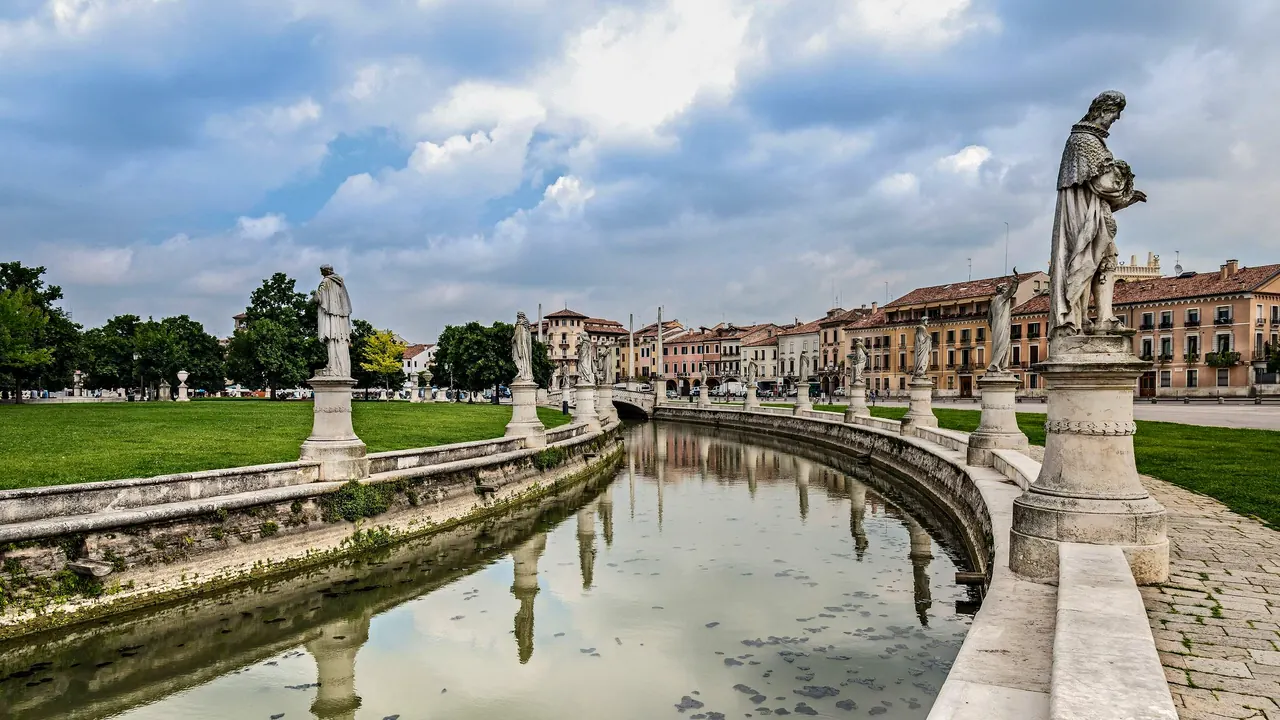
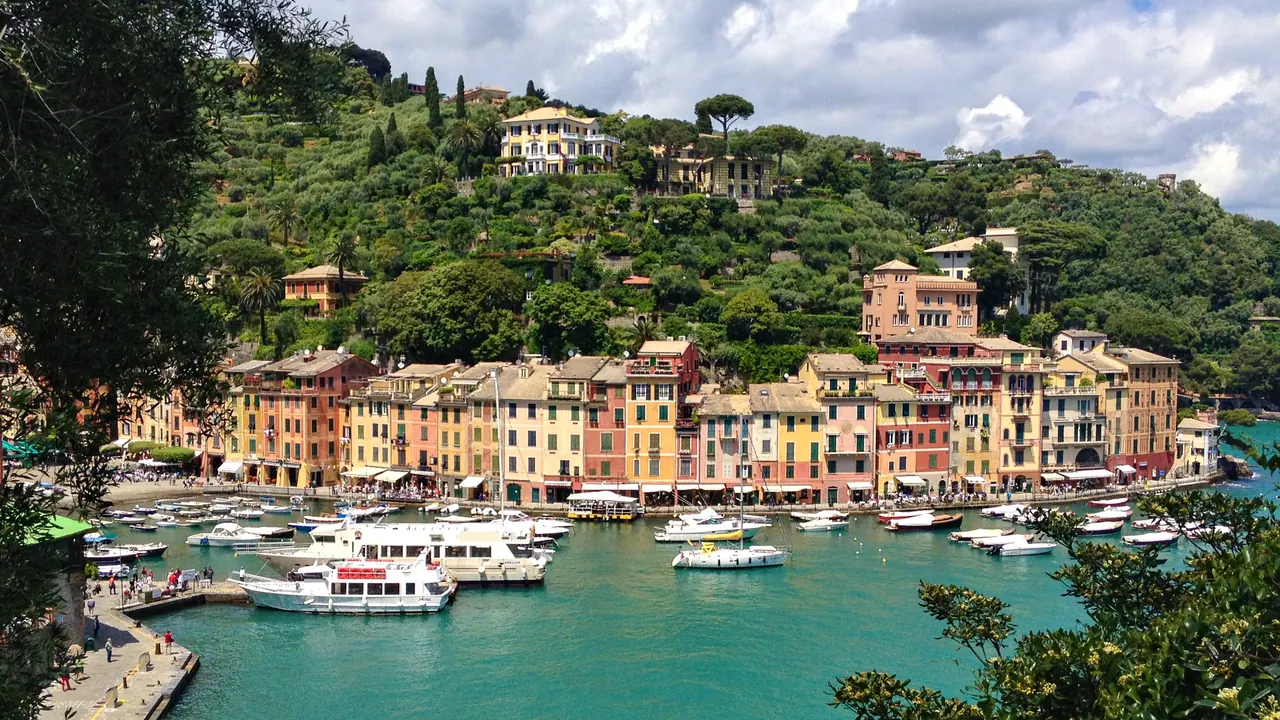
Photos: Padua by Didier Descouens, CC BY-SA 4.0, cropped; Portofino by Michal Osmenda, CC BY 2.0, cropped.
Padua or Portofino?
Our verdict in twelve categories, each scored against the same fixed benchmark cities, and the climate month by month, so you can choose for your trip.
Choose Padua for
- culture and sights
- prices
- nightlife
Padua is for travellers who want substance and a sensible base. It has Giotto's frescoes in the Scrovegni Chapel, the Basilica of Saint Anthony, food built around its markets, and the thermal pools of Abano a short ride away. From its station, Venice, Vicenza, Verona and Bologna are all within easy reach, so it rewards a longer stay spent partly on trains, and it costs far less.
Choose Portofino for
- beaches
- nature and the outdoors
Choose Portofino for a shorter, slower stay where the setting matters more than the sights. The draw is the harbour of painted houses, the protected headland with its cliff paths to San Fruttuoso, and clear water for swimming off the rocks or diving in the marine reserve. Go for walking, the sea and a long aperitivo beside the yachts, and accept that it is very expensive, quiet after dinner and short on museums, food markets and things for children.
Scoreboard
Twelve categories on one fixed scale from 0 to 100. The shaded stretch is the gap between the two.
Your match
Pick a travel style or drag the sliders, and both match scores follow your weighting.
Wins on culture and sights and prices with your weighting.
Wins on beaches and nature and the outdoors with your weighting.
What matters to you?
Category by category
What the scores mean for a trip.
Beaches & swimming
Neither is a classic beach resort, but in Portofino the swimming starts on the doorstep. There is clear, deep water off the rock platforms towards the lighthouse, the sheltered bay of Paraggi is a short walk away, and the pebble cove at San Fruttuoso is reached by boat or path. The catch is space: the spots are small, much of Paraggi is taken by paid beach clubs, and summer crowds fill what is left.
From Padua the sea is an outing of about an hour, to Sottomarina or the Lido of Venice. The sand there is long, flat and lined with umbrellas, and the shallow, calm water suits small children better than anyone looking for scenery. It is easy enough for a day, but not a reason to stay.
Food & drink
Padua eats better and more cheaply. Its day revolves around the markets of Piazza delle Erbe and Piazza della Frutta and the delicatessens under the Palazzo della Ragione. The cooking is Venetian home food, such as bigoli with duck sauce, baccalà and risotto with peas, and the evening brings a spritz taken standing in the square and wines from the Euganean Hills.
Portofino serves Ligurian classics such as trofie with pesto, fritto misto and Recco's cheese focaccia, at a few harbour terraces where the view sets the price and the cooking rarely lives up to it. With no market and no casual places of note, keen eaters head to Camogli, Santa Margherita or the trattorie in the hills.
Culture & sights
This is the widest gap between the two. Padua has Giotto's Scrovegni Chapel and a UNESCO-listed group of fourteenth-century fresco cycles, the Basilica of Saint Anthony with Donatello's altar and his Gattamelata outside, the oldest permanent anatomical theatre in the world at Palazzo Bo, and the Orto Botanico, founded in 1545. That is enough for several full days.
In Portofino the village itself is the sight: the coloured horseshoe of houses, San Giorgio above the bay, Castello Brown, and the abbey of San Fruttuoso in its cove with no road. It is beautiful, can be seen in a day and has no museum of any size.
Nightlife
Both places go out the Italian way, with an aperitivo, but Padua keeps going for longer. On warm evenings, university students fill Piazza delle Erbe and Piazza dei Signori, and in term the wine bars and small pubs around the old ghetto and the Bo stay busy. Clubs are few, though, and the city empties in high summer.
Portofino's evening is a dressed-up drink at a harbour bar facing the yachts, then dinner, then very little. There are no clubs, and outside July and August the village goes quiet early. For a late night you go to Santa Margherita, Rapallo or Genoa.
Nature & outdoors
In Portofino the outdoors starts at the door. The headland is a regional park and marine reserve, with trails through holm oak and pine up to the Semaforo Nuovo viewpoint and down cliff paths, some with chains, to San Fruttuoso and Punta Chiappa. Offshore there is diving on red coral walls and at the Christ of the Abyss statue, and kayaking around the point.
Padua sits on a flat plain, so its countryside begins at the Euganean Hills about 15km out, with vineyard trails and quiet cycling roads, or along the level towpaths of the Brenta. Proper mountain walking on Monte Grappa or the Asiago plateau needs a car and most of a day.
Day trips
Both are good bases, but Padua is exceptional. Venice is under half an hour by train, close enough to visit on several days, and Vicenza is a quarter of an hour away. Verona, Treviso, Bologna and Ferrara are around an hour, and the Brenta villas and the walled towns of Este, Monselice and Montagnana are closer still.
Portofino's trips run along a single coast. Camogli, Santa Margherita and Rapallo are close by bus or boat and Genoa is within the hour. In summer, ferries go to the Cinque Terre and Portovenere and make the journey part of the day. Out of season the boats stop, and trips mean buses and trains from Santa Margherita.
Good for families
Neither place is built around children, but Padua is the easier of the two. Its flat, largely pedestrianised centre works with a pushchair, Prato della Valle gives them room to run, and Gardaland and the beaches of Lake Garda make a manageable day out.
Portofino has the boats, the walk up to the castle and swimming off the rocks, but also steep steps, mostly paid sand at Paraggi and an expensive, grown-up feel. Families usually stay in Santa Margherita or Rapallo and make the trip to Genoa's aquarium.
Getting around
Padua is far simpler. The centre is compact and flat, with arcades and traffic-free streets, a tram from the station and bicycles in everyday use. Its main-line station also lets you travel round the whole Veneto without a car.
Portofino takes a few minutes to cross on foot, though the paths up to the castle and lighthouse are steep. The hard part is getting in and out. There is one narrow coast road from Santa Margherita, about 5km away, and parking is scarce. The buses are crowded in summer, and the ferries only run from spring to autumn.
Shopping & style
Padua's shopping is broader and more everyday. Italian fashion and shoe shops line the arcades, there are bookshops serving the university, and once a month an antiques market fills Prato della Valle. The daily markets are the place to buy cheese and Euganean wine to take home.
Portofino squeezes big fashion and jewellery houses and resort wear into a few lanes behind the harbour, and you can see it all in under an hour. Ligurian lace and jars of pesto are about the only local buys, so for markets or a longer browse people go to Chiavari or Genoa.
Affordability
The difference here is stark. Padua costs what a northern Italian city usually does, which is moderate, and that is why many visitors sleep there and spend their days in Venice. Market food, a standing spritz and a walkable centre keep daily spending modest.
Portofino is among the most expensive places in Italy, with a few luxury hotels, harbour tables priced for the view, and costly loungers, boat hire and parking. Walking the trails and riding the local bus are almost the only cheap things, and staying in Rapallo or Camogli is the usual way to keep costs down.
Live music & performing arts
Padua has a small but genuine season, with theatre and some opera at the nineteenth-century Teatro Verdi, chamber concerts in the frescoed Sala dei Giganti and the Basilica, and student music venues. The Fenice in Venice and the Arena in Verona are an easy trip away.
Portofino has no theatre or regular venue, only the odd summer concert in the piazzetta or at the castle. For a proper evening of music you go to the Teatro Carlo Felice in Genoa.
Wellness & relaxation
Padua has a genuine spa tradition next door. Abano Terme and Montegrotto Terme, about 12km away, form one of Europe's largest thermal districts, with hot mineral pools and mud treatments used since Roman times. Many of the spa hotels let day visitors in after a morning of sightseeing.
Portofino is restful because of its pace and setting rather than its spas, which are the treatment rooms of the hillside hotels. What it offers is quiet, shaded paths and long lunches by the water. That calm is best early, late or out of season, because at midday in summer the tour-boat crowds break it.
When should you go?
Pick your month. The climate figures are measured averages, not a forecast.
Padua in July
Portofino in July
Daytime high, °C
Rainfall in the month, mm
Where the figures come from
Padua's temperatures are measured 35 km from the centre, at Treviso / Istrana.
Padua has no rain gauge within 25 km of the centre, so its rainfall comes from a gridded climate dataset read at the city rather than from a gauge further away.
Padua's sunshine is measured 36 km from the centre, at Treviso / S. Angelo.
Portofino's temperatures are measured 31 km from the centre, at Genova / Sestri.
Portofino has no rain gauge within 25 km of the centre, so its rainfall comes from a gridded climate dataset read at the city rather than from a gauge further away.
Temperature and rainfall are climate normals, averaged over the years shown. Padua: 1991-2020 normals, Treviso / Istrana (35.4 km from centre). Portofino: 1991-2020 normals, Genova / Sestri (31 km from centre).
Padua has the harsher calendar. On the humid plain, midsummer highs reach 31°C, which makes July and August sticky for sightseeing even though July is the sunniest month. Winter is cold and often foggy, with days around 8°C. Late April to early June and September into October are the comfortable months for walking the arcades. Rain is spread fairly evenly through the year and is heaviest in late autumn. The Adriatic beaches an hour away are warm enough to swim from late June to September.
Portofino is milder at both ends of the year. Summer peaks near 28°C and winter days stay around 12°C. High summer is its driest stretch, and the sea is good for swimming from June to early October. The catch is autumn, when rain builds sharply from September and October can bring 225mm. Spring and early autumn suit the headland trails best, but expect wet days later in the season.
Which traveller are you?
For a culture and arts trip, Padua is the clear pick. Giotto's Scrovegni frescoes, the Basilica of Saint Anthony and the old university fill a rich centre, and Venice, Vicenza and Verona are short train rides away. Portofino's sights can be seen in a day.
On an outdoors trip, Portofino wins. The protected headland has cliff trails over Monte di Portofino down to San Fruttuoso, and the marine reserve adds diving, kayaking and swimming in deep, clear water. Padua's Euganean Hills are pleasant for cycling but gentler and further out.
On a tight budget, Padua makes far more sense. Rooms are fairly priced, a standing spritz and market produce cost little, and quick trains reach the whole region. Portofino's hotels, harbour tables and loungers are among the most expensive in Italy.
Before you go
| Measure | Padua | Portofino |
|---|---|---|
| Official language | Italian | Italian |
| Currency | Euro (EUR) | Euro (EUR) |
| Sockets | CFL230 V, 50 Hz | CFL230 V, 50 Hz |
| Driving side | Right | Right |
| Time zone | UTC+1, UTC+2 in summer | UTC+1, UTC+2 in summer |
| Emergency number | 112 | 112 |
| Elevation | 12 m | 20 m |
| Main airport | Venice Marco Polo Airport (VCE)39 km from centre103 non-stop destinations | Genoa Cristoforo Colombo Airport (GOA)32 km from centre25 non-stop destinations |
| Public holidays this year | 13 days | 13 days |
By the numbers
| Measure | Padua | Portofino |
|---|---|---|
| City population | 206,496 | 355 |
| People per km² | 2,220 | 142 |
| Museums within 10 km | 29 | 14 |
| UNESCO World Heritage sites within 50 km | 5 | 2 |
| Swim season, months above 21 °C | 4 months | 4 months |
Where else could you go?
Every comparison below shares a destination with this one, so you can follow Padua or Portofino somewhere new.