Hunza Valley
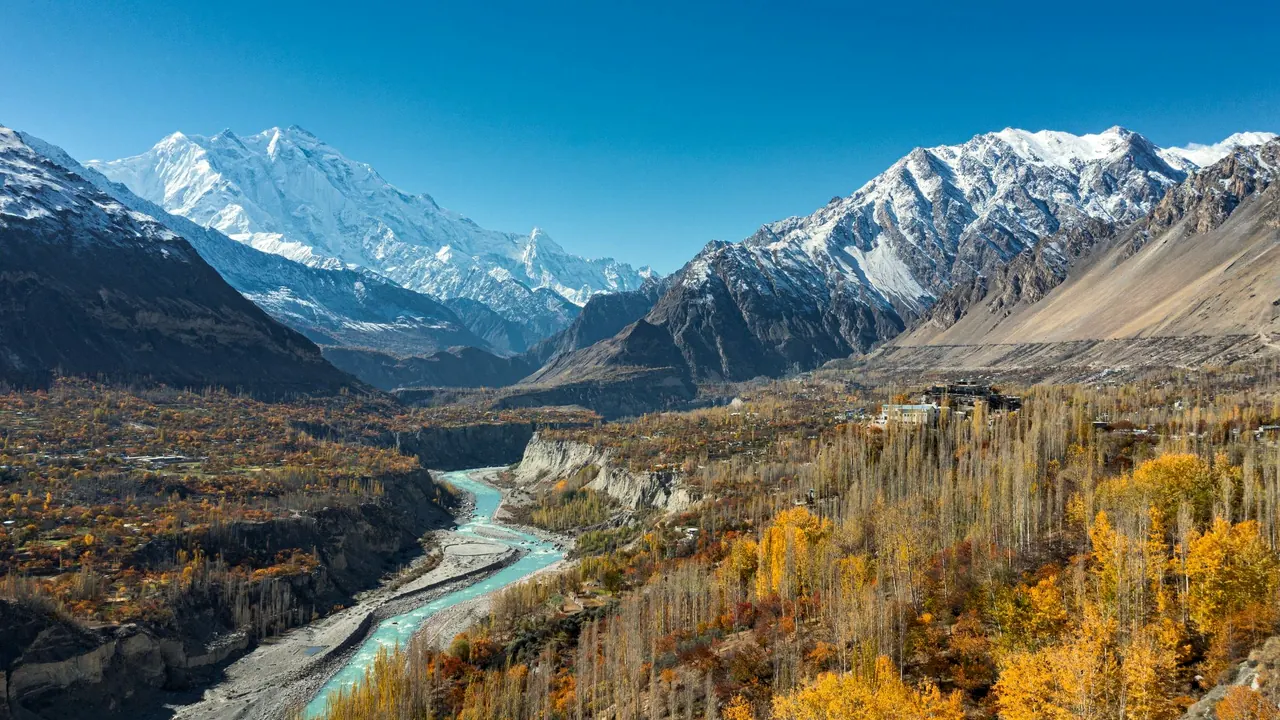
The Hunza Valley in autumn colours, with the river and snow-capped peaks including Rakaposhi
- Nature & outdoors93
- Affordability84
- Culture & sights42
Photo: Wasif Mehmood, Pexels License
Match
33
Every category weighted equally
- Beach & sun34
- Culture & arts31
- Food & nightlife26
- Family trip38
- Outdoors44
- Relax & unwind36
- Shopping & style28
- On a budget39
Hunza Valley in twelve categories
Our verdict on each, scored 0 to 100 against the same fixed benchmark cities, so a score means the same thing on every page.
Beaches & swimming. Scores 4 out of 100.
Food & drink. Scores 30 out of 100.
Culture & sights. Scores 42 out of 100.
Nightlife. Scores 3 out of 100.
Nature & outdoors. Scores 93 out of 100.
Day trips. Scores 34 out of 100.
Good for families. Scores 25 out of 100.
Getting around. Scores 20 out of 100.
Shopping & style. Scores 18 out of 100.
Affordability. Scores 84 out of 100.
Live music & performing arts. Scores 10 out of 100.
Wellness & relaxation. Scores 32 out of 100.
Hunza Valley category by category
Beaches & swimming
4There are no beaches here and no realistic swimming. Attabad Lake has a turquoise colour that draws visitors to its shore, but it is glacier-fed and cold even in midsummer, and people go out on it by boat rather than swimming in it. The rivers are fast, grey with silt and dangerous. Anyone who needs a swim on this trip should look for a hotel pool, and few have one.
Food & drink
30Hunza has a small but genuinely local kitchen, built on what grows on its terraces. Apricots are everywhere, fresh in summer and dried the rest of the year, and their oil and kernels go into many dishes. Look for chapshoro, a meat-filled flatbread pie, diram fitti, a sprouted-wheat bread eaten with apricot oil, buckwheat breads and thick soups, and cherries and mulberries straight from the trees in early summer. Walnut and apricot cakes are a fixture of the cafés in Karimabad.
The range stops there. Most eating happens in guesthouses and a handful of simple restaurants along the Karimabad bazaar and the highway, with Pakistani staples alongside the local dishes. Alcohol is not served openly, though home-distilled mulberry spirit circulates quietly. Come for a few memorable meals, not a food scene.
Culture & sights
42The heritage is compact and memorable. Baltit Fort stands above Karimabad with the valley and Rakaposhi behind it, the former seat of the Mirs of Hunza, carefully restored and furnished with the rooms and objects of that court. Down the hill, Altit Fort is older still, perched on a cliff above the river, with the old village and royal garden around it. Ganish, on the valley floor, keeps its watchtower, wooden mosques and stone lanes as a living settlement.
Beyond these, the Sacred Rock of Hunza at Haldeikish carries rock carvings and inscriptions left by travellers and pilgrims along the old routes over the mountains. There are no large museums, and two or three unhurried days cover the lot.
Nightlife
3There is no nightlife to speak of. Evenings are spent over dinner and tea in a guesthouse, perhaps around a fire on a cold night, and the bazaar in Karimabad goes quiet soon after dark. There are no bars or clubs, and alcohol is not part of public life. The night sky over the peaks is the evening's main event.
Nature & outdoors
93This is one of the great mountain landscapes on earth. From Karimabad the snow face of Rakaposhi fills the southern sky, with Ultar Sar and Ladyfinger close above the town, and the valley is lined with irrigated terraces of poplar, apricot and cherry against bare rock. Upper Hunza, around Gulmit and Passu, brings the jagged Passu Cones, the Passu and Batura glaciers and the long swaying suspension bridges over the river. Khunjerab National Park, rising to the Chinese border, shelters ibex and Marco Polo sheep, with snow leopards rarely seen.
Walking ranges from short climbs to viewpoints such as Eagle's Nest above Duikar to glacier hikes and multi-day treks to high pastures and lakes, best with a local guide. Spring brings blossom in April, autumn turns the valley gold in October, and winter is hard and cold. What it lacks is the infrastructure of the Alps: marked trails, lifts and quick rescue are limited.
Day trips
34The outings are mostly to other villages along the Karakoram Highway, each with its own character. Nagar faces Karimabad across the river and leads up to Hopper and its glacier. Upriver, Gulmit has an old wooden mosque and a traditional settlement, and Passu is the base for the bridges and glacier. Gilgit, about two hours south, is the regional town with its bazaars and the carved Kargah Buddha nearby.
The drive towards the Khunjerab Pass on the Chinese border is a popular full day out, though it is long from Karimabad and is more about the road than a destination. Beyond these, there is no wine country or historic town within reach, and much of a day out is spent looking at mountains.
Good for families
25Hunza is safe, hospitable and calm, and older children who like the outdoors can enjoy the suspension bridges, boat rides on Attabad Lake and fruit picked straight off the trees. Karimabad sits at about 2,500m, high enough to feel but not usually troublesome.
The difficulty is everything else. Reaching the valley means a long road journey or a weather-dependent flight, the villages are steep, there is nothing made for children, and medical care is basic. It suits adventurous families with teenagers far better than those with toddlers.
Getting around
20Within the valley, the Karakoram Highway is a good paved road and Karimabad is small enough to walk, though steeply. Most visitors hire a car or jeep with a driver for outings to Passu, Nagar or the border, since local minibuses are infrequent and slow.
Getting here is the hard part. Flights from Islamabad to Gilgit are short and spectacular but often cancelled when cloud sits over the mountains, and the road alternative takes the better part of two days, with landslides closing stretches from time to time. Winter snow makes higher routes unreliable.
Shopping & style
18Shopping centres on the bazaar street of Karimabad and the lanes below Baltit Fort. Look for hand-embroidered Hunza caps and textiles, wool shawls and woven rugs, gemstones and mineral specimens from the surrounding mountains, and bags of dried apricots, mulberries and walnuts. It is pleasant browsing for an afternoon, but the choice is small and repetitive, with no fashion or design to speak of.
Affordability
84Hunza is cheap by any international measure. Simple guesthouses and home-cooked meals cost little, and even the better hotels in Karimabad are modest by Western standards. The main expenses are the journey in and the hire of a car and driver for outings, which add up on a longer stay. In the busy summer and autumn months, the most popular hotels with views fill up and charge more, so booking ahead pays off.
Live music & performing arts
10There is no formal stage here. What a visitor can hear is the region's folk music, played on drums, the rubab and the shawm, sometimes arranged for guests in the evening or met at village celebrations and seasonal festivals, when men dance in lines in the old style. It is authentic but occasional, and nobody plans a trip around it.
Wellness & relaxation
32Hunza has no spas, baths or bathing tradition, and comfort is simple. Its claim to rest is the pace: quiet villages, cool clean air in summer, mornings on a terrace facing the peaks and long, slow afternoons among the orchards. For a visitor who wants to unplug, it works well. For anyone hoping for massages, saunas or pampering, there is almost nothing.
When should you go?
Pick a month to see what it is like. The climate figures are measured averages, not a forecast.
Hunza Valley in July
Daytime high, °C
Rainfall in the month, mm
The whole year
Shaded against this destination’s own year: the deepest cell is its best month for that figure and the palest its weakest.
Where the figures come from
Hunza Valley has no weather station within reach, so its figures come from a gridded climate model rather than a measured record, and read a broad area rather than one spot.
Temperature and rainfall are climate normals, averaged over the years shown. Hunza Valley: 1991-2020 normals, TerraClimate 4 km grid at the town, no weather station within 90 km.
Before you go
| Measure | Hunza Valley |
|---|---|
| Official language | Urdu, English |
| Currency | Pakistan Rupee (PKR) |
| Sockets | CGM230 V, 50 Hz |
| Driving side | Left |
| Time zone | UTC+5 |
| Emergency number | Police 15, ambulance 1122, fire 16 |
| Main airport | Gilgit Airport (GIL)1 non-stop destination |
Compare Hunza Valley with
Every comparison with a written verdict behind it.