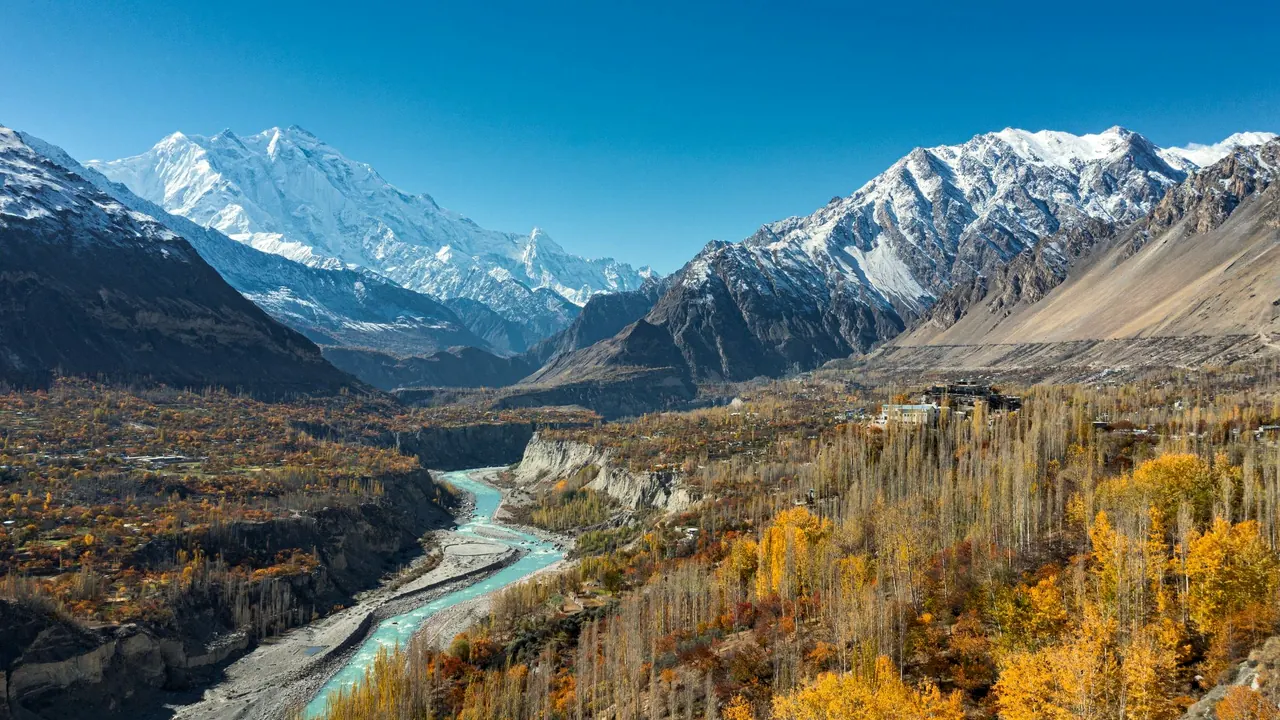
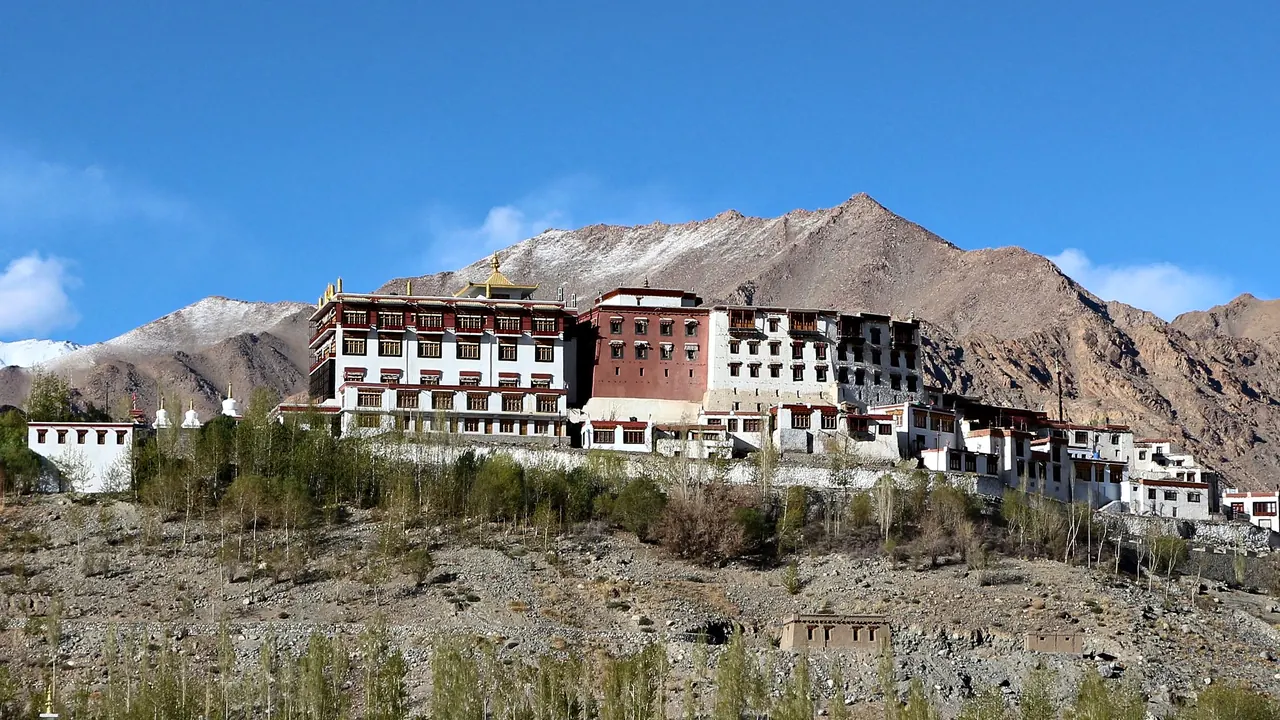
Photos: Hunza Valley by Wasif Mehmood, Pexels License; Ladakh by Bernard Gagnon, CC BY-SA 4.0, cropped.
Hunza Valley or Ladakh?
Our verdict in twelve categories, each scored against the same fixed benchmark cities, and the climate month by month, so you can choose for your trip.
Choose Hunza Valley for
- families
- prices
- getting around
Hunza Valley suits travellers who want great mountains at a gentler height and a lower cost. You base yourself in Karimabad with Rakaposhi in view, explore two old forts, walk through apricot and cherry orchards and stay somewhere that is easier on the body and the budget. It is the better pick for a family with adventurous teenagers, or for anyone who would rather see spring blossom or the autumn gold of the poplars than fit into a short summer window.
Choose Ladakh for
- culture and sights
- day trips
- shopping
Choose Ladakh for a living Buddhist culture that Hunza cannot match: monasteries on the ridges of the Indus, monks at morning prayer, the murals of Alchi and the masked dances of the monastery festivals. It asks more of you in return. The altitude is higher, there are permits to arrange, the drives over passes are long and the season is shorter. It rewards fit adults who have time to acclimatise.
Scoreboard
Twelve categories on one fixed scale from 0 to 100. The shaded stretch is the gap between the two.
Your match
Pick a travel style or drag the sliders, and both match scores follow your weighting.
Wins on families and prices with your weighting.
Wins on culture and sights and day trips with your weighting.
What matters to you?
Category by category
What the scores mean for a trip.
Beaches & swimming
Neither place offers a swim. In Hunza you can at least go out by boat on the turquoise water of Attabad Lake, right beside the highway. Ladakh's Pangong Tso and Tso Moriri lie above 4,000m, a long drive from Leh, and are lakes to look at rather than use. In both, a hotel pool is the only option, and few exist.
Food & drink
Both kitchens are built around the apricot, eaten fresh or dried and pressed for oil, but the good food is found in different places. Hunza's best is in the Karimabad cafés and guesthouses: chapshoro, diram fitti with apricot oil, and walnut cake. Leh's rooftop restaurants lean on momos, thukpa and Indian curries for trekkers, and real Ladakhi cooking such as skyu and butter tea is easiest to find in village homestays.
Leh has more places to eat, and a few rooftops serve beer. In Hunza alcohol is not served openly. Neither is worth the trip for the food alone.
Culture & sights
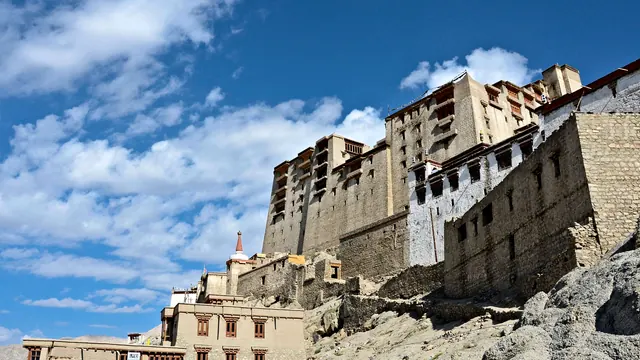
Ladakh has much the deeper heritage. Leh Palace and the Namgyal Tsemo gompa stand over the mud-brick old town, a chain of monasteries runs along the Indus from Shey and Thiksey to Hemis, and Alchi holds its early painted temples. Together they fill several days, and morning prayers show a religious life that is still lived.
Hunza's history is compact by comparison. There are the Baltit and Altit forts, the old settlement of Ganish and the carvings on the Sacred Rock at Haldeikish, all covered in two or three unhurried days. They tell the story of a small mountain kingdom rather than a whole religious tradition.
Nightlife
Evenings end early in both places. Leh at least has a few rooftops serving beer and a couple of quiet bars. Karimabad has no bars at all and goes quiet after dark, leaving dinner, tea and the stars over the peaks.
Nature & outdoors
Both are among the world's great mountain landscapes, but they look quite different. Hunza is green against bare rock, with orchard terraces and poplars below Rakaposhi, the jagged Passu Cones, the Passu and Batura glaciers and swaying suspension bridges. It changes colour with the seasons, from spring blossom to autumn gold.
Ladakh is a high, bare desert of ochre and violet slopes, with Pangong Tso, Tso Moriri and the dunes of Nubra. It also offers more to do: classic treks such as the Markha valley, rafting on the Indus and the Zanskar, and the winter Chadar walk. The price is altitude, since everyone needs a few days in Leh before going higher.
Day trips
Ladakh has more to see within a day of your base. The Sham valley villages of Likir and Basgo, the palace village of Stok and the Shey and Thiksey side are all easy loops by car from Leh, and each outing doubles as a monastery tour. Nubra and the high lakes are better kept for overnight trips.
From Karimabad the list is shorter: Nagar and Hopper across the river, Gulmit and Passu upriver, and Gilgit about two hours south. The long drive towards the Khunjerab Pass is more about the road than the place it ends.
Good for families
Hunza is the more workable choice with children, though neither is easy. Karimabad lies roughly 1,000m lower than Leh, and older children can enjoy the bridges, boat trips on Attabad Lake and fruit straight from the trees.
In Ladakh the altitude is the real problem. Leh is already high and the lake and pass trips go far higher, which puts young children at risk of altitude sickness they cannot describe. In both places it is active teenagers who get the most from the trip.
Getting around
Both need a car and driver for anything beyond the main town, and both have long roads where landslides happen. The difference is in getting there and the paperwork. Hunza's flight to Gilgit is often cancelled when cloud sits over the mountains, and the road alternative takes nearly two days. Most visitors to Ladakh fly straight into Leh, but foreigners need protected-area permits for Nubra and the lakes, and the road routes open only in the warmer months.
On foot, Karimabad is small but steep, and in Leh you walk slowly because of the altitude.
Shopping & style
Ladakh has the wider choice. Leh's main bazaar and the Tibetan market stalls sell pashmina, thangka paintings, singing bowls and turquoise and coral jewellery, though much of the stock repeats and some comes from elsewhere in India or Nepal. Karimabad's bazaar below Baltit Fort is smaller, with embroidered Hunza caps, rugs, mountain gemstones and dried fruit, enough for an afternoon's browsing.
Affordability
Both are inexpensive once you are there, but Hunza costs less overall. Guesthouses and meals are cheap in both. In Hunza the main extra costs are the journey in and a driver, and the hotels with views charge more in summer and autumn.
Ladakh adds summer flights to Leh, fixed taxi-union rates over a week of long drives and protected-area fees. Its upmarket camps and boutique hotels also cost clearly more.
Live music & performing arts
Ladakh has occasions worth planning a trip around. Monks perform masked cham dances in monastery courtyards, with the Hemis festival in early summer the best known and others through the year, and an autumn festival brings folk dance and music to Leh. Hunza's drums, rubab and shawm turn up at a guesthouse evening or a village celebration, authentic but too occasional to plan for.
Wellness & relaxation
Neither has spas, so rest here means quiet. Hunza's version is easier: terraces facing the peaks, long afternoons in the orchards and cool summer air at a height that does not wear you out.
Ladakh gives you more to take part in. There are early prayers in monastery halls, meditation courses around Leh, traditional amchi medicine and simple hot springs at Panamik and Chumathang. The first tiring days at altitude and the long drives take away some of that calm.
When should you go?
Pick your month. The climate figures are measured averages, not a forecast.
Hunza Valley in July
Ladakh in July
Daytime high, °C
Rainfall in the month, mm
Where the figures come from
Hunza Valley has no weather station within reach, so its figures come from a gridded climate model rather than a measured record, and read a broad area rather than one spot.
Ladakh has no weather station within reach, so its figures come from a gridded climate model rather than a measured record, and read a broad area rather than one spot.
Temperature and rainfall are climate normals, averaged over the years shown. Hunza Valley: 1991-2020 normals, TerraClimate 4 km grid at the town, no weather station within 90 km. Ladakh: 1991-2020 normals, TerraClimate 4 km grid at the town, no weather station within 90 km.
Hunza is the lower and warmer of the two, and its good season is longer. Spring arrives in April with blossom and mild days around 18°C. Summer peaks near 31°C in July, warm enough to make the steep lanes of Karimabad hard work at midday. October stays mild and dry as the valley turns gold. Winter is cold, and snow makes the higher routes unreliable.
Ladakh is several degrees cooler all year. Around Leh, July highs reach about 26°C, so June to September is comfortable, and those are also the months when the passes and the road routes in are open. November and March are cold but still above freezing. From December to February the days hover near freezing, with January highs around -2°C, a season mainly for the Chadar walk and snow leopard tracking. Neither place gets much rain in any month, so when you go depends on temperature and access rather than rain.
Which traveller are you?
On a culture and arts trip, Ladakh is the clear choice. Its monasteries along the Indus, from Thiksey to Hemis, are still in religious use, and Alchi's early murals have no equal in Hunza. Masked cham festivals give it a stage that Hunza's occasional folk music cannot match.
On a family trip with children, Hunza is the easier choice. Its base in Karimabad sleeps much lower than Leh, so the altitude only bites on the day out towards the Khunjerab Pass. Outdoorsy teenagers will find plenty to enjoy, though neither place suits toddlers.
For a trip on a tight budget, Hunza makes money go further. Guesthouses and home-cooked meals cost little, and there are none of the protected-area permits or fixed taxi-union rates that push up the cost of a week driving around Ladakh.
Before you go
| Measure | Hunza Valley | Ladakh |
|---|---|---|
| Official language | Urdu, English | Hindi, English |
| Currency | Pakistan Rupee (PKR) | Indian Rupee (INR) |
| Sockets | CGM230 V, 50 Hz | CM230 V, 50 Hz |
| Driving side | Left | Left |
| Time zone | UTC+5 | UTC+5:30 |
| Emergency number | Police 15, ambulance 1122, fire 16 | 108 or 112 |
| Main airport | Gilgit Airport (GIL)1 non-stop destination | Leh Kushok Bakula Rimpochee Airport (IXL)5 non-stop destinations |
By the numbers
| Measure | Hunza Valley | Ladakh |
|---|---|---|
| Population | - | 274,289 |
Where else could you go?
Every comparison below shares a destination with this one, so you can follow Hunza Valley or Ladakh somewhere new.
- Himachal Pradeshvs Ladakh
- Kashmirvs Hunza Valley
- Kashmirvs Ladakh
- Himachal Pradeshvs Hunza Valley
- Rajasthanvs Ladakh
- Pokharavs Hunza Valley