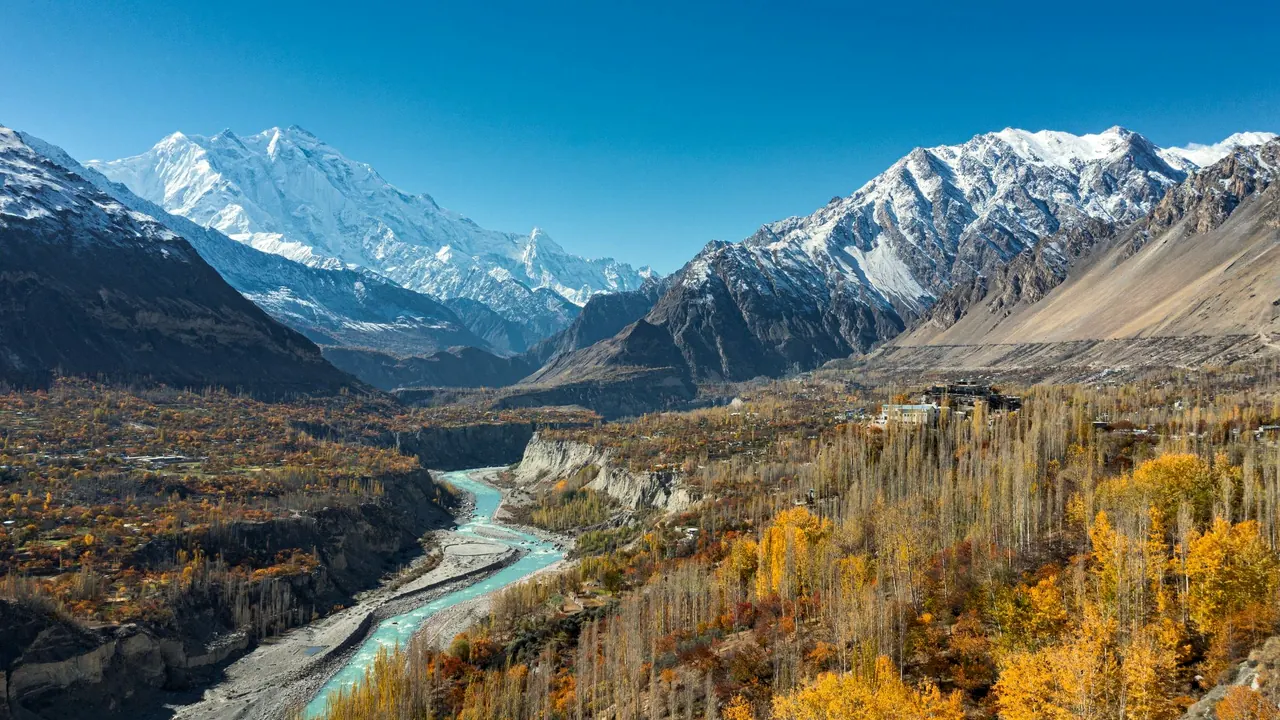
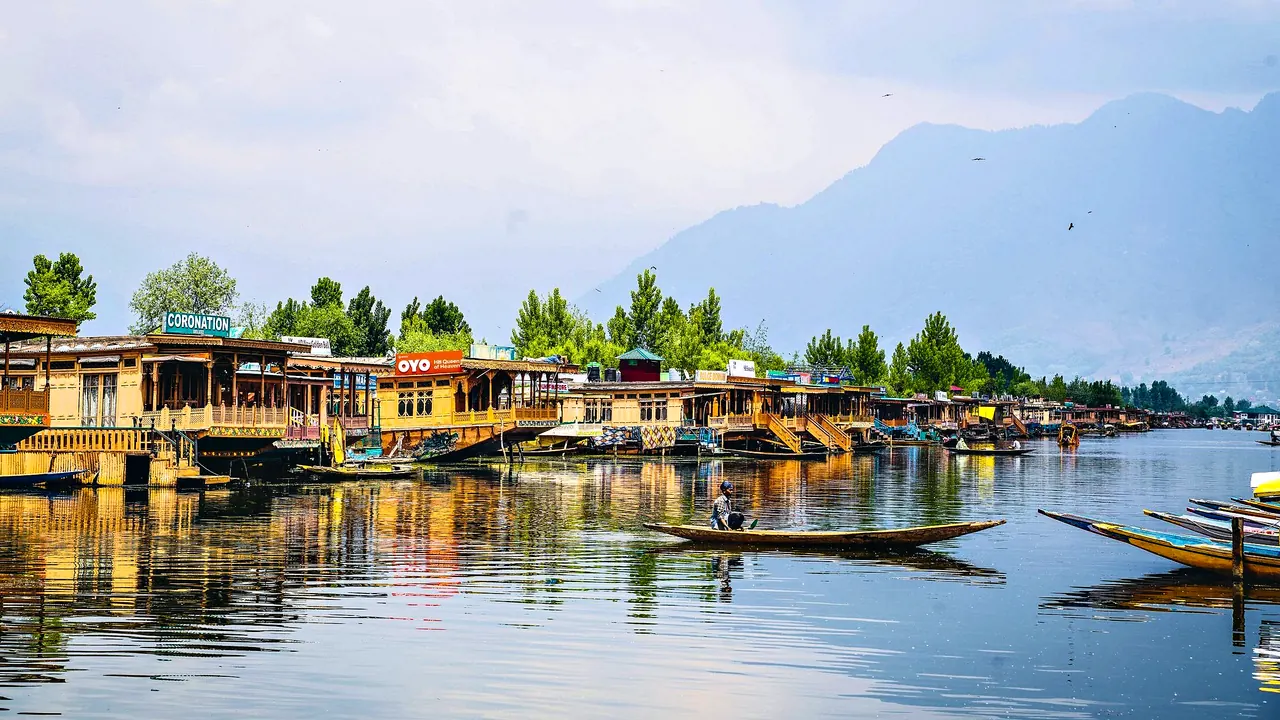
Photos: Hunza Valley by Wasif Mehmood, Pexels License; Kashmir by Ravinder Ravi, Pexels License.
Hunza Valley or Kashmir?
Our verdict in twelve categories, each scored against the same fixed benchmark cities, and the climate month by month, so you can choose for your trip.
Choose Hunza Valley for
- prices
- nature and the outdoors
Hunza Valley is for the traveller who wants high mountains at their starkest and is willing to work to get there. The Karakoram rises straight out of the orchards, glaciers reach almost to the road, and the restored forts above Karimabad give a few days of history among the peaks. Daily costs are very low and the villages are quiet. In return you get a hard journey in, a simple kitchen and very little to buy or do after dark.
Choose Kashmir for
- shopping
- food and drink
- culture and sights
Kashmir gives you mountain scenery as grand as Hunza's, with a richer valley floor in between the peaks. Srinagar adds Mughal water gardens, the timber mosques of the old city, a serious feast cuisine and some of the finest crafts in South Asia, and the houseboats on Dal and Nigeen lakes give a stay its own slow rhythm. It also suits families and winter visitors better, with Gulmarg's gondola and powder skiing. Expect to pay more for drivers and peak-season rooms.
Scoreboard
Twelve categories on one fixed scale from 0 to 100. The shaded stretch is the gap between the two.
Your match
Pick a travel style or drag the sliders, and both match scores follow your weighting.
Wins on prices and nature and the outdoors with your weighting.
Wins on shopping and food and drink with your weighting.
What matters to you?
Category by category
What the scores mean for a trip.
Beaches & swimming
Neither destination is a place to swim, and both put their water on show rather than in use. In Hunza that means a boat out on the glacier-cold turquoise of Attabad Lake. In Kashmir it means living on the water itself, sleeping on a houseboat on Dal or Nigeen Lake and crossing by shikara at dawn.
Food & drink
Kashmir has the far stronger table. Wazwan, the ceremonial run of slow-cooked lamb dishes such as rista and gushtaba, is one of India's great regional feasts, and daily life adds pink noon chai, saffron kahwa and pre-dawn bread from the kandur bakeries. It all centres on Srinagar.
Hunza's cooking is honest and very local but much narrower. It is built on apricots, with chapshoro pies, diram fitti with apricot oil, buckwheat breads and walnut cakes in the Karimabad cafés. Expect a few memorable dishes in guesthouses rather than a reason to travel.
Culture & sights
Kashmir offers more to see. The terraced Mughal gardens of Shalimar, Nishat and Chashme Shahi line Dal Lake, and Downtown Srinagar has the papier-mâché interior of Khanqah-e-Moula and the deodar-pillared Jamia Masjid. The eighth-century Martand Sun Temple lies further south.
Hunza's heritage is smaller but striking in its setting. Baltit Fort looks out towards Rakaposhi, Altit Fort is perched above the river, Ganish is still a lived-in village, and the Sacred Rock at Haldeikish is covered in carvings. Two or three days cover it all.
Nightlife
Both go quiet soon after dark, and neither has bars or clubs. In Hunza the evening means tea by a guesthouse fire and the stars over the peaks. Kashmir at least has a few hotels that serve alcohol, and its evenings are spent on a houseboat veranda over the lake.
Nature & outdoors
Both are among the great mountain landscapes, but they look very different. Hunza is the Karakoram in bare rock and ice, with green terraces of poplar and apricot below. Rakaposhi and Ultar Sar tower over Karimabad, the Passu Cones and Batura Glacier lie upriver, and Khunjerab National Park shelters ibex and Marco Polo sheep.
Kashmir is greener and softer, a broad basin with pine-forested side valleys. Gulmarg has meadows and a gondola, Pahalgam has pony treks along the Lidder, and from Sonamarg the week-long Great Lakes trek sets out, with rafting as an extra. In both places trails are basic and local guides are the norm.
Day trips
The two are close here, and in both most outings head into the mountains. Hunza's day trips follow the Karakoram Highway to villages like Nagar and Hopper, Gulmit and Passu, or make the long drive to the Khunjerab Pass, where the road is the attraction. Kashmir's best day out has more history in it: south along the Jhelum to the saffron fields of Pampore, the Awantipora ruins and Martand, with shrines like Kheer Bhawani closer to Srinagar.
Good for families
Kashmir is easier with children. A night on a houseboat, a shikara past the floating gardens, pony rides at Pahalgam and sledging and the gondola at Gulmarg all give them something to remember, and families with toddlers can stay in Srinagar and keep trips short.
Hunza is safe and welcoming, and teenagers will enjoy the suspension bridges and boat rides on Attabad Lake. But the journey in is long, the villages are steep, nothing is made for children and medical care is basic. It suits adventurous families with older children.
Getting around
Both mean hiring a car and driver, but Kashmir is the easier place to reach and move around. From Srinagar, Gulmarg is about an hour and a half away and Pahalgam two and a half, though union taxis in the resorts and checkpoints on the main roads add some friction.
Getting into Hunza is the real obstacle. The short flight to Gilgit is often cancelled by cloud, and the road from Islamabad takes most of two days, with landslides closing stretches at times. Once you are there, the highway is good and Karimabad is walkable, if steep.
Shopping & style
This is where Kashmir pulls furthest ahead. Its crafts are among the finest in South Asia: pashmina, silk and wool carpets, crewel embroidery, papier-mâché and walnut carving, in showrooms around Polo View and Lal Chowk and in the Downtown workshops. Fake pashmina and drivers who steer you to showrooms paying commission mean it pays to buy slowly.
Hunza has a single bazaar street below Baltit Fort, selling embroidered caps, shawls, gemstones and dried fruit. It makes a pleasant hour or two of browsing.
Affordability
Hunza works out cheaper. Its guesthouses and meals cost very little, and the main bills are the journey in and a driver for outings. Kashmir's everyday costs are also low, but you depend more on paid transport and services: a car for most of the trip, fixed union taxi rates in the resorts, pony and guide fees, and higher prices for good houseboats in peak season. Crafts in Kashmir also start at high asking prices for visitors.
Live music & performing arts
In both places music is something you come across by chance rather than plan for, with no stages or regular programme. Hunza's is folk music, with drums, rubab and shawm and men dancing in lines at village festivals. Kashmir's is more refined: Sufiana kalam on the santoor, alongside the satirical Bhand Pather theatre, sometimes arranged as an evening on a houseboat.
Wellness & relaxation
Kashmir offers a little more for rest. A few of the larger hotels in Srinagar and Gulmarg have spas, and early mornings on a houseboat on Nigeen Lake or afternoons under the chinars in the Mughal gardens are deeply calming. Hunza has no treatments at all, so the rest comes from the quiet itself: terraces facing the peaks, cool summer air and slow hours in the orchards.
When should you go?
Pick your month. The climate figures are measured averages, not a forecast.
Hunza Valley in July
Kashmir in July
Daytime high, °C
Rainfall in the month, mm
Where the figures come from
Hunza Valley has no weather station within reach, so its figures come from a gridded climate model rather than a measured record, and read a broad area rather than one spot.
Temperature and rainfall are climate normals, averaged over the years shown. Hunza Valley: 1991-2020 normals, TerraClimate 4 km grid at the town, no weather station within 90 km. Kashmir: 1991-2020 normals, Srinagar (3.1 km from centre).
Hunza is very dry all year, so the deciding factor is temperature. April brings blossom and mild days, and May to October is the open season. The valley floor reaches about 31°C in July, which is warm for steep village lanes but fine for walking higher up. September and October are the most comfortable months, and October turns the poplars gold. Winter is hard, with January highs around 4°C, and the higher roads become unreliable.
Kashmir is wetter and a little milder. Late winter and spring bring most of the rain, about 99mm in March, along with the almond and tulip blossom. From May the days grow sunny and settled, Srinagar's summer peaks near 30°C, and the high trails open from about June. October is the standout month, dry and bright with the chinars turning red. Kashmir also has a winter season that Hunza lacks, with snow and skiing at Gulmarg from December to March.
Which traveller are you?
On a trip with a tight budget, Hunza Valley lets the money buy more days. Once you have arrived, the best of it is on foot from Karimabad: down to Altit Fort and the lanes of Ganish, up to Eagle's Nest. Kashmir's spread-out valleys keep a driver on the bill.
For a shopping trip, Kashmir is the clear choice, and the buying becomes part of the trip: watching carpets knotted in the Downtown workshops, rowing out at dawn to the floating market on Dal Lake, picking up saffron near Pampore. Hunza's bazaar fills one afternoon.
Skiers should choose Kashmir, as Hunza has nothing comparable. Gulmarg's gondola climbs to nearly 4,000m for deep powder from December to March, an easy drive from Srinagar. Hunza's winters are cold, its higher roads unreliable and its slopes without lifts.
Before you go
| Measure | Hunza Valley | Kashmir |
|---|---|---|
| Official language | Urdu, English | Hindi, English |
| Currency | Pakistan Rupee (PKR) | Indian Rupee (INR) |
| Sockets | CGM230 V, 50 Hz | CM230 V, 50 Hz |
| Driving side | Left | Left |
| Time zone | UTC+5 | UTC+5:30 |
| Emergency number | Police 15, ambulance 1122, fire 16 | 108 or 112 |
| Main airport | Gilgit Airport (GIL)1 non-stop destination | Srinagar International Airport (SXR)12 non-stop destinations |
Where else could you go?
Every comparison below shares a destination with this one, so you can follow Hunza Valley or Kashmir somewhere new.
- Ladakhvs Kashmir
- Himachal Pradeshvs Kashmir
- Ladakhvs Hunza Valley
- Himachal Pradeshvs Hunza Valley
- Rajasthanvs Kashmir
- Pokharavs Hunza Valley