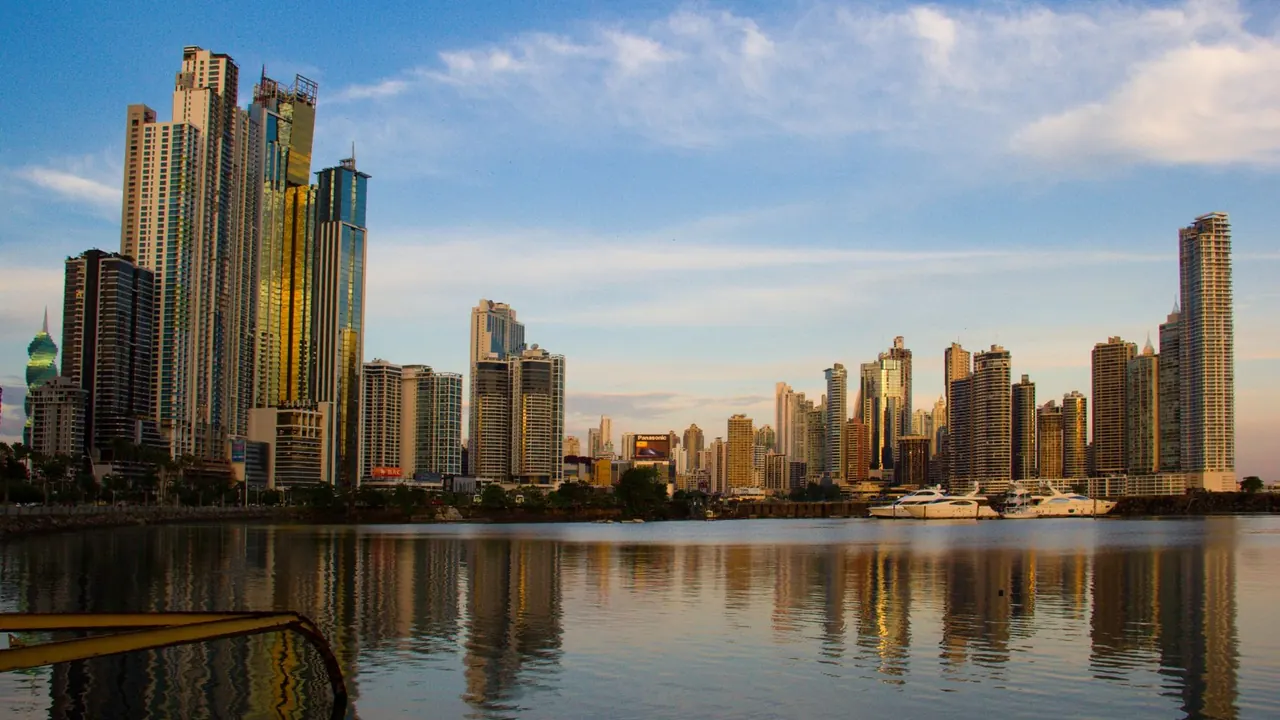
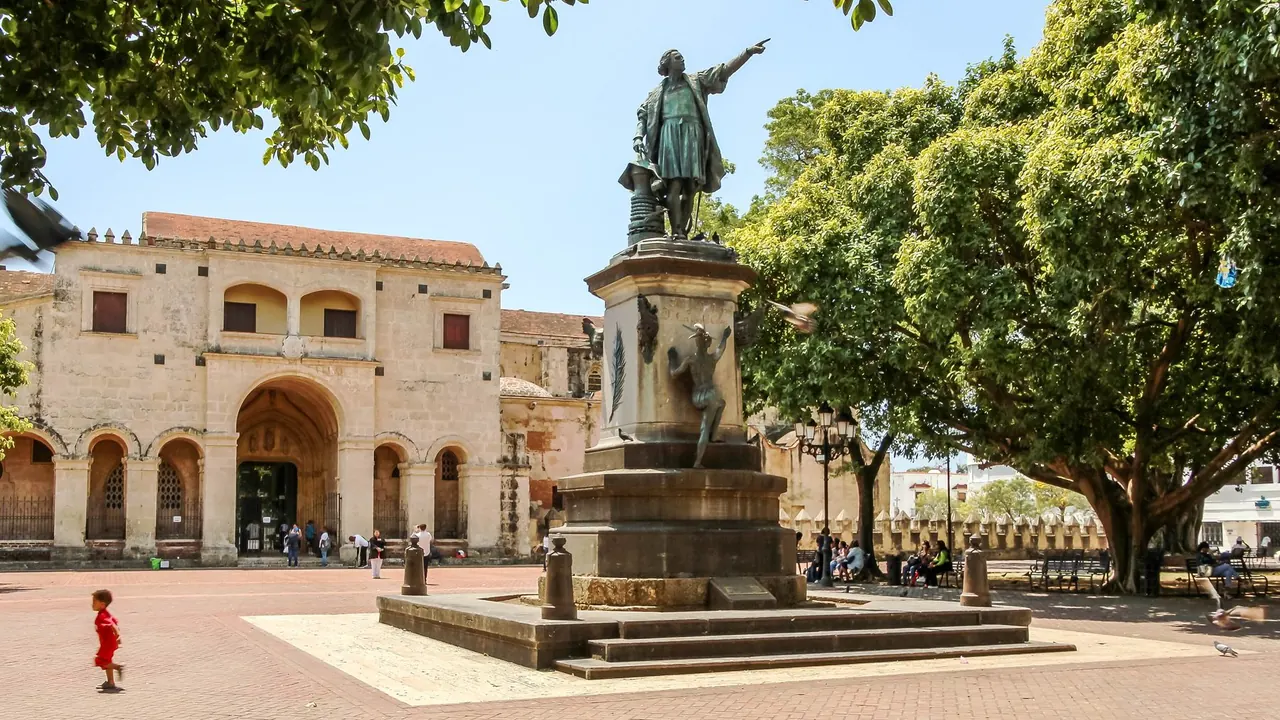
Photos: Panama City by Ayaita, CC BY-SA 3.0, cropped; Santo Domingo by Dr. Thomas Liptak, CC BY-SA 4.0, cropped.
Panama City or Santo Domingo?
Our verdict in twelve categories, each scored against the same fixed benchmark cities, and the climate month by month, so you can choose for your trip.
Choose Panama City for
- nature and the outdoors
- shopping
- day trips
Panama City is the pick for travellers who want wildlife and engineering in the same trip. Rainforest starts at the edge of town, the birding along the Pipeline Road is famous, and you can stand at Miraflores watching ocean-going ships climb through the locks. It suits curious, active visitors who are happy to take taxis and leave the city for a night when they want a proper beach.
Choose Santo Domingo for
- beaches
- live music and the arts
- prices
Santo Domingo makes more sense for a cheaper, more social trip built around history, music and the Caribbean. Its colonial quarter holds the oldest European streets in the Americas, the nights end on a merengue or bachata dance floor, and the calm lagoon at Boca Chica is a short drive away. The countryside near the capital has much less to offer, so people who come for the outdoors usually treat the city as a stop before moving on.
Scoreboard
Twelve categories on one fixed scale from 0 to 100. The shaded stretch is the gap between the two.
Your match
Pick a travel style or drag the sliders, and both match scores follow your weighting.
Too close to call, 1 point apart
Wins on nature and the outdoors and shopping with your weighting.
Wins on beaches and live music and the arts with your weighting.
What matters to you?
Category by category
What the scores mean for a trip.
Beaches & swimming
Neither city has a beach you can swim from in town, but Santo Domingo has the better one within reach. Boca Chica is about 40 minutes east, a shallow lagoon protected by a reef where you can wade in calm water, with Juan Dolio's longer and quieter strip just beyond it.
From Panama City the quick option is the small beach on Isla Taboga, reached by ferry. The bigger beaches mean an hour or more of driving to the grey sand at Coronado, or nearly two hours to the clearer Caribbean water at Portobelo and Isla Grande, and that usually turns a beach day into an overnight trip.
Food & drink
The two are about level, and both serve filling home cooking, sancocho included, at cheap neighbourhood counters. In Panama City the draw is seafood: ceviche by the cup and fried whole fish at the Mercado de Mariscos, followed by excellent Geisha coffee from the highlands.
In Santo Domingo you eat meat and plantain instead, with mofongo, chicharrón, mangú at breakfast and a late-night chimi from a street cart, all washed down with aged rum. Panama City's international range in El Cangrejo is the wider of the two, so it suits longer stays better once the local classics have been tried.
Culture & sights
Both cities have a UNESCO-listed colonial quarter, and either can be covered in two or three days, but the history differs. Santo Domingo's Ciudad Colonial is the older story, with the first cathedral and the first paved street in the Americas, the Alcázar de Colón and the Fortaleza Ozama, all within a few walkable blocks.
Panama City splits its past between the restored balconies of Casco Viejo and the ruins of Panamá Viejo. Its real advantage is the Canal, where watching ships rise through the Miraflores locks is a sight Santo Domingo cannot match, and Gehry's Biomuseo adds a modern landmark.
Nightlife
Both cities go out late and both centre on their old towns, but the style is different. Panama City is more of a dressed-up night of rooftop bars over the lit towers of the bay, followed by reggaeton and electronic clubs on Calle Uruguay with a crowd of expats and business visitors.
Santo Domingo's nights are about dancing to merengue and bachata, either in the plazas around the cathedral or at a colmadón, a corner shop turned open-air bar with plastic chairs and big speakers. In both cities you move between districts by taxi.
Nature & outdoors
This is the widest gap between the two. Panama City has rainforest inside the city at Parque Natural Metropolitano, toucans and very long bird lists along the Pipeline Road, and boat trips past howler monkeys on Gatún Lake, all within about an hour.
Santo Domingo sits on a flat coastal plain, and its green spaces are the cave lagoons of Los Tres Ojos, the botanical garden and Parque Mirador Sur. The mangroves of Los Haitises and the mountains around Jarabacoa are rewarding, but they take a long day or a night away.
Day trips
Panama City has slightly more to choose from. You can see Spanish forts at Portobelo and San Lorenzo on the Caribbean side, take a boat through part of the Canal, visit an Emberá village by dugout canoe or catch the ferry to Taboga, so each day out feels different.
Santo Domingo's outings mostly head east along the coast: Altos de Chavón above the river, San Pedro de Macorís on the way, and boats from Bayahibe to Saona. Many of them come down to a beach and a boat ride.
Good for families
There is little between them, and both suffer from heat, broken pavements and a need for taxis. Panama City has the slight edge thanks to the Canal locks, hands-on displays at the Biomuseo, bike hire on the Amador Causeway and boat trips to see monkeys.
Santo Domingo makes up for it with the aquarium, the zoo, cannons on the colonial forts and Boca Chica's gentle lagoon, which suits small swimmers better than anything near Panama City.
Getting around
The two work in much the same way. Each has a compact old town you can explore on foot, a clean metro built for commuters rather than sightseers, and long traffic-heavy stretches that most visitors cross by app taxi.
Panama City adds the Cinta Costera, a waterfront path linking Casco Viejo with the banking district, while Santo Domingo has the cheap but confusing guaguas and shared cars. For Gamboa or the Panamanian coast a hired car or driver helps, whereas Dominican trips out of the city run on intercity coaches.
Shopping & style
Panama City is the stronger place to shop, mainly because of its huge malls near Albrook, Punta Pacífica and San Francisco, which draw buyers from across Central America for electronics and brands. Its signature craft is the Guna mola, alongside Emberá baskets and highland coffee.
Santo Domingo's malls in Piantini and Naco are smaller, but its souvenirs are more particular: amber with trapped insects, blue larimar, hand-rolled cigars and aged rum, sold along Calle El Conde and haggled over at the Mercado Modelo.
Affordability
In both capitals the money goes on the same things, a room in the restored old town and anything aimed at visitors, while eating and getting around as residents do stays cheap. Panama City is the dearer of the two because more of a typical trip falls on the expensive side. Rooms in Casco Viejo and the banking district, rooftop drinks over the bay and the guided outings to the rainforest and the islands, which are much of the reason to come, all carry visitor prices.
Santo Domingo leaves more room in the budget, and the expensive end is narrower. Only the boutique hotels in colonial houses and the kitchens and cocktail bars of Piantini climb towards European levels, and the forts and museums of the old town charge little to enter. Its main sights sit within a few streets of one another rather than a guided trip away, so you can spend several days without paying for a tour.
Live music & performing arts
Santo Domingo has the livelier music scene, because merengue and bachata are part of ordinary nights out. The Sunday evening concert of son among the ruins of the San Francisco monastery is a fine local ritual, and the Teatro Nacional Eduardo Brito offers symphony, ballet and opera.
Panama City's ornate Teatro Nacional has a short season, and outside the January jazz festival its salsa and típico gigs are hard to plan around.
Wellness & relaxation
Neither is a place to unwind. Both are loud and hot, and wellness in either city means a hotel spa or a massage.
The difference is where people go to rest. Panama City's quiet spots are the forest trails on its edge, and the escape is the cooler air of the highland valleys. In Santo Domingo you find calm in colonial courtyards and the botanical garden, and the escape is a beach resort further along the coast.
When should you go?
Pick your month. The climate figures are measured averages, not a forecast.
Panama City in July
Santo Domingo in July
Daytime high, °C
Rainfall in the month, mm
Where the figures come from
Panama City has no rain gauge within 25 km of the centre, so its rainfall comes from a gridded climate dataset read at the city rather than from a gauge further away.
Santo Domingo has no rain gauge within 25 km of the centre, so its rainfall comes from a gridded climate dataset read at the city rather than from a gauge further away.
Temperature and rainfall are climate normals, averaged over the years shown. Panama City: 1991-2020 normals, Tocumen (20.4 km from centre). Santo Domingo: 1991-2020 normals, Santo Domingo (6.4 km from centre).
Both cities are hot all year, with daytime highs a little above 30°C in every month, so the question is rain rather than warmth. Panama City has a short, very dry season from January to April, and March has almost no rain at all at 19mm. The rain builds from May and is at its heaviest from October to December, when November brings around 438mm and the downpours can take whole afternoons. The Pacific is warm enough to swim in all year, though it is slightly cooler in February and March.
Santo Domingo's rains come earlier and fall more evenly. December to April is the driest and most comfortable time, with slightly milder days for walking the old town. The wet months run from May to October and peak in August at about 235mm, and late summer and early autumn are also the hottest weeks for walking the streets. The Caribbean stays between about 27°C and 29°C, so a beach day is possible in any month. For a single trip covering both, the early months of the year suit each city best.
Which traveller are you?
On an outdoors trip, Panama City is far ahead. Parque Natural Metropolitano has sloths inside the city limits, Soberanía and Gamboa are under an hour away, and El Valle de Antón adds waterfalls. In Santo Domingo the real landscapes need a long day out or an overnight stay.
For a trip on a tight budget, Santo Domingo stretches the money further. Comedor lunches, colmado beer, street food and app taxis cost little, and simple guesthouses are reasonably priced. Panama City's rooms and guided rainforest trips cost noticeably more.
On a beach and sun trip, Santo Domingo is the easier base. Boca Chica's sheltered lagoon and the longer sand of Juan Dolio are both within an hour. From Panama City, a good beach means travelling to Coronado or to the Caribbean side.
Before you go
| Measure | Panama City | Santo Domingo |
|---|---|---|
| Official language | Spanish | Spanish |
| Currency | Balboa (PAB) | Dominican Peso (DOP) |
| Sockets | AB110 V, 60 Hz | AB110 V, 60 Hz |
| Driving side | Right | Right |
| Time zone | UTC-5 | UTC-4 |
| Emergency number | 911 | 911 |
| Elevation | 20 m | 14 m |
| Main airport | Tocumen International Airport (PTY)20 km from centre92 non-stop destinations | Las Américas International Airport (SDQ)28 km from centre40 non-stop destinations |
| Public holidays this year | 14 days | 13 days |
By the numbers
| Measure | Panama City | Santo Domingo |
|---|---|---|
| City population | 1,540,000 | 2,201,941 |
| People per km² | 5,600 | 1,691 |
| Museums within 10 km | 10 | 10 |
| UNESCO World Heritage sites within 50 km | 2 | 1 |
| Swim season, months above 21 °C | 12 months | 12 months |
Where else could you go?
Every comparison below shares a destination with this one, so you can follow Panama City or Santo Domingo somewhere new.