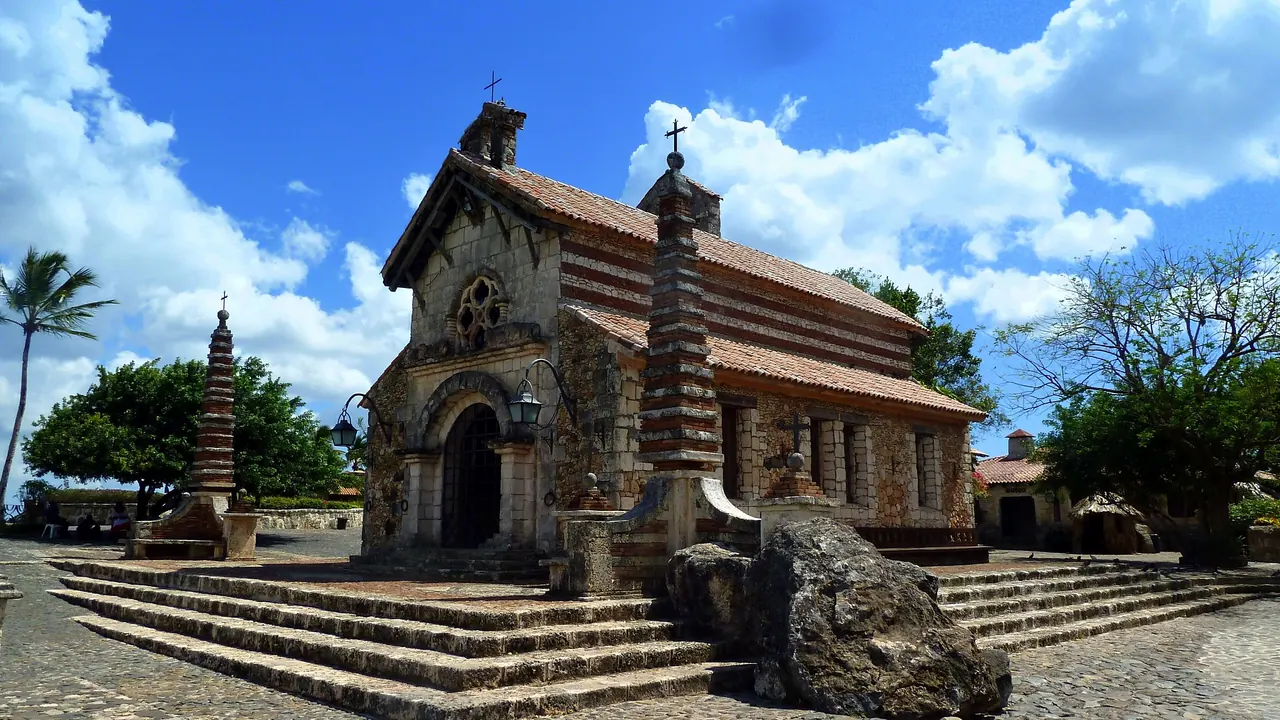
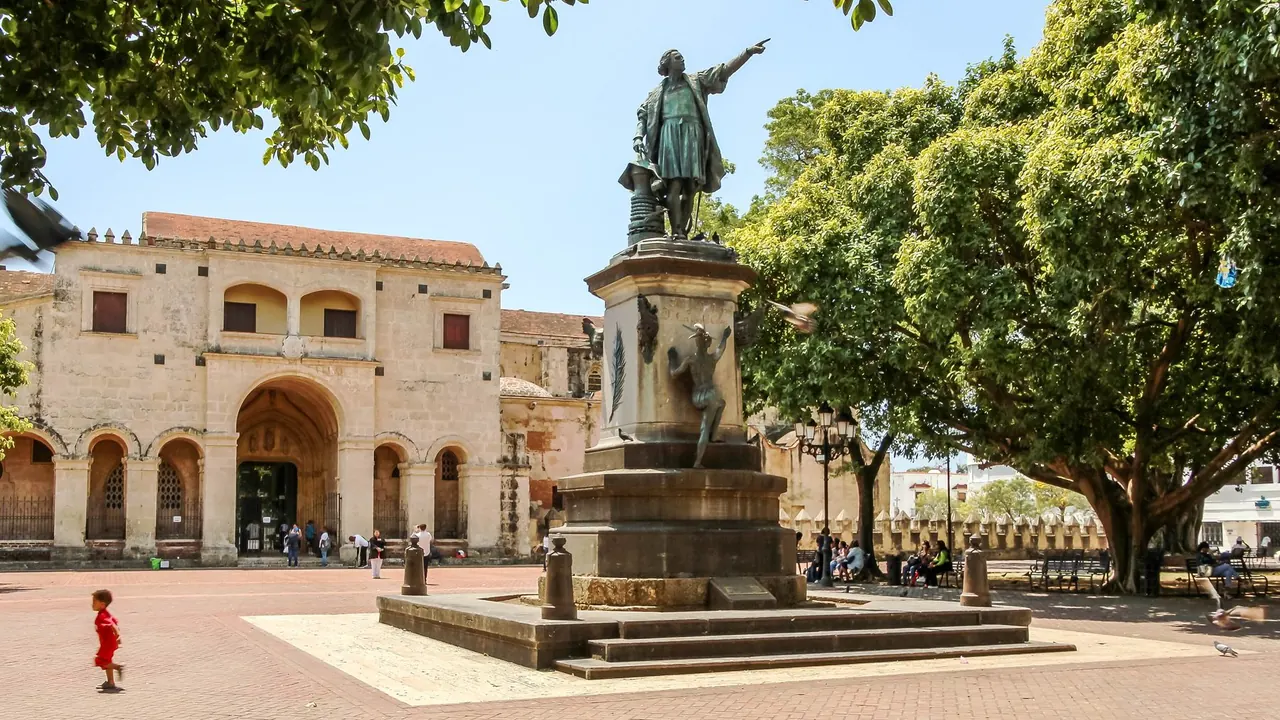
Photos: La Romana by Edgar El, CC BY 3.0, cropped; Santo Domingo by Dr. Thomas Liptak, CC BY-SA 4.0, cropped.
La Romana or Santo Domingo?
Our verdict in twelve categories, each scored against the same fixed benchmark cities, and the climate month by month, so you can choose for your trip.
Choose La Romana for
- beaches
- nature and the outdoors
- wellness
La Romana suits a beach vacation first and foremost. Its stretch of coast at Bayahibe and Dominicus has calm, clear water, the boats to Saona and Catalina leave from the doorstep, and the reefs make it one of the country's main bases for diving. Families and anyone who wants slow, unhurried days by the sea will be happier here, as long as they accept that evenings are quiet and the town itself offers little to see.
Choose Santo Domingo for
- culture and sights
- nightlife
- live music and the arts
Santo Domingo is the choice for travellers who want a city with history and a night out. The Ciudad Colonial gives you the oldest European streets in the Americas, the food has more range, and the dancing to merengue and bachata goes on well past midnight. It also costs less day to day. The trade-off is that swimming means a trip out to Boca Chica or Juan Dolio, and the capital is loud rather than restful.
Scoreboard
Twelve categories on one fixed scale from 0 to 100. The shaded stretch is the gap between the two.
Your match
Pick a travel style or drag the sliders, and both match scores follow your weighting.
Wins on beaches and nature and the outdoors with your weighting.
Wins on culture and sights and nightlife with your weighting.
What matters to you?
Category by category
What the scores mean for a trip.
Beaches & swimming
La Romana has much the better swimming. The town itself has no beach, but just to the east Bayahibe and Dominicus have pale sand on calm, clear water, and the islands of Catalina and Saona are an easy boat ride away. Most visitors stay right on this coast.
In Santo Domingo nobody swims along the Malecón, where the shore is coral rock and surf. The beach is a day out: Boca Chica's shallow lagoon, crowded and loud at weekends, or the quieter sand at Juan Dolio. The finer beaches lie along the coast towards La Romana.
Food & drink
Both serve the same Dominican staples of rice, beans, stewed meat and Sunday sancocho, but Santo Domingo goes further. It adds mangú breakfasts, late-night street carts, courtyard restaurants in old stone houses and the more ambitious kitchens of Piantini and Naco.
In La Romana most visitors eat at their all-inclusive, and the choices outside it come down to grilled fish by the water in Bayahibe, the town's comedores and a polished marina strip. It feeds you well enough, but you will not plan meals around it.
Culture & sights
This is where the two cities differ most. Santo Domingo's Ciudad Colonial is the real thing: the first cathedral, hospital and paved street in the Americas, the Fortaleza Ozama and the Alcázar de Colón. The Plaza de la Cultura museums add enough for two or three days.
La Romana's main sight, Altos de Chavón, is a handsome 20th-century recreation of a Mediterranean hill village. Its small museum of Taíno objects is worth an hour. With a look round the sugar-town centre, a single morning covers it.
Nightlife
Santo Domingo is the place to go out. Weekend nights start late in the bars and plazas of the Colonial Zone, carry on in the lounges and clubs of Piantini and Naco, and end on a packed dance floor well after midnight. The neighbourhood colmadón is there too for a louder local night.
La Romana has the colmado version without the rest. Visitors get a few marina bars and Bayahibe beach bars, all quiet by late evening, and most nights finish with the hotel show.
Nature & outdoors
La Romana's outdoors is in the sea. Parque Nacional del Este has mangrove channels, frigatebirds and Saona's starfish sandbar, and Bayahibe's reef walls, wrecks and underwater cannon museum make it a serious dive base. On land, add a kayak up the Chavón gorge or a walk to the Taíno caves.
Santo Domingo has only city-scale green space: the lagoons of Los Tres Ojos, the Botanical Garden and Parque Mirador Sur. Its wilder country, such as Los Haitises or the mountains at Jarabacoa, means a long day or a night away.
Day trips
La Romana has slightly more within easy reach, and its best outing is the capital itself. The Ciudad Colonial is about an hour and a half west, and the Taíno rock art of the Cueva de las Maravillas, San Pedro de Macorís and the basilica at Higüey are all closer.
From Santo Domingo the excursions run the other way, to Chavón and to Bayahibe for the island boats. That puts the best of them around two hours out, and many trips sold in town are beach days.
Good for families
La Romana works better for a beach vacation with children. The water off Bayahibe is shallow and calm, family resorts have kids' clubs and pools, and the starfish on Saona's sandbar are a guaranteed hit. The catch is that there is almost nothing for children outside the hotels.
Santo Domingo has more attractions, with the National Aquarium, the zoo, the cave lagoons and forts with cannons to climb around. It is harder work, though, with constant heat, broken pavements and a taxi for most trips. Many families combine a few city days with a resort stay.
Getting around
Neither is easy, but Santo Domingo is easier. Its Colonial Zone is compact enough to see on foot, and app taxis are a simple way to reach Piantini or the Malecón. There is a metro as well, though it mostly serves commuters.
La Romana is a string of places along a highway, with nothing walkable between them apart from little Bayahibe. You depend on hotel transfers, excursion pick-ups, taxis or a hire car on poorly lit roads.
Shopping & style
Both sell the island's signature buys of larimar, amber and hand-rolled cigars, and La Romana is the cigar-making town. Santo Domingo simply has more places to buy them. Calle El Conde is lined with jewellery shops, the Mercado Modelo is good for bargaining over crafts and faceless clay dolls, and big malls cover everyday fashion.
In La Romana, shopping comes down to jewellery and resort-wear at Chavón and the marina, plus souvenir stalls in Bayahibe.
Affordability
Santo Domingo is easier on a budget. Comedor lunches, street food, app taxis, modest museum entries and cheap guesthouses keep a city stay inexpensive, and only the boutique hotels and Piantini restaurants are costly.
La Romana's town is cheap too, but few visitors stay there. The real costs are the resort, plus boat trips, dives and transfers priced for tourists. At the gated resort, you are firmly in luxury territory.
Live music & performing arts
Santo Domingo, the home of merengue and bachata, has live music in its bars and plazas. Its best-loved ritual is the Sunday evening concert among the San Francisco monastery ruins, where everyone dances. The Teatro Nacional adds the symphony, ballet and opera.
La Romana has the Chavón amphitheatre above the gorge, a striking setting when a big concert comes. Otherwise it is resort bands and the nightly hotel show.
Wellness & relaxation
La Romana is the place to unwind. Its larger resorts have proper spas, and there are massage huts along the sand. Above all, the days fall into an easy rhythm of swimming, shade and siesta, and Bayahibe goes quiet once the day boats leave.
Santo Domingo is loud with traffic and music. Rest there means a hotel spa on the Malecón, a colonial courtyard or the botanical garden, and many visitors go to the coast to slow down.
When should you go?
Pick your month. The climate figures are measured averages, not a forecast.
La Romana in July
Santo Domingo in July
Daytime high, °C
Rainfall in the month, mm
Where the figures come from
La Romana's temperatures are measured 65 km from the centre, at Punta Cana.
La Romana has no rain gauge within 25 km of the centre, so its rainfall comes from a gridded climate dataset read at the city rather than from a gauge further away.
Santo Domingo has no rain gauge within 25 km of the centre, so its rainfall comes from a gridded climate dataset read at the city rather than from a gauge further away.
Temperature and rainfall are climate normals, averaged over the years shown. La Romana: 1993-2020 (rainfall 1991-2020) normals, Punta Cana (65.4 km from centre). Santo Domingo: 1991-2020 normals, Santo Domingo (6.4 km from centre).
Both places are hot all year, with daytime highs from about 29°C in winter to 33°C in late summer, and the sea is warm enough for swimming in every month, never dropping below about 27°C. The difference is rain. December to April is the dry, settled stretch in both, and the most comfortable time for long boat days off La Romana or for walking the Colonial Zone. From May the wet season sets in, and the showers are heaviest from August to October.
La Romana is clearly the drier of the two. February sees barely any rain, and even its wettest month brings only about 141mm, so summer still leaves plenty of beach days. Santo Domingo gets about two-thirds more rain over the year, peaking at 235mm in August. Its summer afternoons also run a degree or so hotter, which makes sightseeing on foot hard work in the middle of the day.
Which traveller are you?
For a beach and sun trip, La Romana is the clear pick. Pale sand at Bayahibe and Dominicus, sheltered water for weak swimmers and the boat days to Saona's sandbars beat Santo Domingo, where the closest swimming is a drive away.
On a culture and arts trip, Santo Domingo wins easily. The UNESCO-listed Ciudad Colonial, the Alcázar de Colón, the national museums and a symphony season at the Teatro Nacional give you days of real sights, while La Romana has little beyond Chavón.
For a food and nightlife trip, choose Santo Domingo. Courtyard restaurants in the old town, the modern kitchens of Piantini and late weekend dancing in the Colonial Zone go well beyond La Romana's grills and resort bars, which are quiet by late evening.
Before you go
| Measure | La Romana | Santo Domingo |
|---|---|---|
| Official language | Spanish | Spanish |
| Currency | Dominican Peso (DOP) | Dominican Peso (DOP) |
| Sockets | AB110 V, 60 Hz | AB110 V, 60 Hz |
| Driving side | Right | Right |
| Time zone | UTC-4 | UTC-4 |
| Emergency number | 911 | 911 |
| Elevation | 10 m | 14 m |
| Main airport | Casa De Campo International Airport (LRM)7 km from centre13 non-stop destinations | Las Américas International Airport (SDQ)28 km from centre40 non-stop destinations |
| Public holidays this year | 13 days | 13 days |
By the numbers
| Measure | La Romana | Santo Domingo |
|---|---|---|
| City population | 139,238 | 2,201,941 |
| People per km² | 512 | 1,691 |
| Museums within 10 km | 0 | 10 |
| UNESCO World Heritage sites within 50 km | 0 | 1 |
| Swim season, months above 21 °C | 12 months | 12 months |
Where else could you go?
Every comparison below shares a destination with this one, so you can follow La Romana or Santo Domingo somewhere new.