Photos: La Romana by Edgar El, CC BY 3.0, cropped; Puerto Plata by CareAhLine, CC0.
La Romana or Puerto Plata?
Our verdict in twelve categories, each scored against the same fixed benchmark cities, and the climate month by month, so you can choose for your trip.
Choose La Romana for
- wellness
- beaches
- day trips
La Romana suits a traveller who wants the calm Caribbean side of the island. Reef-sheltered water at Bayahibe and Dominicus, boat days out to Saona and Catalina and some of the country's best diving fill the days, and the resorts here are better at slow days and spa time. The trade-off is a town with little to see and evenings that mostly end at the hotel bar.
Choose Puerto Plata for
- prices
- culture and sights
- nightlife
Puerto Plata is the better pick if you want more going on around the beach. It has a real old town with gingerbread houses and a Spanish fort, a cable car into cloud forest, the Damajagua waterfall pools, Cabarete's kites, and nights on the Malecón that run later. Staying and eating locally also costs less, though the Atlantic coast is at its wettest in the northern winter.
Scoreboard
Twelve categories on one fixed scale from 0 to 100. The shaded stretch is the gap between the two.
Your match
Pick a travel style or drag the sliders, and both match scores follow your weighting.
Wins on wellness and beaches with your weighting.
Wins on prices and culture and sights with your weighting.
What matters to you?
Category by category
What the scores mean for a trip.
Beaches & swimming
Both are strong beach destinations, and in neither city do you swim in town. The difference is the sea itself. Around La Romana it is the calm Caribbean: pale sand at Bayahibe and Dominicus, sheltered by reef and gentle enough for weak swimmers, plus boat trips to Catalina and the starfish sandbars of Saona, which get busy at midday.
Puerto Plata faces the Atlantic, so it varies more from beach to beach. Sosúa's horseshoe bay and Cofresí are calm, Playa Dorada has golden sand in front of the resorts, and Cabarete and Encuentro bring surf, winter swells and sometimes seaweed in summer.
Food & drink
The food is much the same in both places: Dominican home cooking of rice, beans, stewed meat, sancocho and whole fried fish, and in both most all-inclusive guests rarely eat out. Around La Romana, Bayahibe's waterfront grills and the resort marina's polished international restaurants are the main choices. Puerto Plata has more variety along its coast, because Sosúa and Cabarete add a wider range of beachfront places, and mamajuana is on sale everywhere.
Culture & sights
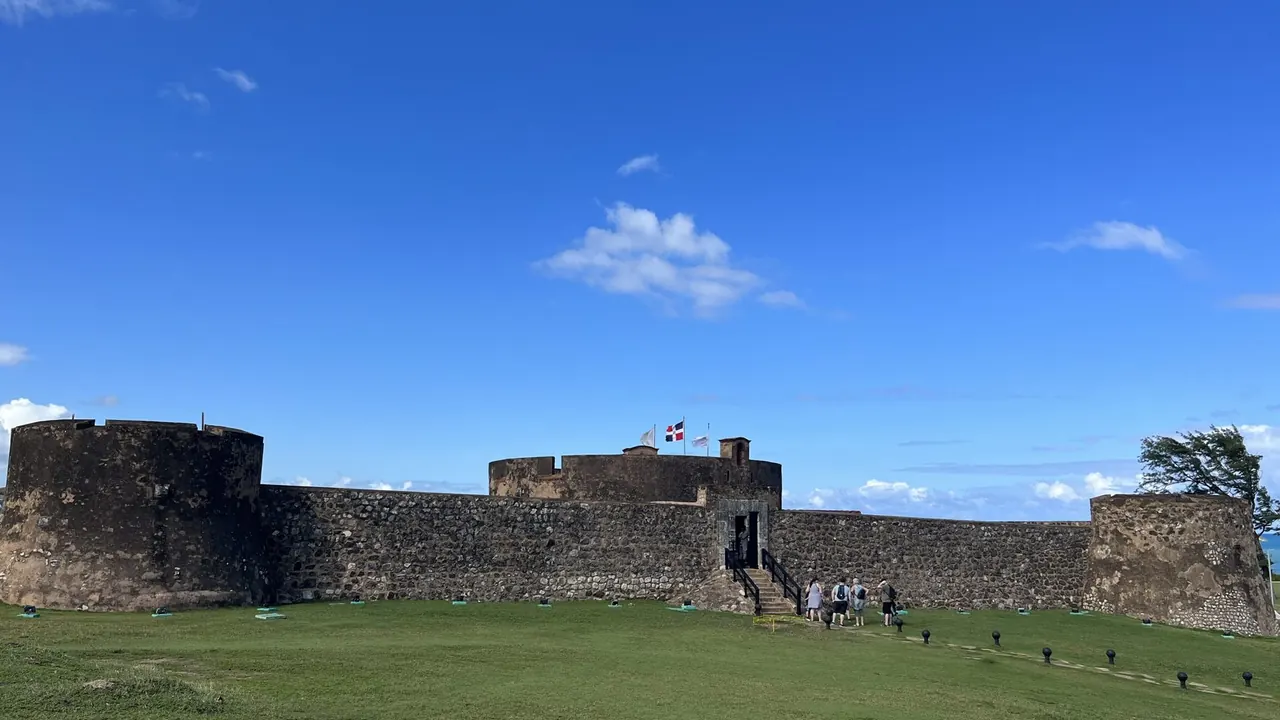
Puerto Plata has more real history. Around Parque Independencia stand restored Victorian houses with gingerbread trim, the sixteenth-century Fortaleza San Felipe guards the end of the Malecón, and the Amber Museum is housed in an old mansion. Together they make a satisfying day.
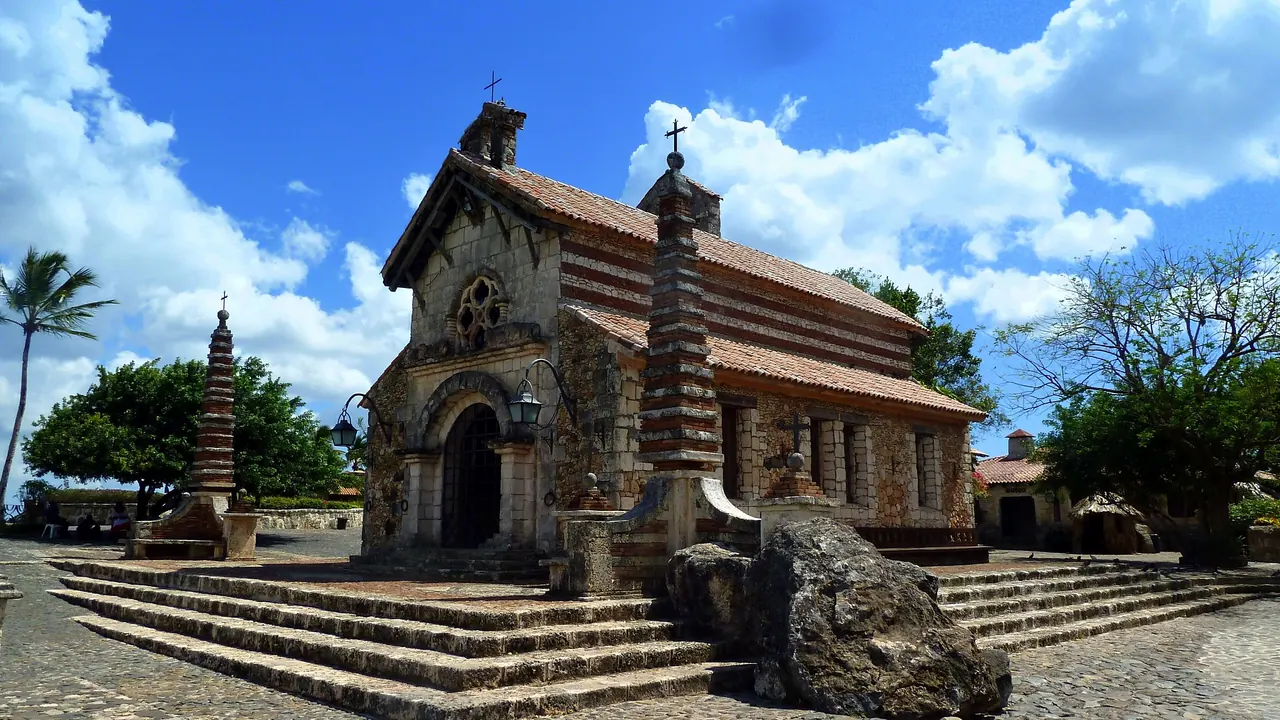
La Romana's main sight, Altos de Chavón, is a handsome twentieth-century copy of a Mediterranean hill village above the river gorge. Its small archaeology museum has good Taíno objects. Beyond that, the sugar town offers little more than a park and a church.
Nightlife
Neither is a party destination, and in both going out means merengue and bachata rather than cocktail lounges. The difference is distance. Around La Romana, the local scene is in town, a drive from where most visitors sleep, and the few bars at the marina and in Bayahibe wind down well before Puerto Plata's get going.
In Puerto Plata the evening happens on the town's own seafront, with weekend crowds along the Malecón and small clubs dancing until late. Cabarete's beach bars, about forty minutes east, give it a livelier option that nothing within reach of La Romana matches.
Nature & outdoors
One coast is best seen from under the water, the other from the hills. La Romana sits on flat, dry limestone, so its outdoors is mostly at sea. Bayahibe is one of the country's main dive centres, with reef walls, wrecks and a museum of sunken cannons, and the national park adds mangroves, frigatebirds and Taíno caves.
Around Puerto Plata there is more to do on land. Mount Isabel de Torres rises behind the town with cloud forest at the top, guides lead visitors up the Damajagua waterfall pools, and the trade winds at Cabarete bring kiting and windsurfing. Divers may prefer La Romana, but most other outdoor travellers will find more around Puerto Plata.
Day trips
The day trips are about equal, but they lead in different directions. La Romana has the stronger single outing: Santo Domingo's Ciudad Colonial, the oldest European-founded city in the Americas, is about an hour and a half away. Higüey's basilica, San Pedro de Macorís and the Cueva de las Maravillas are closer.
From Puerto Plata the capital is too far for a day. Instead you can go over the mountains to Santiago, west to the 1493 foundations at La Isabela, or out to the sandbars of Cayo Arena.
Good for families
Both work for children in much the same way: you base yourself at a resort with a kids' club and add a few excursions. La Romana has the calmer, shallower water along its whole coast, the starfish sandbar on Saona, and horses and quiet roads inside the gated resort. Puerto Plata is better for active older children, with the cable car ride, the Damajagua pools and Cofresí's dolphin and sea lion encounters, while Sosúa's bay suits the little ones.
Getting around
Puerto Plata is the easier of the two to manage without a car. Its old centre and Malecón are walkable, and guaguas run along the coast road to Sosúa and Cabarete, flagged down wherever you stand.
Around La Romana, the town, the resort, Bayahibe and Dominicus are scattered along the highway with scrub between them. Most visitors depend on transfers, taxis and tours, and get around inside the gated resort by golf cart. Only Bayahibe village is small enough to walk.
Shopping & style
Neither city is a shopping destination, and both sell larimar jewellery and cigars. La Romana is the cigar-making town, so hand-rolled cigars are its most authentic buy. Its jewellery is sold at Altos de Chavón and the marina. Puerto Plata has more of a shopping street, with amber from the mountains behind the town, the colourful umbrella-hung lane in the old centre and a small mall near Playa Dorada.
Affordability
Puerto Plata is the cheaper of the two for anyone who travels independently. Simple guesthouses in town, comedor lunches and coastal guaguas cost little, and its all-inclusive packages give good value.
La Romana can be cheap too if you stay in town, but few visitors do. The gated resort and its villas are firmly luxury, and the boat trips to Saona and Catalina, dive trips and taxi transfers all add up.
Live music & performing arts
Neither has a theatre or concert season, and in both, live music mostly means merengue, bachata and resort shows. What sets them apart is one standout in each. La Romana has the open-air amphitheatre at Altos de Chavón, which occasionally hosts big Latin and international concerts above the gorge. Puerto Plata has its February carnival, with parades of costumed devils.
Wellness & relaxation
La Romana is the better place to switch off. The gated resort and several of the large hotels have proper spas, massage huts line the sand at Bayahibe and Dominicus, and the village goes quiet in the evenings.
Puerto Plata has resort spas and beach massages too, and Cabarete adds yoga classes from its modest retreat scene. The town, though, is loud with motorbikes and music, so you can only really relax if you stay inside the resort.
When should you go?
Pick your month. The climate figures are measured averages, not a forecast.
La Romana in July
Puerto Plata in July
Daytime high, °C
Rainfall in the month, mm
Where the figures come from
La Romana's temperatures are measured 65 km from the centre, at Punta Cana.
La Romana has no rain gauge within 25 km of the centre, so its rainfall comes from a gridded climate dataset read at the city rather than from a gauge further away.
Puerto Plata has no rain gauge within 25 km of the centre, so its rainfall comes from a gridded climate dataset read at the city rather than from a gauge further away.
Temperature and rainfall are climate normals, averaged over the years shown. La Romana: 1993-2020 (rainfall 1991-2020) normals, Punta Cana (65.4 km from centre). Puerto Plata: 1993-2020 (rainfall 1991-2020) normals, Puerto Plata (15.3 km from centre).
The two coasts have nearly opposite rainy seasons. La Romana is driest from December to April, when rainfall stays at or under about 50mm a month, then the rain builds from May to a peak of about 140mm in September and October. Puerto Plata runs the other way. Its wettest stretch is November to January, with over 230mm in December, it stays fairly damp through spring, and June to September is its driest time. The sea is warm enough to swim in every month on both coasts, and a touch warmer off La Romana in winter.
Both are hot all year, but late summer is the hardest time for walking around, with highs of 32°C in La Romana and 34°C in Puerto Plata in August and September, so sightseeing is best done early. For a winter escape La Romana is the surer bet. In summer, the drier weather favours Puerto Plata.
Which traveller are you?
On a relaxing and wellness trip, La Romana is the better choice. Its larger resorts have proper spas, and Bayahibe goes quiet once the day boats leave. Puerto Plata town is noisy with motorbikes and music, and its spa offer is thinner.
For a trip on a tight budget, Puerto Plata stretches your money further. It has cheap guesthouses in town, a walkable centre and guaguas that run along the coast to Sosúa and Cabarete. Around La Romana, most visitors stay out of town and rely on taxis and paid excursions.
Kitesurfers and windsurfers should head for Puerto Plata. Cabarete, about forty minutes east, is one of the world's best-known wind spots, with schools and reef-protected flats. La Romana's sheltered Caribbean shore is made for snorkelling and diving rather than wind sports.
Before you go
| Measure | La Romana | Puerto Plata |
|---|---|---|
| Official language | Spanish | Spanish |
| Currency | Dominican Peso (DOP) | Dominican Peso (DOP) |
| Sockets | AB110 V, 60 Hz | AB110 V, 60 Hz |
| Driving side | Right | Right |
| Time zone | UTC-4 | UTC-4 |
| Emergency number | 911 | 911 |
| Elevation | 10 m | 34 m |
| Main airport | Casa De Campo International Airport (LRM)7 km from centre13 non-stop destinations | Gregorio Luperon International Airport (POP)13 km from centre16 non-stop destinations |
| Public holidays this year | 13 days | 13 days |
By the numbers
| Measure | La Romana | Puerto Plata |
|---|---|---|
| City population | 139,238 | - |
| People per km² | 512 | - |
| Museums within 10 km | 0 | 1 |
| UNESCO World Heritage sites within 50 km | 0 | 0 |
| Swim season, months above 21 °C | 12 months | 12 months |
Where else could you go?
Every comparison below shares a destination with this one, so you can follow La Romana or Puerto Plata somewhere new.