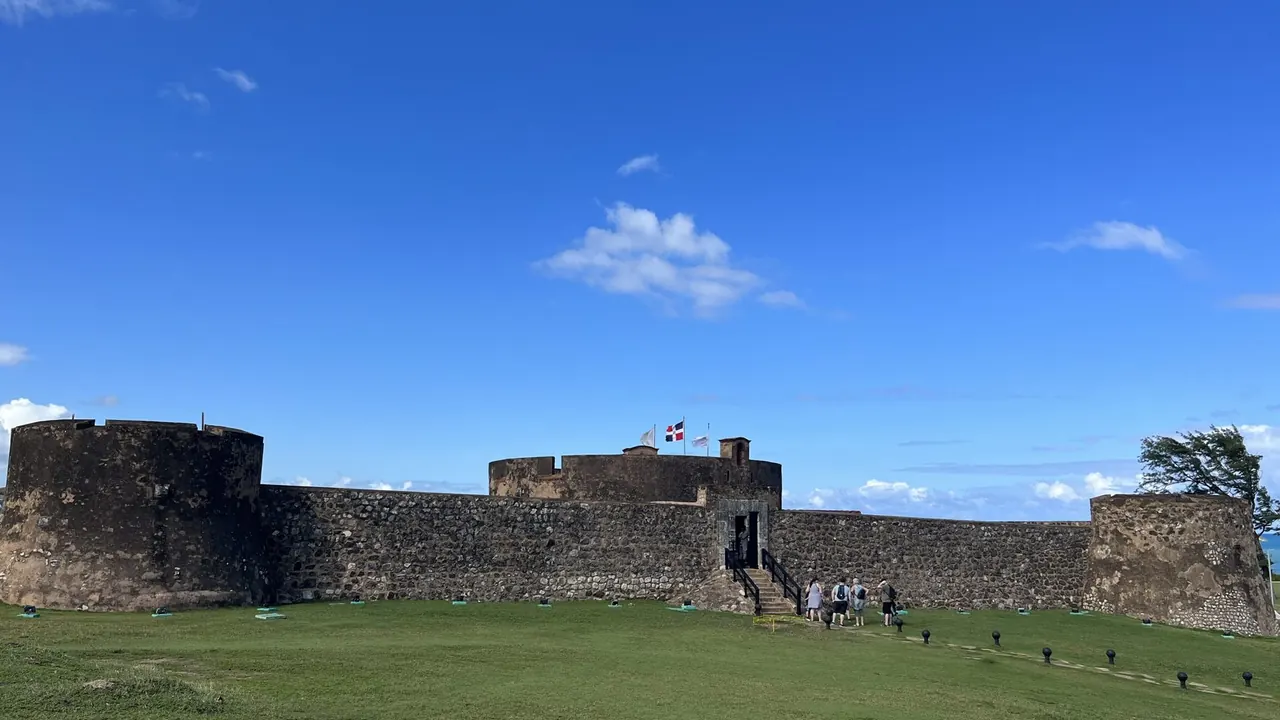
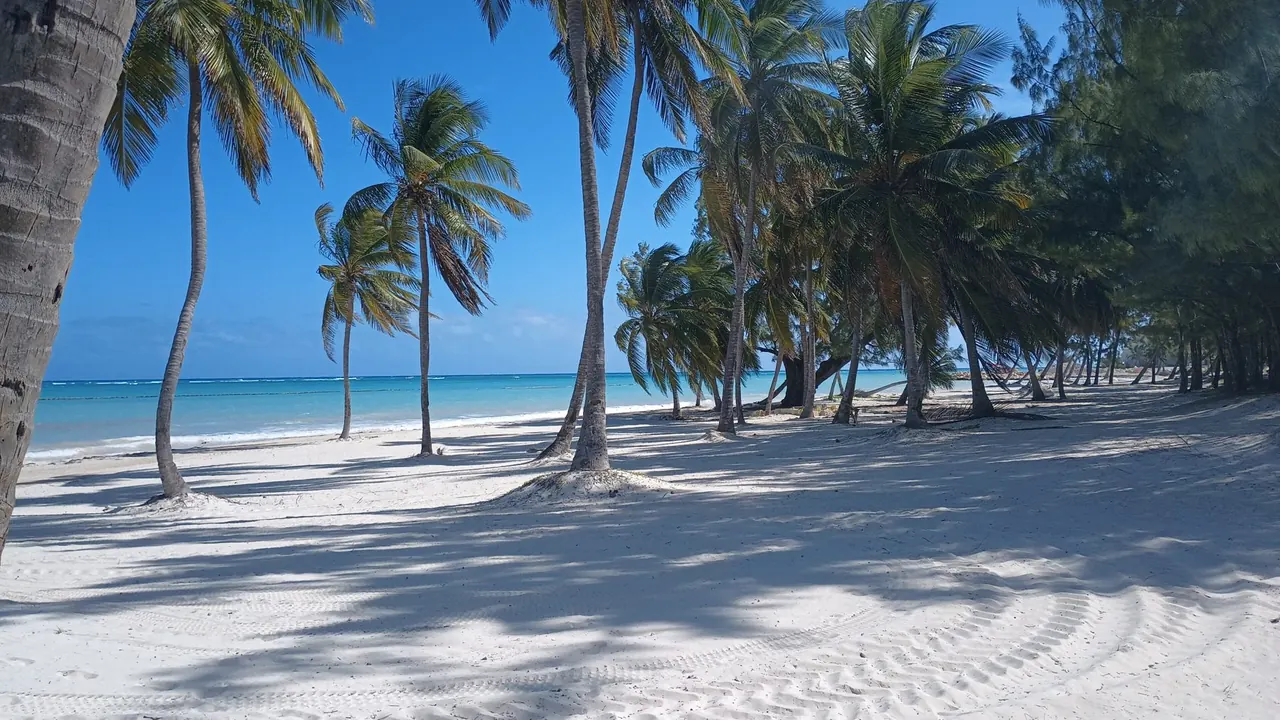
Photos: Puerto Plata by CareAhLine, CC0; Punta Cana by Mary Mark Ockerbloom, CC0.
Puerto Plata or Punta Cana?
Our verdict in twelve categories, each scored against the same fixed benchmark cities, and the climate month by month, so you can choose for your trip.
Choose Puerto Plata for
- culture and sights
- prices
- nature and the outdoors
Puerto Plata suits travellers who want the beach as one part of a fuller trip. It has a real old town of Victorian gingerbread houses and a Spanish fort, a mountain with a cable car rising behind the streets, the Damajagua waterfall pools and Cabarete's kitesurfing beaches. It is also cheaper once you step outside a package, and Santiago and La Isabela make proper days out.
Choose Punta Cana for
- wellness
- beaches
- families
For a week where the sand and the sea are the whole point, Punta Cana is the stronger pick. Its long, reef-calmed eastern shore gives easier swimming, its resorts are built around children and its spas are better. The trade-off is that there is no town to explore, and leaving the resort means a taxi or a tour.
Scoreboard
Twelve categories on one fixed scale from 0 to 100. The shaded stretch is the gap between the two.
Your match
Pick a travel style or drag the sliders, and both match scores follow your weighting.
Wins on culture and sights and prices with your weighting.
Wins on wellness and beaches with your weighting.
What matters to you?
Category by category
What the scores mean for a trip.
Beaches & swimming
The water is warm enough to swim all year in both places, but Punta Cana's beach is on another scale. About 50km of pale, reef-sheltered sand runs from Juanillo to Uvero Alto, calm and shallow outside almost every hotel. Catamaran trips to Saona add a day on white sand.
Puerto Plata's swimming is good but more scattered. The town beach is for strolling, Playa Dorada and Cofresí serve the resorts, and the calmest clear water is in Sosúa's horseshoe bay, half an hour away. Cabarete and Encuentro are for surf and wind rather than a lazy swim, and Atlantic swells can be rough in winter.
Food & drink
Neither is a place to travel for the food, but Puerto Plata puts more of the country on your plate. Its comedores and beach shacks serve la bandera, mofongo and whole grilled fish, and Sosúa and Cabarete add a decent run of international places by the sea.
In Punta Cana you mostly eat at resort buffets and themed restaurants, where there is plenty of food but little you will remember. There are lobster grills in Bávaro and at the Cap Cana marina. For Dominican cooking you have to seek out the workers' comedores away from the resorts.
Culture & sights
The gap is wide here. Puerto Plata has a real old town around Parque Independencia, with restored wooden houses trimmed in gingerbread, the cathedral of San Felipe, the sixteenth-century fort at the end of the Malecón and the Amber Museum in an old mansion. It fills a pleasant day rather than a week, but it is there.
Punta Cana grew up as a resort coast from the 1970s onwards and has no historic core or museums. Anyone interested in heritage has to leave, and Santo Domingo is the trip most worth making.
Nightlife
Nightlife is modest in both, and the difference is one of style. Puerto Plata's evenings are local and low-key, with people gathering at kiosks along the Malecón and merengue and bachata playing in small clubs. For a livelier night, the beach bars of Cabarete are forty minutes away.
Punta Cana's nights out are built for visitors. Bávaro has big party-show clubs, including one inside a limestone cave, and open-air bars and colmados playing reggaeton late. It suits one or two big nights with a group, with a taxi between venues, rather than a wander down to the seafront.
Nature & outdoors
Puerto Plata has the landscape that Punta Cana lacks. Mount Isabel de Torres rises straight behind the town, with cloud forest and a botanical garden at the top. The green ridges of the Cordillera Septentrional run inland, Damajagua's chain of limestone pools is half an hour away, and Cabarete's trade winds have made it a famous kitesurfing spot.
Punta Cana is flat country of scrub and coconut groves, so its outdoors is mostly on the water. You can snorkel the reef, take a boat to Saona and its starfish pool, kitesurf at Cabeza de Toro or go deep-sea fishing. On land, the choices are the lagoon trails of the Indigenous Eyes reserve and the Hoyo Azul sinkhole.
Day trips
Puerto Plata is better placed for days out. Santiago, the country's second city, is about an hour away over the mountains. La Isabela keeps the foundations of the settlement Columbus founded in 1493, and the sandbars of Cayo Arena make a fine day on a boat.
From Punta Cana, the nearer options are the basilica at Higüey, the Mediterranean-style stone village of Altos de Chavón and the fishing village of Bayahibe. Santo Domingo's Zona Colonial is the one big draw, but it means a long day with two and a half hours on the road each way.
Good for families
Punta Cana is the easier choice with children. Many resorts are designed around them, with splash parks, waterslides and kids' clubs. The reef-sheltered beaches at Bávaro and Juanillo shelve gently, so a whole week can pass without leaving the resort.
Puerto Plata works through its resorts at Playa Dorada and Cofresí and the calm bay at Sosúa, and the cable car and the Damajagua pools win over older children. Away from the resorts, though, uneven pavements and unruly traffic make it harder going with small ones.
Getting around
Puerto Plata at least has a centre you can walk, with the old town and the Malecón close together. Guaguas run along the coast road to Sosúa and Cabarete. Beyond that you need taxis, tours or a hired car, and the roads are poorly lit after dark.
Punta Cana has no centre at all. Its resorts sit behind gates along some 50km of coast, the roads have few pavements and the sand is the only good place to walk. Almost every trip means a hotel taxi or a pickup for a tour.
Shopping & style
In both places shopping means souvenirs, mostly the island's larimar, amber, cigars and rum. Puerto Plata has more local character, with amber from its own mountains, jewellery shops in the old town and the street hung with colourful umbrellas. Punta Cana offers a more polished choice in the open-air malls of Bávaro and Cap Cana, with resort fashion and a few upscale labels, as well as craft stalls on the beach where haggling is expected.
Affordability
Puerto Plata is the cheaper base, especially if you step outside the package. Comedor meals, guagua rides and simple guesthouses in town cost little, though taxis and excursions soon add up.
Punta Cana is priced above the rest of the country. Its packages can be good value, but fixed tourist taxi fares, boat trips and beachfront restaurants push the bill up, and Cap Cana is firmly at the expensive end. Cheaper beds are found in the small apartment hotels around Los Corales.
Live music & performing arts
Neither has theatre or a concert season, and in both the music worth hearing is merengue and bachata from bars and live bands. Puerto Plata adds its February carnival of costumed devils and parades. Punta Cana has glossy acrobatic and tribute spectacles in Bávaro on top of the nightly resort shows.
Wellness & relaxation
Punta Cana is the better place to unwind. Its larger resorts have proper spas with hydrotherapy circuits and treatments using local cacao and coconut. With nothing outside the gate pulling you away, the pace stays slow, especially at an adults-only resort.
Puerto Plata offers less: resort spas, massages on the beach and yoga in Cabarete. The town itself is loud with motorbikes and music.
When should you go?
Pick your month. The climate figures are measured averages, not a forecast.
Puerto Plata in July
Punta Cana in July
Daytime high, °C
Rainfall in the month, mm
Temperature and rainfall are climate normals, averaged over the years shown. Puerto Plata: 1993-2020 (rainfall 1961-1990) normals, Puerto Plata (15.3 km from centre). Punta Cana: 1993-2020 (rainfall 1991-2020) normals, Punta Cana (0.9 km from centre).
Both coasts are hot all year, and the sea is warm enough to swim in every month, never much below 26°C. Where they differ is the rain. Puerto Plata is wettest from November to January, with more than 300mm in each of the last two months of the year, and driest from June to September, when June sees only 53mm. Those dry months are also the hottest, and by August and September highs of 34°C make midday walks in the old town hard work. February to May falls in between, with moderate rain and gentler heat.
Punta Cana is drier overall and a little less hot, and its seasons run the other way. Late winter is its driest time, with 49mm in February. The wetter spell builds from May and peaks in October, so its best stretch is December to April. The two coasts pull furthest apart at either end of the year. In December and January Punta Cana is much the drier choice, while from June to September Puerto Plata has the clearer skies, though it is also the hotter of the two.
Which traveller are you?
On a culture and arts trip, Puerto Plata is the clear choice. It has an old town of restored gingerbread houses, a sixteenth-century fort and the Amber Museum, with Santiago and La Isabela within reach. Punta Cana has no historic sights of its own.
For a trip on a tight budget, Puerto Plata makes your money go further. Local comedores, guaguas along the coast road and cheap guesthouses in town make independent travel easy. In Punta Cana, taxis, tours and beachfront prices quickly add to the cost of a package.
On a family trip with young children, Punta Cana makes life simpler. Resorts designed around kids' clubs, splash parks and waterslides sit on calm, gently shelving beaches, so the days need little planning. Outside its resorts, Puerto Plata has much less made for children.
Before you go
| Measure | Puerto Plata | Punta Cana |
|---|---|---|
| Official language | Spanish | Spanish |
| Currency | Dominican Peso (DOP) | Dominican Peso (DOP) |
| Sockets | AB110 V, 60 Hz | AB110 V, 60 Hz |
| Driving side | Right | Right |
| Time zone | UTC-4 | UTC-4 |
| Emergency number | 911 | 911 |
| Elevation | 34 m | 28 m |
| Main airport | Gregorio Luperon International Airport (POP)13 km from centre17 non-stop destinations | Punta Cana International Airport (PUJ)1 km from centre93 non-stop destinations |
| Public holidays this year | 13 days | 13 days |
By the numbers
| Measure | Puerto Plata | Punta Cana |
|---|---|---|
| Population | - | 138,919 |
| People per km² | - | 292 |
| Museums within 10 km | 1 | 0 |
| UNESCO World Heritage sites within 50 km | 0 | 0 |
| Swim season, months above 21 °C | 12 months | 12 months |
Where else could you go?
Every comparison below shares a destination with this one, so you can follow Puerto Plata or Punta Cana somewhere new.
- La Romanavs Punta Cana
- Santo Domingovs Punta Cana
- Santo Domingovs Puerto Plata
- La Romanavs Puerto Plata
- San Juanvs Punta Cana
- Arubavs Punta Cana