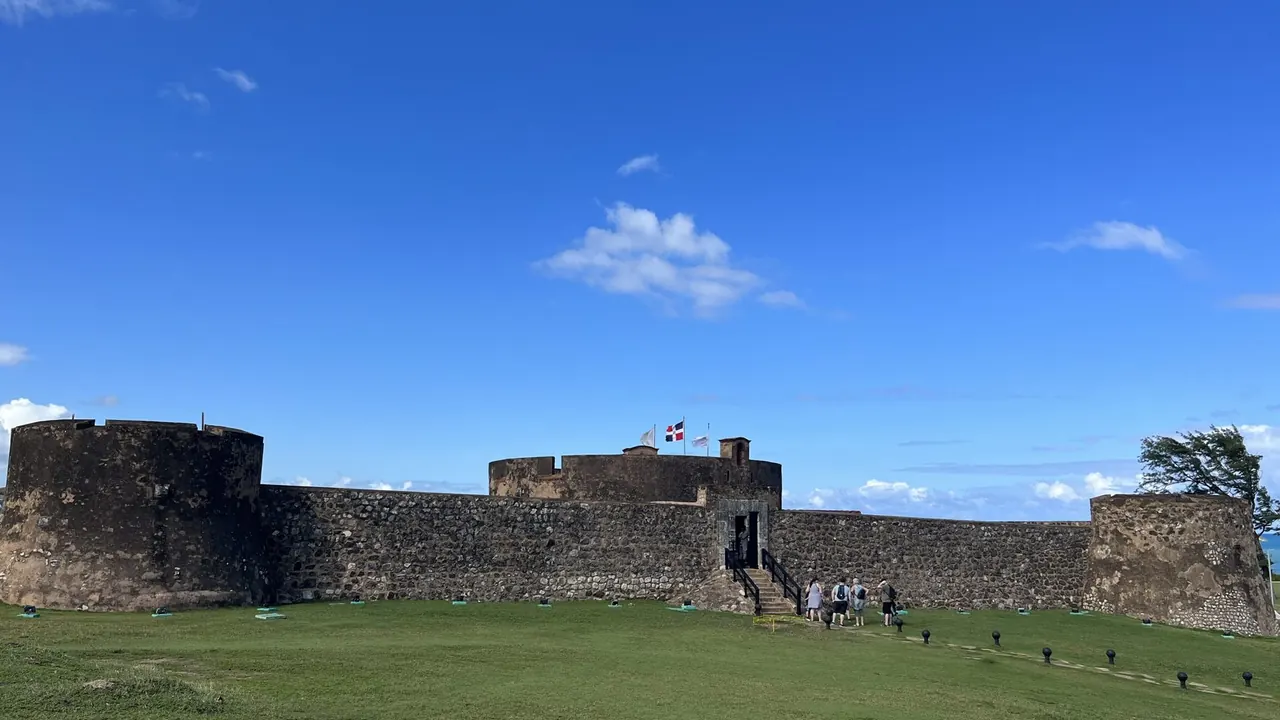
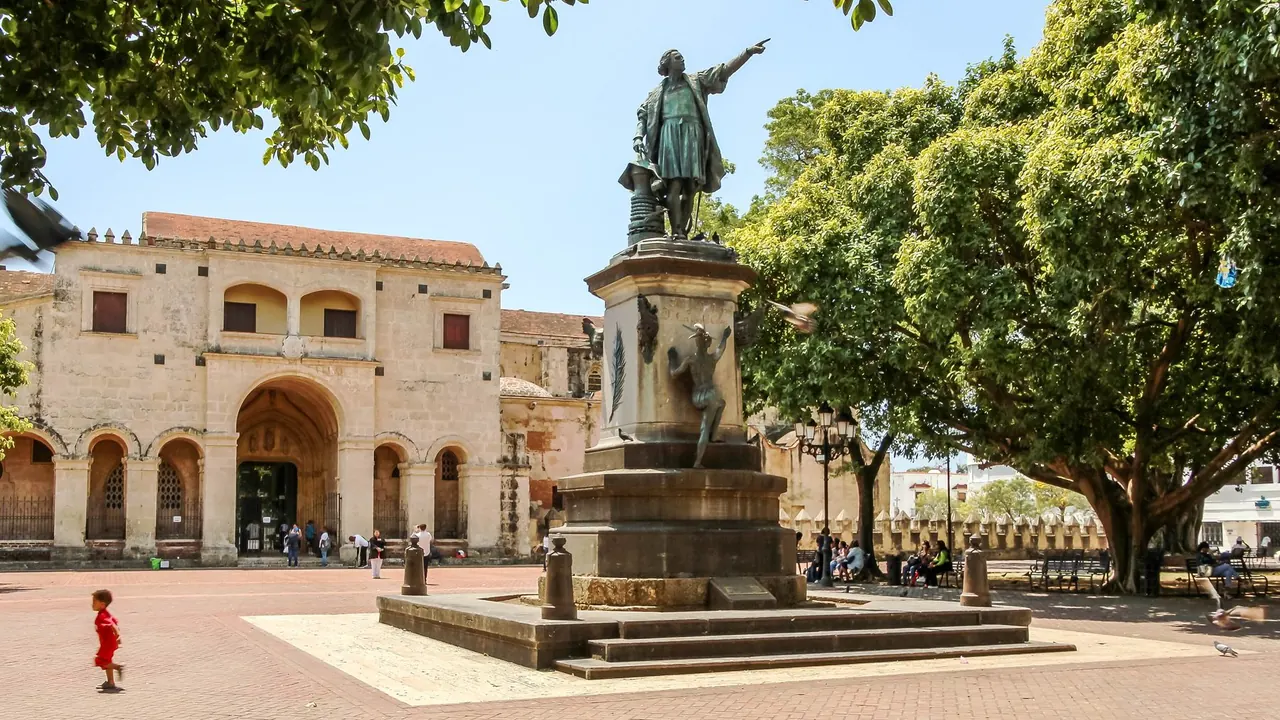
Photos: Puerto Plata by CareAhLine, CC0; Santo Domingo by Dr. Thomas Liptak, CC BY-SA 4.0, cropped.
Puerto Plata or Santo Domingo?
Our verdict in twelve categories, each scored against the same fixed benchmark cities, and the climate month by month, so you can choose for your trip.
Choose Puerto Plata for
- nature and the outdoors
- beaches
- families
Puerto Plata suits a sea-and-sun trip with some activity in it. You get the resort beaches of Playa Dorada and Cofresí, calm reef water at Sosúa, the kites at Cabarete, the cable car up into the cloud forest on Mount Isabel de Torres and the jumps down the Damajagua pools. It works well for families on resort stays and for anyone who cares more about days outdoors than evenings out. The trade-off is that the town's sights fill a single day and the cooking is plain.
Choose Santo Domingo for
- culture and sights
- nightlife
- live music and the arts
Travellers who want history, music and city life more than a beach should choose Santo Domingo. The Ciudad Colonial holds the first cathedral and the first paved street in the Americas, and nights end on a crowded dance floor or at a corner colmadón. The Teatro Nacional and the Sunday concerts in the San Francisco ruins give merengue a stage. Swimming means a drive out to Boca Chica, and the country's wilder landscapes are mostly out of reach.
Scoreboard
Twelve categories on one fixed scale from 0 to 100. The shaded stretch is the gap between the two.
Your match
Pick a travel style or drag the sliders, and both match scores follow your weighting.
Wins on nature and the outdoors and beaches with your weighting.
Wins on culture and sights and nightlife with your weighting.
What matters to you?
Category by category
What the scores mean for a trip.
Beaches & swimming
Puerto Plata is the beach choice by some distance. Playa Dorada and Cofresí lie at the edge of town, Sosúa's reef-sheltered bay gives clear water for snorkelling, and the surf beaches at Cabarete and Encuentro add wind and waves. The only catches are winter swells on the open beaches and some seaweed in the warmer months.
Santo Domingo has no swimming in the city itself, where the Malecón faces coral rock and pounding surf. A beach day means a drive east to Boca Chica's shallow lagoon, which is crowded with local families at weekends, or to the quieter, longer sand at Juan Dolio.
Food & drink
Both serve the same Dominican staples of la bandera, sancocho and mofongo, but Santo Domingo takes them further. It has courtyard restaurants in the Colonial Zone's stone houses and more ambitious modern kitchens in Piantini and Naco that rework Creole flavours. Street carts selling chimi burgers and yaniqueques feed people late into the night.
Puerto Plata's best eating is simpler: whole fish grilled on the beach and plates of rice and stew at roadside comedores, with Sosúa and Cabarete adding international menus. Many visitors on all-inclusive stays rarely look beyond the hotel buffet.
Culture & sights
For sights, Santo Domingo is in a different league. It was the first permanent European city in the Americas, and its Ciudad Colonial holds the first cathedral, Calle Las Damas, the Fortaleza Ozama and the Alcázar de Colón. The Museo del Hombre Dominicano and the Faro a Colón are just beyond the old quarter.
Puerto Plata's old town is smaller and gentler: gingerbread-trimmed wooden houses around Parque Independencia, the sixteenth-century Fortaleza San Felipe on the Malecón and the Amber Museum in its old mansion. It makes a pleasant day, while the capital rewards two or three.
Nightlife
Santo Domingo is the place to go out. Weekend nights start late and run well past midnight. You can choose between bars in colonial houses around Calle Hostos, polished clubs in Piantini and the loud open-air colmadones of the neighbourhoods, with merengue and bachata on every floor.
Puerto Plata dances to the same music on a much smaller scale, with seafront kiosks along the Malecón, a few bars and small clubs, and resort shows at Playa Dorada. The best night out is forty minutes away among the beach bars of Cabarete.
Nature & outdoors
Puerto Plata has the outdoors on its doorstep. The cable car climbs Mount Isabel de Torres to a botanical garden and cloud forest, and the green ridges of the Cordillera Septentrional run inland. The Damajagua pools, Sosúa's dive reefs and Cabarete's kitesurfing flats are all within easy reach.
Santo Domingo's flat coastal plain offers far less: the cave lagoons of Los Tres Ojos, the National Botanical Garden and the shaded paths of Parque Mirador Sur. Los Haitises, Jarabacoa and Samaná need a long day or a night away, so keen hikers tend to move on.
Day trips
Neither city has a long list of outings, and the real difference is the direction they go. From Puerto Plata the pick is Santiago, about an hour inland over the mountains. There are also the foundations of Columbus's settlement at La Isabela and boat trips to the Cayo Arena sandbars.
Santo Domingo's day trips mostly run east along the coast: the hilltop village of Altos de Chavón, the old sugar town of San Pedro de Macorís, and Bayahibe for boats to Saona and Catalina islands. Santiago is a stretch from the capital, and neither city can reach the other comfortably in a day.
Good for families
Puerto Plata is easier with children, mainly thanks to the resorts at Playa Dorada and Cofresí with pools, kids' clubs and beach on site. Sosúa's calm bay suits small swimmers, while the marine park, the cable car and the Damajagua pools keep older children busy.
Santo Domingo has the National Aquarium, the zoo, the Los Tres Ojos caves, the cannons of the colonial forts and the gentle lagoon at Boca Chica. Against that come constant heat, heavy traffic and a taxi for almost every trip, which is why families often pair a short city stay with a beach resort.
Getting around
Neither is easy, but Santo Domingo is the simpler of the two. The Colonial Zone keeps its main sights within a few streets of each other, and app-based taxis cheaply cover the hops to Piantini and the Malecón. The metro is clean, though built more for commuters than for visitors.
In Puerto Plata only the old centre and the Malecón can be walked, and everything else is strung along the coast road. Guaguas and motoconchos are informal, so most visitors depend on taxis, transfers and tours, or hire a car and cope with poorly lit roads after dark.
Shopping & style
The souvenirs overlap: amber, larimar, cigars and aged rum are sold in both. Santo Domingo simply offers more ways to buy them, from the pedestrian Calle El Conde to the hard-bargaining Mercado Modelo, and it adds faceless clay dolls. Its air-conditioned malls in Piantini and Naco also cover fashion and international brands.
Puerto Plata has jewellery shops in the centre, the umbrella-hung street in the old town and one small mall near Playa Dorada, and not much more. Its amber does at least come from the mountains just behind the town.
Affordability
The two cost much the same day to day, with cheap comedor lunches, cold local beer and inexpensive local transport in both. The difference lies in where the money goes.
In Puerto Plata most of it is paid up front on an all-inclusive package, and then tourist taxis and excursions push the bill up. In Santo Domingo, cheap app taxis keep getting around inexpensive, and costs climb only in the boutique colonial hotels and in Piantini's restaurants and cocktail bars.
Live music & performing arts
Santo Domingo has an actual stage. The Teatro Nacional Eduardo Brito is home to the National Symphony Orchestra and hosts ballet and opera. The open-air Sunday evening concerts of son and merengue among the San Francisco ruins are worth planning a weekend around.
Puerto Plata's music lives in the bars and on street corners rather than in a hall, with weekend bands and a February carnival of costumed devils. Beyond that, most visitors see only resort shows.
Wellness & relaxation
Neither city has a bathing or spa culture of its own, but Puerto Plata makes it far easier to unwind. The big resorts at Playa Dorada have their own spas and long, unhurried days by the pool, and you can book a massage in the shade of the palms on the beach. In Cabarete, the surfers have brought in yoga classes and a few small retreats. The calm ends at the resort gates, though, because the town is loud with motorbike engines and music.
In Santo Domingo, treatments are mostly limited to the international hotels along the Malecón, and outside them the horns and speakers hardly ever stop. Quiet comes only for short spells, in the courtyard of a colonial guesthouse or under the trees of the botanical garden. That is why visitors who want real rest usually leave the capital for the coast.
When should you go?
Pick your month. The climate figures are measured averages, not a forecast.
Puerto Plata in July
Santo Domingo in July
Daytime high, °C
Rainfall in the month, mm
Where the figures come from
Puerto Plata has no rain gauge within 25 km of the centre, so its rainfall comes from a gridded climate dataset read at the city rather than from a gauge further away.
Santo Domingo has no rain gauge within 25 km of the centre, so its rainfall comes from a gridded climate dataset read at the city rather than from a gauge further away.
Temperature and rainfall are climate normals, averaged over the years shown. Puerto Plata: 1993-2020 (rainfall 1991-2020) normals, Puerto Plata (15.3 km from centre). Santo Domingo: 1991-2020 normals, Santo Domingo (6.4 km from centre).
Both cities are hot all year and the sea is warm enough to swim in every month, so the real difference is the rain, which comes at opposite times. Puerto Plata, on the Atlantic side, is wettest from November to January, with around 233mm in December. June to September is its drier stretch, down to 49mm in June, but it is also the hottest, with highs of 34°C in August and September, so walking the old town is hard work after mid-morning. February to May sits comfortably in between.
Santo Domingo runs the other way. December to April is its dry season, with only about 57mm in March and slightly gentler heat, which makes this the best time to explore the Colonial Zone on foot. From May the rain builds to a peak of 235mm in August and stays heavy through October. For a trip taking in both, February to April avoids the worst of either city's wet season.
Which traveller are you?
On an outdoors trip, Puerto Plata is the clear choice. Mount Isabel de Torres rises straight behind the town, the Damajagua pools are half an hour away and Cabarete's trade winds draw kitesurfers. Santo Domingo's flat plain offers little beyond Los Tres Ojos and the city parks.
For a culture and arts trip, Santo Domingo is the obvious pick. The UNESCO-listed Ciudad Colonial, the Alcázar de Colón and the Museo del Hombre Dominicano fill two or three days. The Teatro Nacional also adds a concert and ballet season that Puerto Plata simply lacks.
On a food and nightlife trip, Santo Domingo again comes out ahead. Creole cooking in Piantini and the Colonial Zone goes further than Puerto Plata's comedores, and nights run late in colonial-house bars and colmadones. Puerto Plata's night scene is small and largely confined to the resorts.
Before you go
| Measure | Puerto Plata | Santo Domingo |
|---|---|---|
| Official language | Spanish | Spanish |
| Currency | Dominican Peso (DOP) | Dominican Peso (DOP) |
| Sockets | AB110 V, 60 Hz | AB110 V, 60 Hz |
| Driving side | Right | Right |
| Time zone | UTC-4 | UTC-4 |
| Emergency number | 911 | 911 |
| Elevation | 34 m | 14 m |
| Main airport | Gregorio Luperon International Airport (POP)13 km from centre16 non-stop destinations | Las Américas International Airport (SDQ)28 km from centre40 non-stop destinations |
| Public holidays this year | 13 days | 13 days |
By the numbers
| Measure | Puerto Plata | Santo Domingo |
|---|---|---|
| City population | - | 2,201,941 |
| People per km² | - | 1,691 |
| Museums within 10 km | 1 | 10 |
| UNESCO World Heritage sites within 50 km | 0 | 1 |
| Swim season, months above 21 °C | 12 months | 12 months |
Where else could you go?
Every comparison below shares a destination with this one, so you can follow Puerto Plata or Santo Domingo somewhere new.