Port Moresby
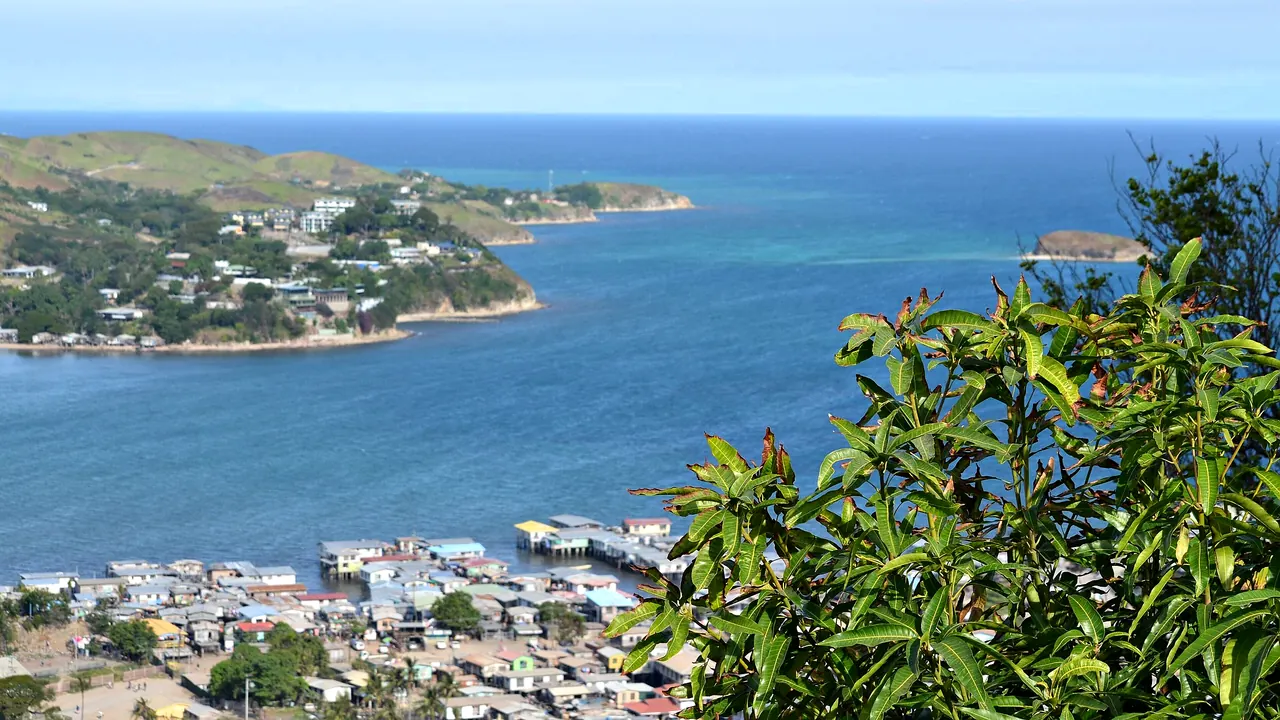
The bay at Port Moresby with the stilt houses of Hanuabada
- Nature & outdoors55
- Beaches38
- Culture & sights32
Photo: eGuide Travel, CC BY 2.0, cropped
Match
23
Every category weighted equally
- Beach & sun25
- Culture & arts21
- Food & nightlife20
- Family trip25
- Outdoors28
- Relax & unwind25
- Shopping & style21
- On a budget22
Port Moresby in twelve categories
Our verdict on each, scored 0 to 100 against the same fixed benchmark cities, so a score means the same thing on every page.
Beaches & swimming. Scores 38 out of 100.
Food & drink. Scores 28 out of 100.
Culture & sights. Scores 32 out of 100.
Nightlife. Scores 12 out of 100.
Nature & outdoors. Scores 55 out of 100.
Day trips. Scores 18 out of 100.
Good for families. Scores 18 out of 100.
Getting around. Scores 8 out of 100.
Shopping & style. Scores 25 out of 100.
Affordability. Scores 15 out of 100.
Live music & performing arts. Scores 14 out of 100.
Wellness & relaxation. Scores 15 out of 100.
Port Moresby category by category
Beaches & swimming
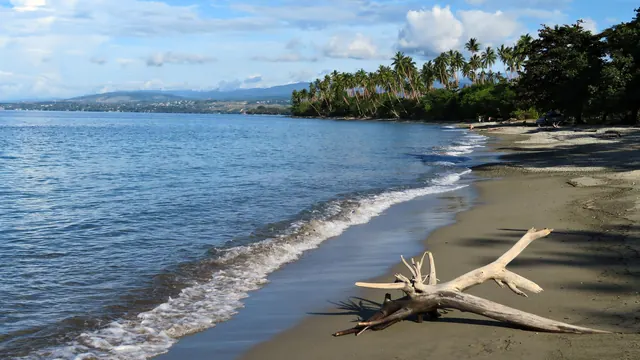
38The sea here is warm all year, around 28°C, but Port Moresby is not a beach city. Ela Beach curves along the edge of the town centre and is good for a seafront walk, but the water by the harbour is not inviting for a swim, and locals use it more for picnics and sport than for bathing.
The better swimming is out in the bays to the south-east. Boats from Bootless Bay reach Loloata Island and Daugo, a low sand island on the reef, where the water is clear and you can snorkel straight off the shore. These are outings you plan for, not part of an ordinary day.
Food & drink
28Most visitors eat in hotel restaurants and a few compound dining rooms. These serve international menus, some Asian cooking and good grilled reef fish, at business-traveller prices. Papua New Guinean food is harder to find. Mumu, pork, chicken and root vegetables cooked over hot stones in an earth oven, turns up at cultural events and celebrations more than on menus.
The markets give the best sense of how the city eats. Koki fish market sits over the water, and the produce markets are piled with taro, sweet potato, betel nut and tropical fruit. Highland coffee is a real local product and worth looking for. Beyond that, there is little to explore on your own.
Culture & sights
32The things to see fit into a day or two, and they cluster in Waigani, the government district. The National Museum and Art Gallery holds a strong collection of carved masks, spirit boards, canoe prows and ceremonial objects from across the country's many cultures. Next door, Parliament House was built in the style of a Sepik spirit house, with a soaring painted gable. It is the city's one landmark of real architectural interest.
The Bomana War Cemetery on the edge of town is a moving reminder of the Kokoda campaign. Hanuabada, the old stilt village of the Motu people, stands over the water by the harbour. The rest of the city is modern and functional, with almost no historic streetscape.
Nightlife
12Evenings for visitors mostly take place in hotels. There are bar terraces looking over the harbour, a few lounges and the occasional club night at a big hotel or a members' venue. Going out on the street, bar-hopping on foot or wandering between venues is not part of life here. Visitors travel after dark by arranged car, and most nights end early.
Nature & outdoors
55The country's famous wilderness mostly lies beyond reach of the capital, but there is real nature close by. Varirata National Park, about an hour away up on the Sogeri Plateau, has rainforest trails, lookouts over the coastal plain and display trees where birds of paradise gather in the early morning. Owers' Corner, the southern end of the Kokoda Track, sits further along the same road. The full trek takes days, but even a short walk down into the valley gives a sense of the country.
At sea, Bootless Bay has coral reefs, wrecks and good diving within a short boat ride. In town, the Port Moresby Nature Park keeps tree kangaroos and cassowaries. The dry hills around the city are often brown for much of the year. Most outings are best done with a guide or driver.
Day trips
18There are no other towns worth a day out within reach, and no road links the capital to the rest of the country. The usual outing is the drive up the Sogeri road, stopping at the Bomana War Cemetery and the Second World War memorials along the way to the Kokoda trailhead. Otherwise, a day trip means a boat to an island resort in Bootless Bay. To see more of Papua New Guinea, you have to fly.
Good for families
18The Port Moresby Nature Park is the one real children's outing, with tree kangaroos, cassowaries, parrots and shaded walkways. Hotel pools and a boat trip to an island in Bootless Bay can fill a day or two more. Beyond those, there is little here for children. Families spend most of their time in hotels and secure compounds and travel by car, so the city works for a family passing through on business or on the way elsewhere, not for a family vacation.
Getting around
8Port Moresby is a city of separate districts, Town, Boroko, Waigani and the airport suburbs, strung out along roads through dry hills. None of it is set up for walking. The PMV minibuses that locals ride are not a practical option for visitors. In practice, almost everyone moves by hotel shuttle, arranged driver or company car, and planning each trip in advance is part of any stay.
Shopping & style
25The modern shopping is in a few air-conditioned malls in Waigani and around town, selling everyday goods rather than anything a visitor would travel for. What is worth taking home is the craft. Look for bilums, the string bags looped by hand in bright patterns, as well as Sepik wood carvings, masks, shell jewellery and woven baskets. These turn up at the craft markets that gather periodically near Ela Beach and in shops at the bigger hotels. Choice is good for carvings and bilums, thin for everything else.
Affordability
15Port Moresby is a costly place to visit, far more expensive than the country's incomes would suggest. Hotels are aimed at mining, aid and government travellers and charge accordingly. Meals in hotel restaurants cost as much as in a large Western city. There is also the hidden cost of hiring drivers, since walking and public buses are not realistic. Market produce and local snacks are cheap, but few visitors live off them. Budget for a business-city stay, not a developing-country one.
Live music & performing arts
14There is no regular theatre, concert or live-music calendar for a visitor to plan around. Traditional performance is what stands out. The Hiri Moale festival, held around Independence, celebrates the trading voyages of the Motu people with canoe races, dancing and the crowning of the Hiri queen. Cultural shows bring sing-sing groups in feathers, shells and body paint to the capital. At other times, music is mostly string bands and local pop heard at hotel events.
Wellness & relaxation
15There is no bathing or spa tradition to seek out. Relaxing means a massage at one of the larger hotels, an afternoon by the pool, or a night on an island in Bootless Bay, where the pace finally slows. The city itself does not invite unwinding, since every outing has to be arranged in advance by car.
When should you go?
Pick a month to see what it is like. The climate figures are measured averages, not a forecast.
Port Moresby in July
Daytime high, °C
Rainfall in the month, mm
The whole year
Shaded against this destination’s own year: the deepest cell is its best month for that figure and the palest its weakest.
Where the figures come from
Port Moresby has no weather station within reach, so its figures come from a gridded climate model rather than a measured record, and read a broad area rather than one spot.
Temperature and rainfall are climate normals, averaged over the years shown. Port Moresby: 2001-2020 normals, NASA POWER reanalysis grid, no weather station within 90 km.
Before you go
| Measure | Port Moresby |
|---|---|
| Official language | English, Hiri Motu, Tok Pisin, Papua New Guinean Sign Language |
| Currency | Kina (PGK) |
| Sockets | I240 V, 50 Hz |
| Driving side | Left |
| Time zone | UTC+10 |
| Emergency number | Police 112, ambulance 111, fire 110 |
| Elevation | 74 m |
| Main airport | Port Moresby Jacksons International Airport (POM)9 km from centre27 non-stop destinations |
| Public holidays this year | 11 days |
By the numbers
| Measure | Port Moresby |
|---|---|
| Population | 317,374 |
| People per km² | 1,322 |
| Museums within 10 km | 1 |
| UNESCO World Heritage sites within 50 km | 0 |
| Swim season, months above 21 °C | 12 months |
Compare Port Moresby with
Every comparison with a written verdict behind it.