Asunción
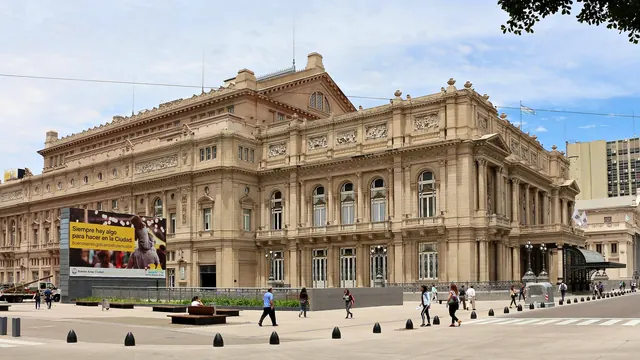
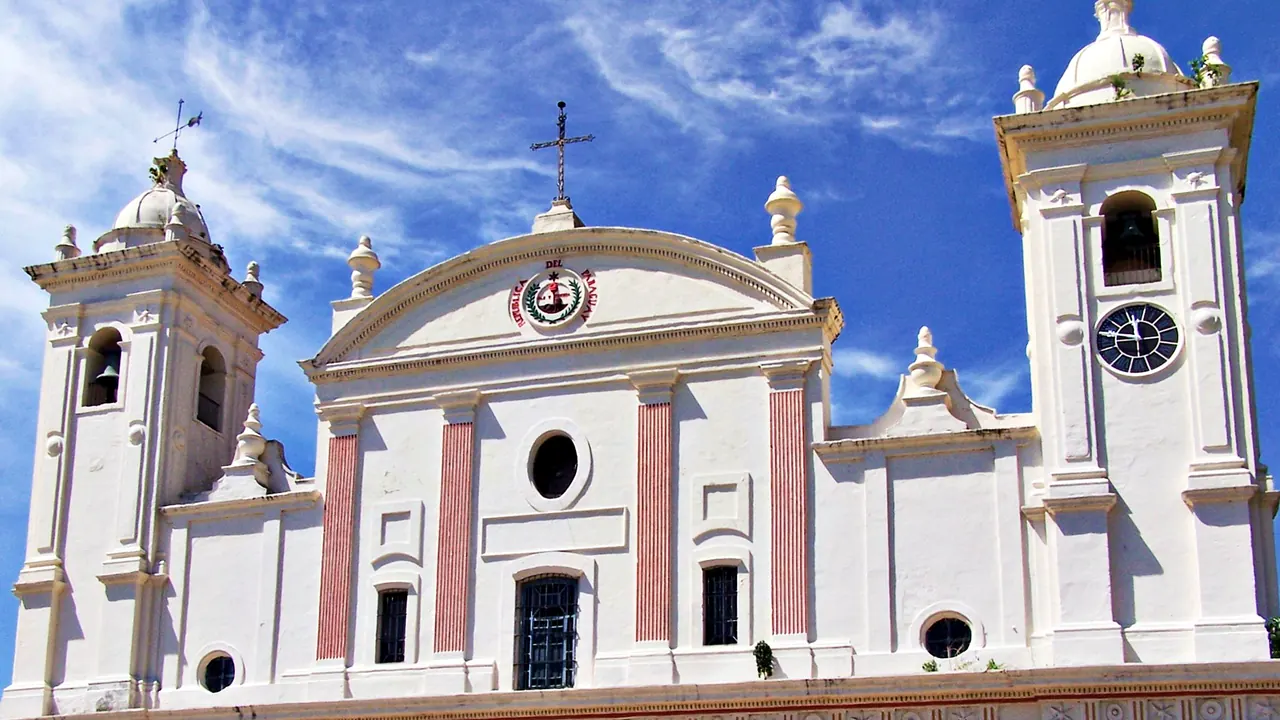
The facade of the Metropolitan Cathedral in Asunción against a blue sky
- Affordability82
- Food & drink45
- Nightlife40
Photo: Tom D'Arby, Pexels License
Match
35
Every category weighted equally
- Beach & sun34
- Culture & arts37
- Food & nightlife37
- Family trip35
- Outdoors35
- Relax & unwind32
- Shopping & style36
- On a budget40
Asunción in twelve categories
Our verdict on each, scored 0 to 100 against the same fixed benchmark cities, so a score means the same thing on every page.
Beaches & swimming. Scores 12 out of 100.
Food & drink. Scores 45 out of 100.
Culture & sights. Scores 36 out of 100.
Nightlife. Scores 40 out of 100.
Nature & outdoors. Scores 28 out of 100.
Day trips. Scores 40 out of 100.
Good for families. Scores 28 out of 100.
Getting around. Scores 26 out of 100.
Shopping & style. Scores 36 out of 100.
Affordability. Scores 82 out of 100.
Live music & performing arts. Scores 30 out of 100.
Wellness & relaxation. Scores 20 out of 100.
Asunción category by category
Beaches & swimming
12Asunción sits on the Paraguay River, more than 1,000km from the sea, and beaches play almost no part in a visit. The riverfront Costanera has a sandy stretch on the bay, but it is for walking and sitting in the evening, not swimming. The muddy river current makes the water uninviting.
The local summer escape is San Bernardino on Lake Ypacaraí, about an hour east. The water is warm, but its quality varies and algae blooms often make swimming unwise. In the hot months most visitors cool off in a hotel or club pool instead.
Food & drink
45Paraguayan cooking is filling and built on corn, cassava and cheese. Visitors meet chipa, a cheese bread sold warm from baskets on street corners and buses. Sopa paraguaya is a solid cornbread despite its name, and there are mbejú, a cassava and cheese flatbread, and bori bori, a chicken soup with dumplings. Weekends belong to asado, the grilled beef that ranks second only to the national dishes. Mercado 4 is the place for cheap lunch counters and stalls piled with medicinal herbs.
The drink everyone carries is tereré: yerba mate steeped in iced water with crushed herbs, shared from a single cup and straw. The better restaurants cluster in Villa Morra and Las Carmelitas and serve good steak and some modern Paraguayan cooking. The range thins quickly beyond that, so visitors do not travel here for the food.
Culture & sights
36Asunción is one of the oldest cities in South America, founded in 1537, but little of its colonial fabric survives. What a visitor sees is a compact historic centre of grand 19th-century public buildings. The white Palacio de López faces the river, and the domed Panteón Nacional de los Héroes holds the nation's war dead. The Casa de la Independencia is a small colonial house where the 1811 break from Spain was planned. The cathedral and the old Cabildo stand on the Plaza de la Independencia.
The best museum is the Museo del Barro, east of the centre. It brings together folk ceramics, Indigenous art from the Chaco and contemporary Paraguayan work. The Loma San Jerónimo neighbourhood has colourful houses and is pleasant for a stroll. The whole city can be seen in two days.
Nightlife
40Going out in Asunción starts late and happens mostly at the weekend. The main areas are Las Carmelitas and Villa Morra, the well-off districts east of the centre. Here beer gardens, cocktail bars and terraces fill after dark, and clubs, known locally as boliches, run from well after midnight towards dawn. Thursday to Saturday is when the city comes alive. Early in the week it is quiet.
The crowd is overwhelmingly local and young, and dress tends to be smart. The old centre empties at night and is not the place to look for bars. It is a friendly scene and an easy one to join, but small, and few people plan a trip around it.
Nature & outdoors
28The country around Asunción is low, green and hot, and the city itself has little open landscape. The largest green space is the Jardín Botánico, on the river's edge in the north. Cerro Lambaré, a small hill to the south, gives a view over the river and the Chaco on the far bank. Sunset walks along the Costanera are the everyday outdoor pleasure. Boat trips on the river show its wide, slow, reed-fringed character.
Further out, the gentle hills of the Cordillera de los Altos rise around Lake Ypacaraí. Ybycuí National Park, about two hours south, has forest trails and waterfalls. Summer heat often passes 35°C, so outdoor time is best kept to early mornings or the cooler months from May to September.
Day trips
40The standard day out is a loop of the small towns east and south of the capital, known as the Circuito Central. Areguá, on a hillside above Lake Ypacaraí, has cobbled streets, old houses and pottery stalls. In Itauguá women make ñandutí, the fine spiderweb lace that is Paraguay's best-known craft. Yaguarón has one of the finest Franciscan colonial churches in the region, with a painted wooden interior. Caacupé's basilica is the country's main pilgrimage site. San Bernardino is the summer lake resort of the Asunción elite.
These places are pleasant but small, and a car or driver makes the loop far easier than buses do. The UNESCO-listed Jesuit missions of Trinidad and Jesús are worth seeing, but they are about five hours away, too far for a day trip.
Good for families
28Paraguayans are relaxed and affectionate with children, and families are welcome in restaurants late into the evening. The city has very little built for young visitors, though. The small zoo in the Jardín Botánico is dated, and there is no aquarium, theme park or major science museum. The Costanera and the large air-conditioned shopping malls are where local families spend their weekends.
Summer heat, broken pavements and chaotic bus traffic make sightseeing with small children tiring. A hotel with a pool and a car or taxi for every outing make the stay manageable. It works best as a short stop rather than a family destination in its own right.
Getting around
26Asunción has no metro or tram. The bus network is extensive but hard for a visitor to read: routes are poorly marked and vehicles are often old and crowded. The historic centre around the Plaza de la Independencia and the Costanera is compact enough to walk, but pavements are uneven and shade is scarce in summer.
The hotels, restaurants and nightlife of Villa Morra and Las Carmelitas lie a few kilometres east of the centre, and most visitors cross that distance by taxi or ride-hailing app. Both are easy to find and quick outside rush hour. The Circuito Central towns are reached most comfortably with a hired driver or rental car.
Shopping & style
36Shopping in Asunción comes in two kinds. Mercado 4 is a sprawling, crowded maze of stalls selling clothes, electronics, household goods, herbs and food. It is a real working market rather than a sight laid on for tourists, and it is worth a careful visit with valuables kept close. At the other end are the large modern malls in the eastern districts, with international chains and a few local labels.
The crafts are where the city is distinctive. Look for ñandutí lace, ao po'i, a hand-embroidered cotton cloth used for shirts, leather goods, Paraguayan harps and the gourds and metal straws used for tereré. The best craft shopping is in the towns of origin, Itauguá for lace and Areguá for ceramics. Designer boutiques and luxury streets are largely absent.
Affordability
82Asunción is one of the least expensive capitals in South America for a visitor. Comfortable hotels in the eastern districts cost a fraction of what similar rooms cost in Europe. Chipa from a street vendor or a set lunch at a market counter costs very little. A steak dinner in a smart restaurant is reasonable by any international standard. Taxis and ride-hailing are cheap, and most museums and sights are free or nearly so.
The costs that add up are imported goods, international hotel chains and hired drivers for longer excursions. Even so, a visitor spends far less here than in most of the continent's better-known cities.
Live music & performing arts
30Paraguay's musical identity rests on the harp and on the guarania, a slow, melancholy song form, with the polka paraguaya as its lively counterpart. A visitor hears them most easily in folk-music dinner shows, at the restaurant peñas and at public celebrations. The Teatro Municipal Ignacio A. Pane, a restored 19th-century theatre in the centre, hosts the national symphony orchestra, ballet and local drama. The Teatro del Banco Central and a few cultural centres fill out the programme.
It is a modest scene, mostly in Spanish and not always well publicised, so it is worth checking listings on arrival. Nobody travels to Asunción for its stages, but an evening of live harp music is a genuine local pleasure.
Wellness & relaxation
20Asunción has no thermal baths, hammams or bathing culture. Wellness means the spa and pool of a good hotel and a handful of day spas in the eastern districts. What the city offers instead is its pace. Life slows in the afternoon heat. People sit in the shade passing round a cup of tereré, and the evening walk along the Costanera is unhurried. It is a calm capital, but not a place to come for rest and treatments.
When should you go?
Pick a month to see what it is like. The climate figures are measured averages, not a forecast.
Asunción in July
Daytime high, °C
Rainfall in the month, mm
The whole year
Shaded against this destination’s own year: the deepest cell is its best month for that figure and the palest its weakest.
Temperature and rainfall are climate normals, averaged over the years shown. Asunción: 1991-2020 normals, Asuncion / Aeropuerto (1.5 km from centre).
Before you go
| Measure | Asunción |
|---|---|
| Official language | Spanish, Guarani |
| Currency | Guarani (PYG) |
| Sockets | C220 V, 50 Hz |
| Driving side | Right |
| Time zone | UTC-3 |
| Emergency number | 911 |
| Elevation | 43 m |
| Main airport | Silvio Pettirossi International Airport (ASU)12 km from centre14 non-stop destinations |
| Public holidays this year | 12 days |
By the numbers
| Measure | Asunción |
|---|---|
| Population | 462,241 |
| People per km² | 3,951 |
| Museums within 10 km | 5 |
| UNESCO World Heritage sites within 50 km | 0 |
Compare Asunción with
Every comparison with a written verdict behind it.