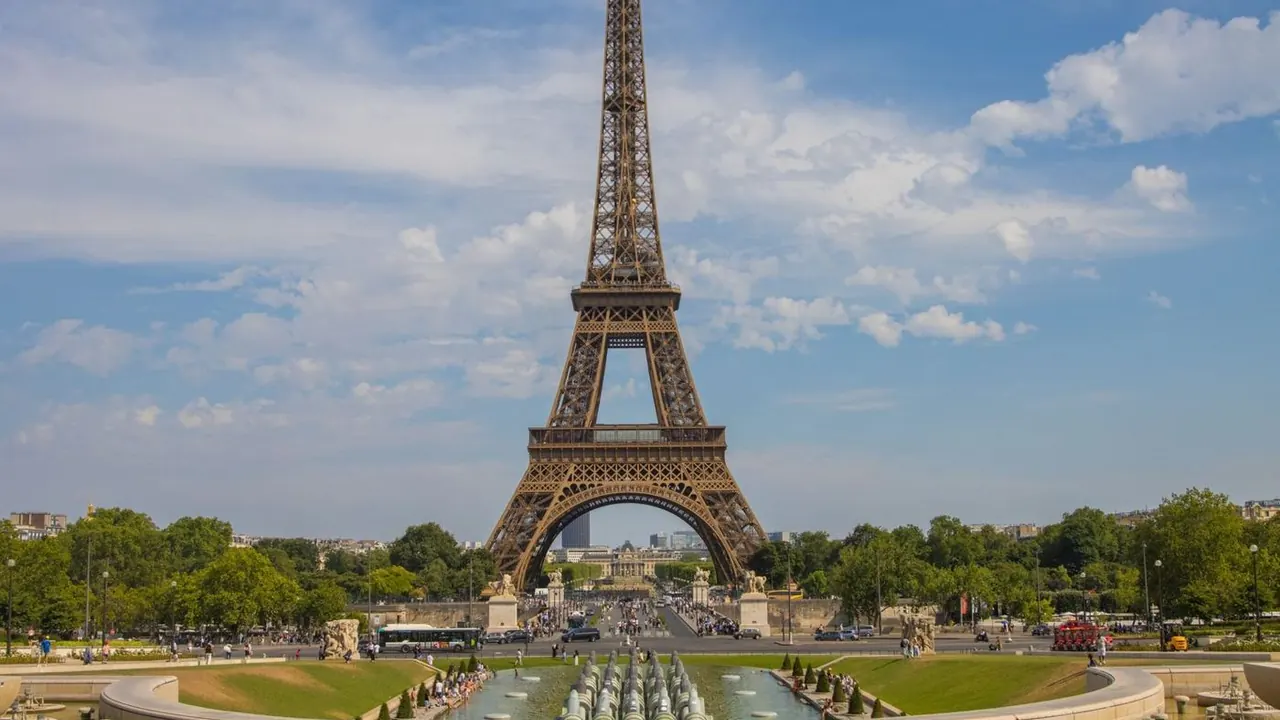
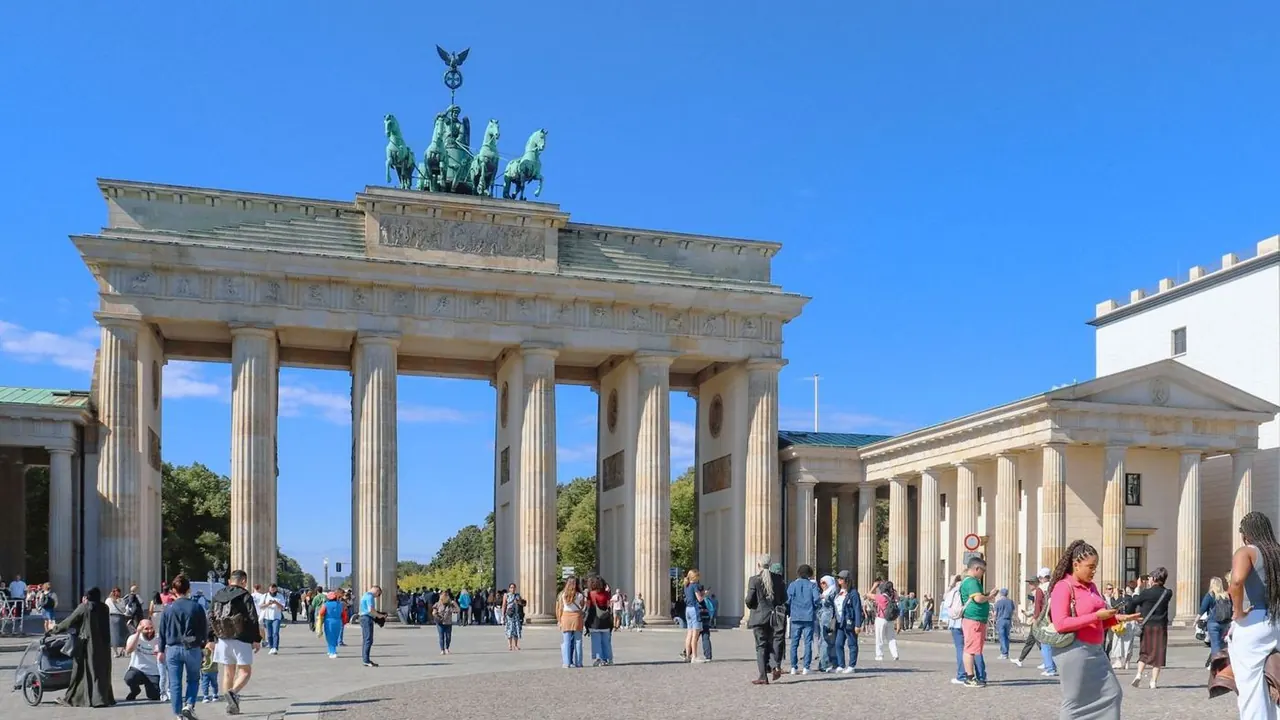
Photos: Paris by Efrem Efre, Pexels License; Berlin by Claudia Solano, Pexels License.
Paris or Berlin?
Our verdict in twelve categories, each scored against the same fixed benchmark cities, and the climate month by month, so you can choose for your trip.
Choose Paris for
- food and drink
- shopping
- day trips
Paris is the better choice when eating, art and shopping are the point of the trip. The bistros, markets and bakeries make every meal part of the visit, the Louvre and the Orsay lead a longer list of great collections, and the luxury houses, department stores and covered passages are unmatched. Add Versailles, Chartres and Champagne within easy reach, and a week fills itself, provided the budget can take it.
Choose Berlin for
- beaches
- prices
- nightlife
Berlin suits travellers who come for the night as much as the day. Its clubs run through the weekend without a closing hour, its museums and memorials tell the story of the twentieth century where it happened, and it costs noticeably less than Paris. In summer the lakes and the sauna halls give you ways to slow down that Paris does not really have.
Scoreboard
Twelve categories on one fixed scale from 0 to 100. The shaded stretch is the gap between the two.
Your match
Pick a travel style or drag the sliders, and both match scores follow your weighting.
Too close to call, 1 point apart
Wins on food and drink and shopping with your weighting.
Wins on beaches and prices with your weighting.
What matters to you?
Category by category
What the scores mean for a trip.
Beaches & swimming
Neither city has a coast, but Berlin gives you a real swim in summer. Strandbad Wannsee has a long sandy shore and wicker beach chairs, and the Müggelsee and the forest lakes such as Schlachtensee are a short S-Bahn ride away. The water reaches about 20-23°C in July and August.
In Paris, summer bathing means sand spread along the riverbanks and swimming spots on the Bassin de la Villette and in the Seine, which are fine for cooling off. For sea swimming, Normandy is about two hours from Paris and the Baltic about three from Berlin, and in both cases it is a separate trip.
Food & drink
Paris is on another level for food. Every quarter has its boulangerie, cheese shop and morning market, and the range runs from zinc-counter bistros through the neo-bistros of the 11th to the haute cuisine that set the standard for fine dining everywhere. Pastry and long hours on café terraces belong to the experience as much as the meals do.
Berlin eats well, but its strength is range rather than a cuisine of its own. The Turkish grills and bakeries of Kreuzberg and Neukölln, good Vietnamese and Korean cooking, and street-food evenings at Markthalle Neun make it cheap and casual. A food lover will remember Paris for longer.
Culture & sights
Both are great museum cities, but Paris has more of everything. The Louvre, the Orsay's Impressionists, Monet's water lilies at the Orangerie, the Sainte-Chapelle and Notre-Dame sit inside a unified Haussmann cityscape, so walking between the sights is part of the pleasure.
Berlin answers with a different kind of visit. Museum Island and the Gemäldegalerie hold world-class collections, but the city's real distinction is its recent history: the Wall Memorial on Bernauer Strasse, the Memorial to the Murdered Jews of Europe and Karl-Marx-Allee, all seen where events took place. Anyone drawn to the twentieth century will find Berlin hard to beat. For sheer quantity of art and architecture, Paris leads.
Nightlife
Berlin is the stronger choice for going out late. Its techno clubs in old power stations and warehouses have no fixed closing time, so a Saturday can run on into Monday, and corner Kneipen and canal-side beers fill every other hour. Friedrichshain and Kreuzberg are where it all comes together.
Paris does evenings well in its own way, with wine bars, crowded bars in Oberkampf and Belleville, and cocktails in South Pigalle. But most bars close around 2am, the clubs are chic and selective at the door, and drinks cost more. It suits a long dinner followed by a few bars better than a whole weekend on the dancefloor.
Nature & outdoors
Both offer gentle green escapes rather than wild landscape, and neither has hills or coast nearby. Berlin's outdoors centres on water and open space: sailing on the Havel, paddling on the Müggelsee, cycling the runways of Tempelhof or the long Berlin Wall Trail, with Brandenburg's lake country beyond.
Paris goes in for formal gardens such as the Luxembourg and the Tuileries, and the large Bois de Boulogne and Bois de Vincennes. Its standout escape is the forest of Fontainebleau, about forty minutes away, whose sandstone boulders draw climbers.
Day trips
From Paris you can fill days with excursions. Versailles is less than an hour out, and Chartres, Giverny and Fontainebleau are just as easy. Fast trains reach the Champagne houses of Reims, half-timbered Rouen and the Loire châteaux, while Brussels and Lille are close.
Berlin has one superb outing in Potsdam's Sanssouci palaces and a handful of good ones: Wittenberg, Leipzig, the Bauhaus in Dessau and the Spreewald canals. Dresden makes a long day. After those the choice runs out, where Paris could keep you going for a week.
Good for families
Both work well with children, but in different ways. Paris has the big attractions, with Disneyland and Parc Astérix close by and the Cité des Sciences, the Jardin d'Acclimatation and carousels in the parks. On the other side, many metro stations have only stairs, and pushchairs struggle on crowded trains.
Berlin has no theme park, but daily life is easier. The streets are flat, prams manage well on the trains, and two large zoos, the dinosaur skeleton at the Natural History Museum and the trains and planes of the Museum of Technology fill the days.
Getting around
Paris is the easier city to cover on foot. Its compact centre lets you walk from the Marais to Saint-Germain or along the Seine to the Eiffel Tower, and a metro station is rarely far away. The downsides are long corridors and stairs, crowded trains at rush hour and pickpockets on the tourist lines.
Berlin's transport is smooth and runs all night at weekends, and the flat, wide streets make cycling natural. The difference is spread: Mitte, Kreuzberg, Prenzlauer Berg and Charlottenburg are separate centres, so you ride trains between them more than you would in Paris.
Shopping & style
Paris is the stronger shopping city by a wide margin. It has the great fashion houses on the Faubourg Saint-Honoré, Galeries Lafayette and Le Bon Marché, independent designers in the Marais, the covered passages, the bouquinistes along the river and specialist shops selling chocolate, cheese and tea to take home.
Berlin is better for rummaging than for luxury. Mauerpark and Boxhagener Platz on a Sunday turn up vinyl, East German curios and old furniture, and Kreuzberg and Prenzlauer Berg have vintage and record shops. KaDeWe and the Kurfürstendamm cover the big brands, but there is not much depth beyond them.
Affordability
Berlin is clearly the cheaper stay. Hotels cost less than in most capitals, and eating cheaply on döner, Vietnamese canteens and bakeries is easy. Only museums and fine dining reach big-city levels.
Paris costs more at almost every step, with small, costly rooms, terrace drinks and full-price museum tickets. Walking, bakeries, lunchtime set menus, the free permanent collections in the city's own museums and a riverside picnic bring the cost down, but it remains the bigger outlay.
Live music & performing arts
Both are first-rate for live performance, and the difference is in character. Berlin has three opera houses, the Berlin Philharmonic in Scharoun's Philharmonie and a deep circuit of jazz cellars and experimental music spaces. The Friedrichstadt-Palast revue is easy to enjoy without German.
Paris counters with the Paris Opera Ballet at the gilded Palais Garnier, the Philharmonie at La Villette and chamber concerts under the stained glass of the Sainte-Chapelle, as well as Pigalle cabaret. In both cities most theatre is in the local language.
Wellness & relaxation
Berlin is the better place to unwind. German sauna culture means large complexes with infusion rituals and quiet rest rooms, the old Stadtbad Neukölln adds columned halls, and thermal resorts in Brandenburg are about an hour away. The city also moves at an easier pace than its size suggests.
Paris offers the tiled steam rooms and mint tea of the Grande Mosquée hammam, plus hotel day spas. Otherwise, rest comes in short breaks between crowded streets, such as a chair in the Luxembourg gardens.
When should you go?
Pick your month. The climate figures are measured averages, not a forecast.
Paris in July
Berlin in July
Daytime high, °C
Rainfall in the month, mm
Temperature and rainfall are climate normals, averaged over the years shown. Paris: 1991-2020 (sunshine 1961-1990) normals, Paris-Montsouris (4.6 km from centre). Berlin: 1991-2020 normals, Berlin / Alexanderplatz (0.9 km from centre).
The two cities follow similar seasons, but Berlin's winters are harsher. January highs reach only about 4°C in Berlin against 8°C in Paris, and Berlin's winter days are short and grey, with very little sunshine from November to January. Both warm up through May. July and August are the warmest months in both, at about 25°C in Berlin and 26°C in Paris, which is comfortable for walking and, in Berlin, warm enough for a swim in the lakes.
Rain falls all year in both, but it peaks at different times. In Berlin July is the wettest month, at about 76mm, usually in summer showers that soon clear, and the long sunny days of May to August make up for it. In Paris the wettest month is May, and the late autumn and early winter stay damp. For walking either city, late May, June and September are the most comfortable. Paris also keeps mild weather a little later into October.
Which traveller are you?
On a trip on a tight budget, Berlin makes the money last longer. A cheaper bed leaves room for clubs, concerts and museums, and the cheapest meals are good food in their own right. Paris can be done on little, but only with constant planning.
For a shopping trip, Berlin is fun for patient rummaging through vinyl and second-hand finds, but Paris is the place to go. Fashion, antiques, old books and fine food can all fill a suitcase, and shopping can easily be the main event of the trip.
On a relaxing and wellness trip, Berlin is the easier choice. Long sessions of sweating and resting are a local habit, the lakes are close by on summer days, and the city rarely feels rushed. Paris is a city for seeing things, not for resting.
Before you go
| Measure | Paris | Berlin |
|---|---|---|
| Official language | French | German |
| Currency | Euro (EUR) | Euro (EUR) |
| Sockets | CE230 V, 50 Hz | CF230 V, 50 Hz |
| Driving side | Right | Right |
| Time zone | UTC+1, UTC+2 in summer | UTC+1, UTC+2 in summer |
| Emergency number | 112 | 112 |
| Elevation | 27 m | 34 m |
| Main airport | Charles de Gaulle International Airport (CDG)22 km from centre277 non-stop destinations | Berlin Brandenburg Airport (BER)19 km from centre161 non-stop destinations |
| Public holidays this year | 11 days | 10 days |
By the numbers
| Measure | Paris | Berlin |
|---|---|---|
| City population | 2,103,778 | 3,700,577 |
| People per km² | 19,960 | 4,153 |
| Museums within 10 km | 251 | 157 |
| UNESCO World Heritage sites within 50 km | 5 | 4 |
Where else could you go?
Every comparison below shares a destination with this one, so you can follow Paris or Berlin somewhere new.