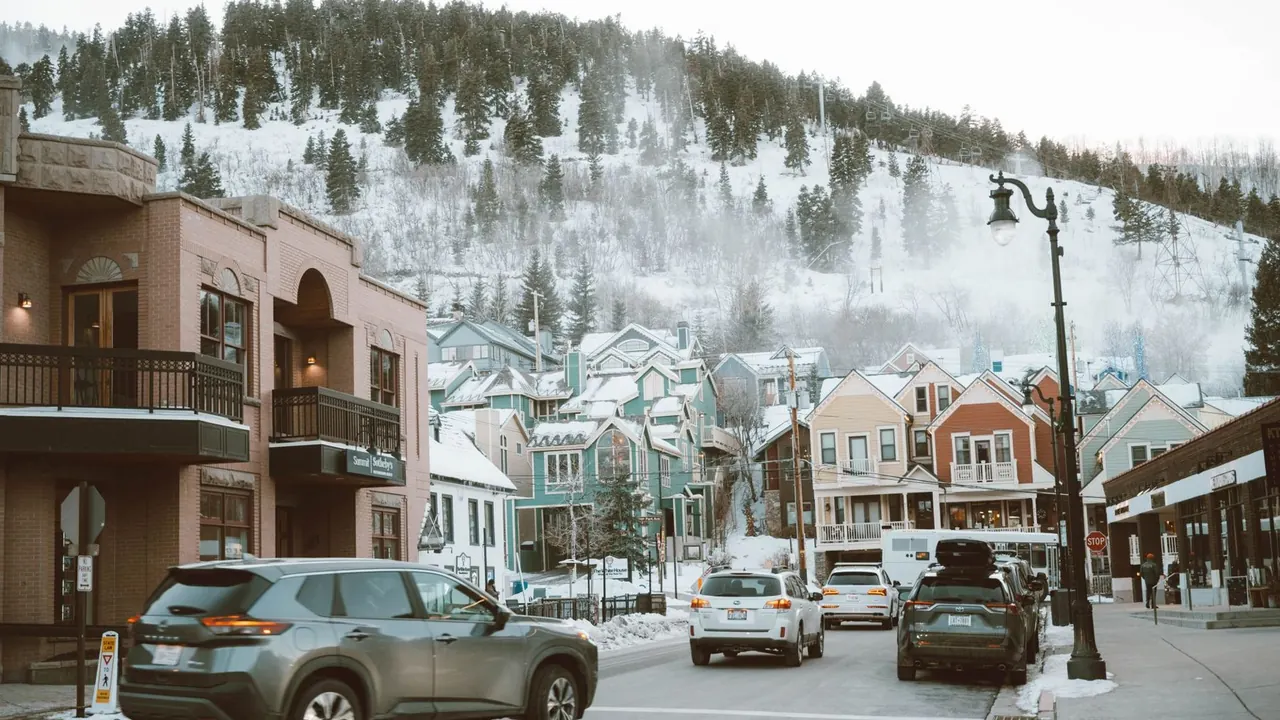
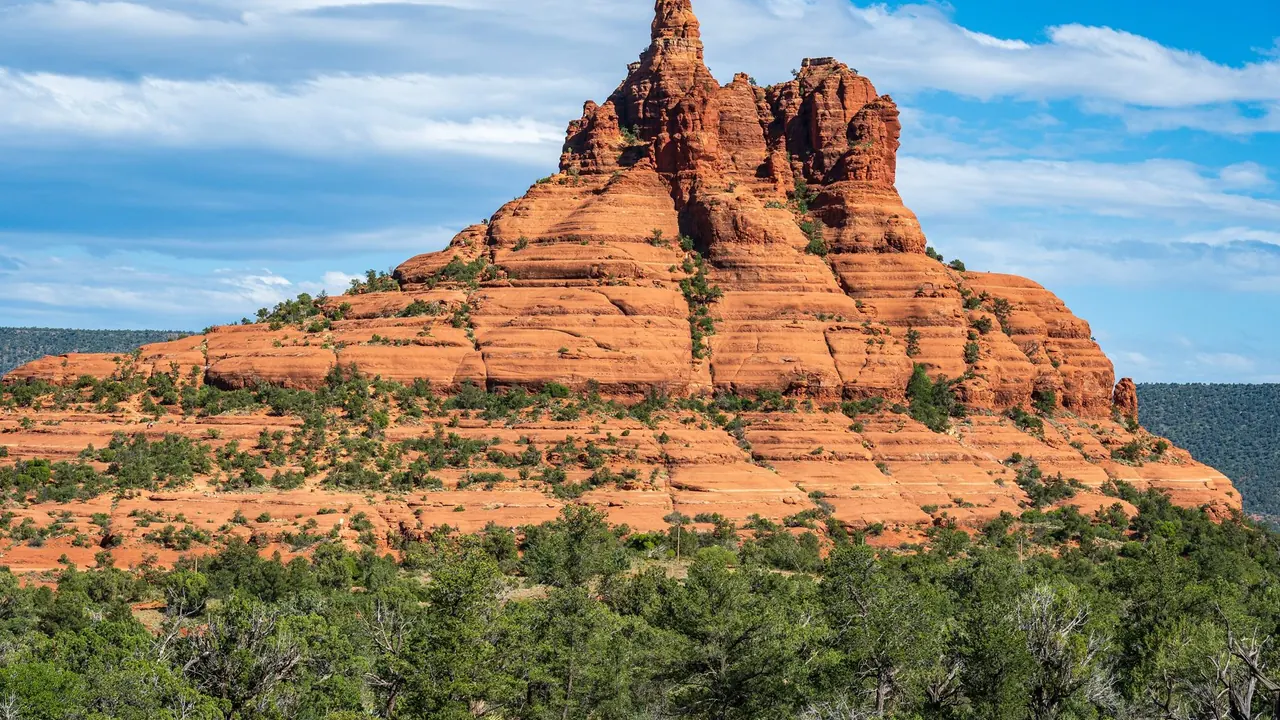
Photos: Park City by Quang Vuong, Pexels License; Sedona by dconvertini, CC BY-SA 2.0, cropped.
Park City or Sedona?
Our verdict in twelve categories, each scored against the same fixed benchmark cities, and the climate month by month, so you can choose for your trip.
Choose Park City for
- getting around
- families
- nightlife
Park City is the choice for a winter mountain trip. Two big ski areas rise straight from town, Utah's dry powder falls all season, and free buses mean you can leave the car at the hotel. It is also the easier place to bring children, with ski schools and the Olympic Park on hand, and there is a bit more going on after dark along Main Street.
Choose Sedona for
- wellness
- day trips
- beaches
Travellers who want slow days and red rock should look to Sedona. Its trails lead to buttes and canyons unlike anything in the Rockies, its yoga, meditation and spa scene is one of the best known in the country, and the cliff dwellings and mining towns of the Verde Valley make good outings. It suits couples and people on a retreat more than families, and you will need a car.
Scoreboard
Twelve categories on one fixed scale from 0 to 100. The shaded stretch is the gap between the two.
Your match
Pick a travel style or drag the sliders, and both match scores follow your weighting.
Wins on getting around and families with your weighting.
Wins on wellness and day trips with your weighting.
What matters to you?
Category by category
What the scores mean for a trip.
Beaches & swimming
Neither town has a coast, but Sedona has the better water to cool off in. At Slide Rock you can ride the creek down a sandstone chute into cold pools, and there are swimming holes below red cliffs at Grasshopper Point and Red Rock Crossing.
In Park City, summer swimming means a drive down to Jordanelle Reservoir, with its sandy areas and a short, cool season. Most visitors only get wet in a hotel pool or hot tub.
Food & drink
Park City eats a little better, thanks to its ski crowd. Main Street and the resort bases have polished restaurants serving elk, bison, trout and steak, and après-ski on the slopeside decks is a ritual in itself.
In Sedona the view often matters more than the cooking. Expect Southwestern dishes built on chilli and corn, plenty of vegetarian and health-minded menus, and wine tastings in the Verde Valley nearby. In both towns the choice runs out after a few good meals.
Culture & sights
Both towns have only a few sights, and both are fairly thin on culture, but the history is different. Park City's story is silver mining: the wooden storefronts on Main Street, old headframes on the slopes, the museum in the old city hall, and the Olympic museums from 2002.
Sedona's past is older and partly Native American. The Sinagua cliff dwellings at Palatki and Honanki and the V Bar V petroglyphs sit a short drive out of town, and the Chapel of the Holy Cross is built into a butte.
Nightlife
Park City has the livelier evenings, though only in season. Après-ski moves on to the saloons and cocktail bars of Main Street, and some winter weekends bring DJs or bands before it all closes fairly early.
Sedona goes to bed early because people are on the trail at dawn. A brewpub or wine bar after dinner is about all there is, and the better show is the dark sky full of stars.
Nature & outdoors
Both are outstanding outdoor bases, but the scenery could hardly be more different. Park City is high alpine country in the Wasatch, with deep powder in winter and aspen ridges, singletrack and lift-served biking in summer.
Sedona is desert, with red sandstone buttes and spires reached by trails such as Cathedral Rock and Devil's Bridge, and mountain biking on slickrock. Oak Creek Canyon and the Grand Canyon's South Rim are also within reach. Sedona is at its best in spring and autumn, while Park City is a winter and summer place.
Day trips
Sedona has more to fill a few days out. Jerome, the old copper town on its hillside, is about forty minutes away, and Montezuma Castle and Tuzigoot are closer still. Flagstaff and the Verde Canyon Railroad add variety.
From Park City, the main outing is Salt Lake City, with Temple Square and a real city's choice of restaurants. Beyond that there are the steam railway in the Heber Valley, Swiss-style Midway and Ogden's railroad street, and after those most of what lies within reach is landscape.
Good for families
Park City is much the easier place with children. The ski areas have learning slopes and ski schools, and the Olympic Park has coasters, ziplines and freestyle jumpers landing in a splash pool. Summer brings alpine slides and climbing walls, and the free buses take the hassle out of getting around. The main drawbacks are the altitude for the first day or two and the cost.
Sedona suits families who already love the outdoors, with Slide Rock and jeep tours as the highlights. Most hotels are aimed at couples, and heat and exposed trails call for care with small children.
Getting around
Park City works well without a car once you are there. Free buses connect Old Town, both ski bases and Kimball Junction, and the airport is about 40 minutes away by shuttle.
Sedona is spread out along two highways. Only Uptown is easy on foot, so trailheads, the chapel and every day trip need a car. Traffic and trailhead parking can be tight on busy weekends, and most visitors drive two hours up from Phoenix.
Shopping & style
There is little to choose between them for shopping, but they sell different things. Park City offers resort browsing on Main Street, with Western boots, outdoor gear, ski fashion and galleries, plus outlet stores at Kimball Junction.
Sedona is better for crafts. Tlaquepaque's courtyards are full of galleries and studios, and there is Native American jewellery, pottery and rugs, along with the town's crystal and metaphysical shops.
Affordability
Both are expensive resort towns, and Sedona is only slightly easier on the budget. Park City in ski season, with lift tickets, ski school and slopeside rooms, is about as costly as North American mountain trips get, although summer and autumn are noticeably cheaper.
In Sedona, spring and autumn rates are high, but most trails cost no more than a parking pass. In both towns, people on a budget sleep somewhere cheaper and drive in: Salt Lake City or the Heber Valley for Park City, and Cottonwood or Flagstaff for Sedona.
Live music & performing arts
Park City has more to see, especially in summer, when the Utah Symphony plays on the lawns at Deer Valley and free concerts are held in town. The 1920s Egyptian Theatre on Main Street has comedy and plays all year.
Sedona has no concert hall and no regular season. Chamber concerts, local theatre and the long-running film festival in late winter make up most of its calendar.
Wellness & relaxation
This is where Sedona pulls well ahead. It is a destination for retreats, with yoga, meditation, breathwork and alternative therapies alongside the resort spas, and sunrise walks to the vortexes add a ritual you will not find elsewhere.
Park City's wellness is about recovery after skiing: massages at the Deer Valley and Canyons lodges and outdoor hot tubs in the snow. It does have the warm water Sedona lacks, at the Homestead Crater spring in Midway.
When should you go?
Pick your month. The climate figures are measured averages, not a forecast.
Park City in July
Sedona in July
Daytime high, °C
Rainfall in the month, mm
Where the figures come from
Park City's temperatures are measured 79 km from the centre, at Evanston.
Park City has no rain gauge within 25 km of the centre, so its rainfall comes from a gridded climate dataset read at the city rather than from a gauge further away.
Sedona's station stands 153 m above the city centre, so the centre is likely a little warmer than the figures say.
Sedona has no rain gauge within 25 km of the centre, so its rainfall comes from a gridded climate dataset read at the city rather than from a gauge further away.
Temperature and rainfall are climate normals, averaged over the years shown. Park City: 1999-2020 (rainfall 1991-2020) normals, Evanston (78.8 km from centre). Sedona: 2009-2025 (rainfall 1991-2020) normals, Sedona / West Sedona (1.3 km from centre).
The two climates run almost opposite to each other. Park City is a snow town from December to March, with daytime highs around -1°C in midwinter. Late spring is slow to warm, and summer is the other good season: July reaches about 28°C and June and July are the driest months, which suits hiking and biking. Autumn turns cold quickly after September.
Sedona is mild when Park City is frozen, with highs around 12°C in January, which is cool but fine for walking. Spring and October are its best months for the trails. From June to August the days reach about 34°C, so hikes need very early starts, and July and August bring the summer storms, the wettest stretch of its year.
Which traveller are you?
On a family trip with children, Park City is the easier choice. It has organised ski schools, the alpine coaster and ziplines at the Olympic Park, and summer slides at the resort bases, and free buses make it simple to get around. Sedona has little built for children.
For a relaxing and wellness trip, choose Sedona. It is a true retreat town, with resort spas facing the canyons, yoga and meditation sessions, quiet sunrise walks to the vortexes and dark, still nights. Park City's spas are mostly about easing tired ski legs.
For skiers, it has to be Park City. Park City Mountain and Deer Valley start at the edge of town, and Alta, Snowbird and the other Cottonwood resorts are within an hour. Sedona gets only an occasional dusting of snow on the red rock.
Before you go
| Measure | Park City | Sedona |
|---|---|---|
| Currency | US Dollar (USD) | US Dollar (USD) |
| Sockets | AB120 V, 60 Hz | AB120 V, 60 Hz |
| Driving side | Right | Right |
| Time zone | UTC-7, UTC-6 in summer | UTC-7 |
| Emergency number | 911 | 911 |
| Elevation | 2,134 m | 1,319 m |
| Main airport | Salt Lake City International Airport (SLC)43 km from centre108 non-stop destinations | Phoenix Sky Harbor International Airport (PHX)160 km from centre149 non-stop destinations |
| Public holidays this year | 12 days | 12 days |
By the numbers
| Measure | Park City | Sedona |
|---|---|---|
| City population | 8,396 | 9,684 |
| People per km² | 185 | 195 |
| Museums within 10 km | 1 | 0 |
| UNESCO World Heritage sites within 50 km | 0 | 0 |
Where else could you go?
Every comparison below shares a destination with this one, so you can follow Park City or Sedona somewhere new.