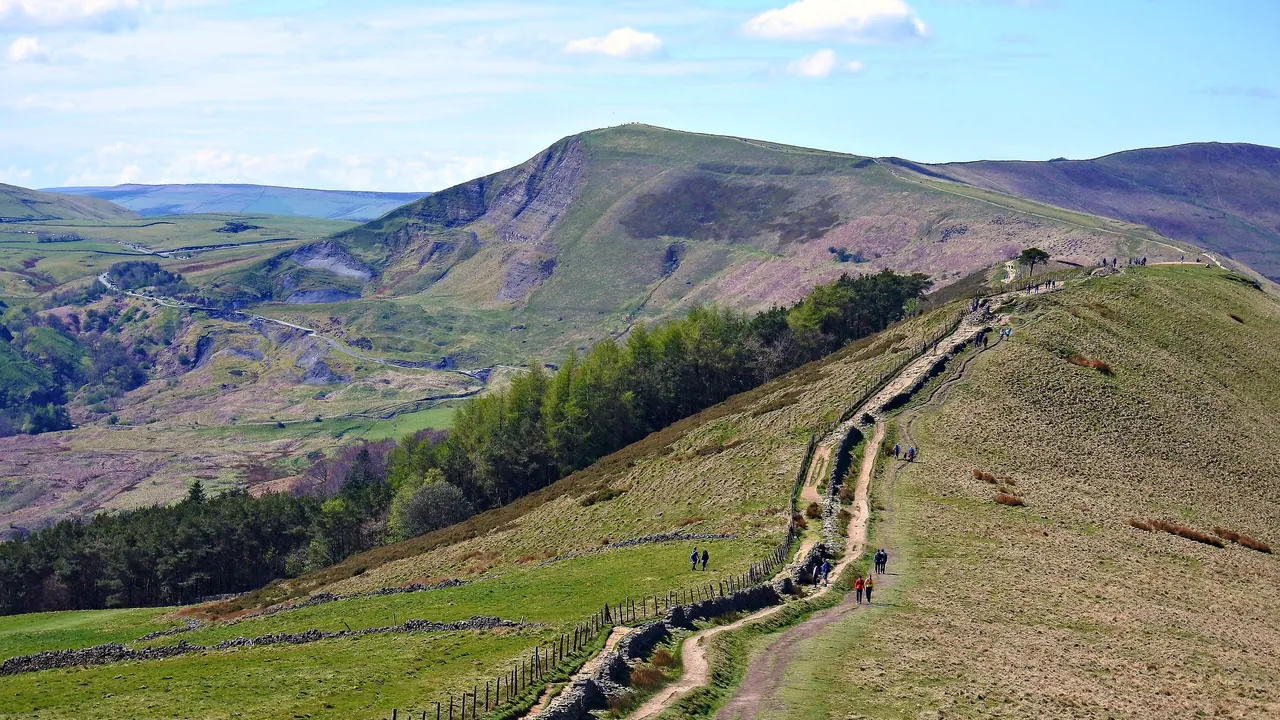
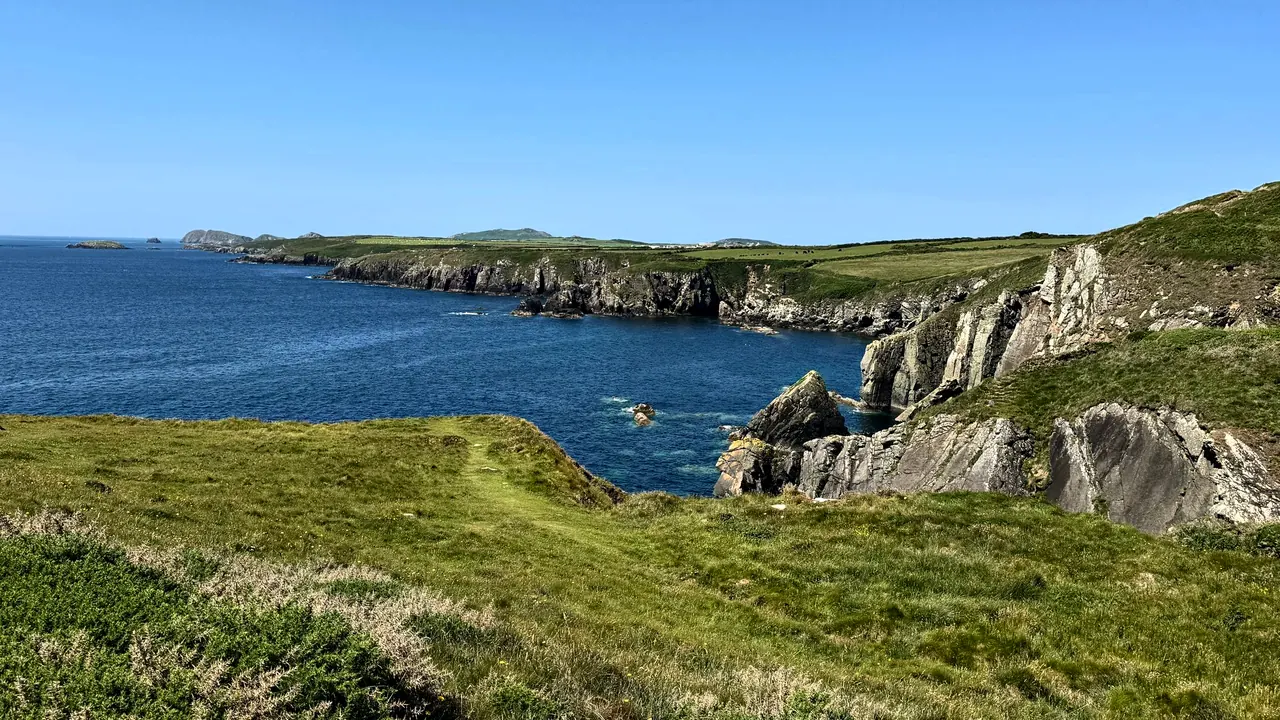
Photos: Peak District by Donnchadh H, CC BY 2.0, cropped; Pembrokeshire by Petra Nesti, Pexels License.
Peak District or Pembrokeshire?
Our verdict in twelve categories, each scored against the same fixed benchmark cities, and the climate month by month, so you can choose for your trip.
Choose Peak District for
- day trips
- wellness
- live music and the arts
The Peak District suits a walking trip with plenty to do between walks. Its moors and dales sit beside Chatsworth, Haddon Hall and the Georgian spa town of Buxton, where the thermal water fills a wet afternoon and the Opera House offers an evening at a show. Manchester and Sheffield are close enough for a day in the city. Families who want show caves, a cable car and a big theme park as well as open country will find more of them here.
Choose Pembrokeshire for
- beaches
- nightlife
- shopping
Anyone who wants the sea should head for Pembrokeshire. Sandy coves, a cliff path round almost the whole coast and boat trips out to puffins, seals and gannets make this a trip shaped by tides and weather rather than by country houses and towns. Expect a cold sea and quiet villages, with Tenby's harbour pubs giving the liveliest evenings, and fewer big outings beyond the county.
Scoreboard
Twelve categories on one fixed scale from 0 to 100. The shaded stretch is the gap between the two.
Your match
Pick a travel style or drag the sliders, and both match scores follow your weighting.
Too close to call, level with your weighting
Wins on day trips and wellness with your weighting.
Wins on beaches and nightlife with your weighting.
What matters to you?
Category by category
What the scores mean for a trip.
Beaches & swimming
This is where the two are furthest apart. Pembrokeshire is a true beach destination, with dune-backed coves, long surf beaches and town sands at Tenby, though the cold sea keeps most swims short and wetsuits are common.
The Peak District has no coast at all. A summer swim there means the heated open-air pool at Hathersage or a cold dip in a dale river, so anyone who wants sand should choose Pembrokeshire.
Food & drink
Neither is a place for serious eating out, and both rely on pubs and good local produce. What you eat differs: the Peak has Bakewell pudding, Hartington cheese, real ale and the farm shops around Chatsworth, while Pembrokeshire has crab and lobster from its harbours, salt-marsh lamb and dairy ice cream eaten with a sea view.
Culture & sights
The heritage is similar in scale but different in kind. The Peak District is the place for great houses and spa architecture, with Chatsworth, Haddon Hall, Buxton's Crescent and the Derwent Valley mills where the factory age began.
Pembrokeshire is older and more spiritual: St Davids' cathedral and Bishop's Palace, a chain of Norman castles led by Pembroke, and prehistoric sites in the Preseli Hills. In both you need a car to link the sights.
Nightlife
Both are quiet after dark, but Pembrokeshire has a little more going on, mainly because of Tenby, whose harbour pubs fill on summer weekends and where a few bars stay open late. The Peak District's evenings are spent by the fire in a village pub with walkers who plan an early start, and for a real night out you have to go to Sheffield or Manchester.
Nature & outdoors
Both are first-rate national parks, but one is about hills and the other about the coast. The Peak District is moorland and limestone dales: Kinder Scout, the gritstone edges loved by climbers, Dovedale, caves to explore underground and flat rail trails for cycling.
Pembrokeshire's strength is its cliff coast path and the sea itself, with puffins on Skomer, seal pups on Ramsey, dolphins in the bays, and coasteering, surfing and kayaking. Walkers who like ridges should choose the Peak. Those who want wildlife and the sea will prefer Pembrokeshire.
Day trips
The Peak District has much more within reach. Manchester and Sheffield are an easy train ride away, Derby, Nottingham and the Potteries are close, and Hardwick Hall, Bolsover and Kedleston lie just outside the park.
Pembrokeshire sits out at the western tip of Wales, so its outings are to smaller places: the monks' island of Caldey, Cardigan and Aberaeron up the coast, Laugharne's Dylan Thomas boathouse, and Gower at the limit. They are pleasant, but none is a big draw.
Good for families
Both suit children, and the Peak District has slightly more to fill the days. It has show caves, the Heights of Abraham cable car, Crich's vintage trams and Chatsworth's farmyard, and Alton Towers is a short drive away.
Pembrokeshire offers simpler days of sand, rock pools, crabbing and seal-watching boat trips, with Tenby and Saundersfoot as easy walkable bases. It has no big theme parks, and in both places rain and the need for a car are the main drawbacks.
Getting around
In both you will mostly drive, but car-free trips work better in the Peak District, where the Hope Valley line lets you start walks from stations at Edale and Hathersage. Pembrokeshire's branch lines stop at a few towns, and its seasonal coastal buses help with one-way coast path walks. Expect overflowing honeypot car parks in the Peak and narrow lanes with passing places down to Pembrokeshire's beaches.
Shopping & style
Shopping is modest in both, and Pembrokeshire has a little more worth buying. Narberth's independent shops, the woollen mills' Welsh blankets and the galleries around St Davids beat the Peak's mix of outdoor gear shops, Castleton's Blue John jewellery and the antique shops of Ashbourne and Leek.
Affordability
Overall costs are much the same. Both charge rural British prices, and in both the main attraction costs nothing: you can walk the Peak's hills and Pembrokeshire's beaches and coast path for free. Where they differ is in what pushes the bill up.
In the Peak District it is the paid sights, because the stately homes and show caves all charge entry, though youth hostels, bunkhouses and campsites keep beds cheap. In Pembrokeshire it is accommodation in July and August, when there are few good rooms and they are expensive. Spring or early autumn bring prices down noticeably.
Live music & performing arts
The Peak District has the stronger offer because of Buxton. Its Frank Matcham Opera House has a programme all year, and the July festival and fringe fill the town with opera and classical music.
Pembrokeshire has the early-summer music festival in St Davids Cathedral and small theatres in Milford Haven and Fishguard, but beyond that live music mostly means folk and pub sessions.
Wellness & relaxation
The Peak District has a real spa tradition, with Buxton's thermal springs feeding a spa in the Crescent, Matlock Bath's Victorian past and hotel spas across the dales.
Pembrokeshire has no bathing culture and only a few hotel spas and farmhouse retreats. Its kind of rest is a cliff walk and a room with a sea view, best outside August.
When should you go?
Pick your month. The climate figures are measured averages, not a forecast.
Peak District in July
Pembrokeshire in July
Daytime high, °C
Rainfall in the month, mm
Where the figures come from
Peak District's temperatures are measured 43 km from the centre, at Manchester Airport.
Peak District has no rain gauge within 25 km of the centre, so its rainfall comes from a gridded climate dataset read at the destination rather than from a gauge further away.
Pembrokeshire's temperatures are measured 46 km from the centre, at Aberporth.
Pembrokeshire has no rain gauge within 25 km of the centre, so its rainfall comes from a gridded climate dataset read at the destination rather than from a gauge further away.
Temperature and rainfall are climate normals, averaged over the years shown. Peak District: 1991-2020 normals, Manchester Airport (43.1 km from centre). Pembrokeshire: 1991-2020 normals, Aberporth (46.2 km from centre).
Both are at their best from late spring to early autumn and get wet and gloomy in the darker months. Inland, the Peak District gets a little warmer in high summer, around 21°C in July, which suits long days on the moors, while Pembrokeshire's coast stays cooler at about 18°C. Winter in the Peak can bring snow to the tops, and short days limit walking from November to February.
Pembrokeshire gets more sun, and May is its brightest month at about 210 hours, a good time for the coast path and the puffins. Only August and September are really beach months, with the sea at its warmest at about 17°C, which still means brisk swims. From October the coast turns noticeably wetter than the Peak, with November rain above 120mm, so autumn there suits people who come for wildlife and stormy views rather than the beach.
Which traveller are you?
For a beach and sun trip, Pembrokeshire is the obvious choice, with Barafundle, Whitesands, Newgale and Tenby's town beaches, rock pools and lifeguards in summer. The Peak District is landlocked, and its reservoirs are not for swimming.
On a relaxing and wellness trip, the Peak District has the edge. Buxton's thermal spa in the Crescent, free spring water at St Ann's Well and country-house hotel spas combine with quiet villages. Pembrokeshire's calm comes from empty lanes and sea views rather than spas or bathing.
For a culture and arts trip, the Peak District gives more in a short stay: Chatsworth's collection, medieval Haddon Hall, Cromford's mills and Buxton's Opera House with its July festival. Pembrokeshire has St Davids and its castles but far less live performance.
Before you go
| Measure | Peak District | Pembrokeshire |
|---|---|---|
| Official language | English | English |
| Currency | Pound Sterling (GBP) | Pound Sterling (GBP) |
| Sockets | G230 V, 50 Hz | G230 V, 50 Hz |
| Driving side | Left | Left |
| Time zone | UTC, UTC+1 in summer | UTC, UTC+1 in summer |
| Emergency number | 112 or 999 | 112 or 999 |
| Main airport | Manchester Airport (MAN)211 non-stop destinations | Cardiff International Airport (CWL)32 non-stop destinations |
| Public holidays this year | 8 days | 8 days |
By the numbers
| Measure | Peak District | Pembrokeshire |
|---|---|---|
| Population | 35,901 | 125,818 |
| People per km² | 25 | 78 |
| Swim season, months above 21 °C | - | None |
Where else could you go?
Every comparison below shares a destination with this one, so you can follow Peak District or Pembrokeshire somewhere new.
- Yorkshire Dalesvs Peak District
- Snowdoniavs Peak District
- Cotswoldsvs Peak District
- Lake Districtvs Peak District
- Cornwallvs Pembrokeshire
- Snowdoniavs Pembrokeshire