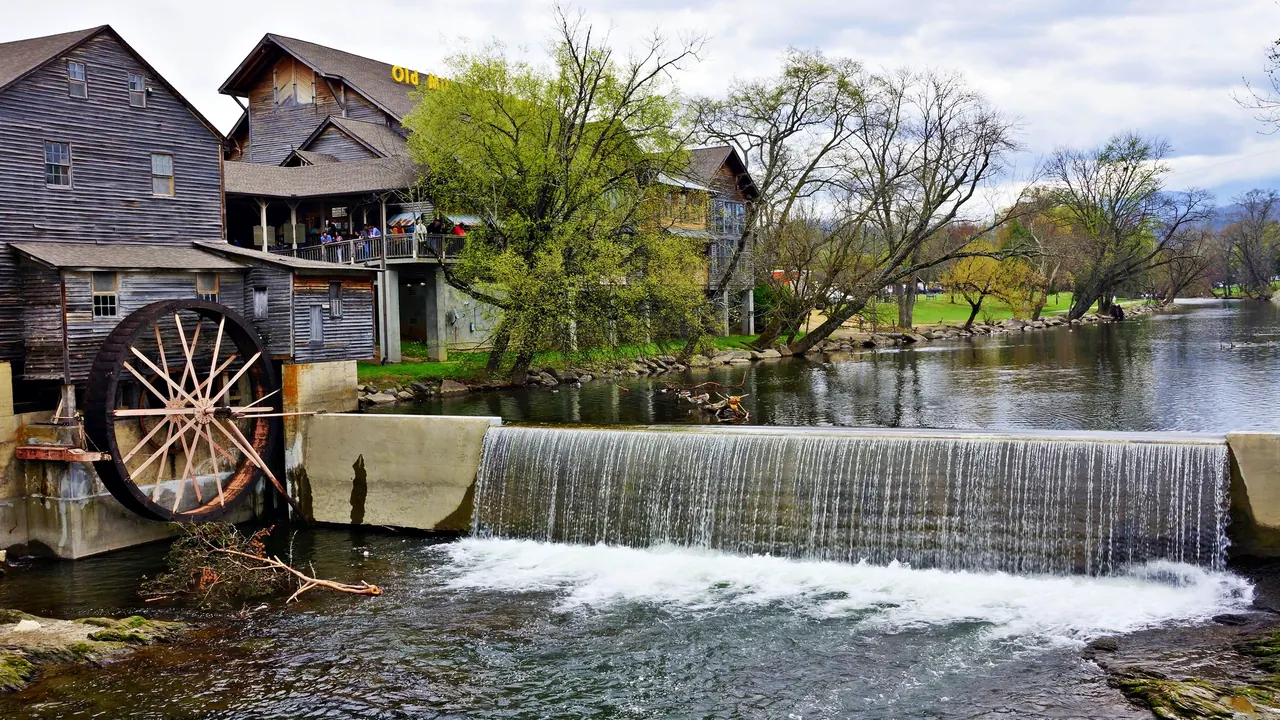
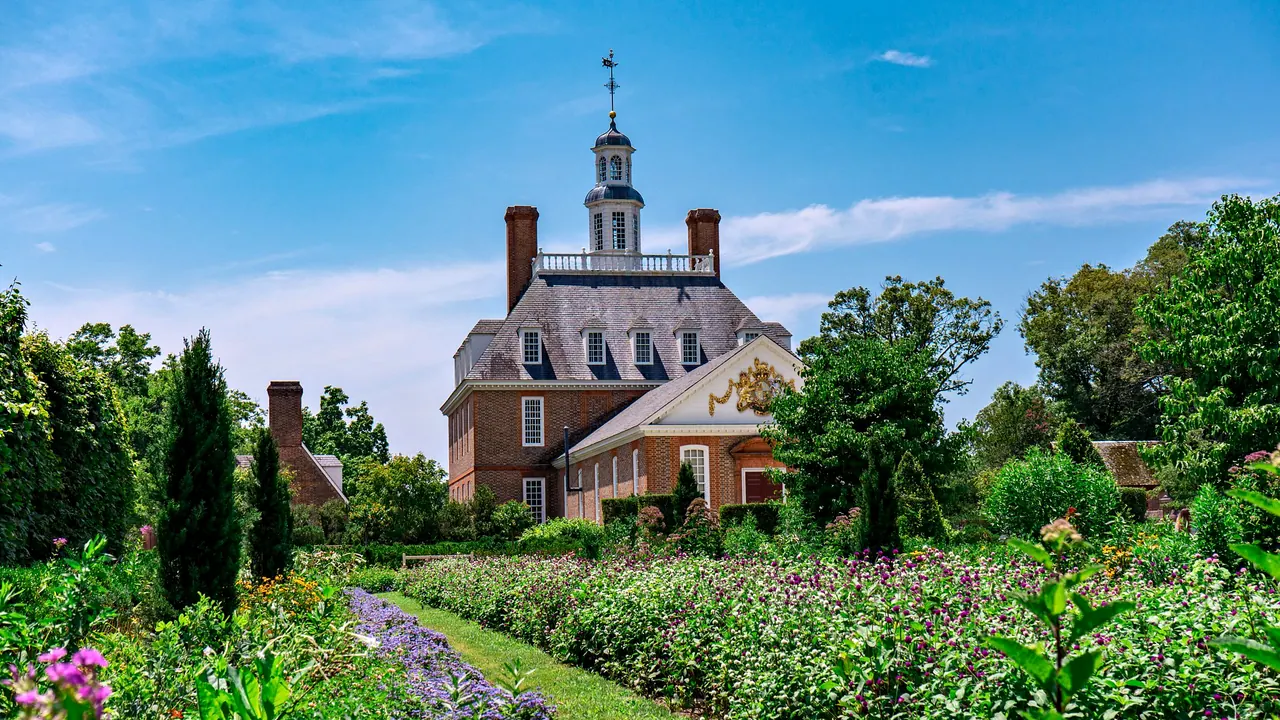
Photos: Pigeon Forge by NealVickers, CC BY-SA 4.0, cropped; Williamsburg, Virginia by Brian Magill, Pexels License.
Pigeon Forge or Williamsburg, Virginia?
Our verdict in twelve categories, each scored against the same fixed benchmark cities, and the climate month by month, so you can choose for your trip.
Choose Pigeon Forge for
- nature and the outdoors
- live music and the arts
- prices
Pigeon Forge suits a trip built around the Great Smoky Mountains and a big family theme park. Days go on waterfall trails, bear spotting in Cades Cove and rides at Dollywood. Evenings are for country and gospel dinner shows, and nights for a hillside cabin with a hot tub. Come for the mountains and the shows, not for history or a town you can walk around.
Choose Williamsburg, Virginia for
- culture and sights
- beaches
- getting around
Anyone who wants early American history in front of them should choose Williamsburg. Colonial Williamsburg, Jamestown and Yorktown are a short drive apart, the historic core is easy to walk, and Busch Gardens gives children their thrill rides. The countryside is flat and gentle, but the Chesapeake beaches are close enough for a summer swim.
Scoreboard
Twelve categories on one fixed scale from 0 to 100. The shaded stretch is the gap between the two.
Your match
Pick a travel style or drag the sliders, and both match scores follow your weighting.
Wins on nature and the outdoors and live music and the arts with your weighting.
Wins on culture and sights and beaches with your weighting.
What matters to you?
Category by category
What the scores mean for a trip.
Beaches & swimming
Neither town is a beach destination, but Williamsburg at least has salt water within easy reach. The quiet strip at Yorktown is a short drive away and Buckroe Beach looks out over the Chesapeake. The Atlantic surf at Virginia Beach makes a full day out. The water is warm from June to September, though sea nettles sometimes drift in during high summer.
Pigeon Forge is hours from any coast. A swim there means Douglas Lake, wading in the boulder pools of the park's streams, or the water park next to Dollywood.
Food & drink
Both towns feed the crowds from pancake houses and buffets along their main roads, and neither is somewhere you go for the food. What sets them apart is the regional cooking. Williamsburg has the Chesapeake, with crab cakes, oysters and soft-shell crab, as well as Virginia ham biscuits, candlelit tavern dinners and a few bistros and wine bars around Merchants Square.
Pigeon Forge sticks to Southern comfort food: fried chicken buffets, barbecue, cobbler and fudge. Moonshine tastings are its one local custom. For an ambitious meal you drive to Knoxville or Asheville.
Culture & sights
Williamsburg is far ahead here. In its restored colonial capital you can walk Duke of Gloucester Street from the Capitol to the Wren Building, passing Bruton Parish Church and the green that leads up to the Governor's Palace. Costumed interpreters work at the old trades, and nearly ninety original buildings stand among the reconstructions. The folk and decorative art museums give the town real depth.
Pigeon Forge was built for amusement rather than history. Its sights are the Titanic replica and the illusion museums. The 1830 Old Mill is its one real historic building, and for the region's past you go to the cabins and churches in the national park.
Nightlife
Evenings in Pigeon Forge are loud, neon-lit and aimed at families. Go-kart tracks and attraction complexes along the Parkway stay busy until about ten. Adults who want a drink find a few sports bars, brewpubs and moonshine tasting rooms, and most drive up to Gatlinburg if they want more bars to choose from.
Williamsburg's evenings are slower and more atmospheric. A candlelit tavern dinner or a ghost walk through the Historic Area is the usual end to the day. Students fill the pubs near William & Mary in term time and there are a few taprooms on the edge of town, but for a real night out you drive to Norfolk or Richmond.
Nature & outdoors
Pigeon Forge has the much stronger case. The Great Smoky Mountains rise to more than 2,000m half an hour away. You can climb to Mount LeConte, walk the Appalachian Trail along the crest or watch bears and wild turkey in Cades Cove. Spring brings wildflowers and October brings autumn colour.
Williamsburg's Tidewater is gentler country of tidal creeks, marsh and wide river estuaries. It is best seen by bike on the Colonial Parkway or the Capital Trail, or by kayak among ospreys and bald eagles. There is nothing to climb, and summer brings mosquitoes.
Day trips
Williamsburg has the richer choice of outings because it sits at the centre of the Historic Triangle. Jamestown and Yorktown are each under half an hour away and the James River plantation houses line Route 5. Further out, Richmond, Norfolk and Fredericksburg add a state capitol, museums and Civil War sites.
From Pigeon Forge there are fewer trips, but they are varied. Choose from Gatlinburg's craft studios, Knoxville's Market Square, or Cherokee on the far side of Newfound Gap. The best full day is Asheville, with the Biltmore Estate.
Good for families
Both towns are built around family vacations, and each has a large theme park with a water park beside it. The difference lies in how you fill the other days. Pigeon Forge adds go-karts, mountain coasters, zip lines, mini-golf and easy waterfall walks, and its large cabins can sleep several families together.
Williamsburg pairs the rides at Busch Gardens with history that children can take part in, such as musket firings, fife-and-drum parades and replica ships to board at Jamestown. Both towns need a car and both are hot in summer, but Pigeon Forge also has slow Parkway traffic in the peak weeks.
Getting around
Williamsburg is easier on foot, though only in its core. The Historic Area, Merchants Square and the campus form a flat district you can cross in about twenty minutes. Duke of Gloucester Street is closed to cars by day, and Amtrak trains stop near the centre.
Pigeon Forge has no walkable centre at all, just a multi-lane strip with a slow trolley that helps a little. In both towns you need a car for the theme parks and outlying sites, and in Pigeon Forge for the national park trailheads too.
Shopping & style
Both towns have big outlet centres with American mid-market brands, and neither has any luxury shopping. Williamsburg has the more unusual shops: colonial-style workshops selling pewter, silver, tin and reproduction furniture, and the brick-fronted stores of Merchants Square. Pigeon Forge's own crafts are the quilts, pottery and stone-ground cornmeal near the Old Mill and the brooms, baskets and woodwork from the studios above Gatlinburg, surrounded by plenty of T-shirts and fudge.
Affordability
Costs are much the same in both towns. Each has plenty of reasonably priced motel rooms outside the peak weeks, a tip on every restaurant bill and a car you can't do without. In Pigeon Forge you save by sharing a big cabin and walking in the national park costs almost nothing, but dinner shows and attractions soon add up. In Williamsburg the biggest cost is admission to the historic sites and theme parks, so the combination passes are worth looking into.
Live music & performing arts
Pigeon Forge has far more live entertainment. Dozens of theatres along the Parkway put on country and gospel revues, comedy, magic and dinner shows every night. Through the day, Dollywood's stages have bluegrass and Appalachian music, and all of it is broad and aimed at families.
Williamsburg's performances are smaller and tied to the colonial setting: candlelit eighteenth-century recitals, period theatre, fife-and-drum corps and student concerts at William & Mary in term time. Neither town has opera or an orchestra, so for those you go to Knoxville or Richmond.
Wellness & relaxation
Neither town has a bathing tradition, and in both the treatments come down to a handful of resort spas. The quiet is found in different places. In Pigeon Forge it is in the hillside cabins, with porches, fireplaces and private hot tubs well away from the neon of the Parkway.
Williamsburg is gentler as a whole. You have the colonial greens to yourself early in the morning, golf resorts with spas beside the James River, and slow drives along the wooded Colonial Parkway.
When should you go?
Pick your month. The climate figures are measured averages, not a forecast.
Pigeon Forge in July
Williamsburg, Virginia in July
Daytime high, °C
Rainfall in the month, mm
Where the figures come from
Pigeon Forge's temperatures are measured 38 km from the centre, at McGhee Tyson Airport.
Pigeon Forge has no rain gauge within 25 km of the centre, so its rainfall comes from a gridded climate dataset read at the city rather than from a gauge further away.
Williamsburg, Virginia's sunshine is measured 60 km from the centre, at Richmond International Airport.
Temperature and rainfall are climate normals, averaged over the years shown. Pigeon Forge: 1991-2020 (sunshine 1981-2010) normals, McGhee Tyson Airport (37.9 km from centre). Williamsburg, Virginia: 2006-2020 (sunshine 1981-2010, rainfall 1991-2020) normals, Williamsburg / Kingspoint (3.6 km from centre).
Both towns have hot, humid summers and cool winters. Williamsburg runs a degree or two warmer all year and reaches 33°C in July. April, May, late September and October are the best months for walking and hiking in either place. In Pigeon Forge, October is also the driest month and the time of autumn colour in the park. Winter days there sit around 9°C and get little sun.
In the Smokies the rain falls steadily all year. Williamsburg's wet season is late summer, with August the wettest month at 151mm, and its winters are drier and clearly sunnier. Only Williamsburg has sea water to swim in. The bay reaches 26°C in July and August and stays pleasant into September.
Which traveller are you?
On an outdoors trip, Pigeon Forge is the clear winner. The Great Smoky Mountains begin half an hour up the road, with the climb to Mount LeConte, waterfall walks and bears in Cades Cove. Williamsburg has only flat forest paths, kayaking and cycling.
For a culture and arts trip, choose Williamsburg. Colonial Williamsburg, the Wren Building, Jamestown and Yorktown together tell the story of early America. Pigeon Forge has the Old Mill, a Titanic replica and novelty museums, plus its country dinner shows.
On a beach and sun trip, neither town is on the sand, but Williamsburg comes closer. Yorktown's calm river beach is a short drive away and Virginia Beach is an hour, with warm summer water. Pigeon Forge offers only lake swimming and a water park.
Before you go
| Measure | Pigeon Forge | Williamsburg, Virginia |
|---|---|---|
| Currency | US Dollar (USD) | US Dollar (USD) |
| Sockets | AB120 V, 60 Hz | AB120 V, 60 Hz |
| Driving side | Right | Right |
| Time zone | UTC-5, UTC-4 in summer | UTC-5, UTC-4 in summer |
| Emergency number | 911 | 911 |
| Elevation | 305 m | 15 m |
| Main airport | McGhee Tyson Airport (TYS)39 km from centre34 non-stop destinations | Newport News Williamsburg International Airport (PHF)24 km from centre1 non-stop destination |
| Public holidays this year | 13 days | 13 days |
By the numbers
| Measure | Pigeon Forge | Williamsburg, Virginia |
|---|---|---|
| City population | 6,343 | 15,425 |
| People per km² | 185 | 656 |
| Museums within 10 km | 7 | 8 |
| UNESCO World Heritage sites within 50 km | 1 | 0 |
| Swim season, months above 21 °C | - | 4 months |
Where else could you go?
Every comparison below shares a destination with this one, so you can follow Pigeon Forge or Williamsburg, Virginia somewhere new.
- Gatlinburgvs Pigeon Forge
- Virginia Beachvs Williamsburg, Virginia
- Ashevillevs Pigeon Forge
- Chattanoogavs Pigeon Forge
- Washington DCvs Williamsburg, Virginia
- Ocean City, Marylandvs Williamsburg, Virginia