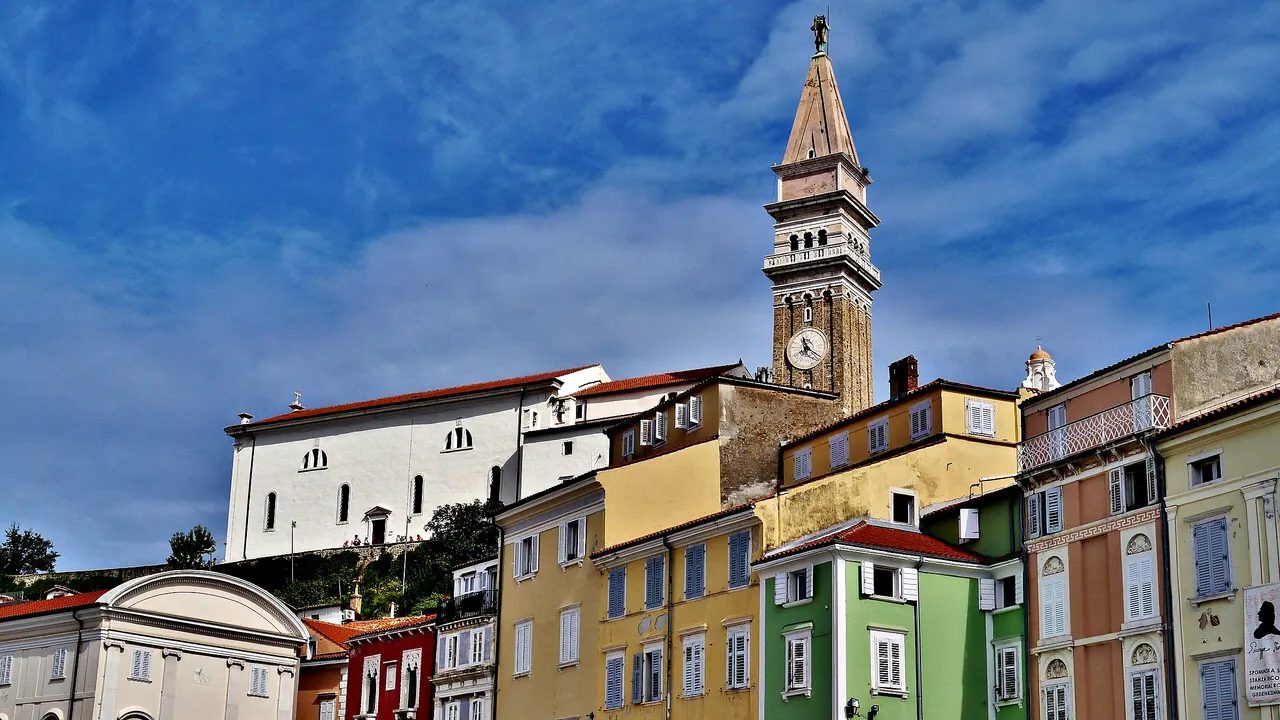
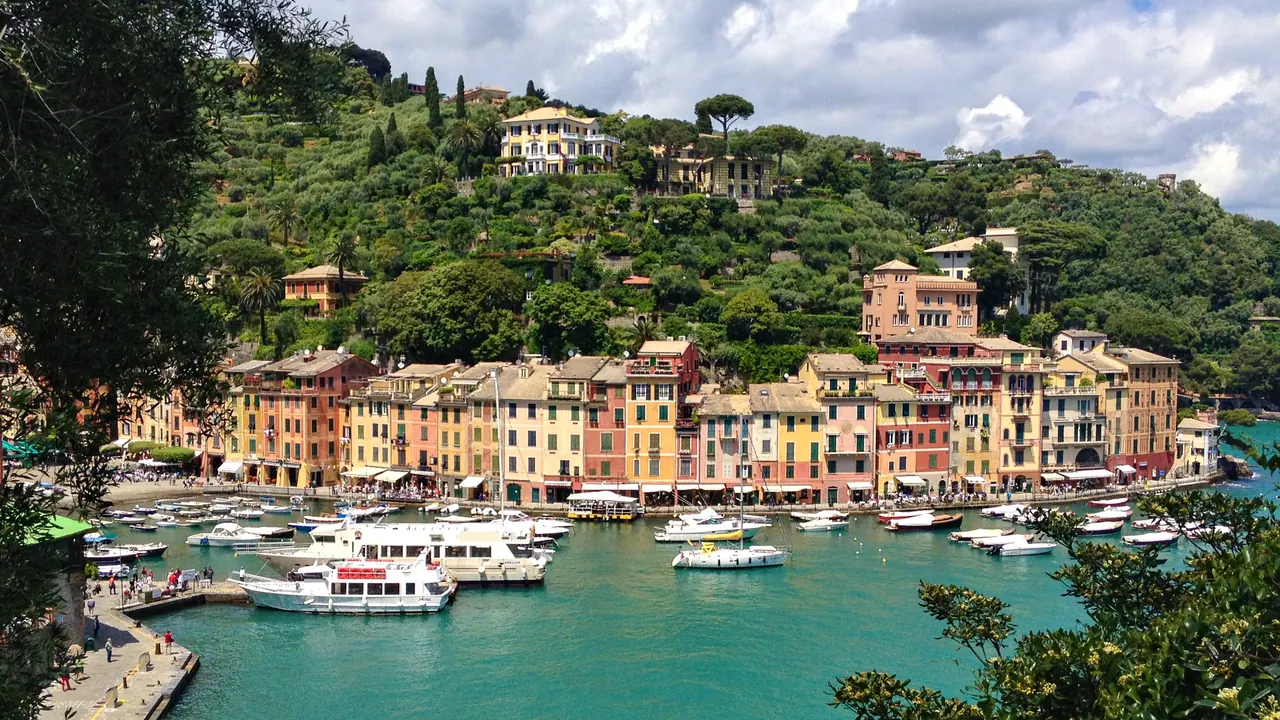
Photos: Piran by Zairon, CC BY-SA 4.0, cropped; Portofino by Michal Osmenda, CC BY 2.0, cropped.
Piran or Portofino?
Our verdict in twelve categories, each scored against the same fixed benchmark cities, and the climate month by month, so you can choose for your trip.
Choose Piran for
- prices
- culture and sights
- families
Piran suits a relaxed, sensibly priced week by the sea. Its car-free Venetian old town is easy with children and pleasant to wander. The seawater and salt-mud spas of Portoroz and the salt pans give a slow stay some substance, and with Trieste, Istria and Ljubljana all within reach it makes a good base for exploring three countries.
Choose Portofino for
- nature and the outdoors
- shopping
- beaches
Choose Portofino if landscape matters more than cost. The protected headland behind the harbour has far better walking, diving and boat trips than Slovenia's short coast, and the ochre harbour is famous in its own right. It is a place to spend freely or to visit for the day, which is why many people sleep in Santa Margherita or Camogli and come over by boat.
Scoreboard
Twelve categories on one fixed scale from 0 to 100. The shaded stretch is the gap between the two.
Your match
Pick a travel style or drag the sliders, and both match scores follow your weighting.
Wins on prices and culture and sights with your weighting.
Wins on nature and the outdoors and shopping with your weighting.
What matters to you?
Category by category
What the scores mean for a trip.
Beaches & swimming
Swimming at both means rocks and ladders rather than a town beach. In Piran you step down from concrete platforms below the old walls and around the Punta, or walk to the small pebble cove at Fiesa. Portofino's rock ledges on the path to the lighthouse drop into deeper, very clear water inside a marine reserve.
What differs is the sand nearby. From Piran the shuttle or the seafront promenade takes you to Portoroz, where the beach is small and artificial but has sand and sunbeds, or to the quieter cliff-backed shore at Strunjan. From Portofino the sand at Paraggi is mostly paid beach clubs with a narrow free strip that fills early, and the best alternative is the pebble beach below the abbey at San Fruttuoso, reached by boat or on foot.
Food & drink
Both serve good, simple coastal food without much range. In Piran that means grilled fish, scampi buzara, Istrian olive oil and truffles, with Malvazija or Refosk from the hills and salt from the local pans. In Portofino it means Ligurian cooking: trofie with pesto, pansoti in walnut sauce and cheese focaccia from Recco.
The real difference is what you pay for the view. Piran's konobas are modest places, while Portofino's harbour terraces charge heavily for the yachts in front of them. In both towns, people who care about food head out of town, into the Istrian hinterland from Piran or to Camogli and the hill trattorie from Portofino.
Culture & sights
Piran gives more to a curious visitor. Its whole peninsula is a Venetian Gothic town of lanes and small squares around the oval Tartini Square, with St George's campanile and the medieval walls above. A maritime museum, an aquarium and the Minorite cloister fill out a day.
Portofino's main sight is the village itself, a horseshoe of painted houses around the harbour. Add San Giorgio, Castello Brown and the abbey at San Fruttuoso and you have most of it. It is a place for atmosphere rather than history or museums.
Nightlife
Neither suits a real night out, though Piran has a little more going on. Evenings there mean wine on Tartini Square or sunset at a bar on the Punta, and Portoroz is only minutes away for beach bars, a casino and a few summer clubs.
Portofino offers a dressed-up aperitivo facing the yachts and a long harbour dinner, and then the village goes quiet. For anything later you have to go to Santa Margherita, Rapallo or Genoa.
Nature & outdoors
Piran's outdoors is level and unhurried. Slovenia's stretch of coast is short, so a day out here means low cliffs and salt lagoons full of birds, an easy ride among vineyards, or a drive up to the limestone Karst to go underground at Skocjan. On the water it is paddling under the cliffs rather than diving. Little of it needs much fitness, and there are no real mountains anywhere near.
Portofino suits anyone who wants to work harder and go further. Its headland climbs straight out of the sea, so one walk can take you up through woodland to the summit ridge and back down to a cove with no road, with a few airy stretches that need a steady head. The protection carries on below the surface too, and the marine reserve draws divers from far afield, something Piran's calm gulf cannot offer.
Day trips
Both are excellent bases, and the difference is mainly in how you travel. Piran sits where three countries meet: Trieste is under an hour away, the Istrian towns of Rovinj, Porec and Motovun are across the border, and Ljubljana, Predjama Castle and Lipica are in the other direction. Most of these trips are easiest by car, though summer boats cross to Venice.
From Portofino you travel by sea and rail. Ferries run to Camogli, the Cinque Terre and Portovenere, and trains go to Genoa's palaces and to Sestri Levante. Outside the ferry season this takes more planning.
Good for families
Piran works noticeably better with children. The old town has no cars, the seafront is flat, the harbour aquarium suits younger children, and Portoroz's shallow sandy beach is close by. Its limits are the steep lanes up to the church and little to keep older children busy.
Portofino is calm and safe, but it is built for adults. The paths are steep steps, there are no playgrounds, and Paraggi's sand is mostly paid clubs. That is why families usually stay in Santa Margherita or Rapallo and take children to Genoa's aquarium.
Getting around
Piran is much the easier place to reach and to park at. Cars stay in the large garage at the edge of town, and a shuttle bus runs into the centre and on to Portoroz, as does the seafront promenade. Its weakness is further afield: there is no railway, so the Istrian towns and the Karst usually mean hiring a car.
Getting into Portofino is the hard part. A single narrow, winding road runs about 5km from Santa Margherita, parking is very limited and the road jams in summer, so the bus to the station or the ferries from spring to autumn are the sensible way in. Once there, both places are walked end to end in minutes, though Portofino's paths to the church, castle and lighthouse are steep.
Shopping & style
Portofino has more to look at, though in a single hour's stroll. Its few lanes hold big fashion and jewellery houses, linen and resort clothes, as well as Ligurian lace and ceramics.
Piran's shopping is smaller and more local: craft shops, galleries and harbour souvenir stalls. The things worth taking home are salt flower from the Secovlje pans, olive oil and coastal wine. For a proper browse, people go from Piran to Trieste or Ljubljana, and from Portofino to Chiavari or Genoa.
Affordability
Piran is far easier on the wallet. It costs more in July and August, but simple konobas, local wine and rooms in Portoroz or out of season bring it down to a fair level. The swimming and walking cost nothing.
Portofino is among the most expensive places to stay in Italy. Its hillside hotels, piazzetta restaurants, Paraggi loungers and parking are all expensive. The usual way to save is to stay in Santa Margherita, Rapallo or Camogli and come over for the day.
Live music & performing arts
Piran has a modest summer programme, which is more than Portofino has. It honours its violinist with Tartini concerts in churches, in the Minorite cloister and on the main square, and the small Tartini Theatre hosts occasional plays and recitals.
Portofino has only the odd summer concert in the piazzetta or at the castle. For opera or a full concert season you have to go to the Teatro Carlo Felice in Genoa.
Wellness & relaxation
Piran has a real bathing tradition on its doorstep. Portoroz grew up as a spa resort with seawater pools and brine baths, the salt pans have an outdoor thalasso spa where you lie in salt mud beside the lagoons, and Strunjan has a seawater health resort. Add the quiet car-free lanes and the town is made for slowing down.
Portofino has no public spas, only the treatment rooms and pools of its luxury hotels. Its calm comes from shaded paths and long lunches by the water, but mainly early or late in the day, since tour boats crowd the harbour at midday in summer.
When should you go?
Pick your month. The climate figures are measured averages, not a forecast.
Piran in July
Portofino in July
Daytime high, °C
Rainfall in the month, mm
Where the figures come from
Portofino's temperatures are measured 31 km from the centre, at Genova / Sestri.
Portofino has no rain gauge within 25 km of the centre, so its rainfall comes from a gridded climate dataset read at the city rather than from a gauge further away.
Temperature and rainfall are climate normals, averaged over the years shown. Piran: 2005-2020 (sunshine 1991-2020, rainfall 1991-2020) normals, Portoroz (1.2 km from centre). Portofino: 1991-2020 normals, Genova / Sestri (31 km from centre).
For swimming, the two follow the same calendar: the sea reaches about 25°C in August at both and is warm enough from June to September. Piran gets hotter in high summer, with days around 30°C in July and long hours of sunshine, so the steep climb to St George's is best done in the morning or evening. Portofino stays a little milder and is very dry in July, though the exposed headland trails are still more comfortable in spring.
The biggest difference comes in autumn. Rain in Portofino climbs sharply from September to about 225mm in October, while Piran's autumn is wet but far less so. In winter Portofino is the milder of the two, with days around 12°C while Piran is noticeably cooler, and neither is a beach destination then. May, June and September suit walking in both, and June and September are also good for swimming.
Which traveller are you?
On a trip on a tight budget, Piran is the obvious choice. Away from July and August its rooms and konoba meals are fairly priced for Western Europe. Portofino charges heavily for everything except walking and the local buses, so most budget travellers only visit for the day.
For an outdoors trip, Portofino comes out ahead. Its regional park and marine reserve offer cliff trails over the headland to San Fruttuoso, dives along red coral walls and kayaking round the point. Piran's outdoors is gentler: the Strunjan cliff path, the salt pans and the Parenzana cycle route.
On a family trip with young children, Piran is the easier of the two. It has a flat car-free seafront, a small aquarium on the harbour and the shallow sand at Portoroz. Portofino has steep steps, no playgrounds, and most of its only sand is taken up by paid beach clubs.
Before you go
| Measure | Piran | Portofino |
|---|---|---|
| Official language | Slovene | Italian |
| Currency | Euro (EUR) | Euro (EUR) |
| Sockets | CF230 V, 50 Hz | CFL230 V, 50 Hz |
| Driving side | Right | Right |
| Time zone | UTC+1, UTC+2 in summer | UTC+1, UTC+2 in summer |
| Emergency number | 112 | 112 |
| Elevation | 7 m | 20 m |
| Main airport | Trieste Airport (TRS)34 km from centre32 non-stop destinations | Genoa Cristoforo Colombo Airport (GOA)32 km from centre25 non-stop destinations |
| Public holidays this year | 21 days | 13 days |
By the numbers
| Measure | Piran | Portofino |
|---|---|---|
| City population | 3,787 | 355 |
| People per km² | 85 | 142 |
| Museums within 10 km | 5 | 14 |
| UNESCO World Heritage sites within 50 km | 4 | 2 |
| Swim season, months above 21 °C | 4 months | 4 months |
Where else could you go?
Every comparison below shares a destination with this one, so you can follow Piran or Portofino somewhere new.