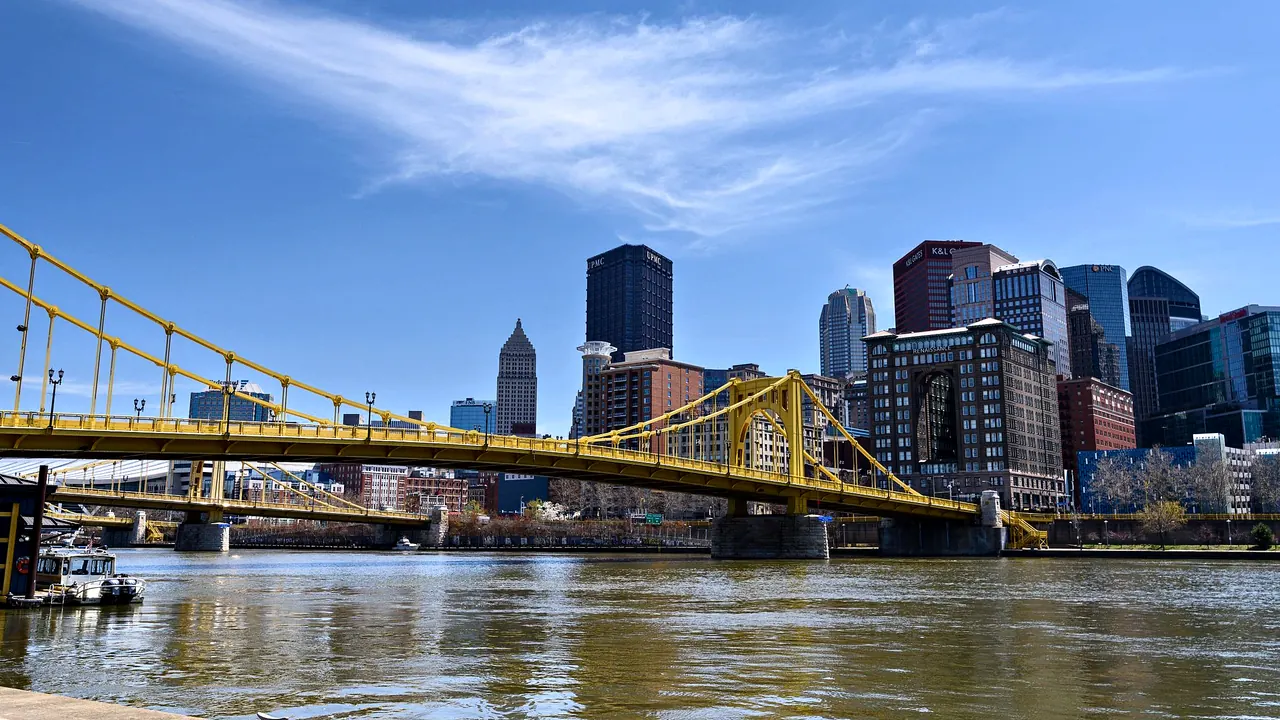

Photos: Pittsburgh by Jay Brand, Pexels License; Washington DC by Guohua Song, Pexels License.
Pittsburgh or Washington DC?
Our verdict in twelve categories, each scored against the same fixed benchmark cities, and the climate month by month, so you can choose for your trip.
Choose Pittsburgh for
- prices
Pittsburgh suits travellers who want an American city at a gentler pace and a lower cost. Its pull is the setting, with bridges over three rivers, inclines up Mount Washington and steel-era collections such as the Carnegie Museums and the Warhol. It also works as a base for the Laurel Highlands and Fallingwater if you have a car. Rooms are much cheaper here, and a long weekend doesn't need much planning.
Choose Washington DC for
- culture and sights
- getting around
- day trips
Washington is the better choice for anyone who wants to fill a week with sights. The free Smithsonian museums, the National Gallery and the monuments of the Mall are on another scale, and the Metro reaches most of them without a car. Around the city you can do day trips to Alexandria, Baltimore, the Civil War battlefields and Philadelphia. You pay for all this in hotel bills, but you get far more to see and do.
Scoreboard
Twelve categories on one fixed scale from 0 to 100. The shaded stretch is the gap between the two.
Your match
Pick a travel style or drag the sliders, and both match scores follow your weighting.
Wins on prices with your weighting.
Wins on culture and sights and getting around with your weighting.
What matters to you?
Category by category
What the scores mean for a trip.
Beaches & swimming
Neither city is a place to swim, and the nearest water is different in each. From Pittsburgh you drive about 45 minutes to Lake Arthur, a freshwater reservoir with small sand beaches in the woods, or two hours to the longer sands of Presque Isle on Lake Erie.
From Washington the nearest water is the Chesapeake, about an hour east. It is warmer than the lakes, but the water is brackish, the beaches are small and late-season jellyfish can spoil a swim. The Atlantic shore is three hours away, so it means a weekend rather than an afternoon.
Food & drink
Washington offers the wider and more ambitious choice of places to eat. Its Ethiopian restaurants around Shaw and U Street are the standout. Add pupusas in Columbia Heights, Chesapeake crabs and oysters in season, the old fish market on the Southwest waterfront, and tasting menus around Logan Circle and Penn Quarter.
Pittsburgh's food has more of a home-grown character but a narrower range. You'll find Eastern European pierogies and haluski, sandwiches with the fries stacked inside, and good craft beer. Its best morning is spent along the Strip District's grocers and stalls, and its best dinners are in the converted industrial buildings of Lawrenceville.
Culture & sights
Pittsburgh's sights tell one strong story, the steel fortunes of Carnegie, Frick and Heinz. You can see it in the dinosaur halls and art of the Carnegie Museums, in the Nationality Rooms of the Cathedral of Learning, and in the Warhol and the Mattress Factory on the North Side. Its finest sight is the view of the bridges from the top of the inclines.
Washington is on another level. The Smithsonian museums, the National Gallery and the African American history museum stand within walking distance of each other along the Mall, and nearly all of them are free. Around them are the Capitol, the Lincoln Memorial and the Library of Congress. You could spend days here and still leave a lot unseen.
Nightlife
Both cities are for bars rather than clubbing, but Washington has more going on. Its 14th Street and U Street corridor has rooftops and late dance spots, Adams Morgan stays rowdy until late, and Dupont Circle is the centre of a long-established LGBTQ+ scene. At weekends a few large clubs book touring DJs.
Pittsburgh is friendlier and smaller. Most nights out happen on Butler Street in Lawrenceville or on the student strip of East Carson Street, and the bars fill up in black and gold on game nights. In both cities the bars shut around 2am, and neither nightlife is a reason to choose the trip.
Nature & outdoors
The two cities are fairly even here, but the landscapes are different. Pittsburgh is steep and hilly, with wooded ravines in Frick and Schenley parks and kayaks under the downtown bridges. Its biggest outdoor draw is the whitewater gorge at Ohiopyle, an hour and a half away.
Washington's best outdoor spots are closer and easier. Rock Creek Park runs through the city, and Great Falls is half an hour upriver. Shenandoah's ridge walks are within a day's reach. One route links the two cities: the Great Allegheny Passage from Pittsburgh joins the C&O Canal towpath that ends in Georgetown, so cyclists can ride all the way between them.
Day trips
Washington has far more within easy reach. Old Town Alexandria is a Metro ride away, Baltimore is under an hour by train, and Philadelphia's Independence Hall is a long but rewarding day by fast train. Mount Vernon, Annapolis, Gettysburg, Antietam and Harpers Ferry fill out a list that covers most of early American history.
Pittsburgh has one outstanding trip: Fallingwater, which you can combine with Wright's Kentuck Knob and the colonial fort at Ligonier. The Flight 93 memorial and Old Economy Village are worth a visit, but beyond those there is little, and you need a car for almost all of it.
Good for families
Washington is the easier city with children, mainly because the best of it is free and close together. The dinosaurs at Natural History and the rockets at Air and Space can fill several days, the National Zoo costs nothing, and lifts at every Metro station make getting around with a buggy simple. The downside is the long, shadeless walk along the Mall in summer.
Pittsburgh has its own strengths: the Science Center's submarine, the free-flying birds of the National Aviary, the dinosaur halls in Oakland and the inclines. It also has Kennywood, an old amusement park with wooden roller coasters, which Washington has nothing close to. Its hills and spread-out neighbourhoods make a car almost essential with small children.
Getting around
Washington is much easier to get around without a car. The centre is flat and laid out on a grid, and the Metro reaches Arlington, Alexandria and the airport. Bike-share docks along the riverside paths link the monuments. The main gap is Georgetown, which you reach on foot or by bus.
Pittsburgh's downtown is compact, with the T and short bridge walks to the North Side and the Strip. Beyond that, Oakland, Lawrenceville and Shadyside depend on commuter buses, steep hills and ride-hailing.
Shopping & style
Neither city is worth the trip for shopping, but Washington has more choice. Georgetown's M Street mixes chains, boutiques and antique shops in old brick buildings, CityCenterDC brings luxury labels downtown, and the Smithsonian and National Gallery shops are good for prints and books.
Pittsburgh's shopping is smaller and more local. Browse the stalls and kitchenware shops of the Strip District, vintage shops on Butler Street and boutiques on Walnut Street in Shadyside. For the big brands you have to drive out to the malls.
Affordability
Pittsburgh is the cheaper stay by a clear margin. Hotel rooms, even downtown, cost well below what Washington charges, and beer and casual meals are fairly priced.
Washington's restaurants, cocktails and taxis are priced for expense accounts, and rooms cost even more in cherry blossom season. Its free museums, zoo and memorials keep the cost of each day's sightseeing low. Staying in Arlington helps, but the hotel bill still makes the difference.
Live music & performing arts
Washington has more to see on stage, especially theatre. You can choose new American plays at Arena Stage, the classics at the Shakespeare Theatre, sharper new work at Woolly Mammoth, and plays in the Folger's Elizabethan-style playhouse or at Ford's Theatre. Add the National Symphony, summer lawn concerts at Wolf Trap and the city's own go-go music.
Pittsburgh's strongest offering is classical. The Symphony at Heinz Hall has a long reputation, and the Benedum Center hosts opera and ballet. Its Hill District jazz past, kept alive in August Wilson's plays and a few small clubs, gives it a history of its own.
Wellness & relaxation
Neither city has a spa or bathing tradition, so in both, relaxing means a hotel spa or a quiet green space. In Pittsburgh, the warm glasshouses of Phipps Conservatory are the calmest spot, and for a proper spa stay you drive to the resort hotels of the Laurel Highlands.
Washington's quieter moments are in the city: an early walk round the Tidal Basin, the gardens of Dumbarton Oaks or the National Arboretum.
When should you go?
Pick your month. The climate figures are measured averages, not a forecast.
Pittsburgh in July
Washington DC in July
Daytime high, °C
Rainfall in the month, mm
Temperature and rainfall are climate normals, averaged over the years shown. Pittsburgh: 1991-2020 (sunshine 1981-2010) normals, Greater Pittsburgh International (7.3 km from centre). Washington DC: 1991-2020 (sunshine 1981-2010) normals, Washington National Airport (5 km from centre).
Both cities are best in late spring and early autumn, but they go wrong in opposite ways. Pittsburgh has the harsher winter, with January highs of about 3°C and very little sun from November to February. Its summer is the easier one, though: highs of about 28°C are comfortable for walking between the hills and rivers. Washington's July and August reach about 32°C and feel sticky, and the long, open walk along the Mall becomes a chore in that heat. The Chesapeake water is warmest then, at about 26°C in August.
Rain falls steadily all year in both cities and peaks at around 107mm in June and July, mostly as summer storms. Washington gets noticeably more sunshine in every month, which makes its winters brighter and milder than Pittsburgh's. For sightseeing, choose May or late September to October in Pittsburgh, when the autumn colour is out on the ridges. In Washington, April to early May and October are best.
Which traveller are you?
On a culture and arts trip, Washington comes out ahead. Pittsburgh has the Warhol and the room-sized installations of the Mattress Factory, but Washington adds the Hirshhorn's modern art, the Freer and Sackler galleries, the Portrait Gallery and Shakespeare or new American plays at night.
For a trip on a tight budget, Pittsburgh makes more sense. Its hotel rooms, beer and casual meals cost far less. Washington's free museums keep the days cheap, but its rooms are expensive all year, and the room is what decides the bill.
For a short city break without a car, Washington is easier. Pittsburgh's downtown is walkable, but hills and commuter buses slow the trip out to Oakland or Lawrenceville. In Washington, the flat grid, the Metro and bike-share link the main sights quickly.
Before you go
| Measure | Pittsburgh | Washington DC |
|---|---|---|
| Currency | US Dollar (USD) | US Dollar (USD) |
| Sockets | AB120 V, 60 Hz | AB120 V, 60 Hz |
| Driving side | Right | Right |
| Time zone | UTC-5, UTC-4 in summer | UTC-5, UTC-4 in summer |
| Emergency number | 911 | 911 |
| Elevation | 373 m | 72 m |
| Main airport | Pittsburgh International Airport (PIT)20 km from centre62 non-stop destinations | Ronald Reagan Washington National Airport (DCA)5 km from centre105 non-stop destinations |
| Public holidays this year | 12 days | 11 days |
By the numbers
| Measure | Pittsburgh | Washington DC |
|---|---|---|
| City population | 302,971 | 689,545 |
| People per km² | 2,005 | 3,896 |
| Museums within 10 km | 29 | 98 |
| UNESCO World Heritage sites within 50 km | 0 | 0 |
| Swim season, months above 21 °C | - | 3 months |
Where else could you go?
Every comparison below shares a destination with this one, so you can follow Pittsburgh or Washington DC somewhere new.
- Baltimorevs Washington DC
- Rehoboth Beachvs Washington DC
- Bethany Beachvs Washington DC
- Ocean City, Marylandvs Washington DC
- Williamsburg, Virginiavs Washington DC
- Cape Mayvs Washington DC