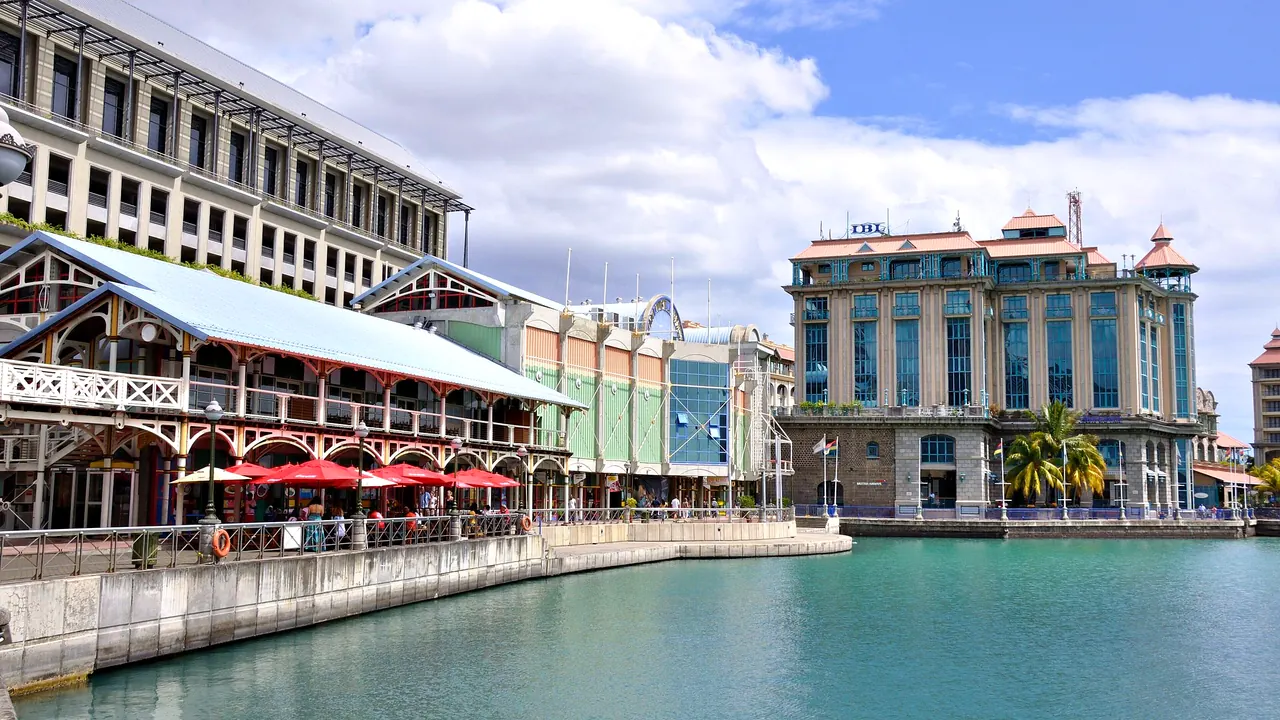
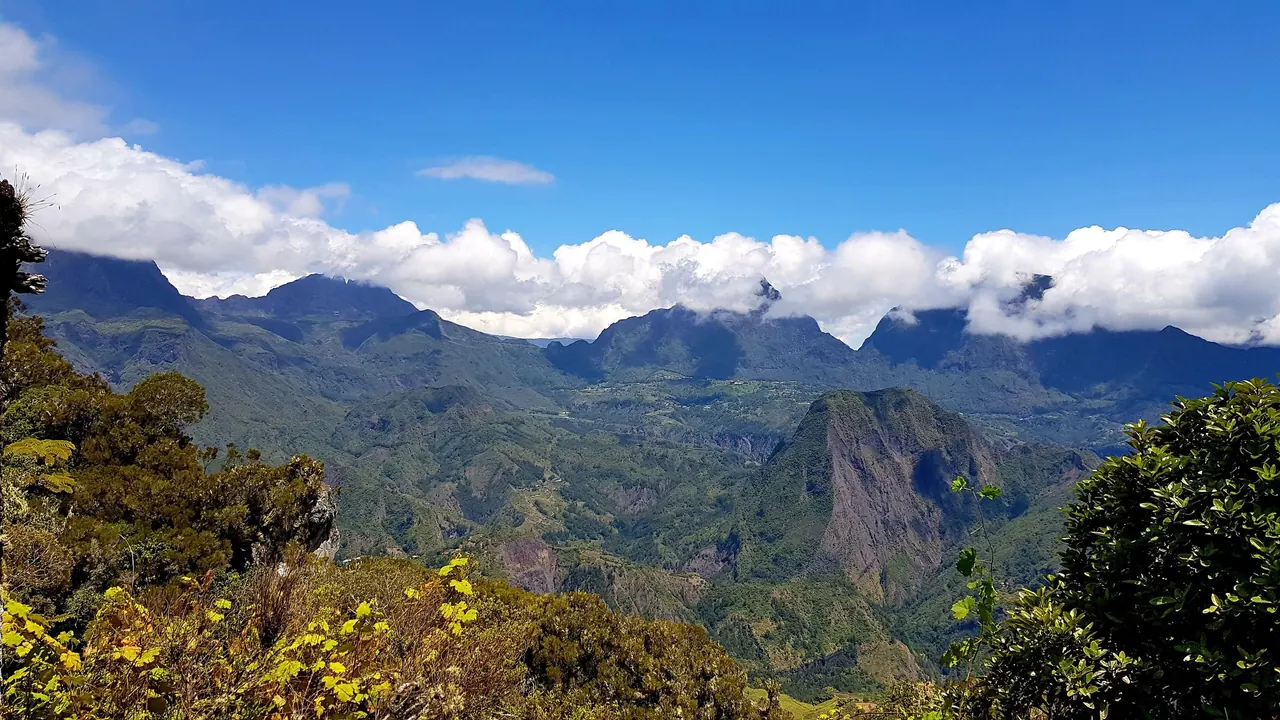
Photos: Port Louis by Simisa, CC BY-SA 3.0, cropped; Réunion by Asile4ever, CC BY-SA 4.0, cropped.
Port Louis or Réunion?
Our verdict in twelve categories, each scored against the same fixed benchmark cities, and the climate month by month, so you can choose for your trip.
Choose Port Louis for
- beaches
- prices
- day trips
Port Louis suits a traveller who wants Mauritius with a city base. It has a walkable old centre with Aapravasi Ghat and the Central Market, street food at lunchtime, and lagoon beaches about half an hour away on the north-west coast and at Flic en Flac. It is the cheaper choice, and the island's gardens, estates and temples are easy to string together from it. In return, evenings are quiet and every beach day starts with a drive.
Choose Réunion for
- live music and the arts
- nature and the outdoors
- nightlife
Hikers, and anyone drawn by wild landscape, should pick Réunion. Its cirques, the roadless hamlets of Mafate and the active crater of Piton de la Fournaise are on a different scale from the peaks around Port Louis, and the mountain gîtes and the Cilaos springs add a restful side. The trade-offs are French prices, a rental car on winding roads, and swimming limited to a few lagoons on the west coast.
Scoreboard
Twelve categories on one fixed scale from 0 to 100. The shaded stretch is the gap between the two.
Your match
Pick a travel style or drag the sliders, and both match scores follow your weighting.
Too close to call, 1 point apart
Wins on beaches and prices with your weighting.
Wins on live music and the arts and nature and the outdoors with your weighting.
What matters to you?
Category by category
What the scores mean for a trip.
Beaches & swimming
Neither puts you on the sand from your door. Port Louis has no swimming in town, but the north-west lagoons at Trou aux Biches and Mont Choisy and the long white beach at Flic en Flac are within half an hour. They offer calm, clear water and real stretches of beach.
Réunion has less beach than its size suggests. Shark risk limits swimming to a few reef-protected lagoons between Saint-Gilles and Étang-Salé, which are often only waist-deep and busy at weekends, though Étang-Salé's black sand is striking. Here the beach is a pause between hikes rather than the reason to go.
Food & drink
Both kitchens grow from the same Creole, Indian and Chinese roots, so neither comes out ahead, and on both islands street stalls feed you cheaply at midday. Where they differ is the setting. In Port Louis, lunch is the main event: dholl puri from hawkers by the Central Market, noodles in Chinatown and curries at shared canteen tables. In the evening there is little beyond the Caudan waterfront.
Réunion's cooking is spread across the island, from roadside snack vans selling samoussas and carri to the markets of Saint-Paul and Saint-Pierre, with French bakeries and wine alongside. Its most memorable meals come after dark, at table d'hôte dinners in the mountain cirques, with Cilaos lentils and a glass of rum arrangé.
Culture & sights
Port Louis fits more into one walkable day. There is Aapravasi Ghat, the UNESCO-listed depot where indentured labourers landed, then the colonial route from Place d'Armes to Government House. Add the Blue Penny and Natural History museums, and the Citadel looking down over the old racecourse.
Réunion's heritage is spread out and smaller in scale. It runs from the Creole villas of Rue de Paris in Saint-Denis and the painted cottages of Hell-Bourg to museums such as Stella Matutina and the Villèle estate. They tell the island's story well, but seeing them takes a car and several separate outings.
Nightlife
Neither island is made for big nights out, but Réunion has more going on. Saint-Gilles-les-Bains has beach bars at sunset and a handful of clubs that fill up on weekends, and Saint-Pierre adds a more local row of bars along its seafront.
Port Louis goes quiet once the offices close, leaving a few bars and a casino on the Caudan waterfront. For anything livelier you take a taxi to Grand Baie.
Nature & outdoors
Port Louis has good outdoor options within reach: Le Pouce and Pieter Both rise above the city, Black River Gorges is an hour away, Le Morne stands in the south, and dolphin and catamaran trips leave from the west coast.
Réunion is on another scale. Its UNESCO-listed interior is made up of three collapsed calderas with cliffs a thousand metres high, including the roadless Cirque de Mafate. Add a 3,070m summit and one of the world's most active volcanoes, and it is a destination built around walking. Canyoning, paragliding and the humpback whales that calve offshore from July to October come on top.
Day trips
From Port Louis the whole of Mauritius can be reached in a day, and the outings vary. You can visit the Pamplemousses botanical garden, plantation estates such as Château de Labourdonnais, the tea country around Curepipe, the pilgrimage lake at Grand Bassin and the old lagoon town of Mahébourg.
On Réunion the best days out are into the landscape itself. Beyond that the excursions are smaller: a morning at Saint-Pierre's market, the Creole houses of Hell-Bourg or Entre-Deux, the vanilla farms around Saint-Philippe or a rum distillery.
Good for families
Both work for families, and on both the answer is to stay on the coast. Port Louis has an aquarium and a dodo skeleton, but its hot, crowded streets are hard work with children, and Casela and La Vanille are a drive away.
Réunion's west coast makes an easier family base, with the shallow lagoon at L'Hermitage, the Kélonia turtles, and French healthcare and supermarkets close by. What families miss there is the island's main attraction, because the long hikes and hairpin roads into the cirques are tough on young children.
Getting around
In Port Louis you can walk the compact centre from the waterfront to Chinatown, and the light rail runs up to the upland towns. Beyond that you rely on slow buses, taxis or a hire car, and weekday traffic jams around the capital.
Réunion gives you fewer choices. A rental car is close to essential, and the expressway clogs at rush hour. The roads to Cilaos and Salazie take a long time over countless bends, and Mafate can be reached only on foot or by helicopter.
Shopping & style
Port Louis has more to browse. There is the Victorian iron-and-stone Central Market, Chinatown's dried-goods shops, and the craft and duty-free stalls of the Caudan waterfront. Handmade model ships and local knitwear are the classic things to buy.
On Réunion, shopping mostly means produce from the markets: vanilla from the south-east, rum arrangé, Cilaos embroidery and basketwork. Beyond that there are French chain stores in suburban shopping centres.
Affordability
Both get expensive once you rely on taxis, boat trips and imported goods, but Port Louis starts lower. Its guesthouses and business hotels cost far less than the Mauritian beach resorts, and street food, buses and the light rail are cheap.
Réunion is priced like France. A rental car is a cost you can't avoid, and west-coast hotels are dearest in the southern winter and during French school vacations. Gîtes, snack-van lunches and free hiking soften the bill.
Live music & performing arts
Réunion has the stronger living tradition. Maloya, recognised by UNESCO, is played at kabars and on festival stages, sega is heard at village fêtes, and the Sakifo festival in Saint-Pierre is the main event of the year. The theatres at Saint-Gilles and Saint-Denis bring concerts and touring shows.
In Port Louis, visitors mostly hear sega at beach-hotel evenings, and the old municipal theatre hosts only occasional events.
Wellness & relaxation
Neither is a spa destination, but Réunion offers more genuine rest. Cilaos has been a spa town built on warm springs since the nineteenth century. A few nights in a gîte in the cirques, cool and silent after dark, are as restful as anything on either island.
Port Louis is hot and noisy, and to unwind you leave it for the spas of the coastal resorts, many of which offer Ayurvedic treatments and day passes.
When should you go?
Pick your month. The climate figures are measured averages, not a forecast.
Port Louis in July
Réunion in July
Daytime high, °C
Rainfall in the month, mm
Where the figures come from
Port Louis's station stands 289 m above the city centre, so the centre is likely a little warmer than the figures say.
Réunion's temperatures are measured 36 km from the centre, at Saint-Denis / Gillot.
Réunion has no rain gauge within 25 km of the centre, so its rainfall comes from a gridded climate dataset read at the destination rather than from a gauge further away.
Temperature and rainfall are climate normals, averaged over the years shown. Port Louis: 1991-2020 normals, Vacoas Mauritius (15.4 km from centre). Réunion: 1991-2020 normals, Saint-Denis / Gillot (36.1 km from centre).
The two islands follow the same southern-hemisphere pattern. Summers are hot and wet from December to March, and winters are cooler and drier from May to November, which is also the hiking season for both. Port Louis is the wetter of the two, with more than 320mm a month from January to March. It is at its most comfortable from September to November, when the rain eases, the days are warm rather than heavy and October brings the most sunshine. In July and August highs fall to about 22°C, which is pleasant for walking the city's streets.
Réunion's figures, measured on the coast, run a few degrees warmer all year, with highs near 30°C in the southern summer. Its dry season is also more marked: from June to October rainfall drops to around 50mm a month, the best conditions for the trails. The sea is almost identical at both, close to 28°C at its peak and only a few degrees cooler in winter, so the lagoons of either island can be swum in all year.
Which traveller are you?
On a beach and sun trip, Port Louis puts the better lagoons within reach: Trou aux Biches, Mont Choisy and the long white sand of Flic en Flac, each about half an hour's drive away. On Réunion, shark risk confines swimming to a few shallow west-coast lagoons.
For an outdoors trip, Port Louis offers a morning up Le Pouce and the forest trails of Black River Gorges. Réunion is still the clear choice, with three UNESCO-listed cirques, the overnight climb of Piton des Neiges, the Fournaise crater rim, canyoning and paragliding.
On a tight budget, Port Louis makes the money go further. Canteen lunches, street food, cheap buses, the light rail and city guesthouses all keep costs down. Réunion is priced like France, and you pay for a rental car from the first day.
Before you go
| Measure | Port Louis | Réunion |
|---|---|---|
| Official language | French, English | French |
| Currency | Mauritius Rupee (MUR) | Euro (EUR) |
| Sockets | CG230 V, 50 Hz | E220 V, 50 Hz |
| Driving side | Left | Right |
| Time zone | UTC+4 | UTC+4 |
| Emergency number | Police 112/999, ambulance 114, fire 115/995 | 112 |
| Elevation | 134 m | - |
| Main airport | Sir Seewoosagur Ramgoolam International Airport (MRU)36 km from centre37 non-stop destinations | Roland Garros Airport (RUN)14 non-stop destinations |
By the numbers
| Measure | Port Louis | Réunion |
|---|---|---|
| Population | 149,194 | 889,679 |
| People per km² | 3,195 | 354 |
| Museums within 10 km | 7 | - |
| UNESCO World Heritage sites within 50 km | 2 | - |
| Swim season, months above 21 °C | 12 months | 12 months |
Where else could you go?
Every comparison below shares a destination with this one, so you can follow Port Louis or Réunion somewhere new.
- Antananarivovs Port Louis
- Nosy Bevs Réunion
- Nosy Bevs Port Louis
- Mahevs Port Louis
- Zanzibarvs Réunion
- Zanzibarvs Port Louis