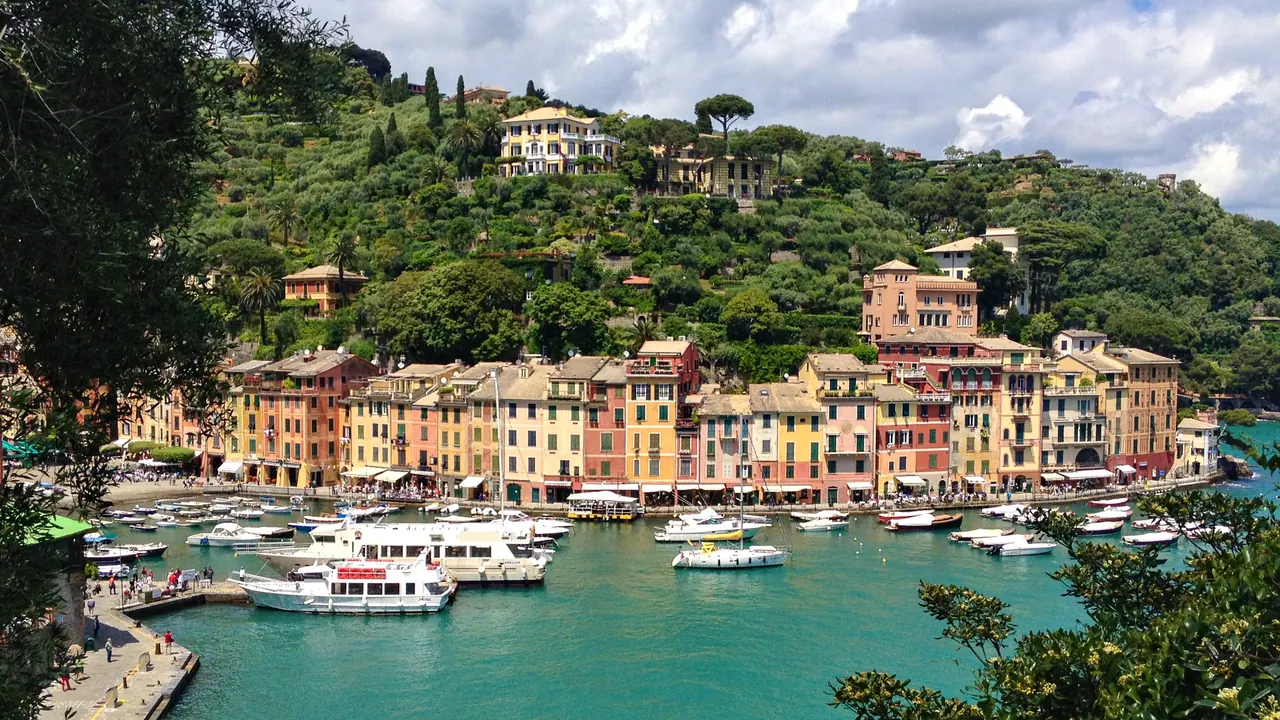
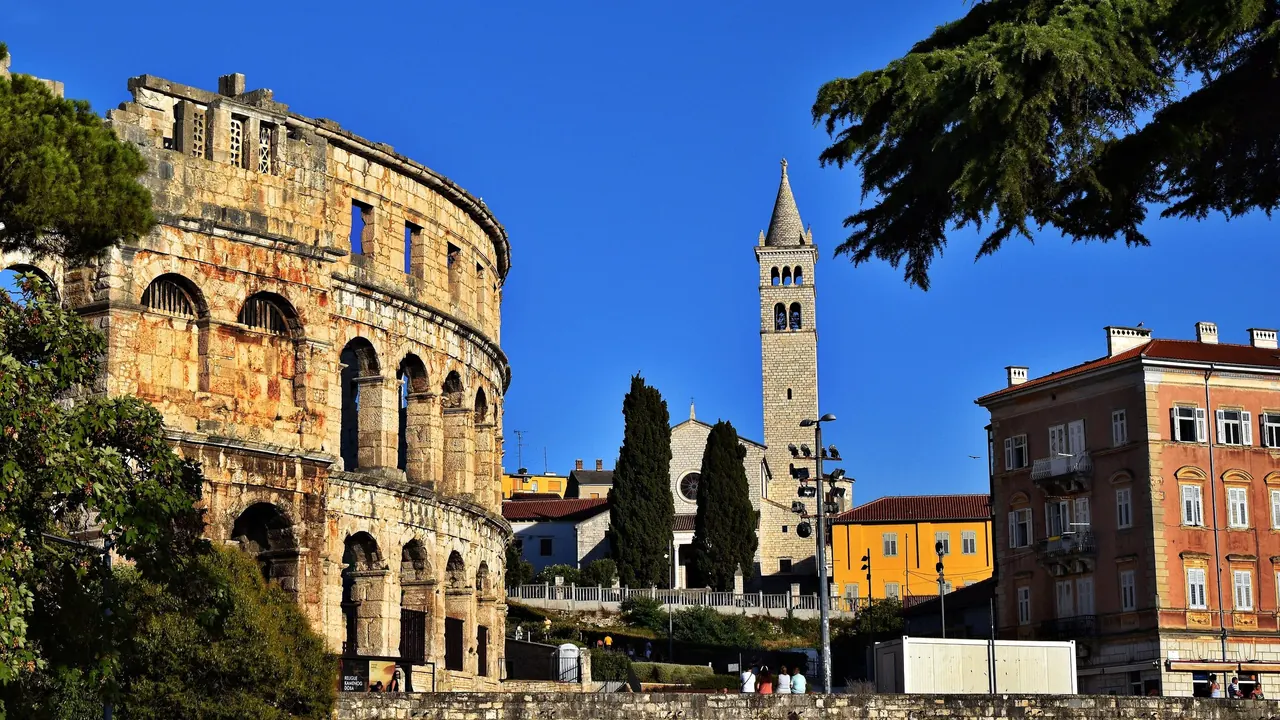
Photos: Portofino by Michal Osmenda, CC BY 2.0, cropped; Pula by Miroslav.vajdic, CC BY-SA 4.0, cropped.
Portofino or Pula?
Our verdict in twelve categories, each scored against the same fixed benchmark cities, and the climate month by month, so you can choose for your trip.
Choose Portofino for
- nature and the outdoors
- wellness
Portofino suits travellers who come for the setting and are happy to pay for it: a painted harbour, a protected headland with steep coastal trails, and some of the clearest diving water on the Italian Riviera. It is best as a slow, scenic stay of a few days for adults, with boat trips along the Ligurian coast to Genoa and the Cinque Terre, and it is most rewarding at the quiet edges of the day.
Choose Pula for
- prices
- culture and sights
- live music and the arts
Pula gives you more to do at a far gentler cost. A Roman amphitheatre still standing whole, Istrian truffles and wine, and many more swimming coves, including the wild shoreline of Kamenjak, make it the stronger all-round base. That goes for families, budget travellers and anyone who wants history as well as sea, as long as they are willing to hire a car.
Scoreboard
Twelve categories on one fixed scale from 0 to 100. The shaded stretch is the gap between the two.
Your match
Pick a travel style or drag the sliders, and both match scores follow your weighting.
Wins on nature and the outdoors and wellness with your weighting.
Wins on prices and culture and sights with your weighting.
What matters to you?
Category by category
What the scores mean for a trip.
Beaches & swimming
Neither place has a sandy town beach, but Pula has far more coastline to swim from. Portofino's options are the rock ladders on the way to the lighthouse, the small bay at Paraggi, which is mostly given over to paid beach clubs, and boat trips to the pebble cove at San Fruttuoso. The water is beautiful, but the spots are few and fill up quickly.
Around Pula the coves stretch across Verudela, Stoja and the Medulin bays, with pines shading the rocks. Cape Kamenjak adds dozens of wild inlets where you can usually find room, even in summer. Bring water shoes for the urchins.
Food & drink
Pula eats better. Istrian cooking brings truffle-sauced fuži, scampi buzara, pršut and local Malvazija and Teran wines, and the covered market shows what is in season. The tables right by the Arena are touristy, but the inland taverns are a short drive away.
Portofino offers good Ligurian staples such as pesto trofie and cheese focaccia from Recco, served on harbour terraces where you pay for the yachts in view. There is no market and little casual eating, so food lovers end up in Camogli or Santa Margherita.
Culture & sights
Pula has genuine monuments where Portofino has mostly scenery. The Arena's three-storey ring, the intact Temple of Augustus on the Forum and the Arch of the Sergii make Roman history unusually easy to see, and Austro-Hungarian forts and a fortress museum add later layers.
Portofino's sights are the coloured harbour front itself, San Giorgio, Castello Brown and the cove-side abbey of San Fruttuoso. A day covers it, and it rewards people who like atmosphere more than sightseeing.
Nightlife
Neither is a party town, but Pula at least lets a summer evening run late. After drinks around the Forum, people move on to beach and cocktail bars on Verudela and around Medulin, and a few small clubs fill up at weekends. Portofino's evening is a dressed-up aperitivo and dinner facing the yachts, then very little, so anyone wanting more heads to Rapallo or Genoa.
Nature & outdoors
Portofino's landscape is the more dramatic. The whole headland is a regional park, with trails climbing through holm oak and pine to Semaforo Nuovo and then dropping, sometimes on chained sections, to San Fruttuoso above sheer cliffs. Offshore, the marine reserve has red coral walls and the sunken Christ of the Abyss.
Pula's countryside is gentler: low, stony Kamenjak with dinosaur footprints and wild flowers, flat cycling routes through red-earth farmland, windsurfing at Premantura and wreck dives from the naval era. Real hills mean a drive to Učka.
Day trips
Both make excellent bases, but you travel differently. From Portofino the outings follow the coast by boat and train: Camogli and Sestri Levante, Genoa's medieval centre in under an hour, and summer ferries to the Cinque Terre and Portovenere.
Pula sends you inland and up the peninsula by car, to Venetian Rovinj, the mosaics of Poreč, the hill towns of Motovun and Hum, and the Brijuni islands. Trieste and Piran are possible on a longer day.
Good for families
Pula is much easier with children. The shallow bays at Medulin and Premantura suit small swimmers, the aquarium sits inside an old fort, and children can explore the passages beneath the Arena. A dinosaur park and a water park are within an hour.
Portofino is calm and safe, but it is made for adults. Steep stepped paths defeat pushchairs, there are no playgrounds, and the little sand is in paid clubs, so families usually stay in Rapallo and visit for the day.
Getting around
Both centres are small enough to walk, though Portofino's paths up to the castle and lighthouse are steep while Pula's old town is flat. The real difference is getting further afield. In Portofino a car is a nuisance on the single narrow coast road, and buses and ferries do the job. Around Pula the reverse is true, as infrequent regional buses make a car or scooter close to essential for Kamenjak and the Istrian interior.
Shopping & style
Neither is worth a trip for shopping, but what you find differs. Portofino's few lanes hold big fashion and jewellery boutiques and resort wear for yacht guests, and you can see them all in an hour. Pula's best buys are edible, such as olive oil, truffle products, honey and wine from the market hall and the producers, with high-street chains on the main street.
Affordability
This is where the two are furthest apart. Portofino ranks among Italy's most expensive places to stay, with a handful of luxury hotels and charges for loungers, boats and parking, so many visitors sleep in Santa Margherita or Camogli instead.
Pula is mid-priced. Apartments and konobas keep costs sensible, especially in spring and autumn, although July and August rooms and meals by the Arena climb towards Western European levels.
Live music & performing arts
Pula has a stage that Portofino lacks: in summer the Roman Arena hosts pop and rock concerts, classical galas and the long-running Pula Film Festival under its arches, and the Istrian National Theatre performs through the rest of the year. In Portofino you might find the odd summer concert at the castle, but a real performance means an evening at Genoa's Teatro Carlo Felice.
Wellness & relaxation
Portofino is the more restorative choice, provided you avoid the midday tour-boat crowds. Its luxury hillside hotels have the spas, and quiet mornings, long lunches over the water and shaded paths with only birdsong set the pace. Pula's resort spas on Verudela and in Medulin are more ordinary, and the calm comes instead from coffee on the Forum and pine-lined evening walks outside summer.
When should you go?
Pick your month. The climate figures are measured averages, not a forecast.
Portofino in July
Pula in July
Daytime high, °C
Rainfall in the month, mm
Where the figures come from
Portofino's temperatures are measured 31 km from the centre, at Genova / Sestri.
Portofino has no rain gauge within 25 km of the centre, so its rainfall comes from a gridded climate dataset read at the city rather than from a gauge further away.
Pula's temperatures are measured 87 km from the centre, at Trieste.
Pula has no rain gauge within 25 km of the centre, so its rainfall comes from a gridded climate dataset read at the city rather than from a gauge further away.
Temperature and rainfall are climate normals, averaged over the years shown. Portofino: 1991-2020 normals, Genova / Sestri (31 km from centre). Pula: 1991-2020 normals, Trieste (87 km from centre).
Both coasts are warm enough for swimming from June to September, and in August the sea reaches about 25°C at each. Portofino's summer is a little milder, so its steep paths stay walkable early and late in the day. Pula runs hotter, with July and August highs near 29°C and long, very sunny days, so the middle of the day is for the water rather than the Roman streets.
The two part ways in autumn. In Portofino the heavy rain begins in September and is at its worst in October, at around 225mm. Its best walking months are therefore May and June, which are warm and fairly dry without the full heat of high summer. Pula's rain is spread far more evenly through the year, so late September there is still mostly dry and pleasant for sightseeing, with the sea warm enough for a last swim. In winter Portofino stays a little milder, while Pula's January highs fall to about 9°C.
Which traveller are you?
On a culture and arts trip, choose Pula. From Portofino, serious sightseeing means a journey into Genoa. In Pula you can stay in the old town, see the Roman sites in the cool of the morning and book a summer night at the Arena.
For a trip on a tight budget, Pula is the realistic choice. Treat Portofino as a day out by bus, with a picnic and a hike over the headland. In Pula you can stay a week in May or September and use city buses for the nearer coves.
On an outdoors trip, Portofino has the edge. Go in May or early June, before the exposed slopes heat up, then walk the headland one way and catch the boat back. Pula suits cyclists better, and real hiking there needs a car to Učka.
Before you go
| Measure | Portofino | Pula |
|---|---|---|
| Official language | Italian | Croatian |
| Currency | Euro (EUR) | Euro (EUR) |
| Sockets | CFL230 V, 50 Hz | CF230 V, 50 Hz |
| Driving side | Right | Right |
| Time zone | UTC+1, UTC+2 in summer | UTC+1, UTC+2 in summer |
| Emergency number | 112 | 112 |
| Elevation | 20 m | 5 m |
| Main airport | Genoa Cristoforo Colombo Airport (GOA)32 km from centre25 non-stop destinations | Pula Airport (PUY)7 km from centre34 non-stop destinations |
| Public holidays this year | 13 days | 14 days |
By the numbers
| Measure | Portofino | Pula |
|---|---|---|
| City population | 355 | 52,220 |
| People per km² | 142 | 971 |
| Museums within 10 km | 14 | 4 |
| UNESCO World Heritage sites within 50 km | 2 | 1 |
| Swim season, months above 21 °C | 4 months | 4 months |
Where else could you go?
Every comparison below shares a destination with this one, so you can follow Portofino or Pula somewhere new.