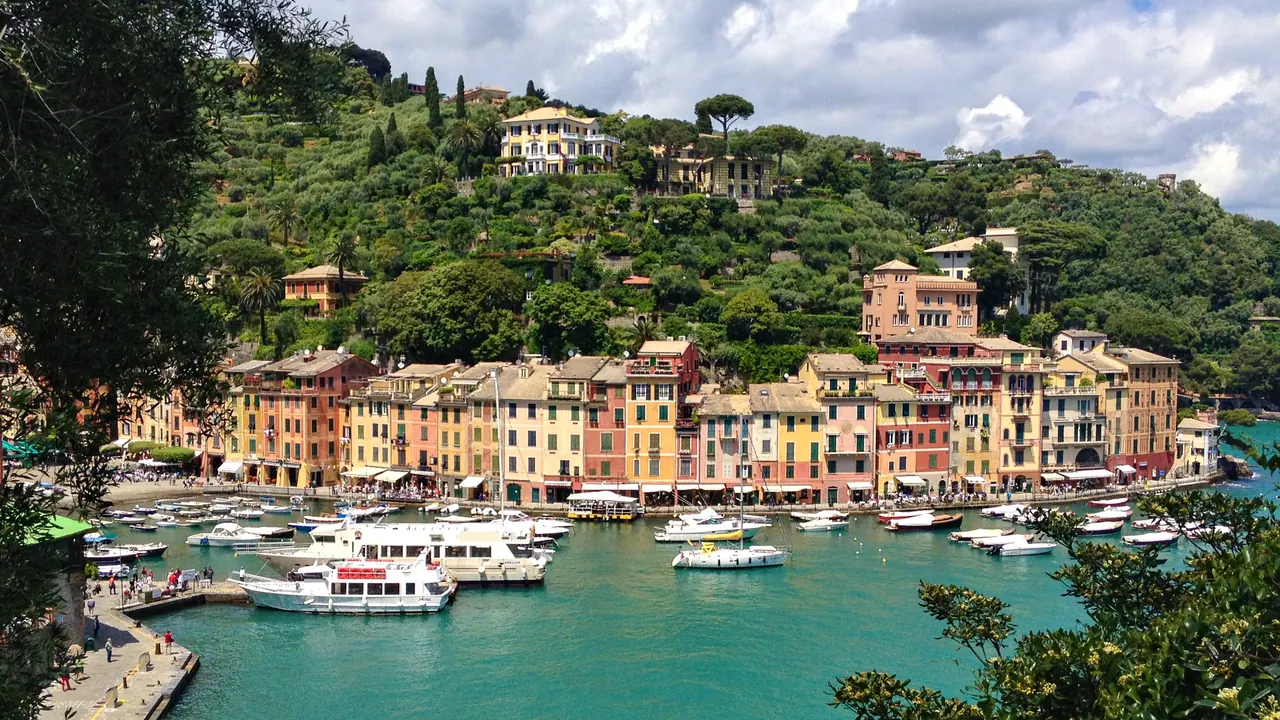
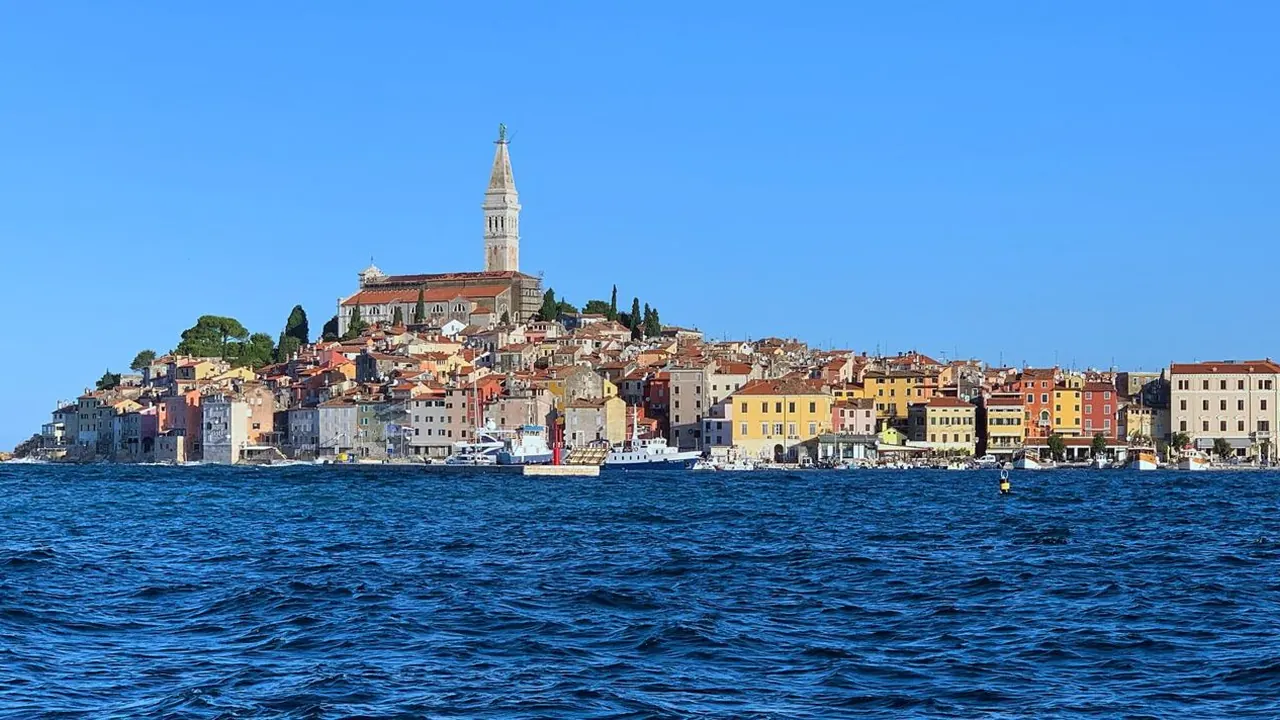
Photos: Portofino by Michal Osmenda, CC BY 2.0, cropped; Rovinj by Vyacheslav Bukharov, CC BY-SA 4.0, cropped.
Portofino or Rovinj?
Our verdict in twelve categories, each scored against the same fixed benchmark cities, and the climate month by month, so you can choose for your trip.
Choose Portofino for
- nature and the outdoors
- day trips
- shopping
Portofino suits walkers, divers and travellers who want a beautiful base on the Riviera di Levante and don't mind what it costs. The protected headland, with trails over Monte di Portofino down to San Fruttuoso and a marine reserve offshore, is superb for active days. Ferries and trains make the Cinque Terre, Camogli and Genoa easy to reach without a car. The trade-off is a tiny village that goes quiet at night and is one of the most expensive places to sleep in Italy.
Choose Rovinj for
- prices
- families
- culture and sights
Couples and families planning to stay put for a week will get more from Rovinj. It is easier on the budget and better set up for children, with resorts, campsites and the flat shaded paths of the Golden Cape. It also eats better, with Istrian truffles, fish and local wine. The old town on its former island gives you more to wander through in the evening. Seeing Pula, Porec and the hill towns, though, means hiring a car.
Scoreboard
Twelve categories on one fixed scale from 0 to 100. The shaded stretch is the gap between the two.
Your match
Pick a travel style or drag the sliders, and both match scores follow your weighting.
Wins on nature and the outdoors and day trips with your weighting.
Wins on prices and families with your weighting.
What matters to you?
Category by category
What the scores mean for a trip.
Beaches & swimming
Neither town has a proper sandy beach, but Rovinj gives you far more room to swim. Several kilometres of limestone ledges, pebble coves and concrete bathing platforms run south into the Golden Cape park. Taxi boats go to quieter coves on St Catherine and Red Island.
Portofino's swimming is lovely but cramped. You climb down ladders off the rocks towards the lighthouse, Paraggi's small bay is mostly given over to paid beach clubs, and the pebbles under the abbey at San Fruttuoso are reached by boat or on foot. The water is very clear in both places. In Rovinj, bring water shoes against the urchins.
Food & drink
Rovinj eats better and with more local character. Fuži with truffle, scampi buzara, Malvazija and Teran wines from the hinterland and slow-cooked meat in countryside konobas add up to a week of good meals, even though the harbour menus are written for passing visitors.
Portofino's Ligurian dishes are worth trying: trofie with pesto, pansoti in walnut sauce and Recco's cheese-filled focaccia. The problem is that the harbour terraces charge for the yachts, and the cooking rarely lives up to the view. People who care about food go over to Camogli or up to the trattorie in the hills.
Culture & sights
Both towns are places to look at rather than tour, but Rovinj gives you more. Its old town fills a former island and climbs through Venetian lanes and the Balbi Arch to St Euphemia, whose bell tower you can climb. The Batana House tells the story of the town's flat-bottomed fishing boats and the songs that went with them.
In Portofino, the main sight is the horseshoe of painted houses around the harbour. Above it are San Giorgio and Castello Brown, and the medieval abbey of San Fruttuoso is a hike or a boat ride away. A day covers the lot.
Nightlife
In Portofino the evening is a dressed-up aperitivo facing the yachts and a long dinner, and then it is over. For anything later you have to go along the coast to Santa Margherita or Rapallo, or into Genoa.
Rovinj keeps going a little longer. After dinner people take a drink down to the rocks below the old town as the sun sets over the sea. The cocktail and wine bars on the waterfront stay busy, and in high season a couple of places stay open late for dancing. Even so, most of the old town is quiet by midnight.
Nature & outdoors
Portofino has the more dramatic outdoors. The headland is protected as a regional park on land and a marine reserve offshore. Trails climb over Monte di Portofino, and cliff paths, some with chains, drop to San Fruttuoso and Punta Chiappa. Divers come for the red coral and the bronze Christ of the Abyss statue.
Rovinj's nature is flatter and gentler. The Golden Cape park has gravel paths for walking and cycling, the low islands are good for kayaking and diving, and boats run up the Lim Fjord to the mussel farms. It makes for easy, pleasant days rather than a challenge.
Day trips
Portofino has the richer run of outings, and you can do them without a car. Boats and buses reach Camogli, Santa Margherita and San Fruttuoso, trains run to Sestri Levante and the Cinque Terre, and the summer ferries make getting there part of the fun. Genoa, with its medieval centre and the palaces of the Strade Nuove, is under an hour away.
Rovinj's region has plenty to see too: Pula's Roman amphitheatre, the sixth-century mosaics of the Euphrasian Basilica in Porec, and the hill towns of Motovun and Groznjan. Most of it, though, needs a hire car. It is Roman sites and wine country on one side against the Riviera by boat on the other.
Good for families
Rovinj is the better bet with children. Its resorts and campsites are built for families, with pools and playgrounds, and the flat, shaded paths of the Golden Cape suit pushchairs and bikes. The rocky shore does mean water shoes and close watching.
Portofino is safe and calm, and children like the boats and the walk to the castle. Even so, steep steps, no playgrounds and paid beach clubs make it hard work. Families usually stay in Santa Margherita or Rapallo and make a trip to the aquarium in Genoa.
Getting around
In both towns you walk everywhere, and a car is more trouble than it is worth once you have arrived, though the lanes are steep in each. The difference is how you get in and out.
Portofino hangs on a single narrow coast road that jams in summer. Buses link it to the train at Santa Margherita, and from spring to autumn ferries run along the coast. Rovinj's old town is closed to cars, and a flat promenade leads into the forest park, but there is no railway at all, so intercity buses are your only public transport out.
Shopping & style
Neither is somewhere to go for shopping, and you can see what each has in an afternoon or less. What differs is what they sell. Portofino's few lanes behind the harbour hold boutiques from big fashion and jewellery houses, along with resort wear for people coming off the yachts.
Rovinj leans towards things to take home from the region, such as truffle products, olive oil, wine and lavender, plus the artists' studios and galleries along Grisia. For markets or a longer browse, Portofino sends you to Chiavari or Genoa, while from Rovinj you have to drive to a larger town.
Affordability
There is a big gap in cost between the two. Portofino is one of the most expensive places to sleep in Italy, with only a handful of hotels, nearly all of them luxury. The view is built into the price of every drink on the piazzetta, every lounger at Paraggi and every boat you hire. Most visitors sleep in Santa Margherita, Rapallo or Camogli and come over for the day.
Rovinj is expensive for the Croatian coast, and in July and August, rooms near the old town cost what you would pay at any popular Mediterranean resort. Fish is sold by weight, so dinners add up quickly. Still, you can stay in the town itself on a modest budget: rent a private apartment or stay at one of the campsites, buy lunch at a bakery, and come in late spring or September, when it is noticeably cheaper.
Live music & performing arts
There is little live performance in either town, but Rovinj has a bit more of its own. In summer there are classical concerts in St Euphemia and open-air music on the squares, and the bitinada, the local unaccompanied singing linked to the batana boats, is sometimes performed for visitors.
Portofino has only occasional summer events in the piazzetta or at the castle. Its advantage is being close to Genoa, where the Teatro Carlo Felice runs a full season. From Rovinj, the big nights out are the summer concerts in Pula's Roman arena.
Wellness & relaxation
The two are very alike here. Neither has a bathing tradition, spas are found only in hotels, and to find calm you have to avoid the crowded middle of the day in high summer.
The difference is in where you find it. In Portofino, the spas belong to a few luxury hotels on the hillside, and the real rest comes from shaded paths and long lunches above the water. Along the Golden Cape, Rovinj's resort hotels have well-equipped pools, saunas and treatment rooms that outside guests can use, and late swims off the rocks in May, June or September set an easy pace.
When should you go?
Pick your month. The climate figures are measured averages, not a forecast.
Portofino in July
Rovinj in July
Daytime high, °C
Rainfall in the month, mm
Where the figures come from
Portofino's temperatures are measured 31 km from the centre, at Genova / Sestri.
Portofino has no rain gauge within 25 km of the centre, so its rainfall comes from a gridded climate dataset read at the city rather than from a gauge further away.
Rovinj's temperatures are measured 64 km from the centre, at Trieste.
Rovinj has no rain gauge within 25 km of the centre, so its rainfall comes from a gridded climate dataset read at the city rather than from a gauge further away.
Temperature and rainfall are climate normals, averaged over the years shown. Portofino: 1991-2020 normals, Genova / Sestri (31 km from centre). Rovinj: 1991-2020 normals, Trieste (63.7 km from centre).
Both coasts are at their warmest in July and August. Rovinj runs slightly hotter, at about 29°C, and its sea is marginally warmer, but in either place swimming is comfortable from June through September. The big difference is rain. Rovinj stays fairly dry all year and gets the most sun, with around 300 hours in July. Portofino has milder winters, a few degrees warmer than Rovinj, but its autumn is very wet. Rain builds in September and reaches about 225mm in October, with November almost as wet.
For walking, spring suits both, with May highs of around 22°C. Portofino's exposed hillside trails get hot in high summer, so its best hiking runs from April to early June. Rovinj stays pleasant into late September and early October, when Portofino's rains have often already begun. In winter Portofino is the gentler of the two for a quiet off-season stroll, but Rovinj's January is noticeably cold and grey.
Which traveller are you?
For an outdoors trip, Portofino is the one to pick. You can walk over the headland to San Fruttuoso in the morning, swim in the cove, catch the boat back and spend the next day diving in the marine reserve. Rovinj's outdoor days are easier, mostly cycling and paddling.
On a tight budget, Portofino only really works as a day out, coming in by bus or ferry from somewhere cheaper along the coast. In Rovinj you can stay the whole week, cook some of your own meals and spend your days swimming off the free rocks.
On a family trip with young children, Portofino keeps them happy for a morning with the boats and the castle, and not much longer. In Rovinj a family can settle in for a fortnight: island boat rides, afternoons in the shade of the pines and gelato on the harbour after dark.
Before you go
| Measure | Portofino | Rovinj |
|---|---|---|
| Official language | Italian | Croatian |
| Currency | Euro (EUR) | Euro (EUR) |
| Sockets | CFL230 V, 50 Hz | CF230 V, 50 Hz |
| Driving side | Right | Right |
| Time zone | UTC+1, UTC+2 in summer | UTC+1, UTC+2 in summer |
| Emergency number | 112 | 112 |
| Elevation | 20 m | 0 m |
| Main airport | Genoa Cristoforo Colombo Airport (GOA)32 km from centre25 non-stop destinations | Pula Airport (PUY)31 km from centre34 non-stop destinations |
| Public holidays this year | 13 days | 14 days |
By the numbers
| Measure | Portofino | Rovinj |
|---|---|---|
| City population | 355 | 12,968 |
| People per km² | 142 | - |
| Museums within 10 km | 14 | 1 |
| UNESCO World Heritage sites within 50 km | 2 | 1 |
| Swim season, months above 21 °C | 4 months | 4 months |
Where else could you go?
Every comparison below shares a destination with this one, so you can follow Portofino or Rovinj somewhere new.