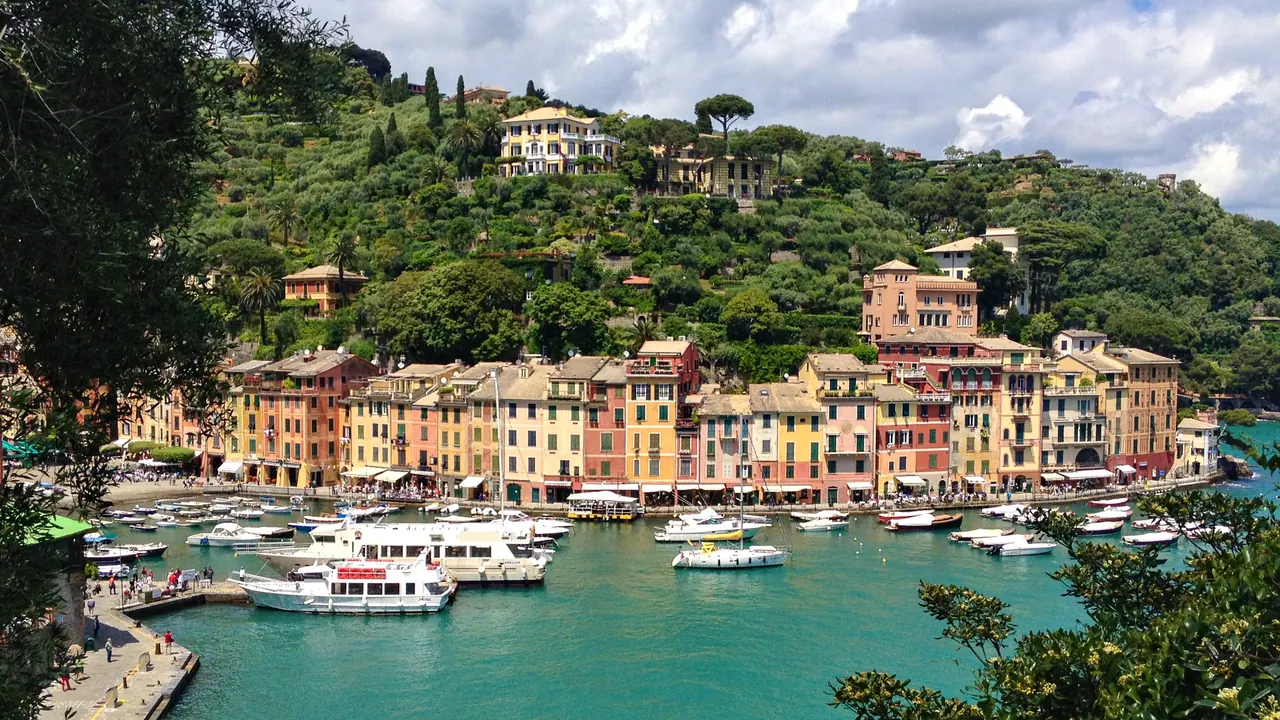
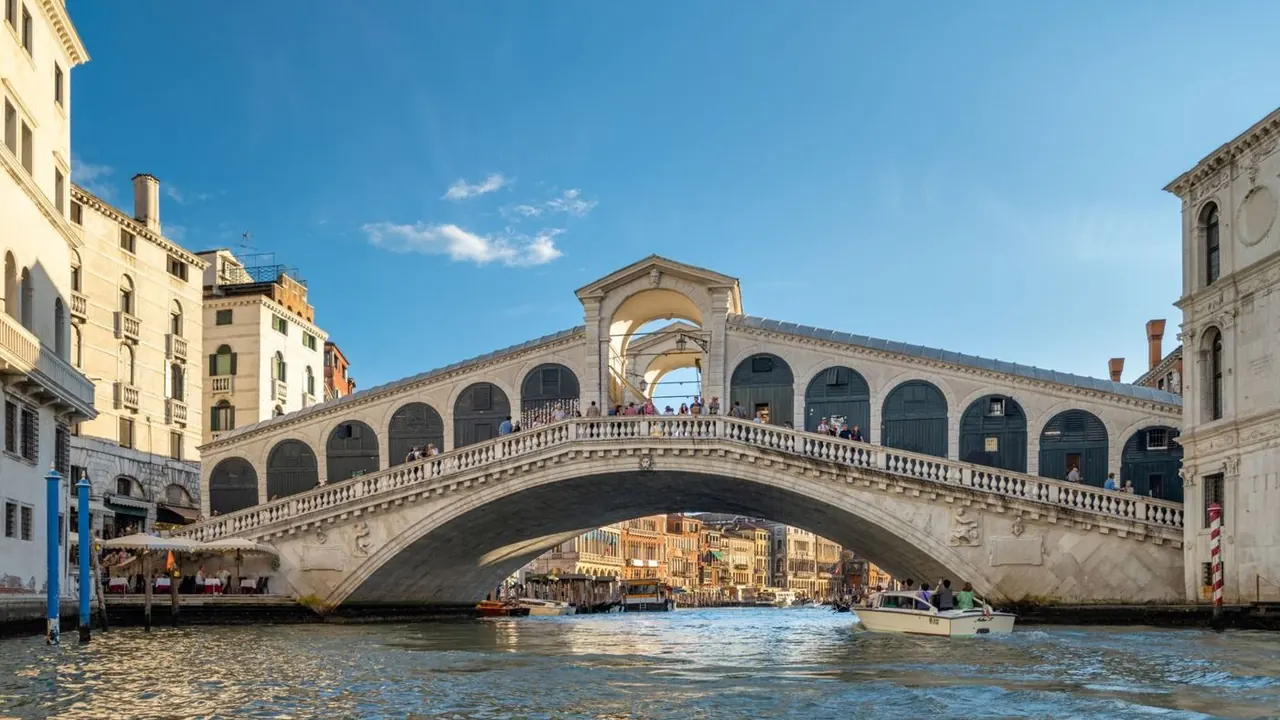
Photos: Portofino by Michal Osmenda, CC BY 2.0, cropped; Venice by David Vives, Pexels License.
Portofino or Venice?
Our verdict in twelve categories, each scored against the same fixed benchmark cities, and the climate month by month, so you can choose for your trip.
Choose Portofino for
- nature and the outdoors
- beaches
- wellness
Portofino suits a short, unhurried stay on a beautiful headland, for travellers who would rather walk cliff paths, swim off rocks in clear water and linger over a harbour lunch than tick off sights. It is tiny and very expensive, and there is little to do after dinner. Come for the setting, the trails and the sea, and sleep along the coast if the budget matters.
Choose Venice for
- culture and sights
- live music and the arts
- shopping
Venice is the better choice for almost everything a city can offer. It has one of the richest collections of art and architecture in Europe, a proper opera house, better eating at the bar counters and fast trains to Padua and Verona. Choose it for a trip built around looking, listening and exploring on foot, and accept that you will share the main sights with crowds and pay heavily to sleep near them.
Scoreboard
Twelve categories on one fixed scale from 0 to 100. The shaded stretch is the gap between the two.
Your match
Pick a travel style or drag the sliders, and both match scores follow your weighting.
Wins on nature and the outdoors and beaches with your weighting.
Wins on culture and sights and live music and the arts with your weighting.
What matters to you?
Category by category
What the scores mean for a trip.
Beaches & swimming
Neither place is a beach resort, but swimming means something quite different in each. Portofino has no sand of its own. You swim from rock platforms and ladders towards the lighthouse in deep, very clear water, or take the bus to the small bay at Paraggi, which is mostly given over to beach clubs, or the boat to the pebble cove at San Fruttuoso.
Venice has the opposite: kilometres of fine sand on the Lido, a short vaporetto ride away, with shallow, gentle water that suits small children. The sea there is greenish rather than clear, though, and most visitors give it one hot afternoon at most.
Food & drink
Portofino keeps to Ligurian cooking: trofie with pesto, pansoti in walnut sauce and cheese focaccia from Recco, served on a handful of harbour terraces where you pay for the yachts as much as the plate. Anyone who cares about eating usually heads to Camogli or the hill trattorie.
Venice offers far more to explore. Standing at the counter of a bacaro in Cannaregio or Castello with sarde in saor and a glass of wine is one of the city's real pleasures, and the Rialto market supplies cuttlefish risotto and lagoon crab. The price is learning to avoid the picture-menu places on the routes around San Marco.
Culture & sights
Portofino's sights are the village itself: the coloured houses around the harbour, the church of San Giorgio and Castello Brown above it, and the walk on to the abbey of San Fruttuoso. A day covers it comfortably, and it rewards people who come for atmosphere rather than a list.
Venice is in another league. Beyond the Basilica of San Marco, the Doge's Palace and the palazzi of the Grand Canal, the art runs from Titian and Tintoretto to the Peggy Guggenheim Collection and the Biennale in the Arsenale. Even its smaller parish churches hold masterpieces, and a week barely scratches the surface.
Nightlife
Both places go to bed early, but Venice has a little more evening life. Portofino's night is a long aperitivo at the bars facing the moored yachts, where people dress up to be seen, followed by dinner and silence. Outside July and August even that fades early, and a real night out means going to Santa Margherita or Genoa.
In Venice the spritz hour fills the bacari along the Fondamenta della Misericordia, and the students around Campo Santa Margherita in Dorsoduro keep a few bars going later. There are no clubs in either place, but a midnight walk along the dark, silent canals is a fair consolation.
Nature & outdoors
Portofino is the place for the outdoors. The whole headland is a regional park, with trails through holm oak and pine to the Semaforo Nuovo viewpoint, then down to San Fruttuoso along cliffs, with chained sections. Offshore, the marine reserve offers red coral walls, seagrass meadows and the bronze Christ of the Abyss for divers.
Venice's nature is the lagoon: herons, egrets and flamingos in the marshes around Torcello, explored by kayak or on a lesson in standing rowing. The land is flat, so serious walking means going to the Euganean Hills, or more than two hours each way to the Dolomites.
Day trips
Both make excellent bases, and Venice has the edge. From Portofino the Riviera di Levante unfolds by boat: Camogli, Rapallo, Portovenere and, in summer, the Cinque Terre, with Genoa's medieval centre under an hour away. Out of season the ferries stop and the trains take over, which needs more planning.
Venice's fast trains reach Padua's Scrovegni Chapel in about half an hour and Verona's arena in little more than an hour, with Palladio's Vicenza in between. Murano, Burano and Torcello make a full day on the lagoon without boarding a train at all.
Good for families
Neither is easy with small children, but Venice gives them more to enjoy. Portofino is calm and safe, and children like the boats and the climb to the castle. Still, it is built for adults with money, with no playgrounds and steep stepped paths, and most families stay in Santa Margherita and go to Genoa for the aquarium.
Venice gives children vaporetto rides, glass-blowing on Murano, dinosaurs at the natural history museum and the shallow Lido beach, with no cars to worry about. Its problem is the stepped bridges, which make a pushchair hard work, so it suits older children on a short stay.
Getting around
Inside Portofino everything is a few minutes apart, and the difficulty is getting in and out. A single narrow coast road runs about 5km from Santa Margherita, with scarce parking and summer jams, so the bus and the spring-to-autumn ferries are the practical choices.
Venice is easier overall. Trains end at Santa Lucia, the centre can be crossed on foot in under an hour, and vaporetti and traghetto gondolas cover the water. The trade-off is the endless steps over bridges with luggage, and slow, packed boats on the main lines.
Shopping & style
Portofino's shopping is a few lanes of big-name fashion and jewellery boutiques and resort wear for yacht guests, plus some lace and jars of pesto. You can see it all in under an hour.
Venice has a real craft tradition to shop for: Murano glass, Burano lace, papier-mâché masks, marbled paper and velvet furlane slippers, best bought from workshops in Dorsoduro and Castello. The fashion houses line Calle Larga XXII Marzo, but watch for imported fakes along the main routes.
Affordability
Both are among the most expensive places to stay in Italy, and Portofino is the harsher of the two. Its few hotels are almost all luxury properties, and the piazzetta terraces, Paraggi loungers, boat hire and parking all cost a lot. Walking and the bus are the only cheap things, so many visitors sleep in Camogli or Rapallo and come over for the day.
Venice offers more ways to cut costs. You can eat cicchetti standing at the counter, stay in quieter sestieri or across the water in Mestre, and visit in late autumn or winter. Entry fees for sights and the visitor prices on water transport still add up.
Live music & performing arts
Portofino has almost nothing to attend beyond the occasional summer concert in the piazzetta or at the castle. Opera and theatre mean an evening trip to the Teatro Carlo Felice in Genoa.
Venice is a serious destination for music. La Fenice, where Verdi and Rossini held premieres, runs full seasons of opera, ballet and concerts, Teatro Goldoni stages drama, and the Biennale adds contemporary festivals. On most nights there are also Vivaldi concerts in churches and scuole grandi, of mixed quality. Jazz and rock are thin on the ground.
Wellness & relaxation
The two are much alike here. Neither has its own bathing culture, so spas mean hotel spas, and calm depends on avoiding the midday crowds. In Portofino the rest comes from the setting: shaded paths with only birdsong and the sea, and long lunches by the water, best outside high summer.
Venice's calm comes from having no traffic, and you find it in early mornings in Castello, Cannaregio or on Giudecca. It also has something Portofino lacks: real thermal pools and mud treatments at Abano Terme and Montegrotto Terme, about an hour away.
When should you go?
Pick your month. The climate figures are measured averages, not a forecast.
Portofino in July
Venice in July
Daytime high, °C
Rainfall in the month, mm
Where the figures come from
Portofino's temperatures are measured 31 km from the centre, at Genova / Sestri.
Portofino has no rain gauge within 25 km of the centre, so its rainfall comes from a gridded climate dataset read at the city rather than from a gauge further away.
Venice has no rain gauge within 25 km of the centre, so its rainfall comes from a gridded climate dataset read at the city rather than from a gauge further away.
Venice's sunshine is measured 26 km from the centre, at Treviso / S. Angelo.
Temperature and rainfall are climate normals, averaged over the years shown. Portofino: 1991-2020 normals, Genova / Sestri (31 km from centre). Venice: 1991-2020 normals, Venezia / Tessera (6.7 km from centre).
Portofino's summer runs from June to September, with August highs near 28°C and the sea warm enough to swim from June into early October. The catch is autumn. The rain builds through September, and October and November are very wet, with October bringing about 225mm. Winters stay mild enough for walking the headland trails, and spring is the most comfortable time to hike before the exposed slopes get hot.
Venice has a much colder winter, with January highs of only 7°C, and a sticky July around 29°C that is also the sunniest stretch of the year. Rain is spread fairly evenly through the months with no real wet season, so in autumn Venice is a safer bet than the Ligurian coast. The Lido is warm enough for swimming from late June to September, and April, May and September are the most pleasant months for long days on foot in the city.
Which traveller are you?
On a culture and arts trip, choose Venice. Portofino's harbour, castle and abbey take a day or so to see. Venice has Titian in the Frari, Tintoretto at San Rocco, the Accademia and La Fenice, enough for a week of looking and listening.
For an outdoors trip, Portofino wins easily. Its protected headland has cliff trails over Monte di Portofino to San Fruttuoso, and the marine reserve offshore suits diving and kayaking. Venice's flat lagoon offers birdwatching and rowing, but little more.
On a food and nightlife trip, Venice is the better bet. Portofino offers a costly harbour dinner and then an early night. In Venice, cicchetti and spritzes in the bacari around the Rialto lead on to later drinks on Campo Santa Margherita.
Before you go
| Measure | Portofino | Venice |
|---|---|---|
| Official language | Italian | Italian |
| Currency | Euro (EUR) | Euro (EUR) |
| Sockets | CFL230 V, 50 Hz | CFL230 V, 50 Hz |
| Driving side | Right | Right |
| Time zone | UTC+1, UTC+2 in summer | UTC+1, UTC+2 in summer |
| Emergency number | 112 | 112 |
| Elevation | 20 m | 2 m |
| Main airport | Genoa Cristoforo Colombo Airport (GOA)32 km from centre25 non-stop destinations | Venice Marco Polo Airport (VCE)7 km from centre103 non-stop destinations |
| Public holidays this year | 13 days | 13 days |
By the numbers
| Measure | Portofino | Venice |
|---|---|---|
| City population | 355 | 250,369 |
| People per km² | 142 | 602 |
| Museums within 10 km | 14 | 52 |
| UNESCO World Heritage sites within 50 km | 2 | 5 |
| Swim season, months above 21 °C | 4 months | 4 months |
Where else could you go?
Every comparison below shares a destination with this one, so you can follow Portofino or Venice somewhere new.