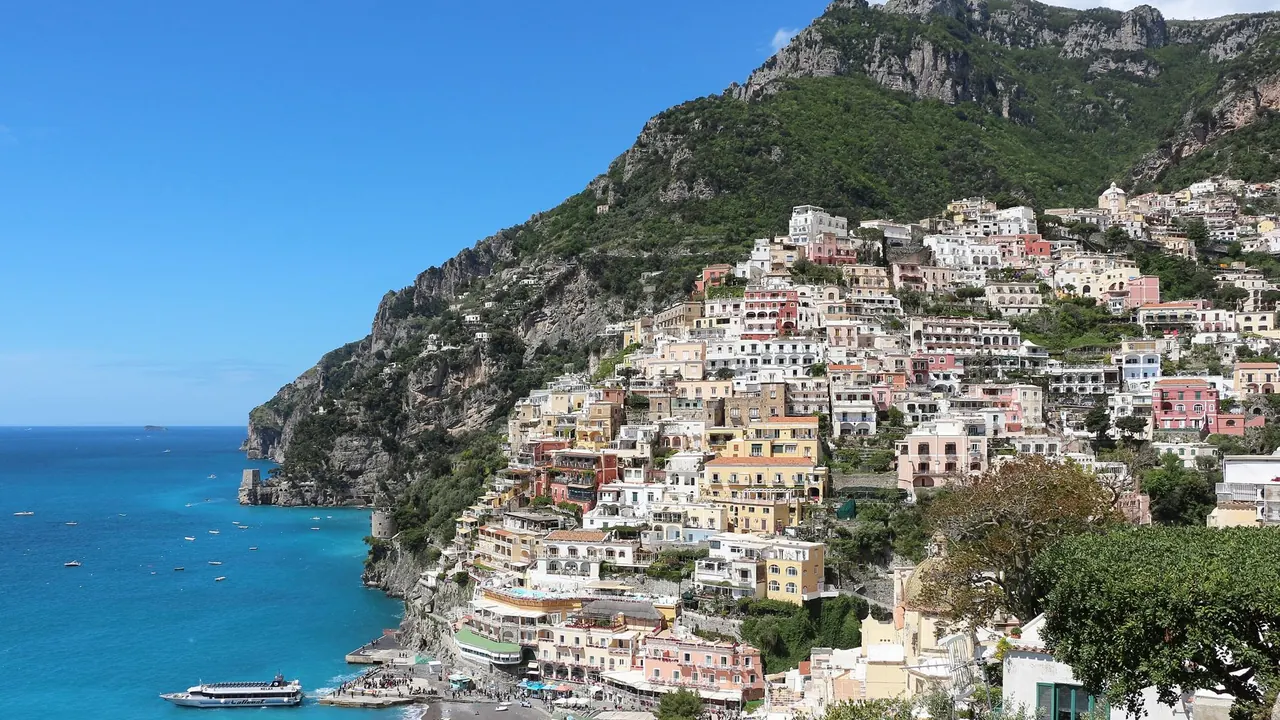
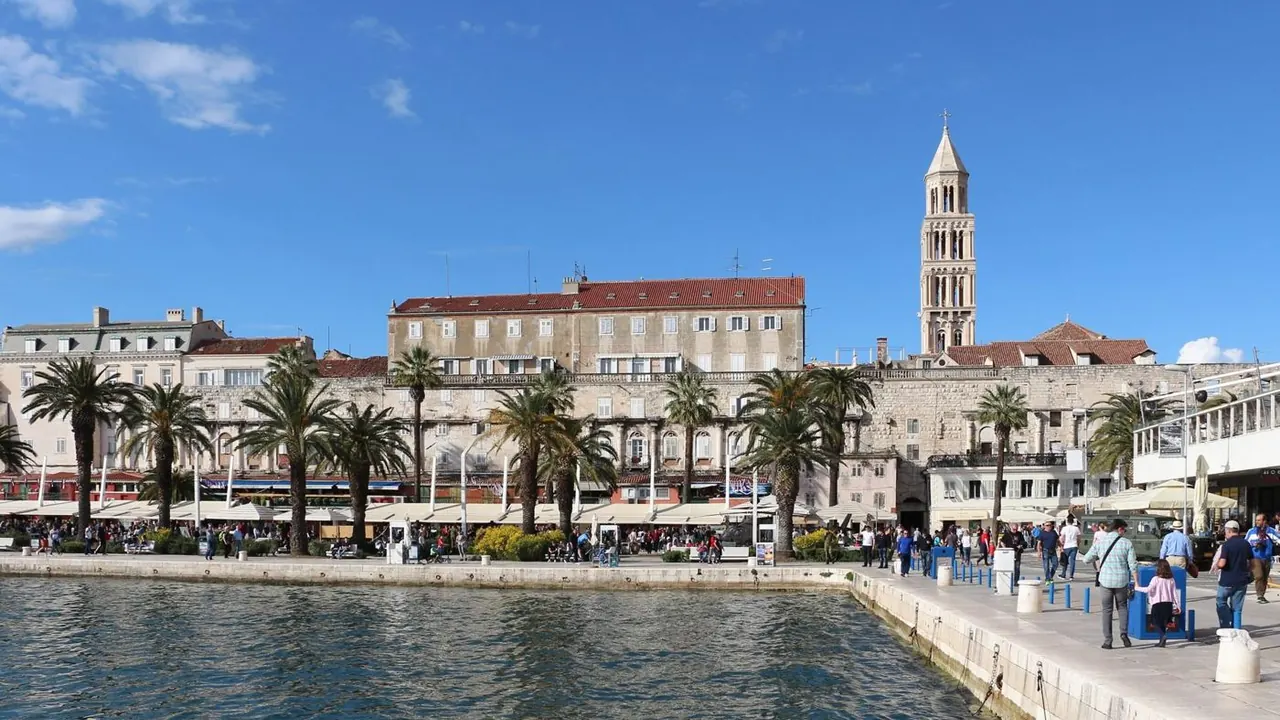
Photos: Positano by Bernard Gagnon, CC BY 4.0, cropped; Split by Bernard Gagnon, CC BY-SA 4.0, cropped.
Positano or Split?
Our verdict in twelve categories, each scored against the same fixed benchmark cities, and the climate month by month, so you can choose for your trip.
Choose Positano for
- shopping
- day trips
- wellness
Positano suits a couple who want the coast at its most theatrical and are prepared to pay for it. The days are about the sea, the cliff walks and boats to Capri, Amalfi and Ravello, with Pompeii within reach. Evenings mean a long dinner on a terrace, not a night out. Anyone who minds stairs, wants museums or has small children will find it hard work.
Choose Split for
- culture and sights
- prices
- getting around
For a trip that wants a working town around the beach, Split is the better choice. You sleep and eat inside or beside a Roman emperor's palace, reach the markets, the Riva and Bačvice on foot within minutes, and catch ferries to Hvar and Brač from the harbour. It costs much less, the evenings have more life, and families and first-timers will find it far easier.
Scoreboard
Twelve categories on one fixed scale from 0 to 100. The shaded stretch is the gap between the two.
Your match
Pick a travel style or drag the sliders, and both match scores follow your weighting.
Wins on shopping and day trips with your weighting.
Wins on culture and sights and prices with your weighting.
What matters to you?
Category by category
What the scores mean for a trip.
Beaches & swimming
The swimming is equally good in both, but the beaches are different. Positano's Spiaggia Grande and Fornillo are steep strips of dark sand and pebble packed with loungers in the deep blue water under the cliffs. Arienzo, Laurito and the coves further along are reached by long stairways or by boat.
Split's beaches are more casual. Bačvice is a shallow sandy bay a short walk from the old town, where locals play picigin in knee-deep water. The Marjan coves add pine shade, and a ferry to Brač or Šolta brings longer beaches within reach.
Food & drink
Split gives you more to eat, and more variety. There is peka ordered ahead, black risotto and pašticada in family konobas in Varoš, plus the fish market and the Pazar for browsing. Plavac Mali and Pošip are good local wines to go with it all.
Positano offers a beautiful lunch rather than a food scene. Clams, grilled fish and lemon desserts on a terrace over the sea are memorable, but the menus repeat each other and there is little everyday or street eating. Many kitchens close for the winter.
Culture & sights
This is where the two differ most. Split is built inside Diocletian's Palace, a Roman residence that people still live and shop in. The cathedral was once the emperor's mausoleum, the vaulted substructures show the original plan, and the Meštrović Gallery is worth the walk up Marjan.
In Positano the sight is the view of the town itself. There is the majolica dome of Santa Maria Assunta and the painted Roman villa rooms beneath it, and a couple of hours covers both. For serious sightseeing you take a trip out.
Nightlife
Split has a real night out in summer. Bars fill the stone alleys and stairways of the palace until late, and beach bars and clubs around Bačvice keep a younger crowd going into the early hours.
Positano's evenings are aperitivo and a long dinner. The cave club at the end of Spiaggia Grande is about the only late-night option. That suits a couple, but not a group after a party. Both go quiet once the season ends.
Nature & outdoors
Both sit where mountains drop into the sea, and both are strong for the outdoors in different ways. Positano has the single most dramatic walk, the Path of the Gods high above terraced lemon groves. There are steep woodland climbs to ridges over 1,000m, and boat trips along the cliffs to grottoes and the Li Galli islets.
Split offers more kinds of activity. Marjan's pine forest begins at the edge of the old town, and there are ridge hikes on Mosor and Biokovo. You can raft or canyon in the Cetina gorge at Omiš, see the waterfalls of Krka, or sail among the islands.
Day trips
Positano has the stronger list of places within a day. Capri, Amalfi, Ravello's gardens, the buried towns of Pompeii and Herculaneum and the Greek temples of Paestum are hard for any base to match. The catch is that ferries run mostly in season and the coast road is slow.
Split makes trips easier, with ferries, buses and trains all leaving from the same harbour. Medieval Trogir, Šibenik's cathedral, the Roman ruins of Salona and Hvar town are all worthwhile, but they are less famous than the places Positano can reach.
Good for families
Split is far easier with children. The centre is compact, Bačvice is shallow enough for toddlers to paddle, Marjan gives shade and room to run, and the ferry ride is often the highlight. Neither town has attractions built for children.
Positano is a town of stairs, so pushchairs are useless. Its pebbly beaches also shelve quickly into deep water. Older children who love swimming and boats will enjoy it, but families with small children should look elsewhere.
Getting around
Positano is a vertical town, and getting about is mostly climbing. Every trip between your room, the beach and dinner goes up or down stairways. One bus serves the single road through the upper town, and in summer the coast road is so slow that the boats from Spiaggia Grande are usually the quicker way out. Fewer boats run out of season, which leaves the slow buses, and driving yourself just adds a hunt for parking.
Split is far gentler on the legs. The palace, the Riva, Varoš and Bačvice sit close together on streets without cars, so most days need nothing but your feet, and Marjan's woods start where the town ends. Basic city buses reach Solin and Trogir. Summer traffic on the coast road is a nuisance here too, and the polished steps inside the palace are hard with a pushchair, but they cover a few lanes rather than the whole town.
Shopping & style
Positano gives you a reason to shop. The lanes down to the sea specialise in white linen and printed resort wear, there are sandals made to measure and hand-painted ceramics, and the whole town shares one recognisable look.
Split's palace shops lean towards lavender, ties and souvenirs, and Marmontova has the usual chains. The best browsing is the Pazar market, where dried figs, honey, olive oil and Dalmatian wine make better things to take home.
Affordability
Split is much easier on the wallet. Its old-town rooms are expensive in midsummer, but bakeries, buses, the palace sights and konobas away from the Riva are cheap. In shoulder season and winter it becomes a modestly priced city.
Positano is among the most expensive places to stay in Italy. Sea-view rooms, beach loungers, boats and terrace meals all cost a lot. The usual way to save is to stay in Praiano or Sorrento and come in by bus or ferry.
Live music & performing arts
In Split there is something to attend. The 19th-century Croatian National Theatre stages opera and ballet in season, and in summer the Split Summer Festival performs in the open air in the Peristyle. Klapa singers often perform in the palace's domed vestibule.
Positano itself has only the odd summer concert in a church. The real draw is an evening at Ravello's classical festival on its terrace above the sea. For opera you need to go to Naples.
Wellness & relaxation
The two are broadly level, and neither has a bathing culture. In Positano, rest comes from the upscale hotels, with spas and pools cut into the cliff and a slow afternoon on a terrace above the sea. The stairs make every errand tiring.
Split's version is fjaka, the local habit of long coffees on the Riva and empty streets in the afternoon heat. Spa time means resort hotels east of the centre. The old town is loud late into the night in midsummer, so the woods of Marjan or an island are better for real rest.
When should you go?
Pick your month. The climate figures are measured averages, not a forecast.
Positano in July
Split in July
Daytime high, °C
Rainfall in the month, mm
Where the figures come from
Positano's temperatures are measured 25 km from the centre, at Capri.
Positano has no rain gauge within 25 km of the centre, so its rainfall comes from a gridded climate dataset read at the city rather than from a gauge further away.
Positano's sunshine is measured 59 km from the centre, at Grazzanise.
Temperature and rainfall are climate normals, averaged over the years shown. Positano: 2005-2025 (sunshine 1991-2020, rainfall 1991-2020) normals, Capri (25.3 km from centre). Split: 1991-2020 normals, Split / Marjan (0.9 km from centre).
Positano is at its best for swimming from June to September. The sea reaches about 26°C in August and stays pleasant into early October. Summer highs peak around 30°C, and the stairs make that heat feel worse in the middle of the day. Split has the same swimming season with water a degree cooler. It runs hotter in midsummer, with July and August highs around 31°C that make the palace lanes tiring at midday. Both get long, sunny summers, and Split is a little sunnier.
May, early June and late September are the best months for walking and cliff paths in either place. September brings the first heavy rain to both coasts in similar amounts. From October on, Positano is the wetter of the two, with about 100mm in October against 80mm in Split, and both are wettest in November. Winters are mild, wet and grey in both. Split is a degree or two colder but stays a living town, while Positano largely shuts down.
Which traveller are you?
On a culture and arts trip, Split is the clear pick. Diocletian's Palace, the cathedral built from the emperor's mausoleum and the Meštrović Gallery fill two good days. Opera in the Peristyle and klapa singing add evenings that Positano cannot offer.
For a trip on a tight budget, choose Split. Positano is among the costliest places to stay in Italy, and the view is added to every bill. In Split, bakeries, the green market, local buses and konobas away from the Riva keep daily costs modest.
On a shopping trip, Positano has the edge. Its lanes down to the beach sell the loose linen and printed resort wear of moda Positano, and sandal makers cut a pair while you wait. In Split you mostly find souvenirs and chain stores.
Before you go
| Measure | Positano | Split |
|---|---|---|
| Official language | Italian | Croatian |
| Currency | Euro (EUR) | Euro (EUR) |
| Sockets | CFL230 V, 50 Hz | CF230 V, 50 Hz |
| Driving side | Right | Right |
| Time zone | UTC+1, UTC+2 in summer | UTC+1, UTC+2 in summer |
| Emergency number | 112 | 112 |
| Elevation | 142 m | 0 m |
| Main airport | Naples International Airport (NAP)33 km from centre131 non-stop destinations | Split Saint Jerome Airport (SPU)12 km from centre69 non-stop destinations |
| Public holidays this year | 13 days | 14 days |
By the numbers
| Measure | Positano | Split |
|---|---|---|
| City population | 3,729 | 160,577 |
| People per km² | 429 | - |
| Museums within 10 km | 10 | 11 |
| UNESCO World Heritage sites within 50 km | 5 | 4 |
| Swim season, months above 21 °C | 5 months | 4 months |
Where else could you go?
Every comparison below shares a destination with this one, so you can follow Positano or Split somewhere new.